Artwork
Piping Plover
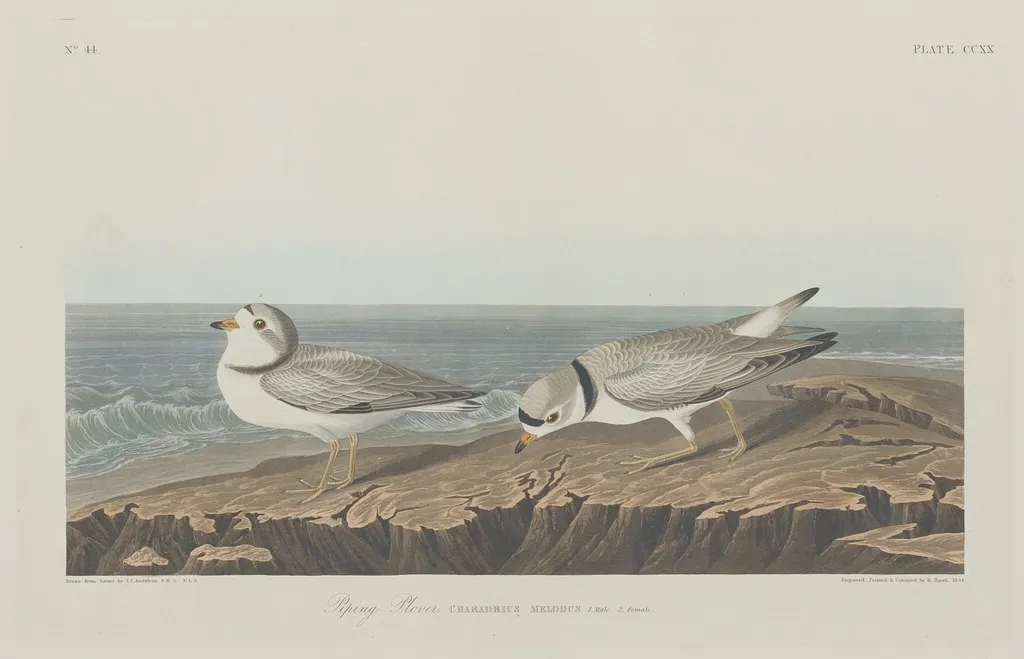
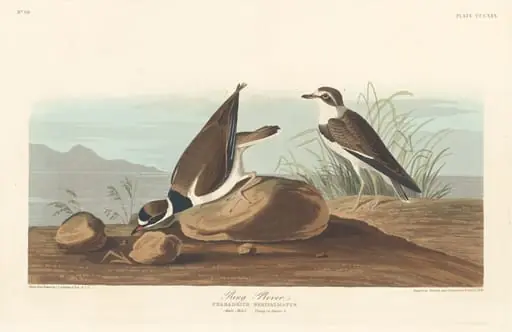
Piping Plover is an ink print by the Romanticist artist Robert Havell Jr.. It dates from 1834 and is held in the collection of the National Gallery of Art.
About this work
Overview
Created in 1834, *Piping Plover* is a hand‑coloured engraving combined with aquatint, executed on high‑quality Whatman wove paper. The print portrays a small shorebird in a coastal landscape, rendered with delicate line work and a muted palette of whites, greys and blues that suggest sea, sky and rock.
Subject & Meaning
The image focuses on a piping plover, a diminutive wading bird, shown perched on a rocky outcrop beside crashing waves. The bird’s white plumage, black wing tips and yellow bill are highlighted, emphasizing its fragile presence within a dynamic natural setting.
Technique & Style
The work employs aquatint to achieve tonal washes, while fine engraving lines define feather texture and the rugged shoreline. Hand‑applied colour adds subtle variation, giving the surface a painterly quality that complements the precise printmaking process.
History & Provenance
Robert Havell Jr., a member of the renowned Havell family of engravers from Reading, Berkshire, produced the piece. The Havells were leading practitioners of aquatint in the early nineteenth century and had strong ties to Indian artistic circles, a background that informed their technical expertise.
Context
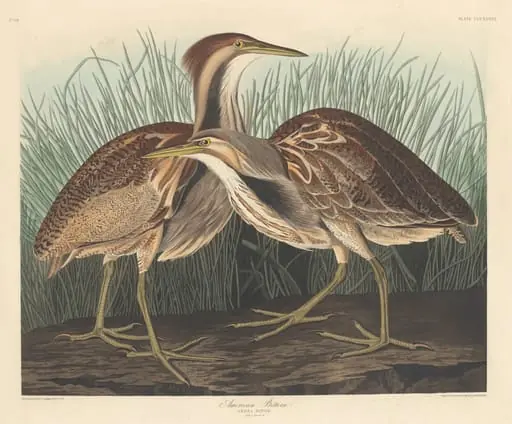
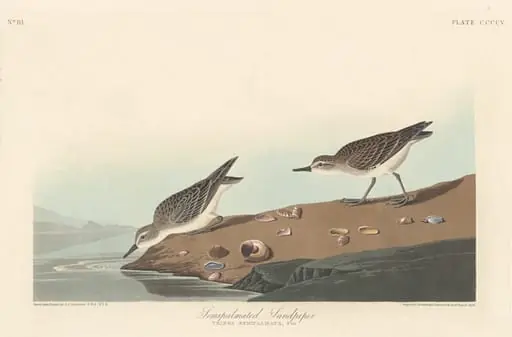
The print reflects the period’s growing interest in natural history illustration, where detailed depictions of birds and habitats were valued for both scientific and aesthetic purposes. It also illustrates the Havell workshop’s capacity to blend commercial print techniques with fine‑art sensibilities.
Artist & collection

Artist
The Havell family of Reading, Berkshire, England, included a number of notable engravers, etchers and painters, as well as writers, publishers, educators, and musicians.