Artwork
Roscoe's Yellow Throat
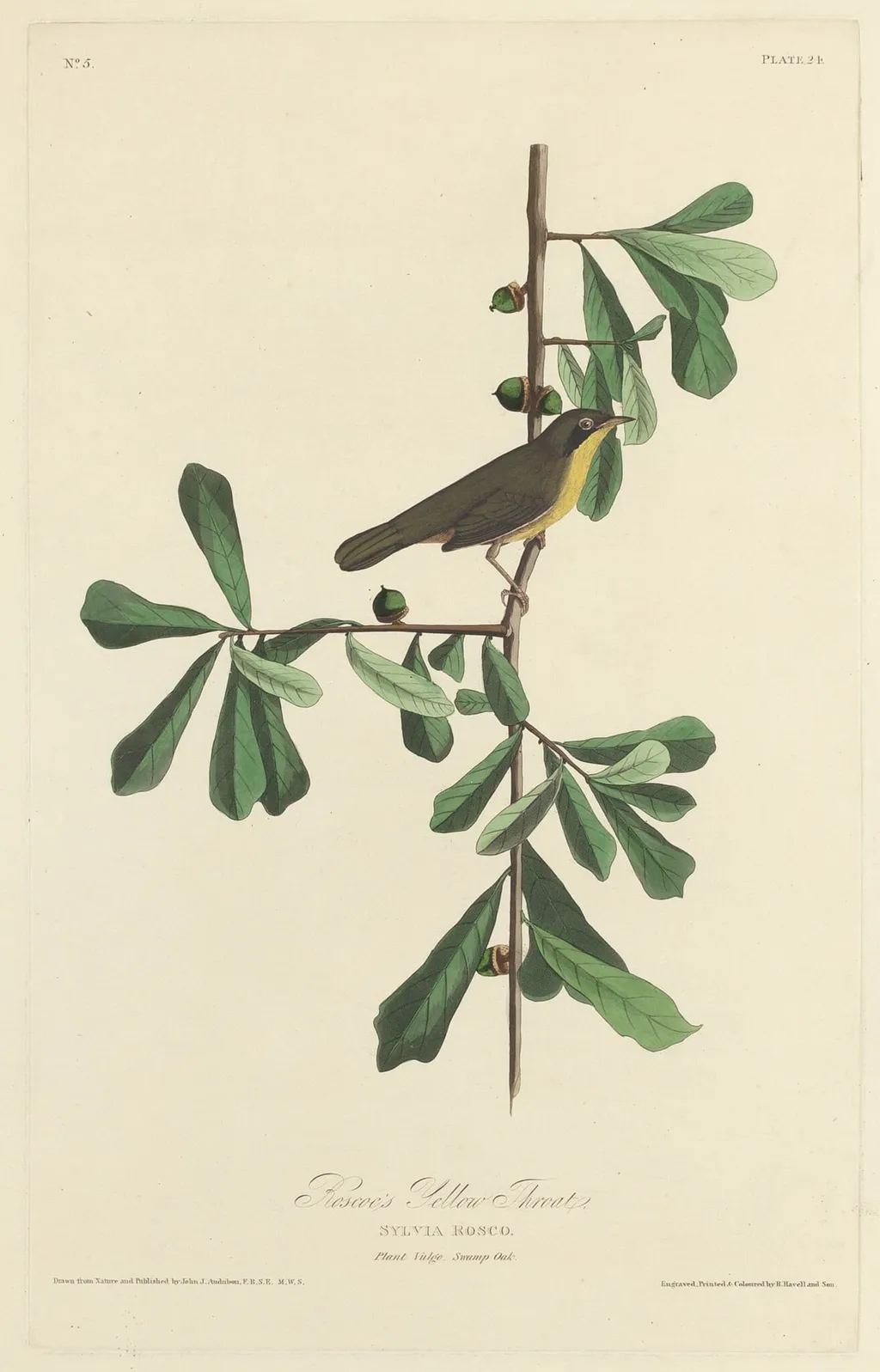
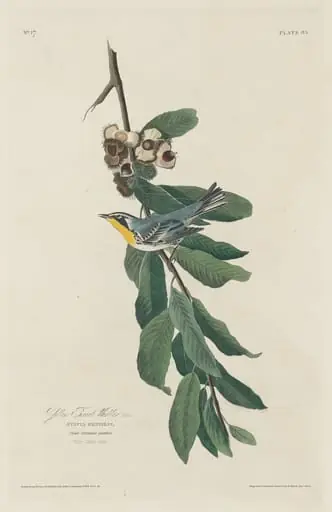
Roscoe's Yellow Throat is an ink print by the Romanticist artist Robert Havell Jr.. It dates from 1827 and is held in the collection of the National Gallery of Art.
About this work
Overview
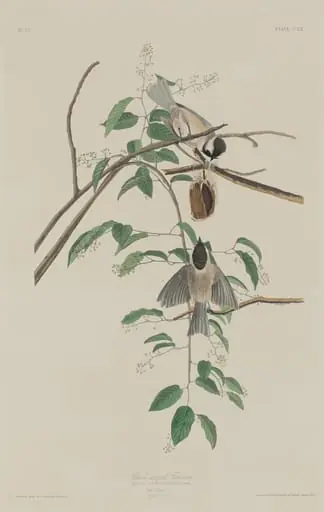
Created in 1827, this hand‑colored engraving and aquatint portrays a modest passerine perched on a thin twig amid foliage and scattered acorns. Rendered on Whatman wove paper, the image balances a muted, creamy background with the bird’s vivid green and yellow plumage, emphasizing the delicate interplay of natural elements.
Subject & Meaning
The work captures a small bird—identified by its dark green body and bright yellow throat—resting on a slender branch. The surrounding leaves and acorns suggest a woodland habitat, inviting viewers to consider the bird’s place within its ecosystem and the quiet observation of everyday nature.
Technique & Style
The piece combines engraving with aquatint, a method that produces tonal washes alongside fine line work. After printing, the image was hand‑colored, allowing precise application of the bird’s contrasting hues. The use of Whatman wove paper provides a smooth surface that enhances the subtle gradations of the aquatint background.
History & Provenance
Attributed to Robert Havell Jr., the print emerges from the renowned Havell family, noted for their expertise in aquatint and involvement with Indian artistic circles. Produced during a period when the Havells supplied illustrations for natural history publications, the work reflects their broader contribution to early‑19th‑century scientific and artistic publishing.
Context
The early 1800s saw a surge in interest in ornithological illustration, driven by expanding scientific exploration. Prints like this served both educational and aesthetic purposes, providing detailed visual records of species while appealing to a growing market of collectors fascinated by the natural world.
Artist & collection

Artist
The Havell family of Reading, Berkshire, England, included a number of notable engravers, etchers and painters, as well as writers, publishers, educators, and musicians.