Artwork
Yellow-throated Vireo
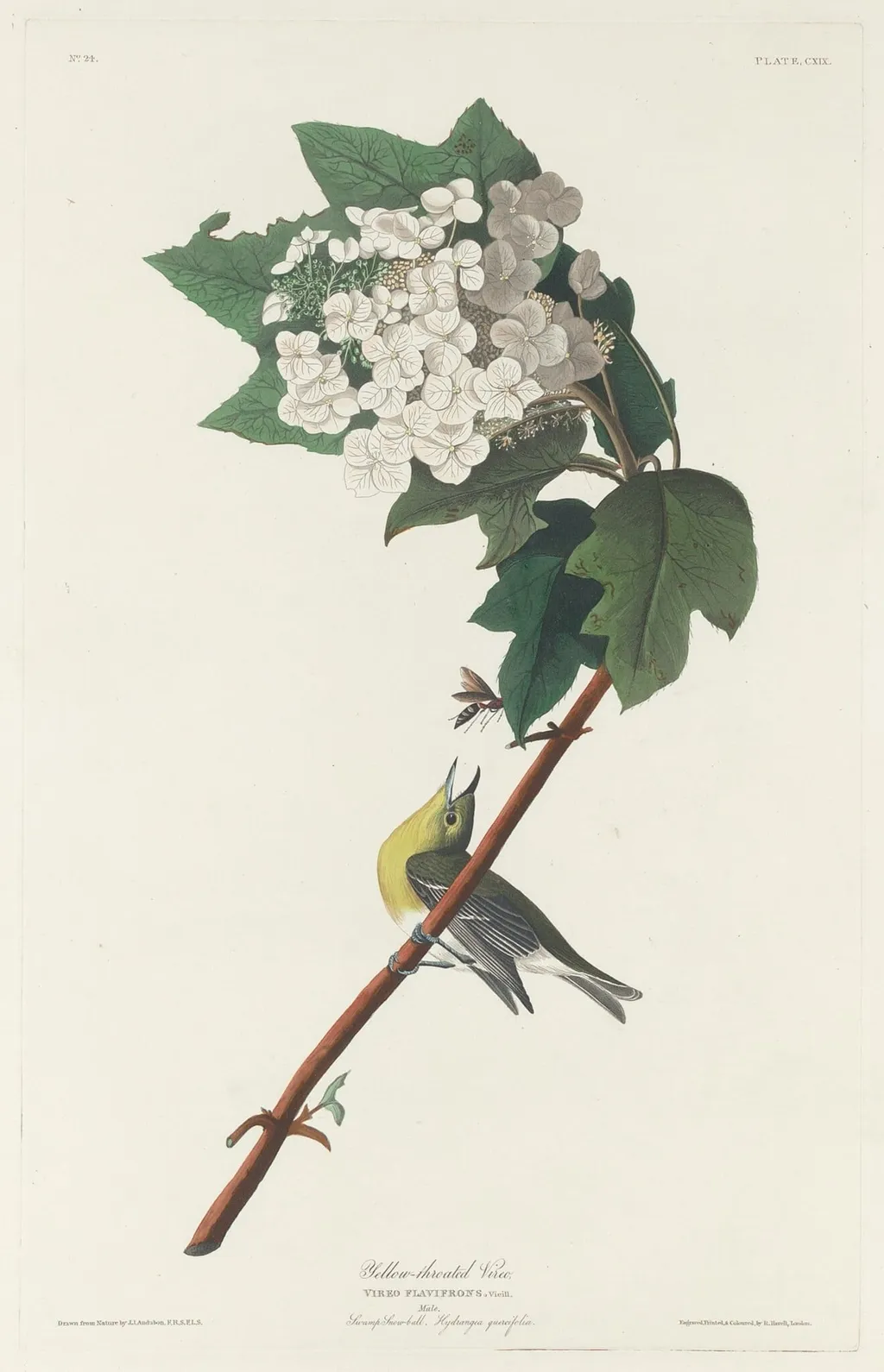
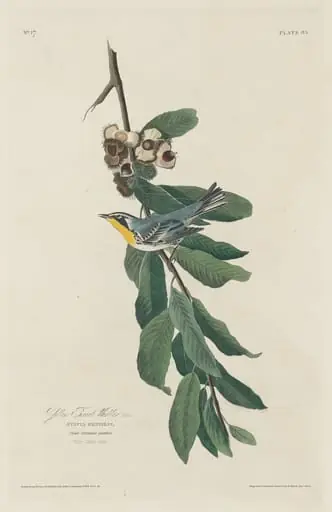
Yellow-throated Vireo is an ink print by the Romanticist artist Robert Havell Jr.. It dates from 1831 and is held in the collection of the National Gallery of Art.
About this work
The image depicts a yellow-throated vireo perched on a branch, surrounded by white flowers and green leaves.
The image depicts a yellow-throated vireo perched on a branch, surrounded by white flowers and green leaves. The bird is facing left, with its beak open as if singing. The branch is adorned with large, dark green leaves and clusters of small, white flowers. The background of the image is a light beige color.
The image is a hand-colored engraving, aquatint on whatman wove paper, created in 1831. The level of detail and the use of color suggest a high level of craftsmanship.
The image is a beautiful example of Romanticism, a movement that emphasized emotion and nature. The artist, Havell, Jr., Robert, has captured the beauty of the natural world in this intricate and detailed engraving. For more information on the artist's work, look up Havell, Jr., Robert.
Overview
Created in 1831, this hand‑colored engraving and aquatint portrays a Yellow‑throated Vireo perched on a branch amid white blossoms and verdant foliage. Rendered on Whatman wove paper, the image presents the bird with an open beak, suggesting song, against a muted beige background.
Subject & Meaning
The work functions as an ornithological illustration, documenting the appearance and posture of the Yellow‑throated Vireo. By situating the bird among natural elements—leaves and flowers—the image emphasizes the species’ habitat and the broader relationship between avian life and its environment.
Technique & Style
Robert Havell Jr. employed a combination of engraving and aquatint, then applied hand‑coloring to achieve subtle tonal variations. The aquatint process, in which fine particles of resin create tonal washes, allowed for the delicate shading of feathers and foliage, while the hand‑applied pigments enhance realism without sacrificing the crisp lines of the engraving.
History & Provenance
Robert Havell Jr., son of the noted engraver and publisher Robert Havell the Elder, worked within a family workshop renowned for its expertise in aquatint. The Havell studio produced a range of natural‑history prints, and this 1831 piece reflects their ongoing involvement in scientific illustration, including projects related to Indian art and culture.
Context
Produced during the early nineteenth‑century surge in natural‑history publishing, the print aligns with Romantic interests in detailed observation of nature. Its precise rendering and decorative qualities illustrate the period’s blend of scientific documentation and aesthetic appreciation of the natural world.
Artist & collection

Artist
The Havell family of Reading, Berkshire, England, included a number of notable engravers, etchers and painters, as well as writers, publishers, educators, and musicians.