Artwork
Wood Pewee
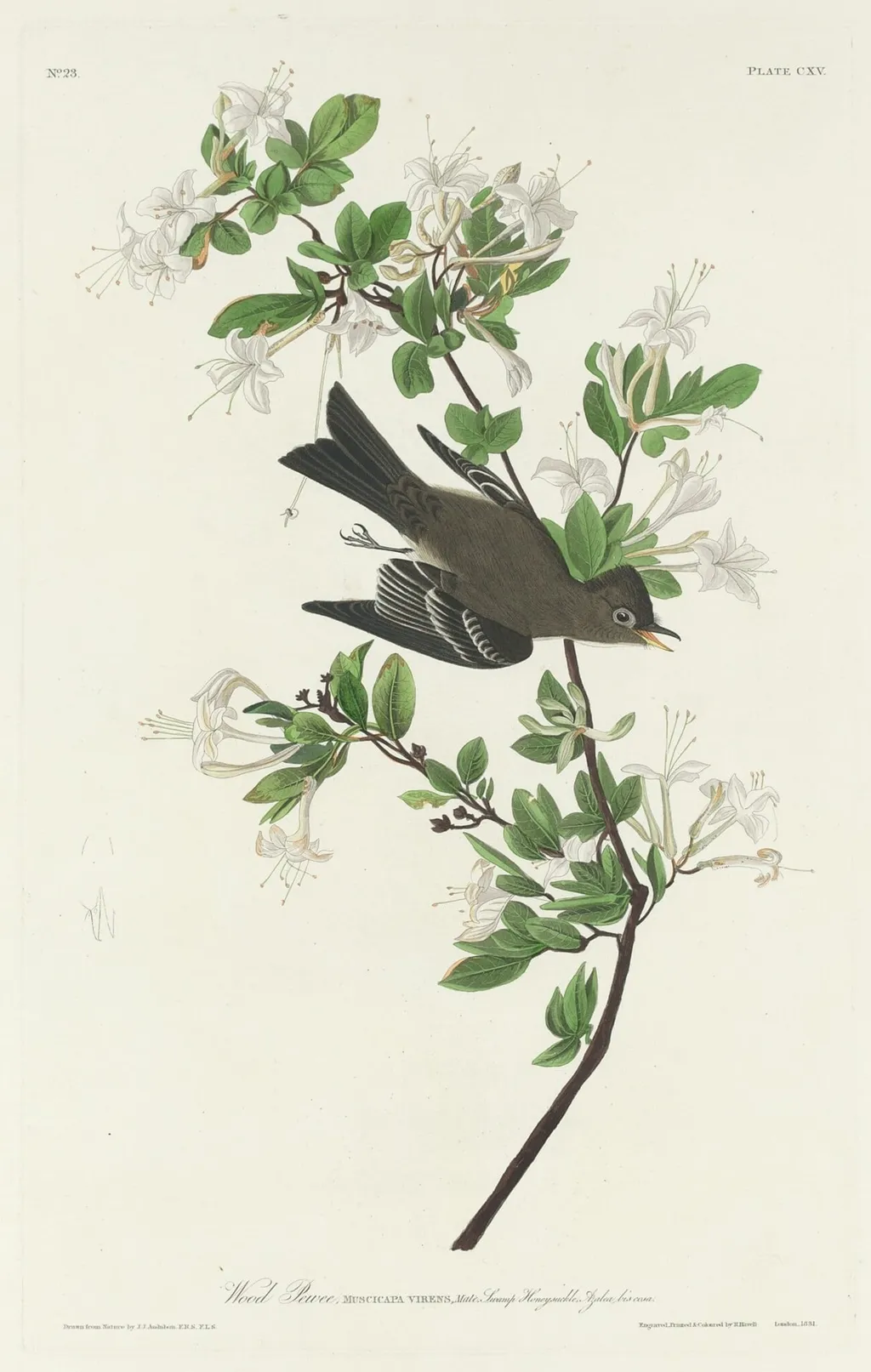
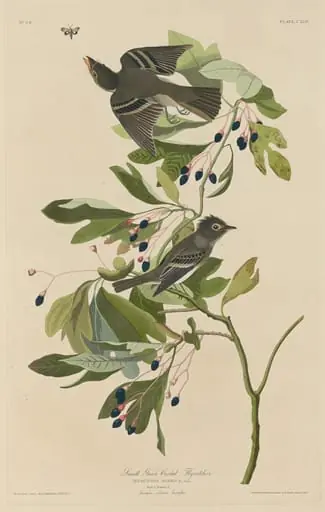
Wood Pewee is an ink print by the Romanticist artist Robert Havell Jr.. It dates from 1831 and is held in the collection of the National Gallery of Art.
About this work
Overview
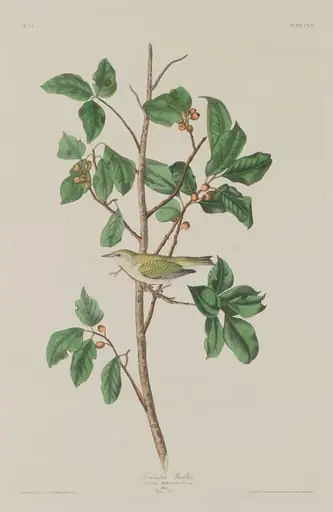
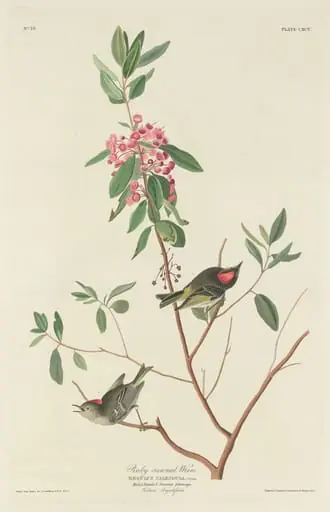
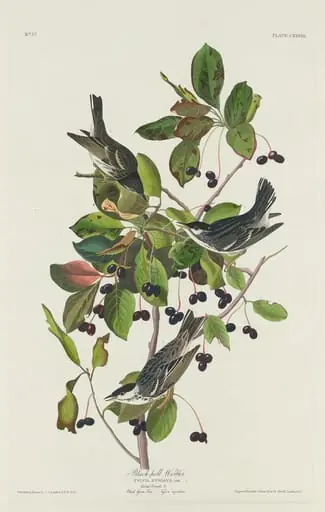
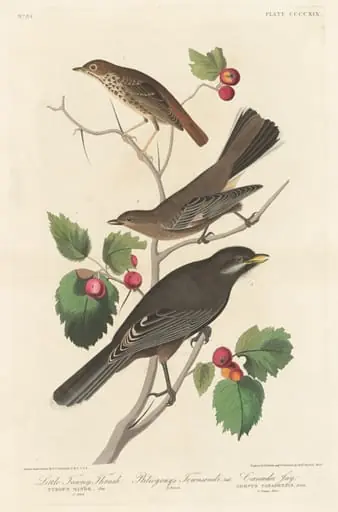
Robert Havell Jr. created a hand‑colored engraving and aquatint titled *Wood Pewee* in 1831. Executed on Whatman wove paper, the print presents a small North American flycatcher perched amid a leafy branch, rendered with fine line work and subtle coloration.
Subject & Meaning
The image focuses on a wood pewee, a diminutive passerine bird, shown perched on a branch laden with green foliage and clusters of white blossoms. The bird’s dark plumage is highlighted by a pale lateral stripe, emphasizing its delicate form within a natural setting.
Technique & Style
Havell employed cross‑hatching to build texture in the bird’s feathers and surrounding leaves, layering fine lines to suggest volume without overt brushwork. The aquatint background provides a soft tonal wash, while hand‑applied color accents the bird and flowers, combining printmaking precision with painterly nuance.
History & Provenance
The Havell family were noted practitioners of aquatint in the early nineteenth century, and Robert Havell Jr. continued this tradition. Their workshop had longstanding ties to Indian art and culture, and members were active as engravers, etchers, and illustrators, situating *Wood Pewee* within a broader familial legacy of print production.
Context
Produced during a period of heightened interest in natural history illustration, the print reflects contemporary scientific documentation of North American avifauna. The detailed rendering aligns with the era’s emphasis on accurate, observable representation for both scholarly and decorative purposes.
Artist & collection

Artist
The Havell family of Reading, Berkshire, England, included a number of notable engravers, etchers and painters, as well as writers, publishers, educators, and musicians.