Artwork
Cuvier's Wren
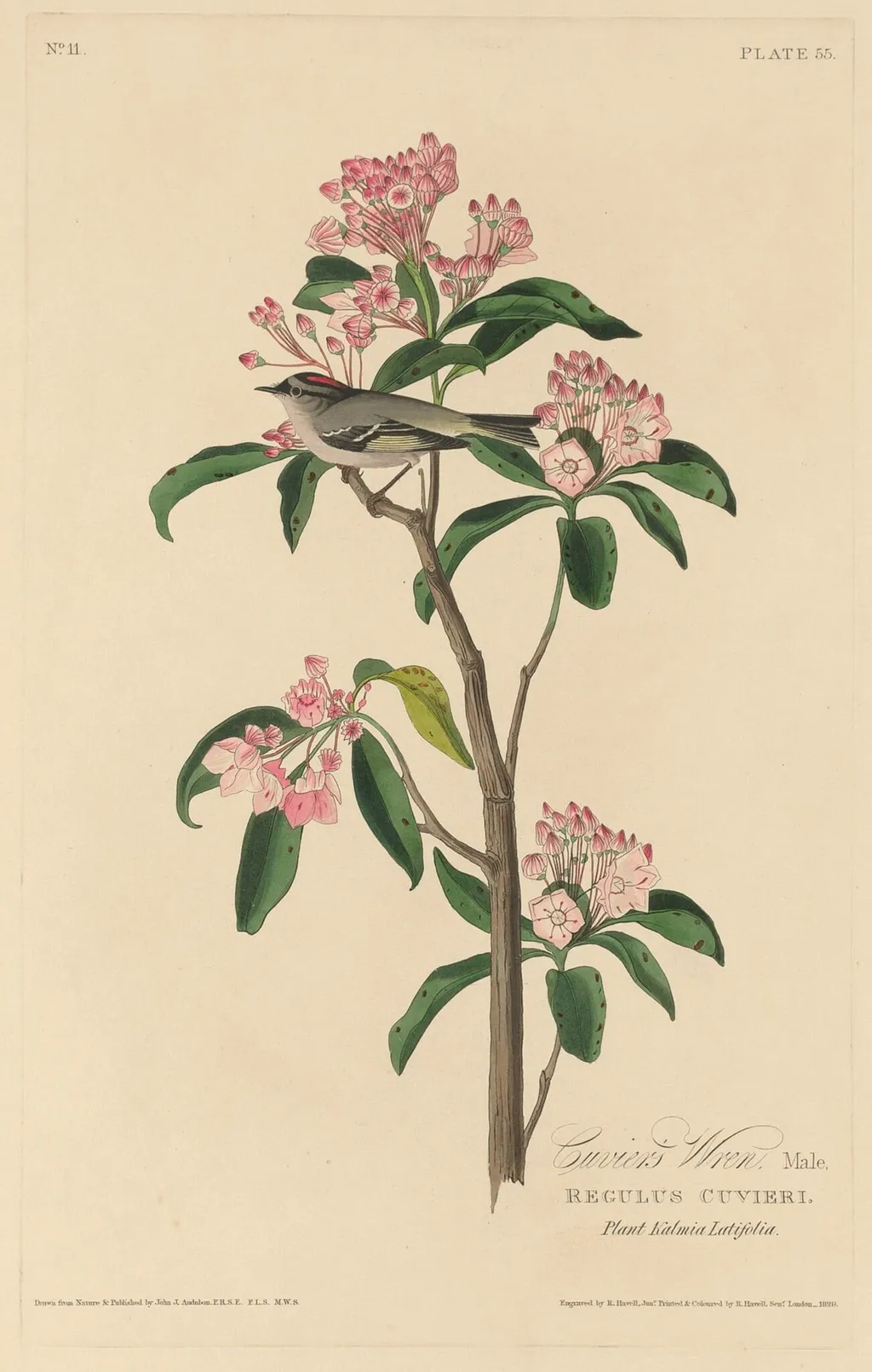
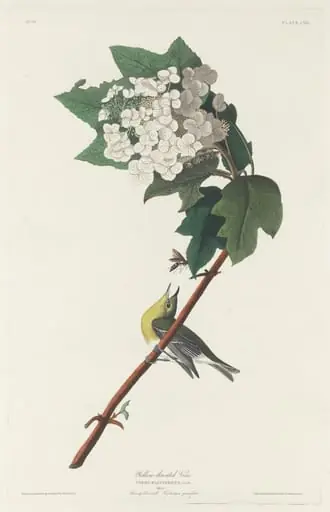
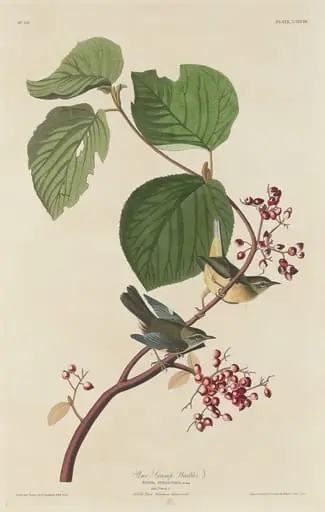
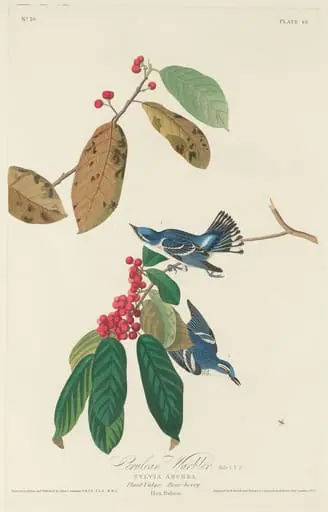
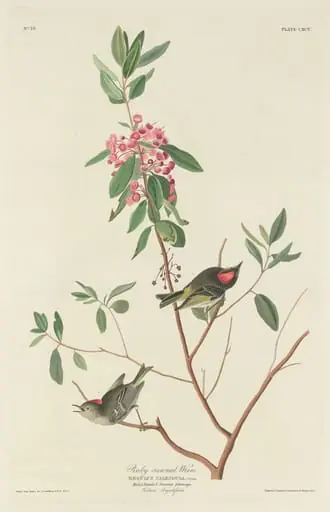
Cuvier's Wren is an ink print by the Romanticist artist Robert Havell Jr.. It dates from 1829 and is held in the collection of the National Gallery of Art. Created in 1829, *Cuvier’s Wren* is a hand‑colored engraving combined with aquatint, printed on smooth Whatman wove paper.
About this work
Overview
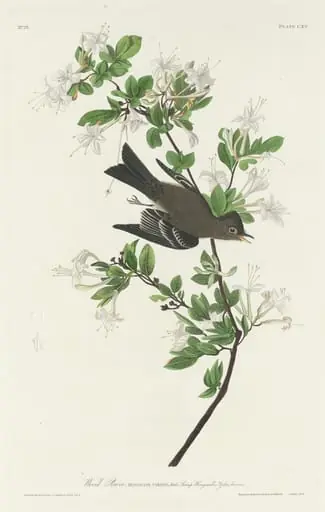
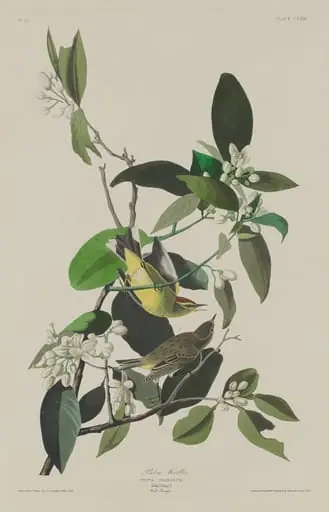
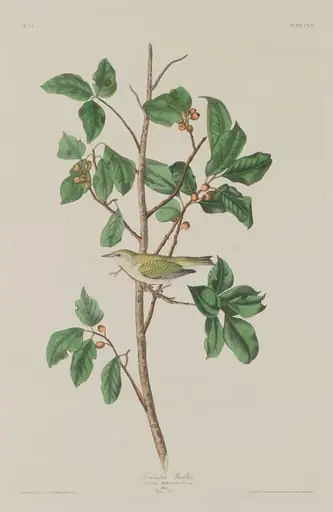
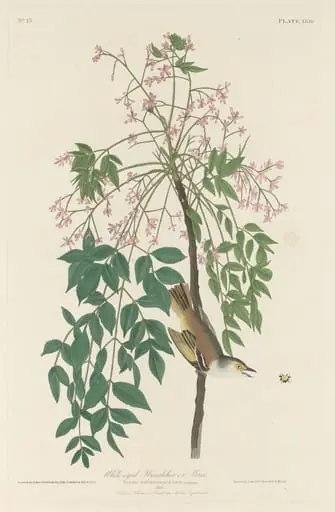
Created in 1829, *Cuvier’s Wren* is a hand‑colored engraving combined with aquatint, printed on smooth Whatman wove paper. The image depicts a diminutive wren perched on a branch amid soft pink blossoms and dark green foliage. The bird is rendered with a red cap, white superciliary streaks and a plain brown back, while the surrounding flora is detailed with delicate petals and visible leaf veins.
Subject & Meaning
The print serves as a scientific illustration of the wren species referenced by naturalist Georges Cuvier, emphasizing anatomical accuracy over decorative embellishment. By situating the bird among flowering branches, the image conveys the bird’s natural habitat, offering viewers a clear visual reference for identification and study.
Technique & Style
Robert Havell Jr. employed fine line engraving to delineate feather texture and petal outlines, then applied aquatint to achieve subtle tonal washes that suggest depth and volume. Hand‑coloring added precise hues to the cap, flowers and foliage, a method typical of early‑19th‑century natural history prints where detail and realism were paramount.
History & Provenance
The work emerges from the Havell family, noted for their long‑standing expertise in aquatint and engraving. Robert Havell Jr. continued the practice established by his father, Robert Havell the Elder, and his uncle Luke Havell, both prominent figures in British printmaking and in the production of illustrated scientific works.
Context
Produced during a period of intense interest in cataloguing the natural world, the print aligns with the broader European tradition of illustrated zoological texts. Its meticulous execution reflects the era’s demand for accurate visual records to accompany taxonomic descriptions, a demand that the Havell workshop met for publishers and scholars alike.
Artist & collection

Artist
The Havell family of Reading, Berkshire, England, included a number of notable engravers, etchers and painters, as well as writers, publishers, educators, and musicians.