Artwork
Vigors Vireo
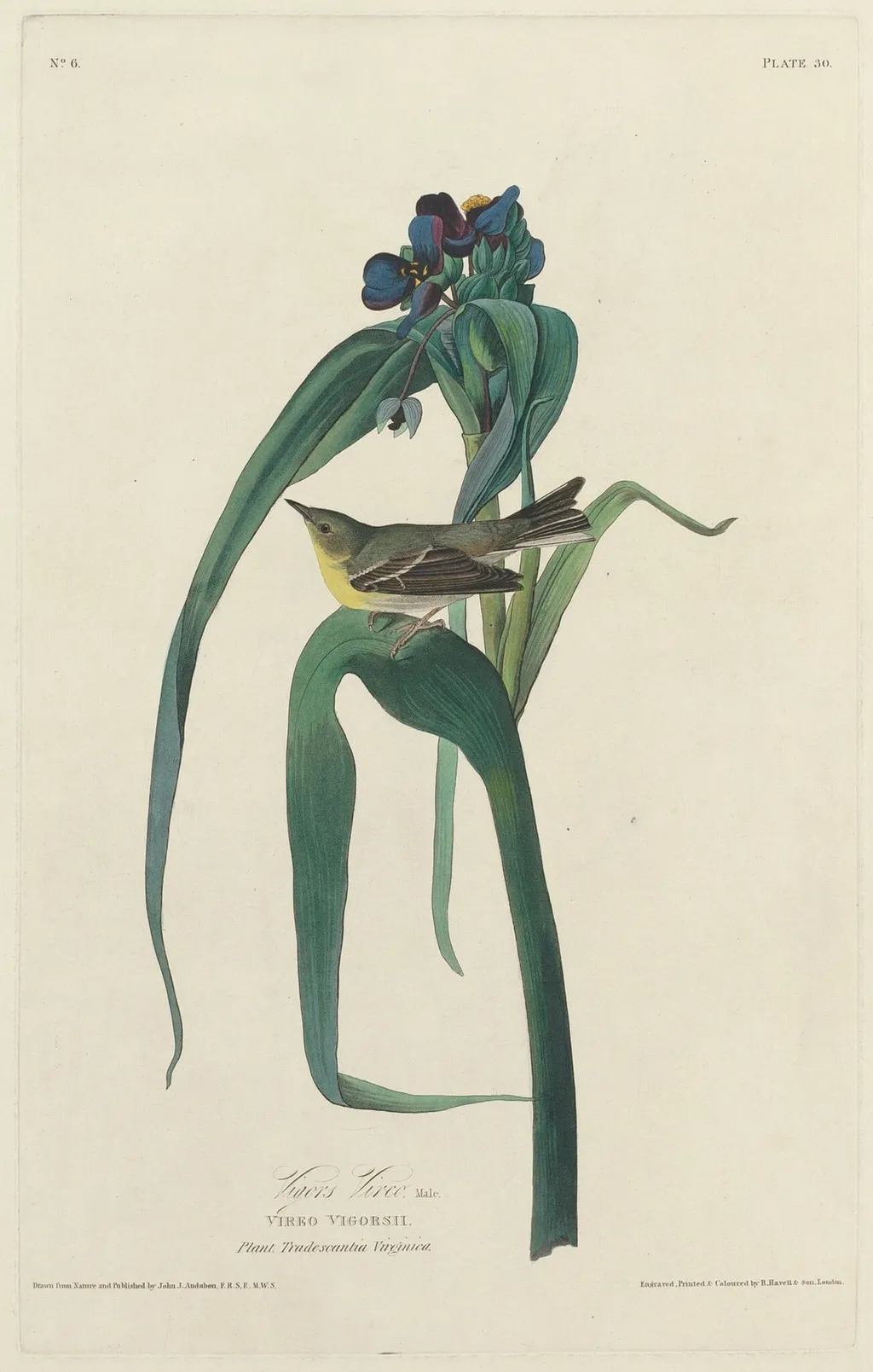
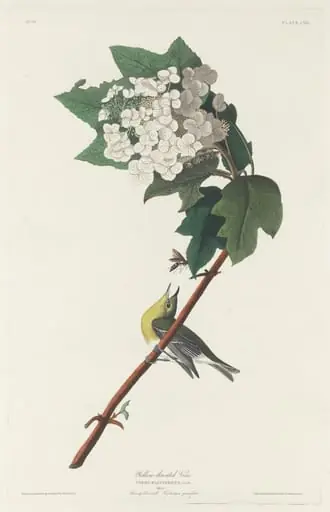
Vigors Vireo is an ink print by the Romanticist artist Robert Havell Jr.. It dates from 1828 and is held in the collection of the National Gallery of Art.
About this work
Overview
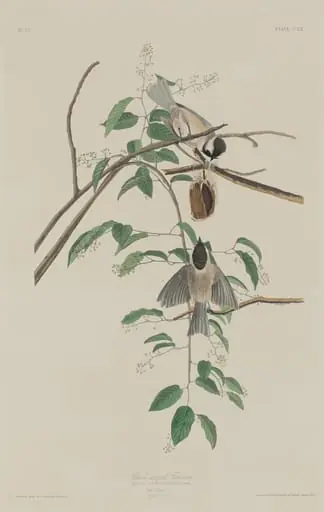
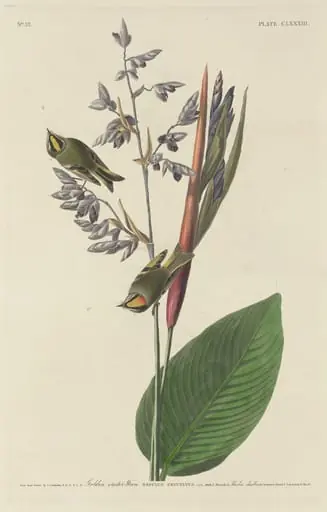
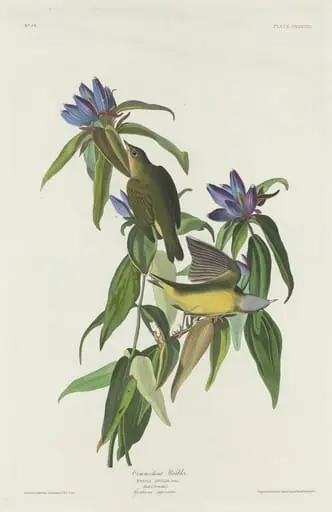
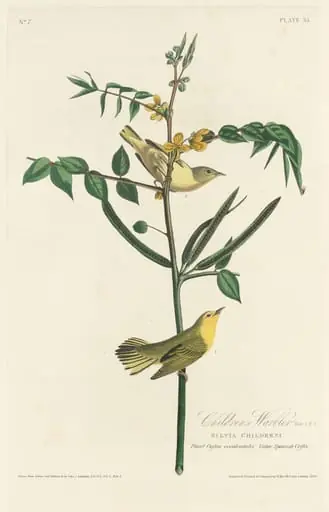
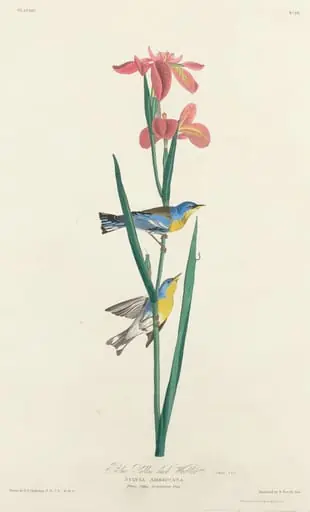
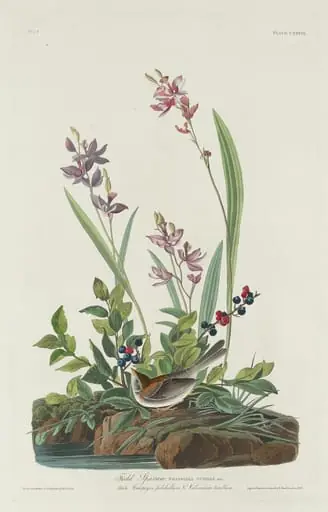
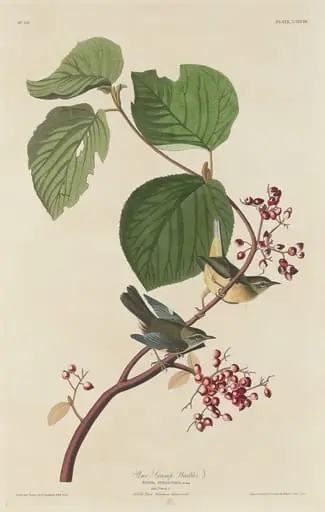
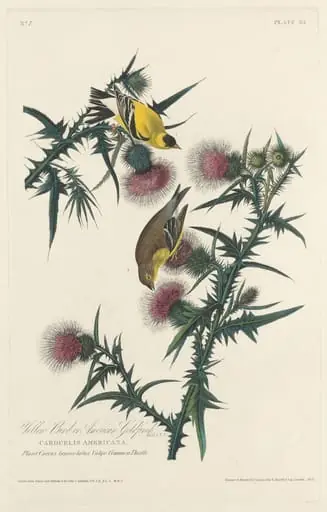
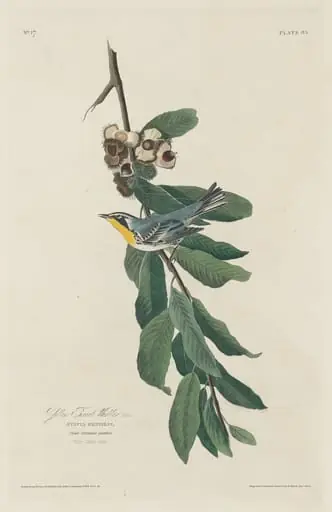
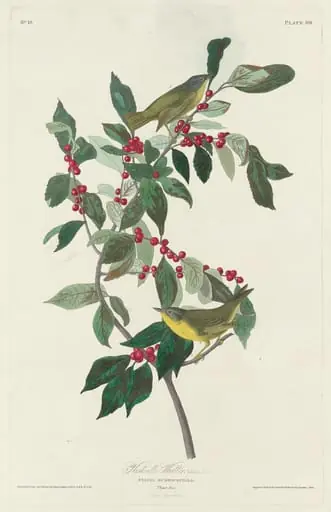
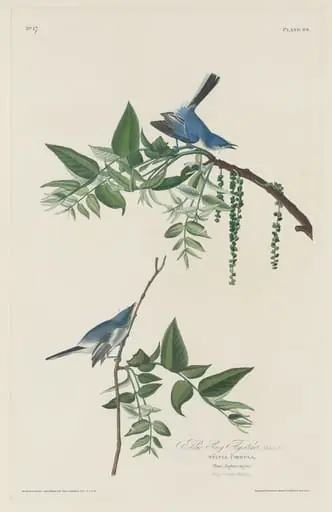
Created in 1828, *Vigors Vireo* is a hand‑colored engraving combined with aquatint, printed on smooth Whatman wove paper. The work presents a small songbird perched on a slender stem, surrounded by delicate blue‑purple blossoms and gently undulating green leaves.
Subject & Meaning
The central figure is a vireo‑type bird, identifiable by its yellow chest, dark wings, and fine beak. Its poised stance on the stem, framed by flowering foliage, conveys a quiet observation of natural detail, typical of early nineteenth‑century natural history illustration.
Technique & Style
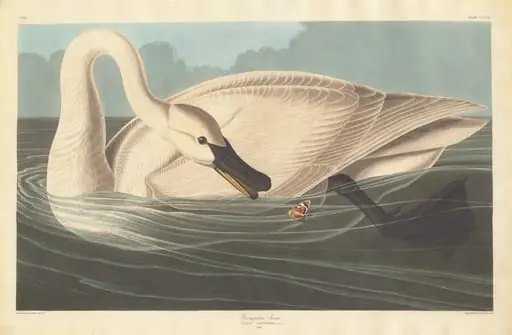
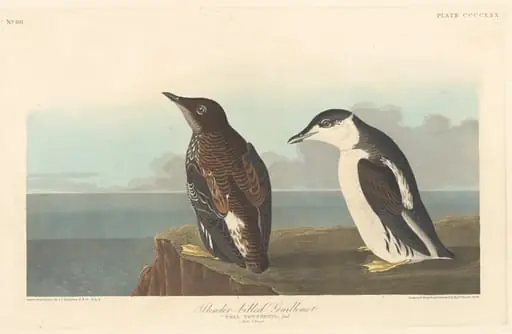
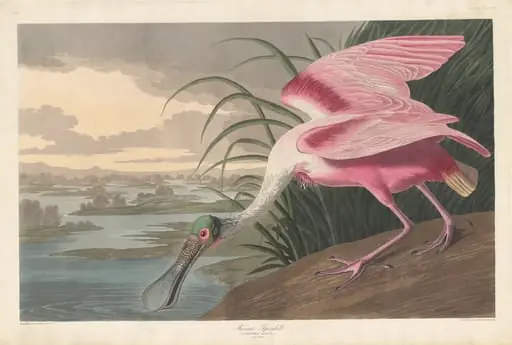
Robert Havell Jr. employed fine line engraving to delineate feather and leaf texture, while aquatint provided subtle tonal shifts that model form without harsh contrast. Hand‑applied watercolor adds muted yet vivid hues, balancing realism with a restrained palette.
History & Provenance
The print emerges from the Havell family workshop, a lineage that included Robert Havell the Elder and his brothers Luke and Daniel, all noted for their expertise in aquatint and for producing images linked to Indian artistic traditions. The piece reflects the family’s continued engagement with natural history publishing in Britain.
Context
Produced during a period of expanding scientific illustration, the work aligns with contemporary efforts to document flora and fauna for both scholarly and popular audiences. Its meticulous rendering mirrors the era’s emphasis on accuracy in botanical and ornithological studies.
Artist & collection

Artist
The Havell family of Reading, Berkshire, England, included a number of notable engravers, etchers and painters, as well as writers, publishers, educators, and musicians.