Artwork
The Blood of the Redeemer
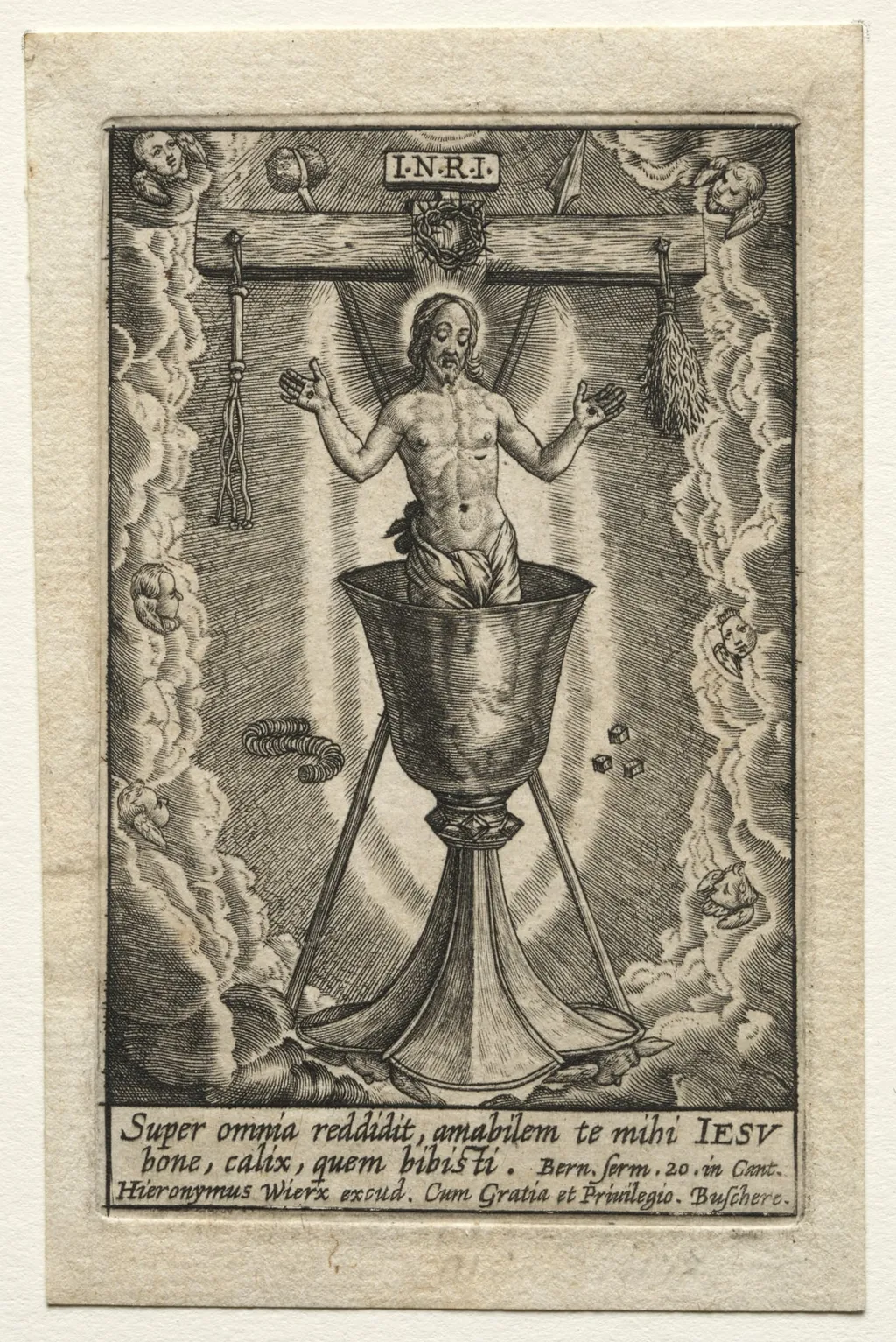
The Blood of the Redeemer is a print by the Baroque artist Hieronymus Wierix. It dates from 1619 and is held in the collection of the Cleveland Museum of Art.
About this work
Overview
Created in 1619 by the Flemish engraver Hieronymus Wierix, this print depicts a dramatic religious scene now part of the Cleveland Museum of Art’s collection. The composition centers on a figure of Christ standing within a large chalice, illuminated against a dark backdrop, while everyday objects such as a broom and rope hang from a wooden beam above.
Subject & Meaning
The work presents Jesus as the sacrificial Redeemer, his outstretched arms and halo emphasizing his divine role. The chalice, a traditional symbol of the Eucharist, reinforces the theme of bloodshed and salvation, while the juxtaposition of mundane items may allude to the humility and suffering associated with his passion.
Technique & Style
Wierix employs fine, intricate line work and careful hatching to render a realistic, three‑dimensional effect. Strong chiaroscuro—contrasting light and shadow—creates depth and heightens the emotional intensity typical of early Baroque visual language, despite the piece being an engraving rather than a painted canvas.
History & Provenance
The print was produced in the early seventeenth century, a period when Wierix was active in Antwerp’s thriving print market. It entered the Cleveland Museum of Art’s holdings through acquisition in the twentieth century, where it remains on display as an example of Northern European devotional engraving.
Artist & collection

Artist
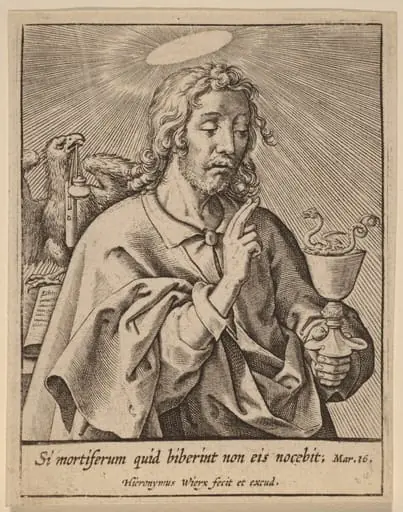
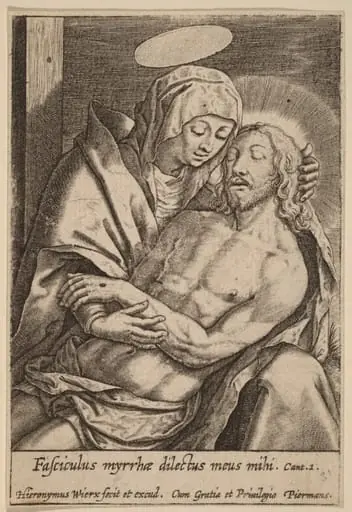
Hieronymus Wierix (1553–1619) was a Flemish engraver, draughtsman and publisher. He is known for his reproductive engravings after the work of well-known local and foreign artists including Albrecht Dürer. Together with…