Artwork
The Descent of the Holy Spirit
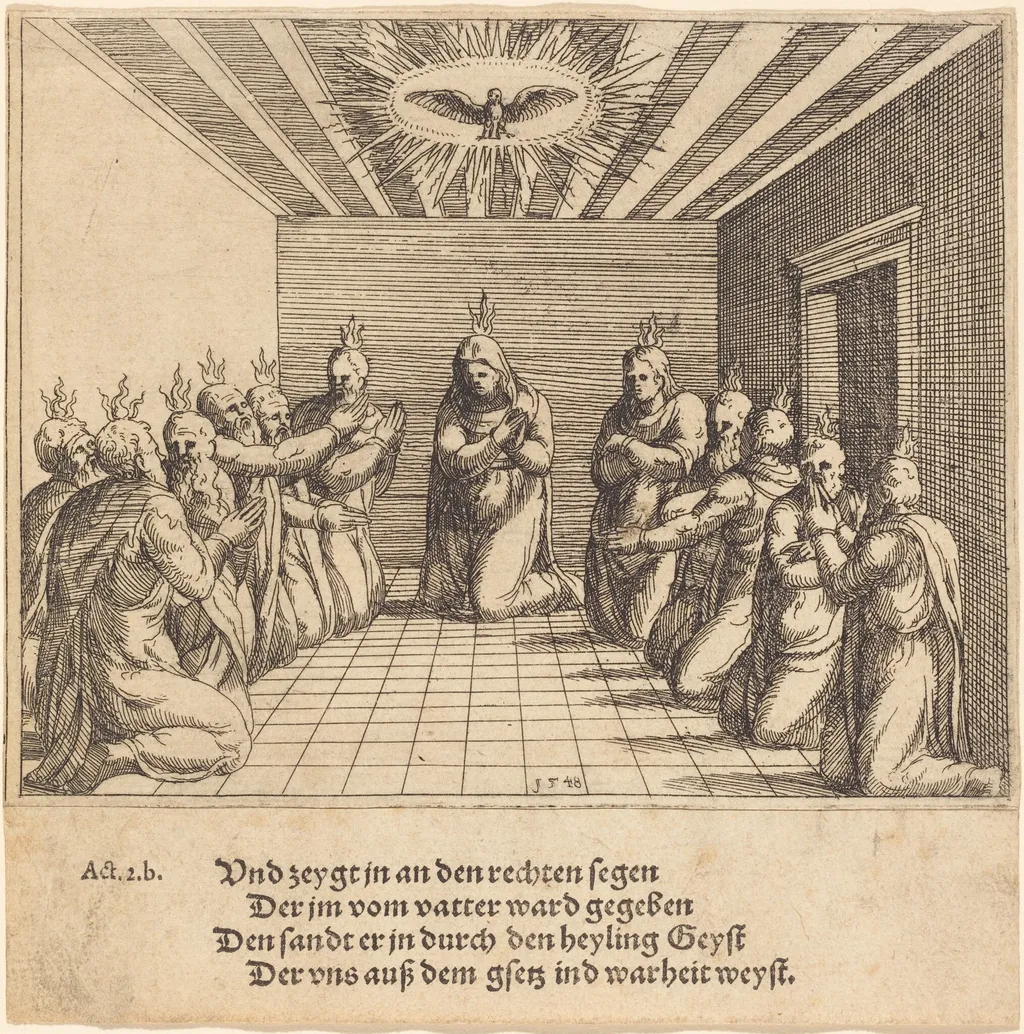
The Descent of the Holy Spirit is an ink print by the Renaissance artist Augustin Hirschvogel. It dates from 1548 and is held in the collection of the National Gallery of Art.
About this work
Overview
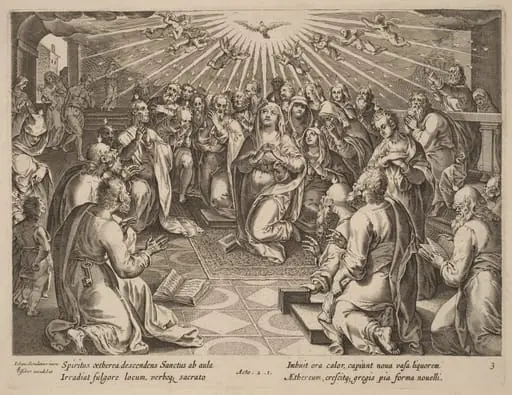
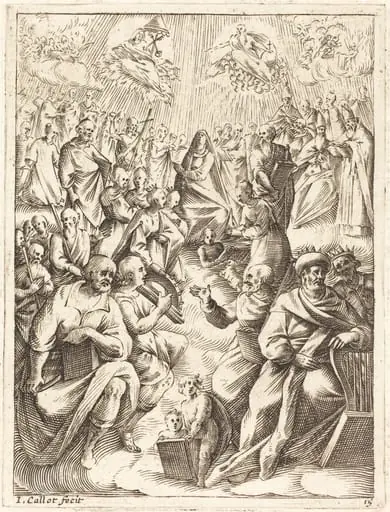
Created in 1548, *The Descent of the Holy Spirit* is an etching by German artist Augustin Hirschvogel. Executed in black‑and‑white, the print portrays a gathered group within an interior space, centered on three figures whose hands are joined as they look upward toward a descending dove. The composition is framed by a luminous, star‑filled sky and surrounded by figures bearing halos of fire.
Subject & Meaning
The central trio, linked by hand, symbolize unity and reception of divine inspiration, while the dove represents the Spirit itself.
The image illustrates the biblical moment of the Holy Spirit’s descent, a key episode in Christian theology. The central trio, linked by hand, symbolize unity and reception of divine inspiration, while the dove represents the Spirit itself. Surrounding participants, some holding books or objects, suggest contemplation and the transmission of sacred knowledge, reinforced by the fiery halos that denote spiritual illumination.
Technique & Style
Hirschvogel employed the etching process, incising fine lines into a metal plate to achieve a range of tonal contrasts. Sharp, precise lines define shadows and convey movement, giving the scene a heightened dramatic effect. The stark monochrome palette, typical of mid‑16th‑century printmaking, emphasizes the interplay of light and darkness, while the detailed rendering of architectural space reflects the artist’s cartographic precision.
History & Provenance
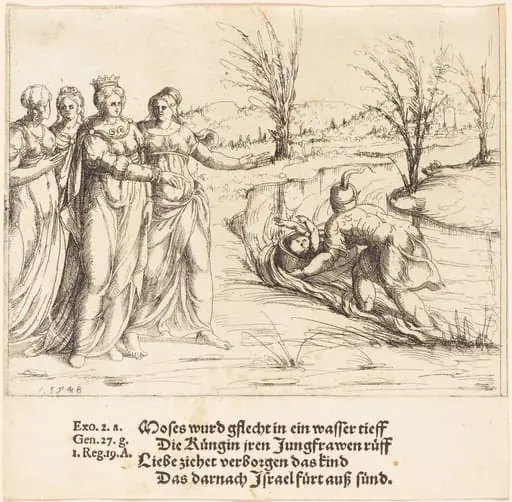
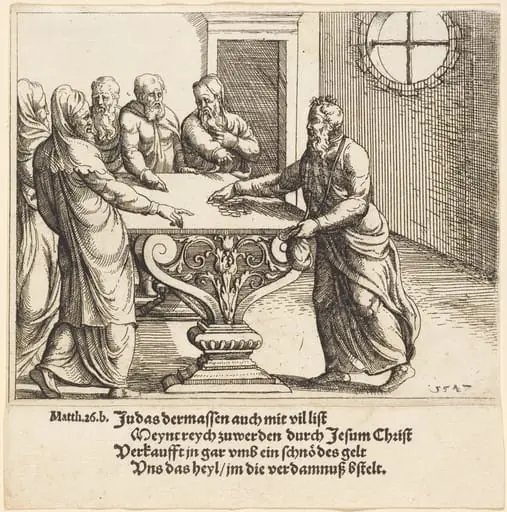
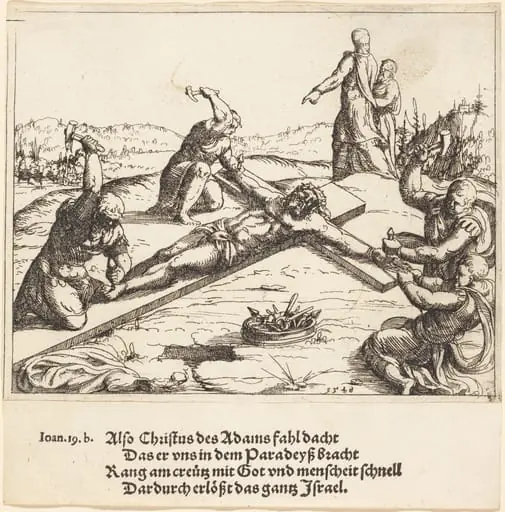
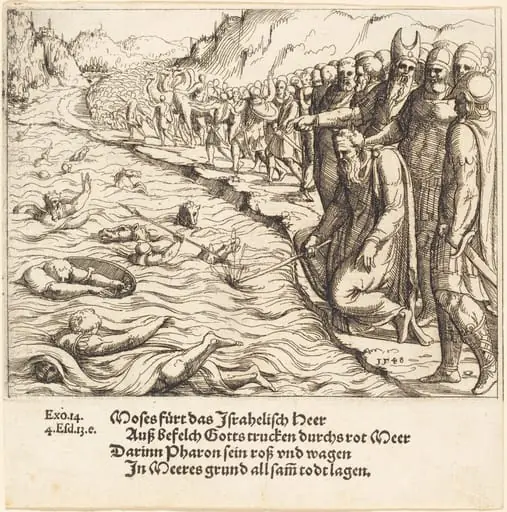
The print belongs to a series of thirty‑five small landscape etchings Hirschvogel produced between 1545 and 1549, a period during which he was active in the artistic circles of Bavaria and Austria. Although primarily known for his landscapes, this religious work demonstrates his versatility. The original plate and early impressions remain in European collections, tracing a provenance linked to the Danube School’s network of patrons.
Context
Hirschvogel’s career intersected art, mathematics, and cartography, situating him within the Danube School—a movement noted for its detailed naturalism and integration of scientific observation. The 1540s saw a flourishing of print culture in the Holy Roman Empire, allowing works like this to circulate beyond a single workshop. The print thus reflects both the devotional concerns of the Reformation era and the technical innovations of contemporary German printmakers.
Artist & collection
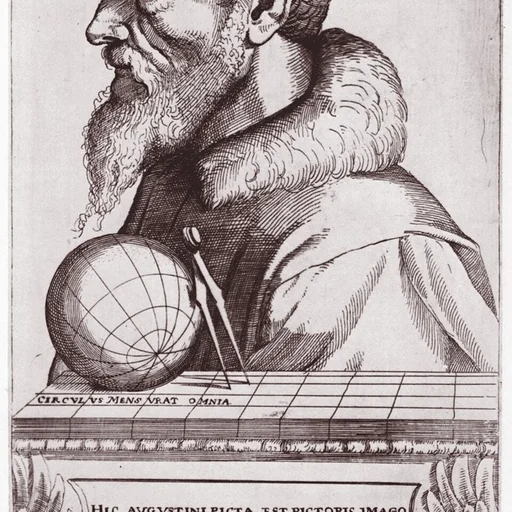
Artist
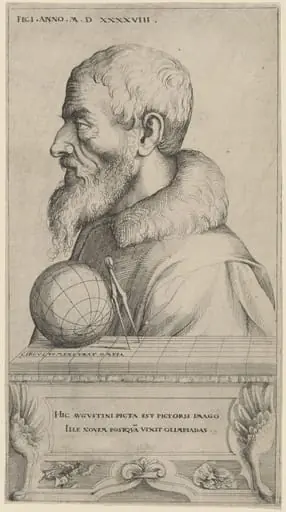
Augustin Hirschvogel (1503 – February 1553) was a German artist, mathematician, and cartographer known primarily for his etchings.