Artwork
Christ Heals a Blind and Dumb Demoniac
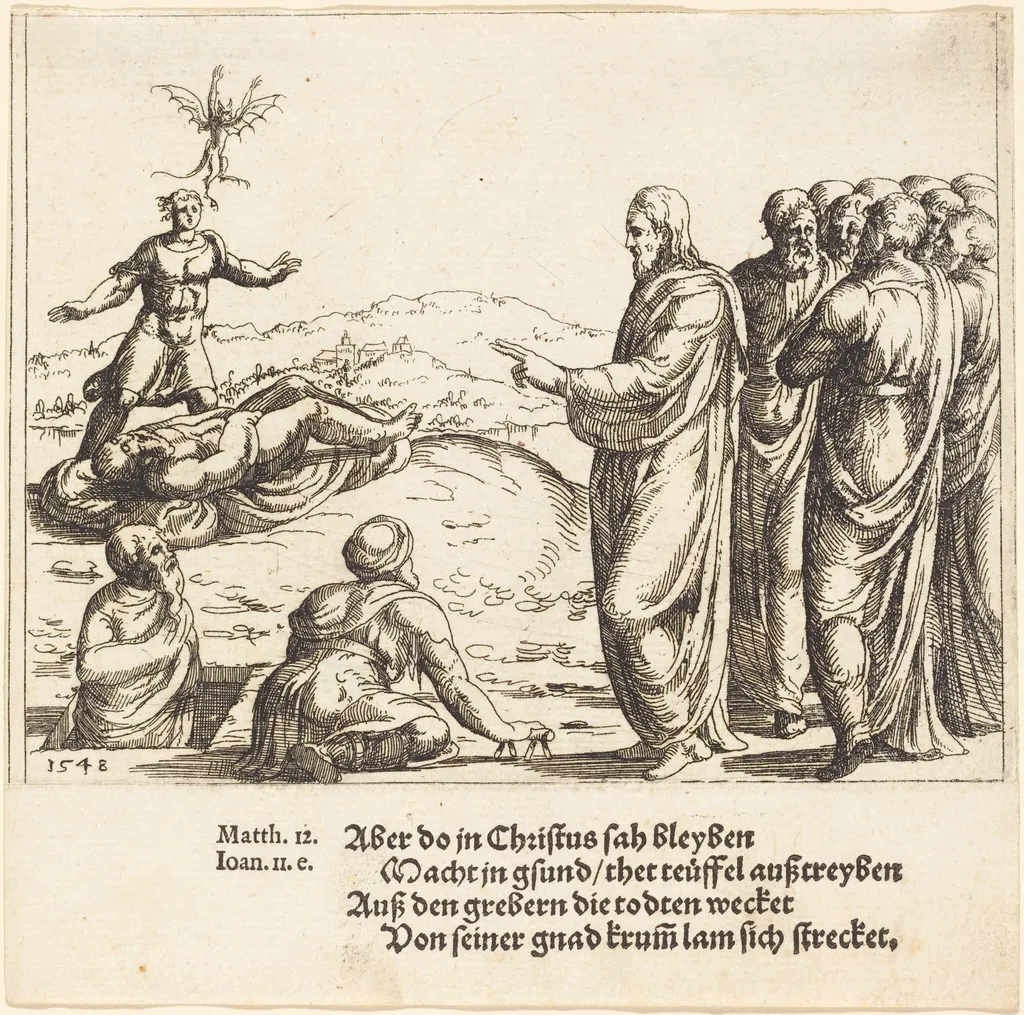
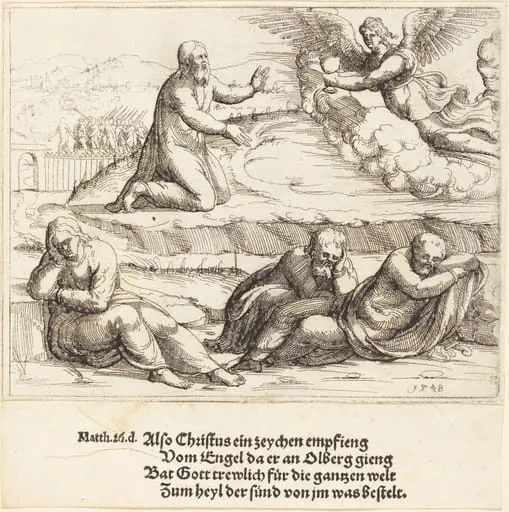
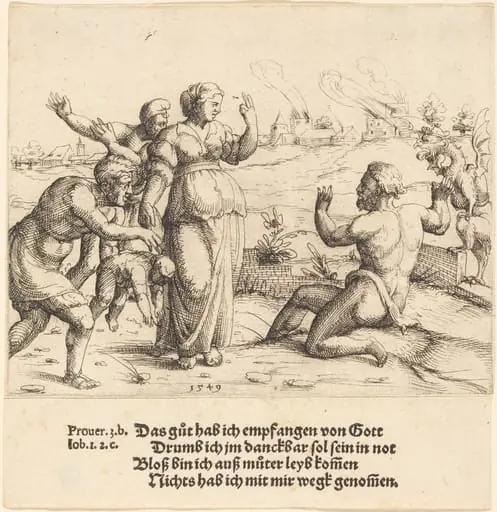
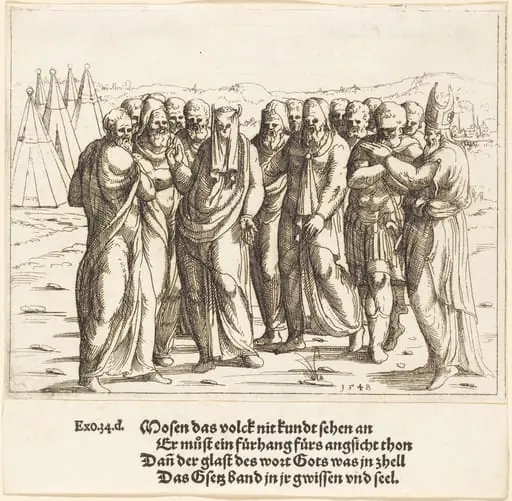
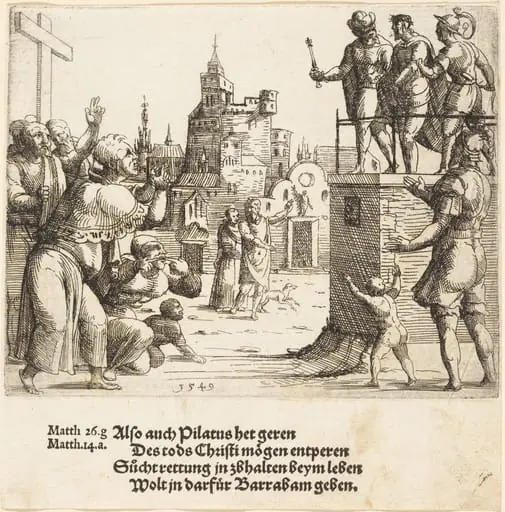
Christ Heals a Blind and Dumb Demoniac is an ink print by the Renaissance artist Augustin Hirschvogel. It dates from 1548 and is held in the collection of the National Gallery of Art.
About this work
Overview
Created in 1548 by the German artist Augustin Hirschvogel, this etching depicts a biblical miracle from the Gospels.
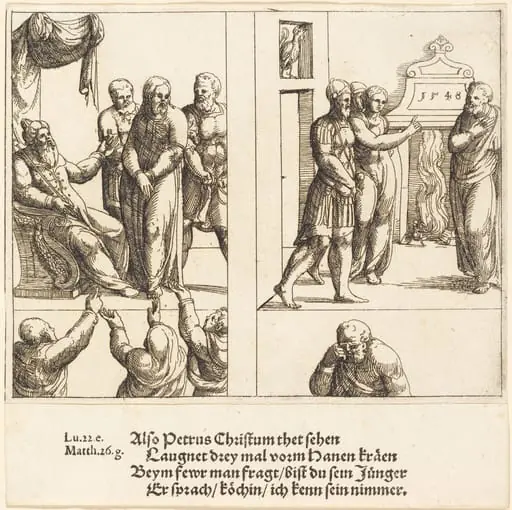
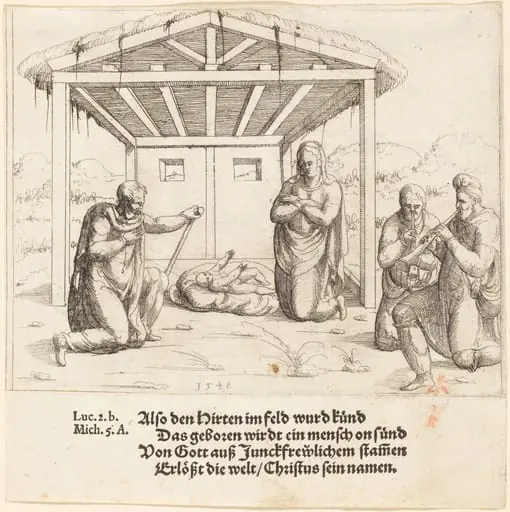
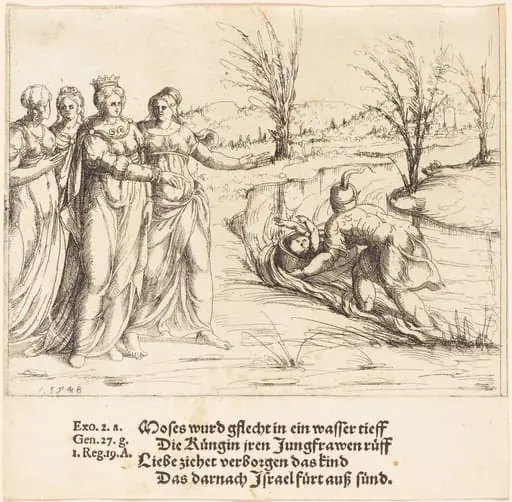
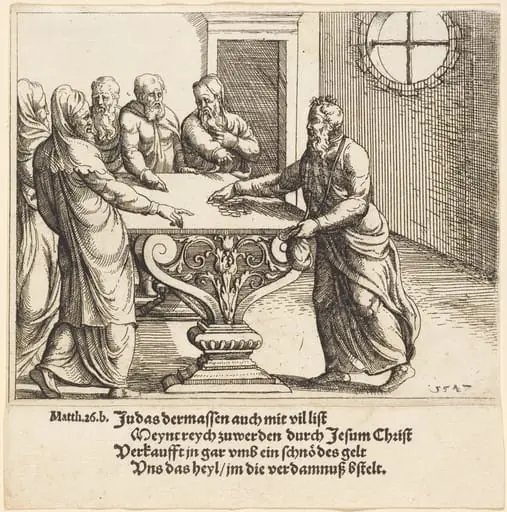
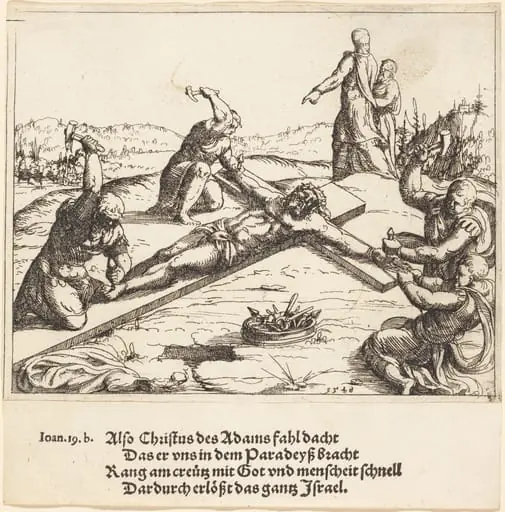
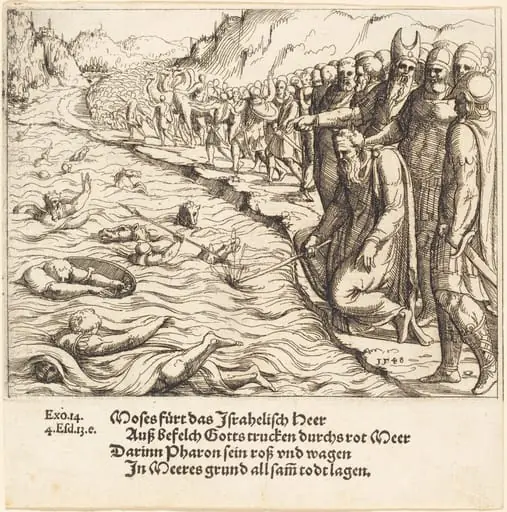
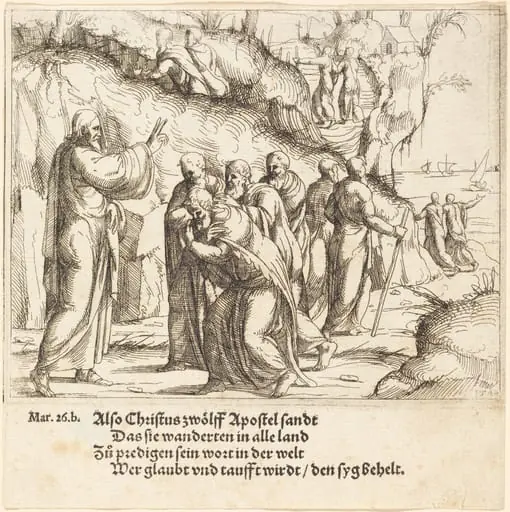
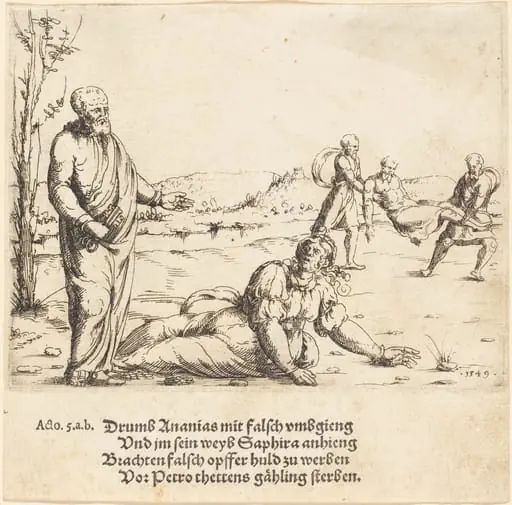
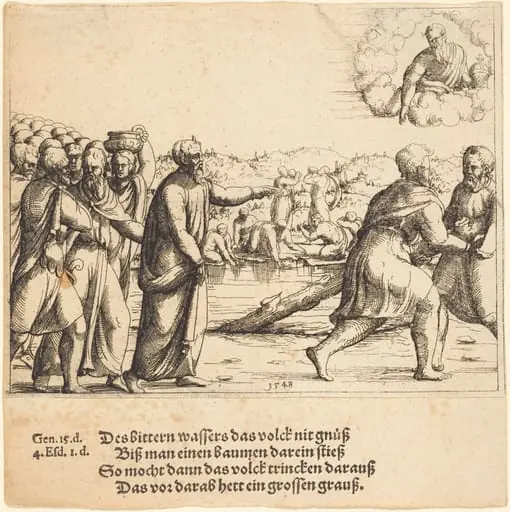
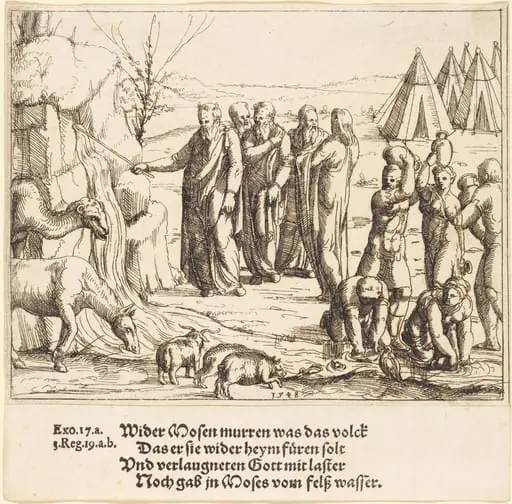
Created in 1548 by the German artist Augustin Hirschvogel, this etching depicts a biblical miracle from the Gospels. Hirschvogel, known for his precision in printmaking and cartographic work, produced this religious scene during a period when he focused intensely on small-scale etchings. The work belongs to a series of thirty-five landscape-influenced prints made between 1545 and 1549, reflecting his engagement with both spiritual themes and natural detail.
Subject & Meaning
The scene illustrates Christ restoring sight and speech to a man afflicted by demonic possession, as described in Matthew 12:22. Figures surround the healed man, who kneels in submission, while others gesture in awe or inquiry. A leafy branch held by one figure may symbolize life or divine intervention. The distant hilltop town anchors the miracle in a recognizable world, reinforcing the narrative’s earthly significance and the immediacy of Christ’s power.
Technique & Style
Hirschvogel employed fine, controlled lines typical of Renaissance etching to render texture, depth, and emotional gravity. Delicate cross-hatching defines folds of clothing and shadowed faces, while the background town is suggested with minimal, economical strokes. The monochrome palette enhances the solemnity of the moment. His technique balances detail with restraint, characteristic of Northern European printmakers of the period who valued clarity over ornamentation.
History & Provenance
The etching emerged from Hirschvogel’s active years in Nuremberg, a center of print culture in mid-16th-century Germany. Though no early ownership records are widely documented, the work aligns with the dissemination of religious imagery through prints during the Reformation. Its survival in museum collections suggests it was valued for its technical skill and devotional content, circulating among educated patrons interested in both faith and art.
Context
Hirschvogel worked within the Danube School, a loose network of artists blending landscape observation with religious narrative. His etchings responded to the era’s demand for portable, reproducible devotional images amid religious upheaval. Unlike large altarpieces, his small prints allowed private contemplation, making biblical stories accessible beyond church walls. The inclusion of German text beneath the image further indicates its intended audience: literate, Protestant-leaning viewers.
Legacy
Though Hirschvogel is less known today than contemporaries like Dürer, his etchings contributed to the evolution of printmaking as a medium for intimate religious storytelling. His fusion of landscape elements with biblical scenes influenced later Northern artists. This work remains a quiet example of how technical precision and restrained composition could convey spiritual gravity without theatricality, preserving a moment of sacred intervention in miniature form.
Artist & collection
Artist
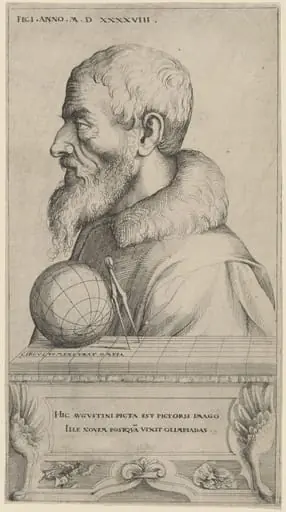
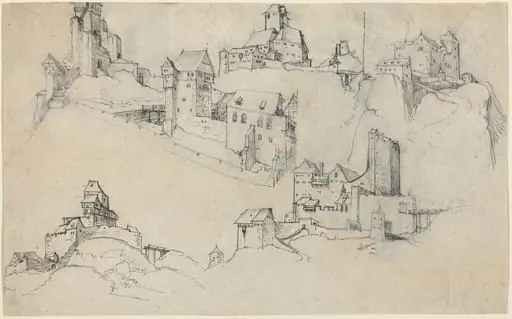
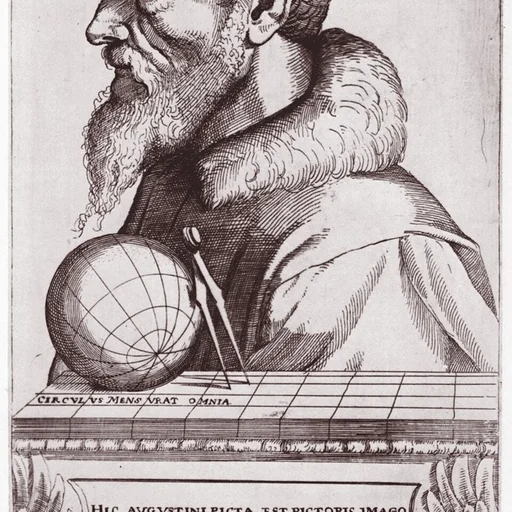
Augustin Hirschvogel (1503 – February 1553) was a German artist, mathematician, and cartographer known primarily for his etchings.