Artwork
Moses Striking the Rock
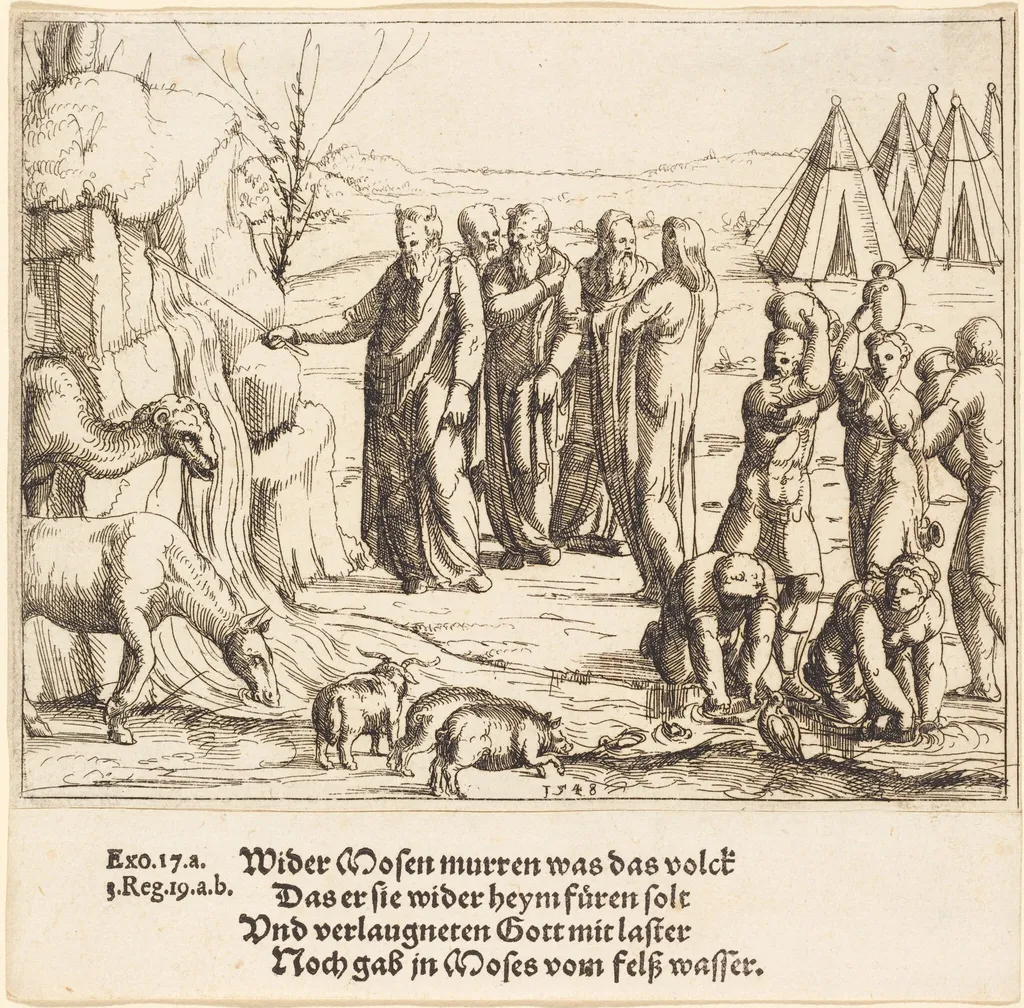
Moses Striking the Rock is an ink print by the Renaissance artist Augustin Hirschvogel. It dates from 1548 and is held in the collection of the National Gallery of Art.
About this work
Overview
The print belongs to a small group of etchings created between 1545 and 1549, notable for their detailed natural settings and narrative clarity.
Augustin Hirschvogel, a German artist active in the mid-16th century, produced this etching in 1548 as part of a brief but significant series of landscape prints. His work bridges artistic practice with scientific precision, reflecting his background in mathematics and cartography. The print belongs to a small group of etchings created between 1545 and 1549, notable for their detailed natural settings and narrative clarity.
Subject & Meaning
The scene illustrates the biblical episode from Exodus in which Moses strikes a rock to produce water for the Israelites in the desert. Figures are arranged to emphasize divine intervention: a central figure raises his staff, while others react with awe, prayer, or exhaustion. A child clinging to his leg underscores human vulnerability, reinforcing the narrative’s theme of reliance on divine provision amid hardship.
Technique & Style
Hirschvogel employed fine, controlled lines to model form and texture, using etching to achieve sharp contrasts between light and shadow. The ground is rendered with dense, irregular strokes suggesting rough terrain, while vertical elements—tents, rocks, staffs—create rhythmic structure. The composition avoids clutter through deliberate spacing, allowing each figure to contribute to the story without overwhelming the viewer.
History & Provenance
Created during Hirschvogel’s time in Bavaria and Austria, the print emerged from a regional artistic network influenced by both Northern Renaissance traditions and emerging landscape interests. Though few of his prints survive in large numbers, this work is documented in early collections and reflects the growing market for small-scale religious prints among educated patrons in the Holy Roman Empire.
Context
In mid-16th-century Central Europe, religious imagery remained central to print culture despite Reformation tensions. Hirschvogel’s choice of a biblical narrative aligned with Protestant emphasis on scriptural stories, while his landscape treatment echoed the Danube School’s interest in naturalistic settings. His integration of detailed terrain and human figures marked a shift toward secularized storytelling within sacred subjects.
Legacy
Hirschvogel’s etchings, including this one, contributed to the development of landscape as an independent visual language in printmaking. His technical discipline and compositional clarity influenced later German draftsmen, though his broader reputation faded after his death. The work remains a key example of how scientific precision and narrative artistry converged in 16th-century print culture.
Artist & collection
Artist
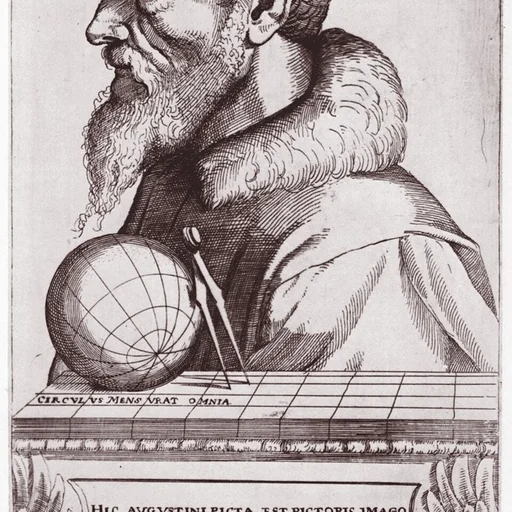
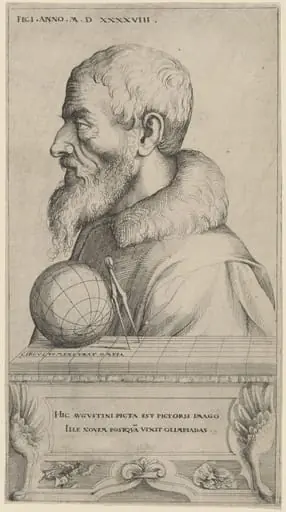
Augustin Hirschvogel (1503 – February 1553) was a German artist, mathematician, and cartographer known primarily for his etchings.

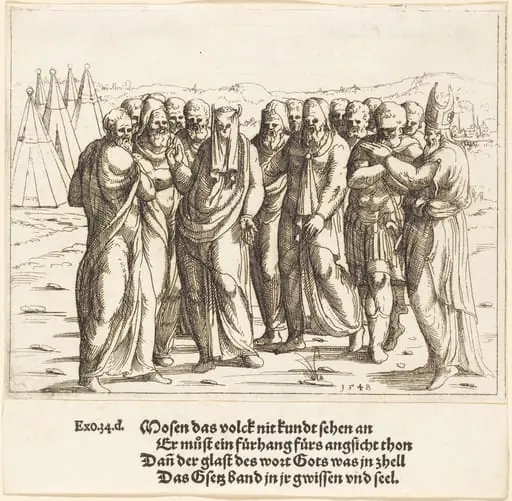 Moses Speaks to the Children of Israel
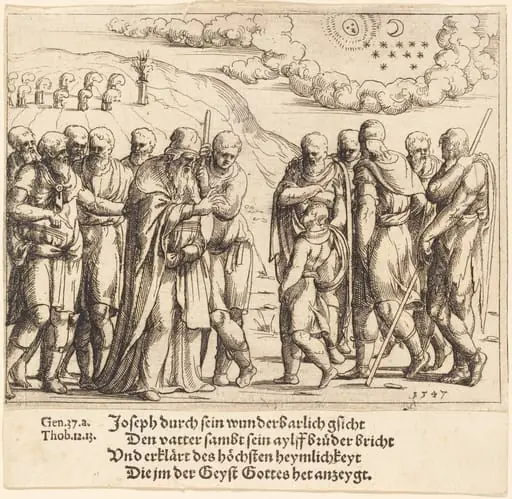 Joseph Recounts His Dreams
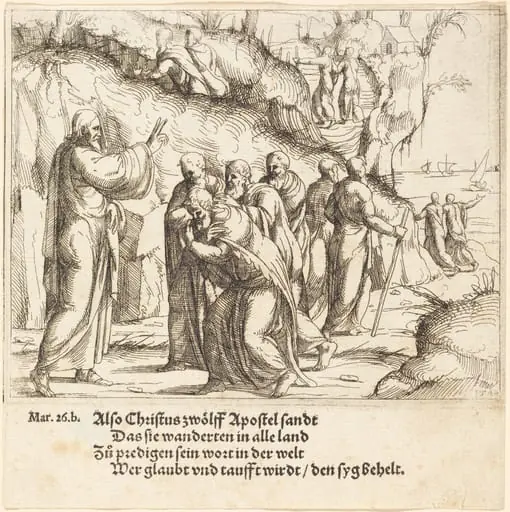 Christ Charges the Apostles of their Mission
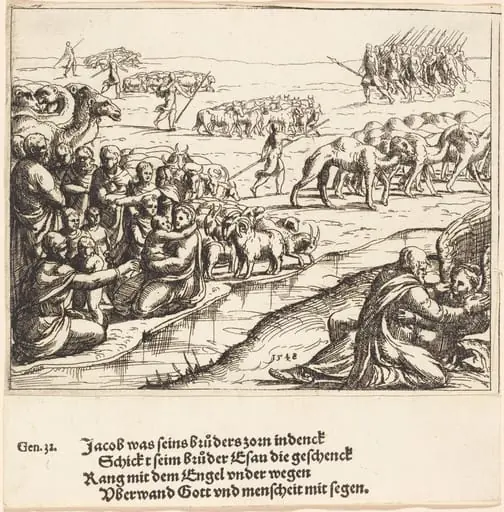 Jacob Wrestling with the Angel
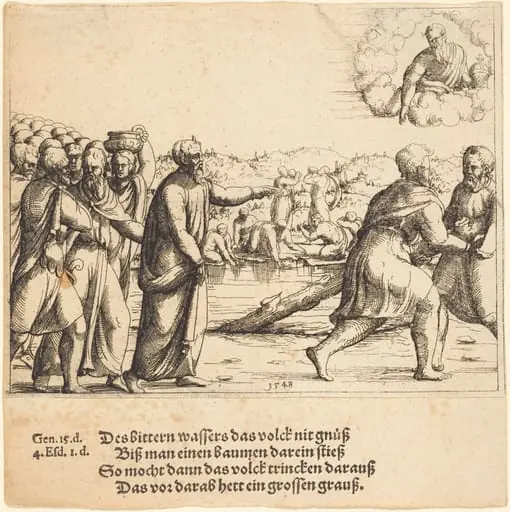 The Lord Sweetens the Waters of Marah
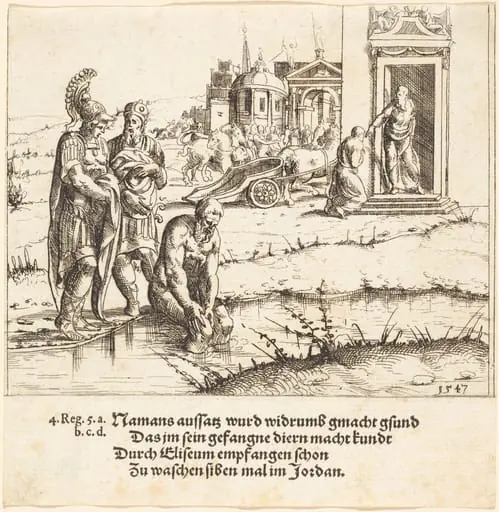 Naaman is Cured of Leprosy
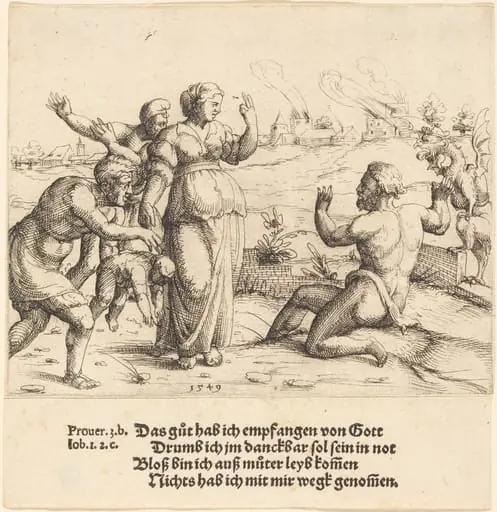 Job Learns of His Misfortunes
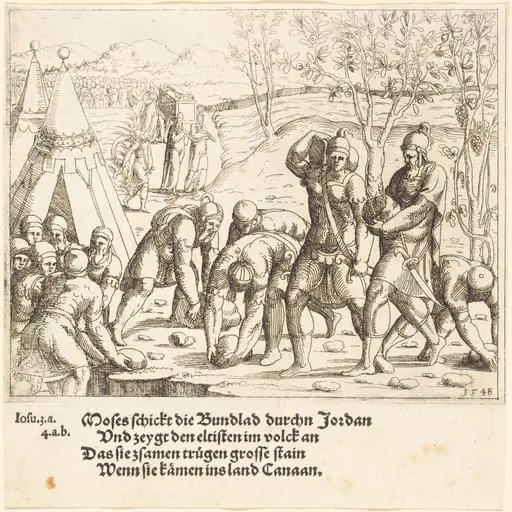 The Twelve Stones, and the Waters of the Jordan are Divided
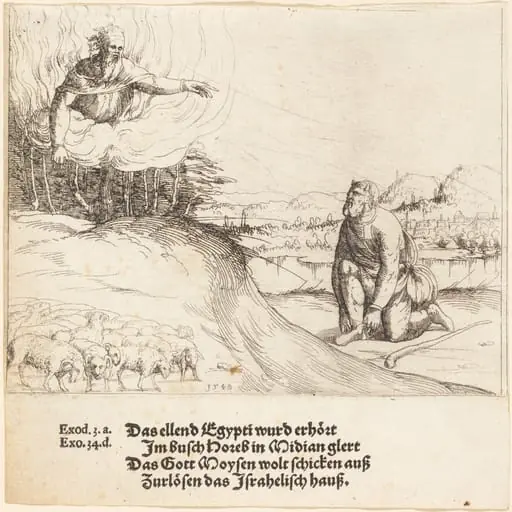 Moses and the Burning Bush
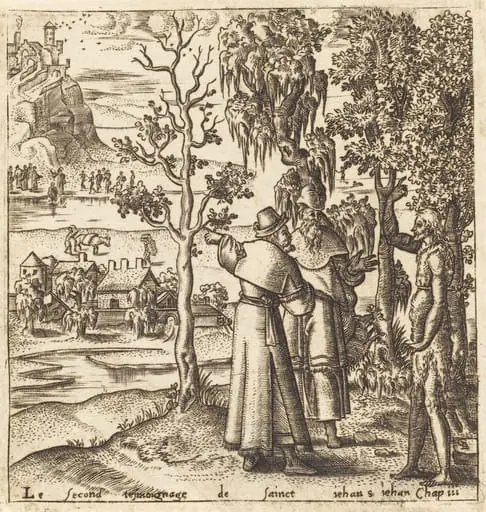 The Testimony of John