Artwork
Landscape with the Conversion of Saint Paul
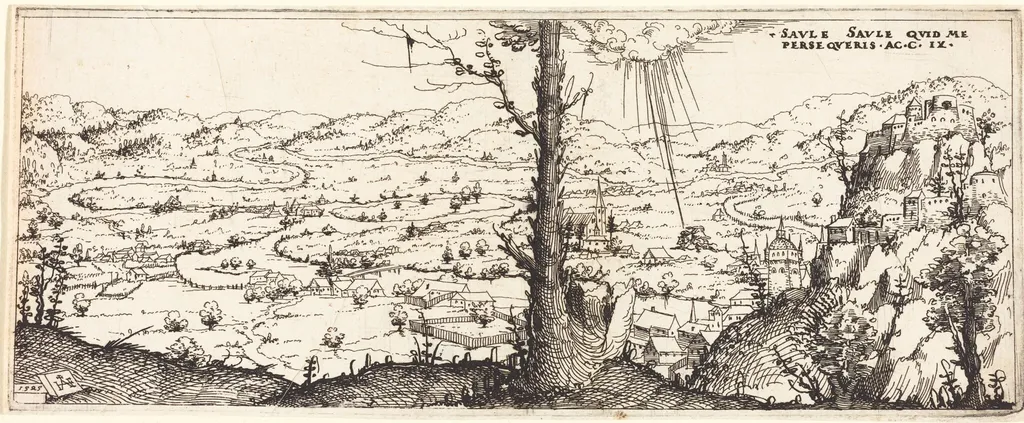
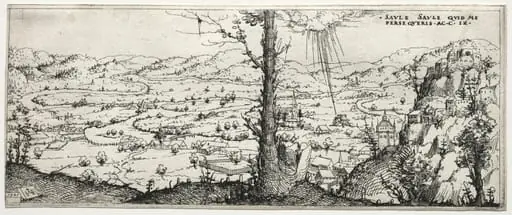
Landscape with the Conversion of Saint Paul is an ink print by the Renaissance artist Augustin Hirschvogel. It dates from 1545 and is held in the collection of the National Gallery of Art.
About this work
Overview
Landscape with the Conversion of Saint Paul is a 1545 etching by Augustin Hirschvogel, part of a series of 35 small landscape etchings created between 1545 and 1549 that solidified his position within the Danube School.
Subject & Meaning
A central tree and winding road divide the composition, with a hill featuring a small building and tower on the right.
The etching depicts the biblical scene of Saint Paul's conversion within a serene landscape. A central tree and winding road divide the composition, with a hill featuring a small building and tower on the right. Swirling lines in the sky suggest dynamic movement, possibly symbolizing the divine event. Tiny figures populate the paths and buildings, underscoring human presence amidst the dramatic conversion. A Latin inscription at the top contextualizes the scene, a common practice in period prints to embed narrative depth.
Technique & Style
Executed as an etching, the work showcases Hirschvogel's mastery of the medium. The use of swirling lines to convey energy in the sky, alongside the detailed rendering of architectural elements and the natural landscape, demonstrates the Danube School's characteristic blend of precision and expressive flair.
History & Provenance
Created in 1545, this etching is one of Hirschvogel's earliest in the series, contributing significantly to his reputation among the Danube School artists active in Bavaria and Austria during the 16th century. Provenance details are not specified in available sources.
Context
The work reflects the Danube School's emphasis on landscape as a central theme, often infused with religious narratives. Hirschvogel's background in mathematics and cartography likely influenced the etching's compositional balance and detail.
Legacy
Landscape with the Conversion of Saint Paul, as part of Hirschvogel's series, played a role in establishing the Danube School's distinct approach to landscape etchings in the 16th century, though its specific impact on later artistic movements is not prominently documented.
Artist & collection
Artist
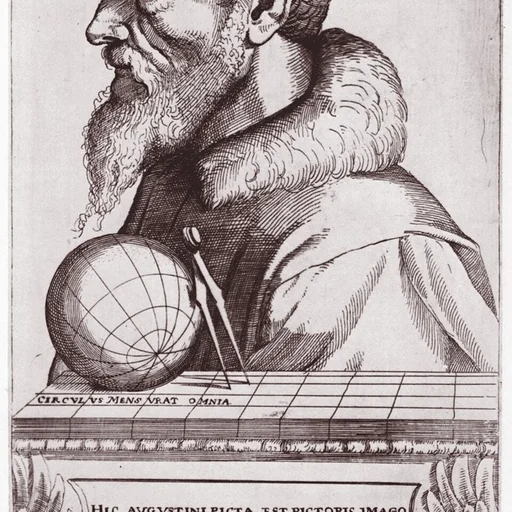
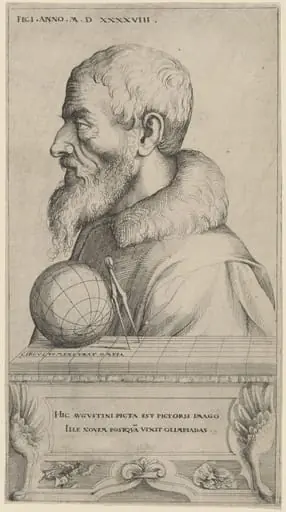
Augustin Hirschvogel (1503 – February 1553) was a German artist, mathematician, and cartographer known primarily for his etchings.

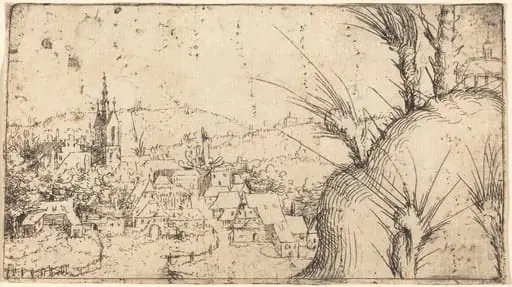 Landscape with a Town at Left
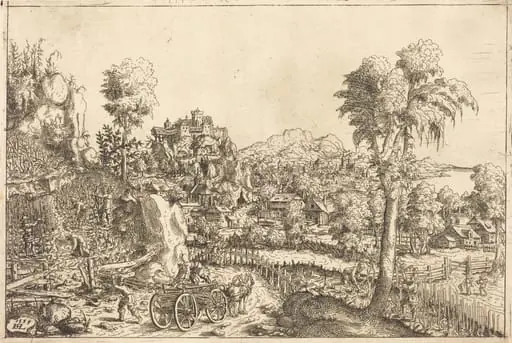 Landscape with a Vineyard
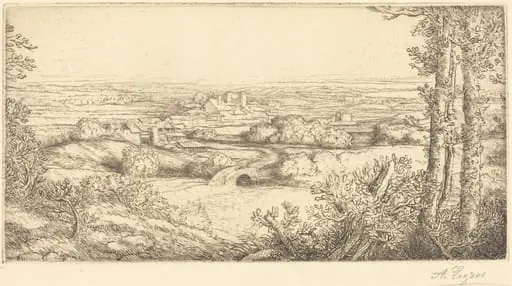 Valley in Bourgogne (Une vallee en Bourgogne)
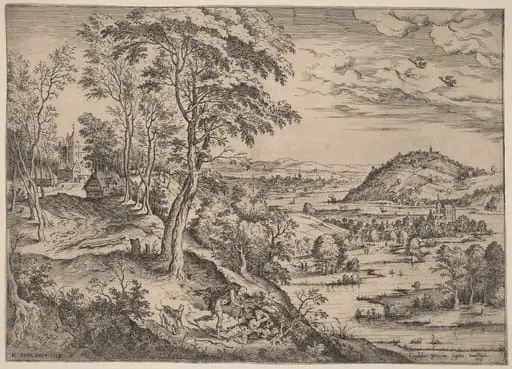 Cephalus and Procris
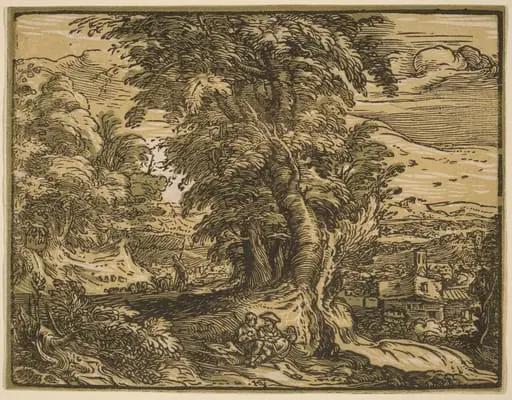 Landscape with a Shepherd Couple
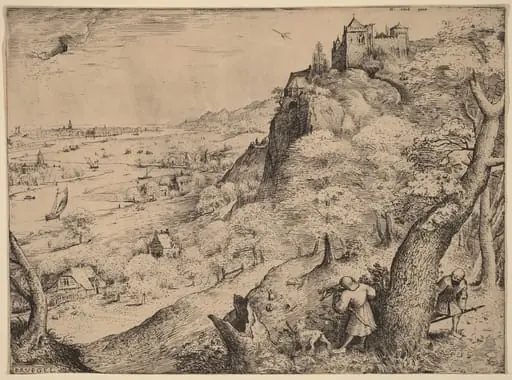 The Rabbit Hunters
 Plaustrum Belgicum (The Belgian Wagon)
 Landscape with High Cliffs, River, and City
 Landscape with Two Pines
 River Landscape with Rocks at Left and Right
 The Great Landscape with the Water Mill
 Landscape with the conversion of saulus