Artwork
Landscape with the conversion of saulus
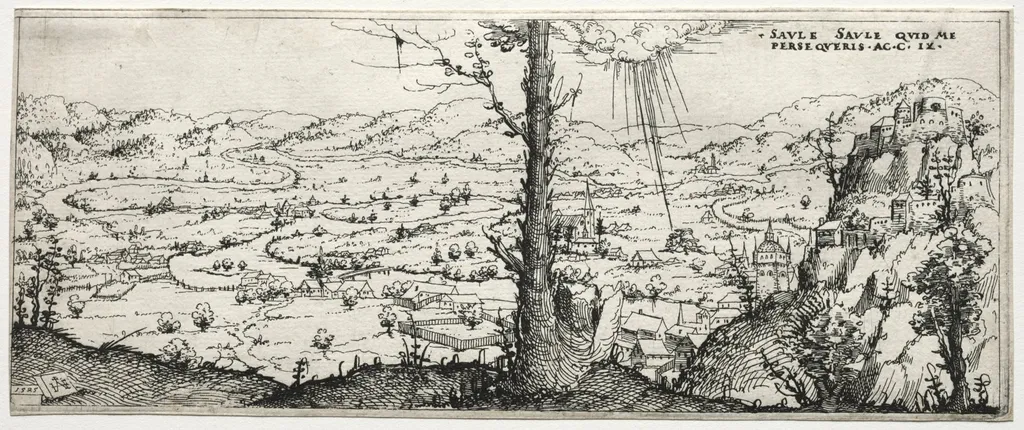
Landscape with the conversion of saulus is a print by the Renaissance artist Augustin Hirschvogel. It dates from 1545 and is held in the collection of the Cleveland Museum of Art.
About this work
Overview
Created in 1545 by the German artist Augustin Hirschvogel, this etching is one of thirty-five small landscape prints he produced during the mid-16th century.
Created in 1545 by the German artist Augustin Hirschvogel, this etching is one of thirty-five small landscape prints he produced during the mid-16th century. Though primarily known for cartography, Hirschvogel integrated biblical narratives into natural settings, aligning with the aesthetic interests of the Danube School. The work reflects a trend among Northern Renaissance artists to merge sacred stories with detailed, immersive environments.
Subject & Meaning
The print illustrates the moment from Acts 9 when Saul, later Paul, is struck down by divine light on the road to Damascus. A figure collapses beneath a tree as a radiant beam illuminates him, while the Latin inscription quotes Christ’s question: 'Saul, Saul, why do you persecute me?' The surrounding landscape—teeming with travelers, buildings, and winding paths—frames the event as both personal revelation and part of a larger, inhabited world.
Technique & Style
Hirschvogel employed fine-line etching to render intricate details across a compact composition. The scene is densely packed with miniature structures, roads, and figures, all rendered in precise, controlled strokes. A central lone tree anchors the visual field, contrasting with the chaotic activity around it. The use of light to highlight Saul’s moment of revelation demonstrates an early mastery of chiaroscuro within printmaking.
History & Provenance
The print emerged from Hirschvogel’s series of landscape etchings, circulated among collectors and scholars in southern Germany and Austria. While no early ownership records are widely documented, its inclusion in major museum collections today suggests it was valued early for its technical precision and narrative synthesis. The work reflects the growing market for small-scale, portable religious imagery in the decades following the Reformation.
Context
In mid-16th-century Bavaria, artists increasingly turned to landscape as more than backdrop—infusing it with spiritual and moral resonance. Hirschvogel’s work aligns with the Danube School’s emphasis on atmospheric depth and natural detail, even as religious themes persisted despite Protestant reforms. His integration of scripture into everyday terrain responded to a public appetite for devotional imagery that felt immediate and grounded.
Legacy
Hirschvogel’s etching contributed to the evolution of landscape as a vehicle for narrative in Northern European printmaking. Though not widely replicated, his approach influenced later artists who sought to embed biblical events within complex, observed environments. His fusion of cartographic precision with spiritual storytelling helped shape how faith was visually mediated in the age of print.
Artist & collection
Artist
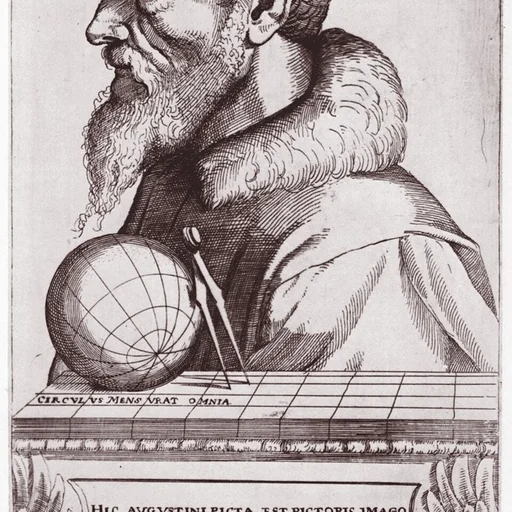
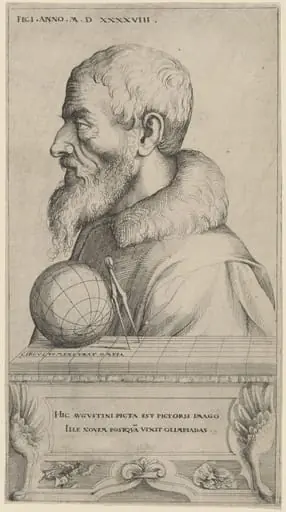
Augustin Hirschvogel (1503 – February 1553) was a German artist, mathematician, and cartographer known primarily for his etchings.

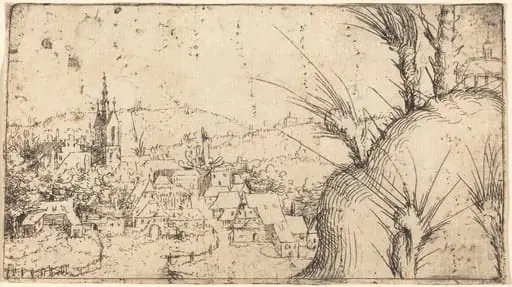 Landscape with a Town at Left
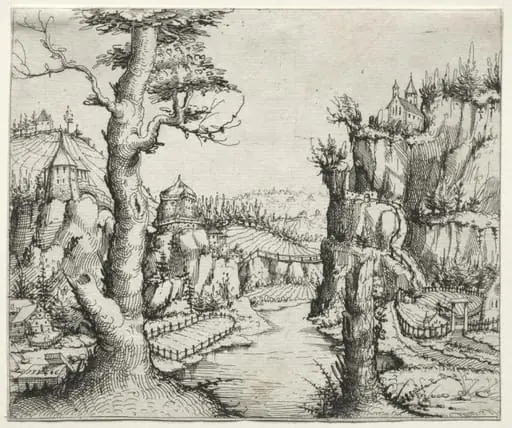 River Landscape with Rocks at Left and Right
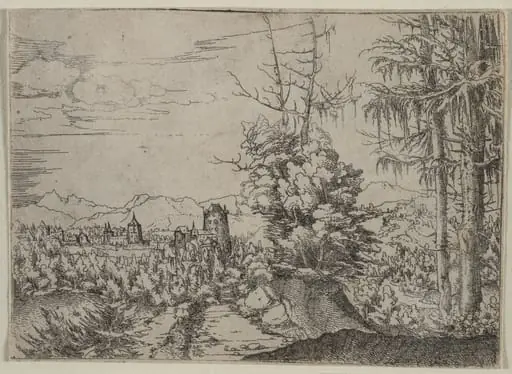 Landscape with Two Pines
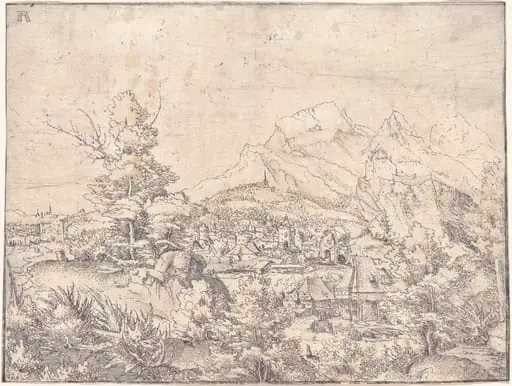 The Great Landscape with the Water Mill
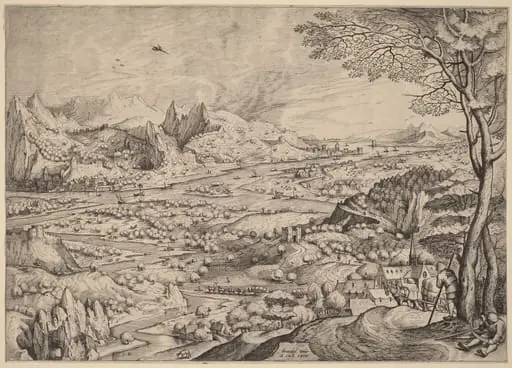 Solicitudo Rustica (Rustic Concerns)
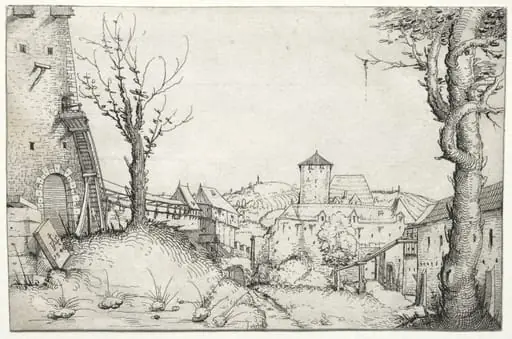 Courtyard of a castle
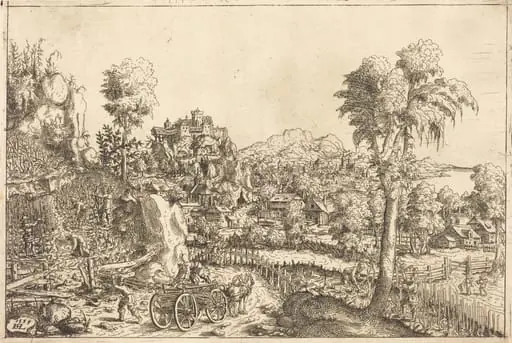 Landscape with a Vineyard
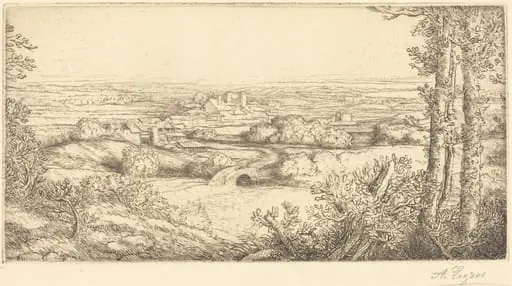 Valley in Bourgogne (Une vallee en Bourgogne)
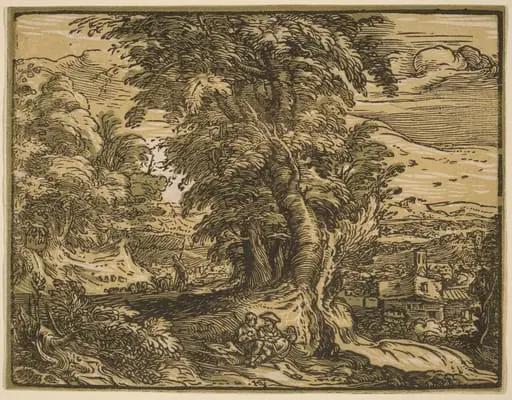 Landscape with a Shepherd Couple
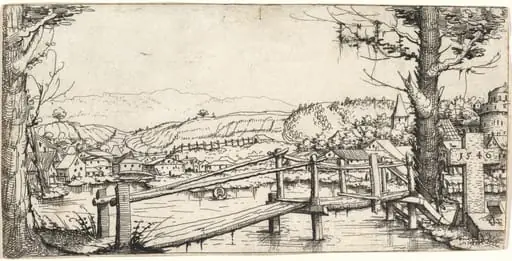 River Landscape with a Footbridge
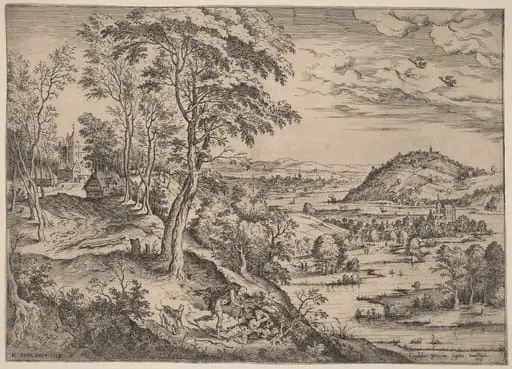 Cephalus and Procris
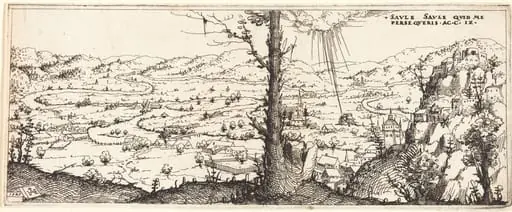 Landscape with the Conversion of Saint Paul