Artwork
The Transfiguration
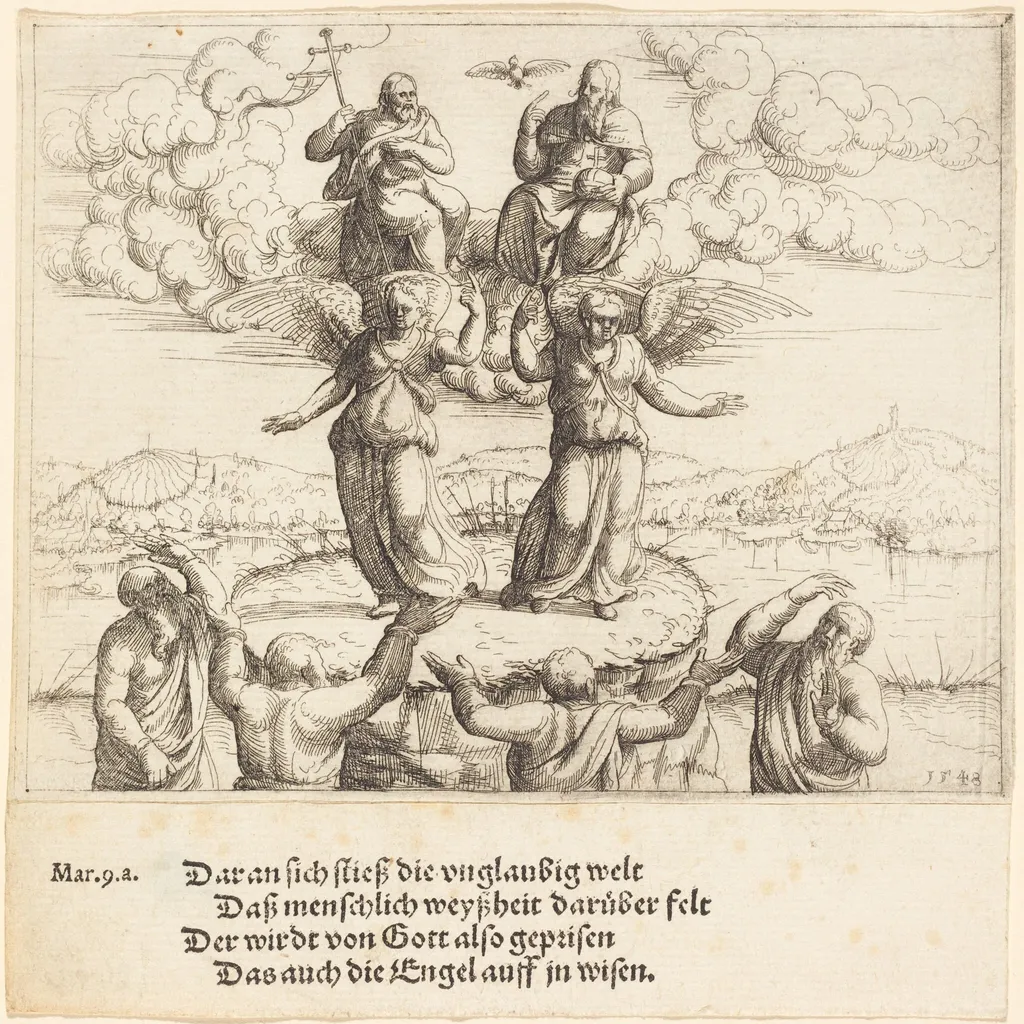
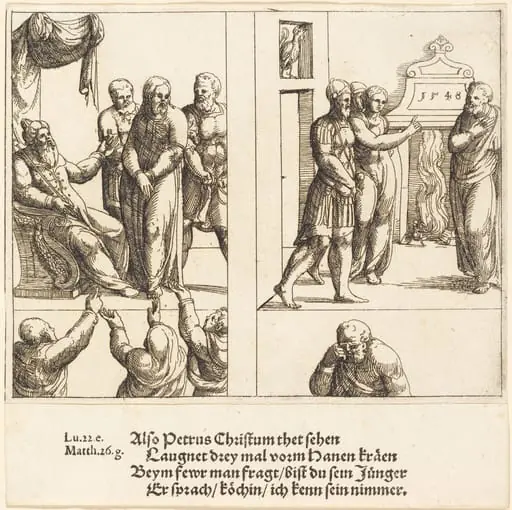
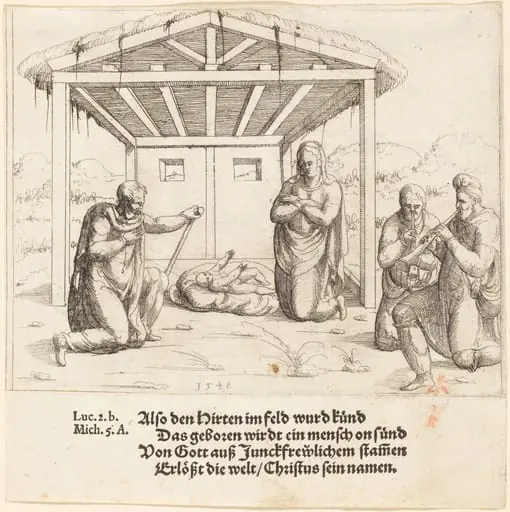
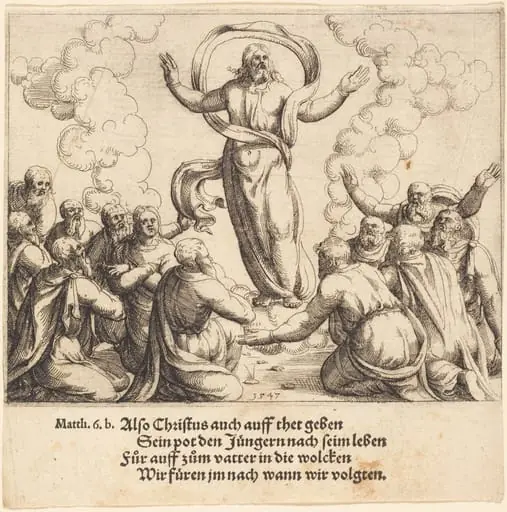
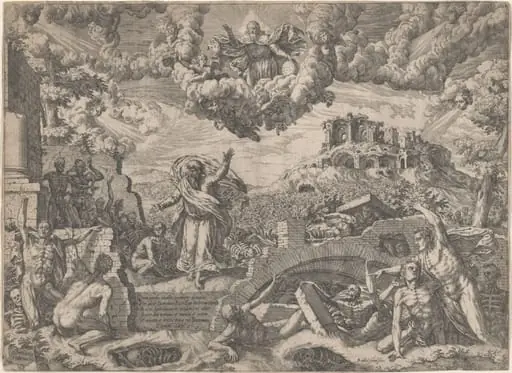
The Transfiguration is an ink print by the Renaissance artist Augustin Hirschvogel. It dates from 1548 and is held in the collection of the National Gallery of Art.
About this work
Overview
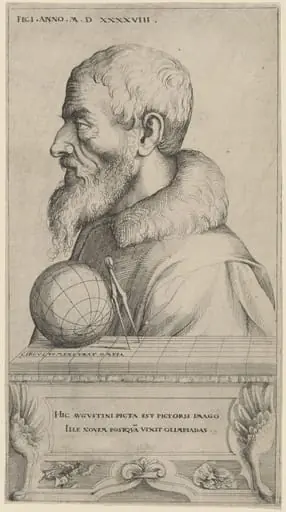
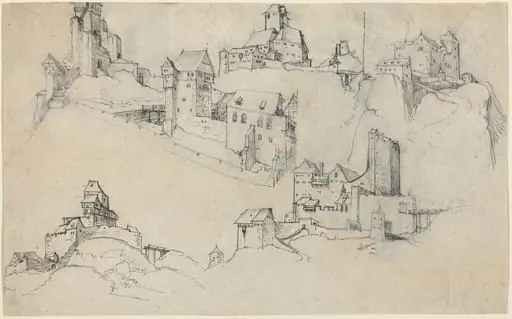
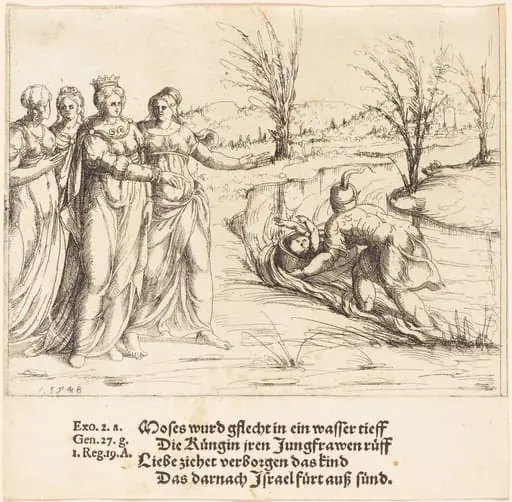
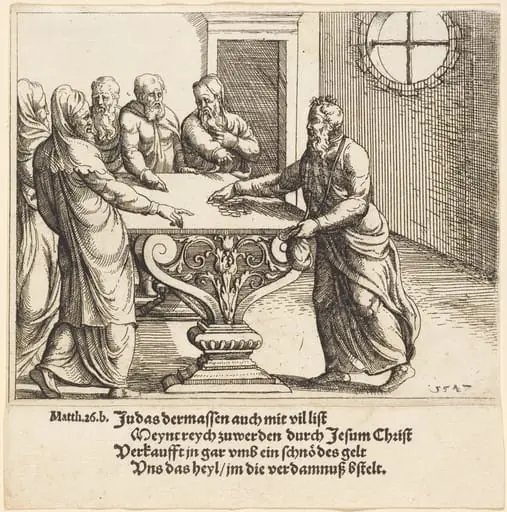
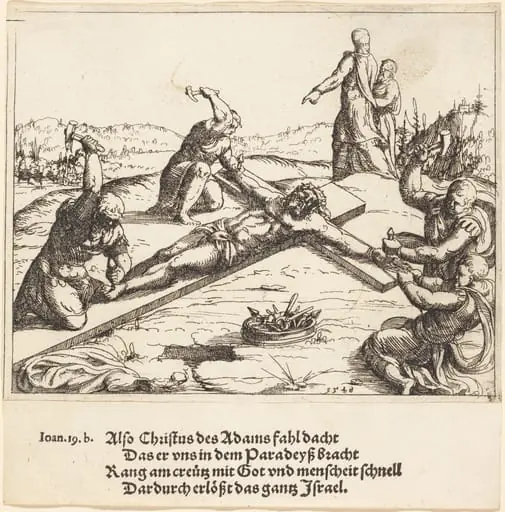
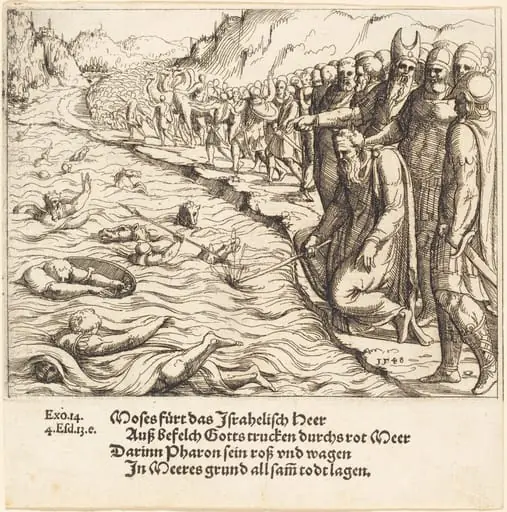
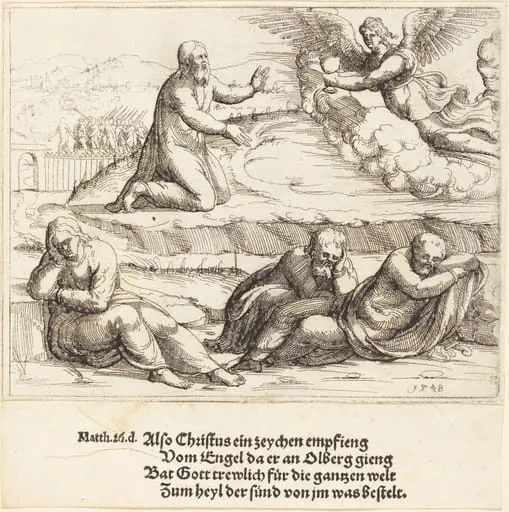
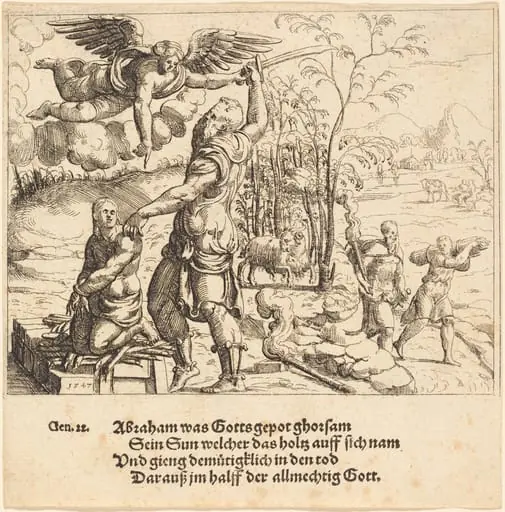
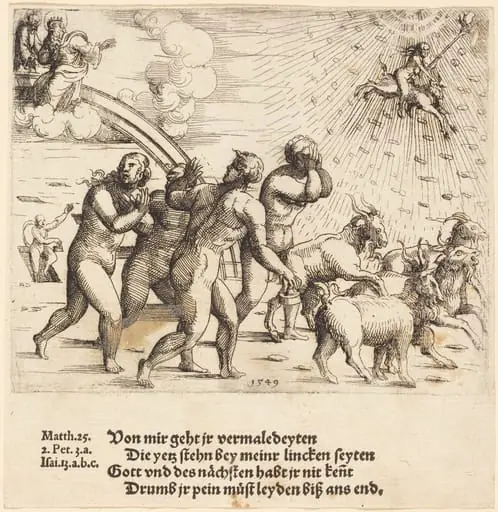
The Transfiguration is a 1548 etching by Augustin Hirschvogel, a multifaceted German artist, mathematician, and cartographer linked to the Danube School. This work falls within his notable series of landscape etchings produced between 1545 and 1549.
Subject & Meaning
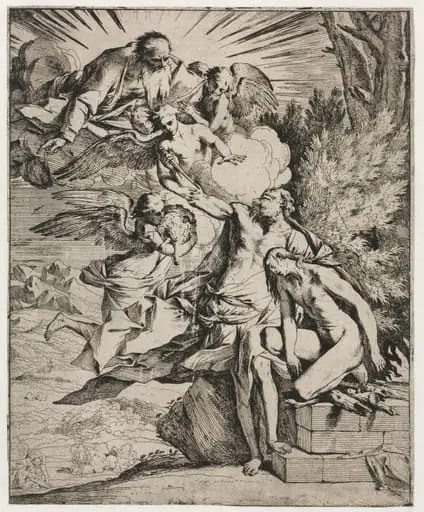
The etching portrays a religious scene, specifically the Transfiguration, featuring two dominant figures on a cloud, holding crosses and gazing downward, amidst a crowd of smaller, outstretched figures below, conveying a sense of spiritual yearning and drama.
Technique & Style
Characterized by sharp, scratchy lines, the etching embodies Hirschvogel's dynamic style, creating a sense of liveliness and movement. The composition's busyness and dramatic flair are hallmark traits of his approach.
History & Provenance
Created in 1548, the etching reflects the artistic tendencies of the Danube School active in 16th-century Bavaria and Austria, with Hirschvogel's work being part of this regional artistic movement.
Context
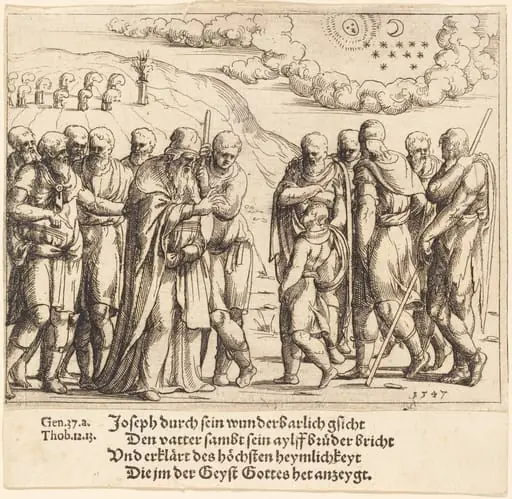
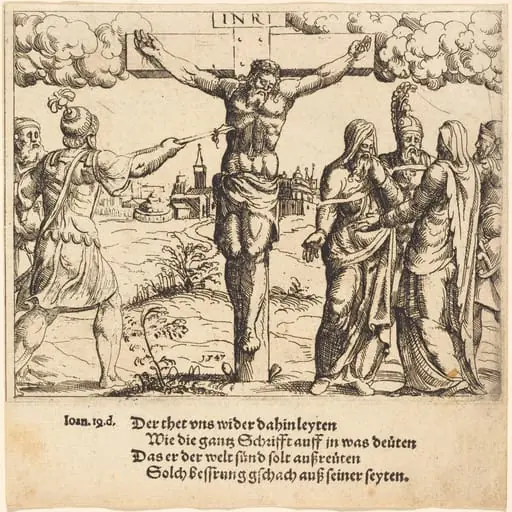
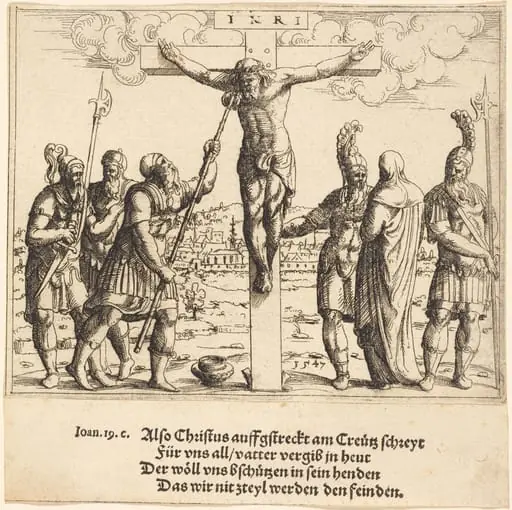
The inclusion of old German text at the bottom of the etching adds a layer of historical authenticity, underscoring its origins within a specific cultural and temporal context.
Artist & collection
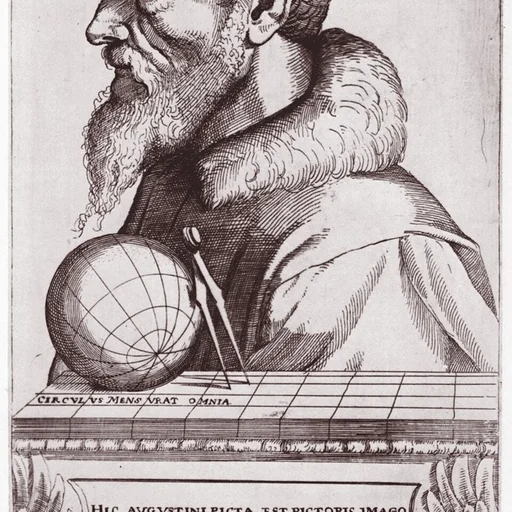
Artist
Augustin Hirschvogel (1503 – February 1553) was a German artist, mathematician, and cartographer known primarily for his etchings.