Artwork
Absalom Slain by Joab
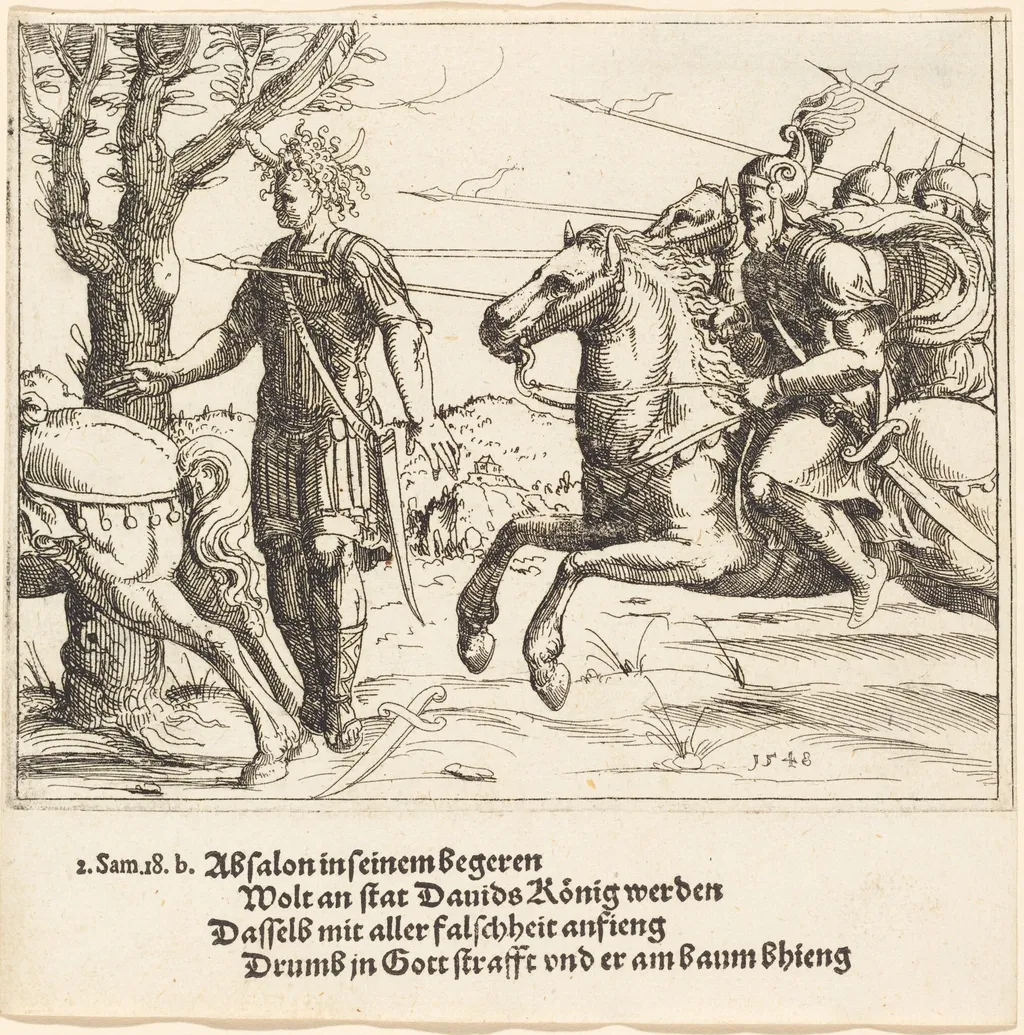
Absalom Slain by Joab is an ink print by the Renaissance artist Augustin Hirschvogel. It dates from 1548 and is held in the collection of the National Gallery of Art.
About this work
Overview
This work is one of fewer than forty etchings he created between 1545 and 1549, marking a concentrated phase of his graphic output.
Augustin Hirschvogel, a German artist active in the mid-16th century, produced this etching in 1548. Known primarily for his small-scale landscapes, he applied his technical precision to biblical narratives, blending cartographic discipline with narrative composition. This work is one of fewer than forty etchings he created between 1545 and 1549, marking a concentrated phase of his graphic output.
Subject & Meaning
The scene illustrates the biblical moment when Joab, commander of King David’s army, kills Absalom, the king’s rebellious son, despite David’s orders to spare him. Absalom, depicted with distinctive curls and holding a sword, stands isolated on the left, while Joab and his soldiers approach from the right. The tension between divine command and political violence is rendered without overt moralizing, leaving interpretation to the viewer.
Technique & Style
Hirschvogel employed fine-line etching to achieve intricate detail and subtle tonal gradations. The landscape background, with rolling hills and a solitary tree, is rendered with delicate hatching, characteristic of the Danube School’s interest in naturalistic settings. The figures are compact yet dynamically posed, their armor and clothing defined by precise, interwoven lines that convey texture without clutter.
History & Provenance
Created during Hirschvogel’s most prolific printmaking period, the etching likely circulated among collectors and scholars in southern Germany and Austria. Though no early ownership records are documented, its survival in multiple museum collections suggests it was valued for its technical refinement and biblical subject matter during the 16th and 17th centuries.
Context
Hirschvogel worked within the Danube School, a regional circle of artists who fused landscape observation with religious themes. Unlike Italian Renaissance prints, these works emphasized atmospheric depth and natural detail over idealized form. His etchings reflect a broader Northern European trend of using printmaking to explore both sacred stories and the observable world with equal rigor.
Legacy
Though Hirschvogel is less known today than contemporaries like Dürer, his etchings contributed to the development of landscape as an independent visual language in printmaking. His precise technique influenced later German engravers, and *Absalom Slain by Joab* remains a testament to the capacity of small-scale prints to convey complex narratives with quiet intensity.
Artist & collection
Artist
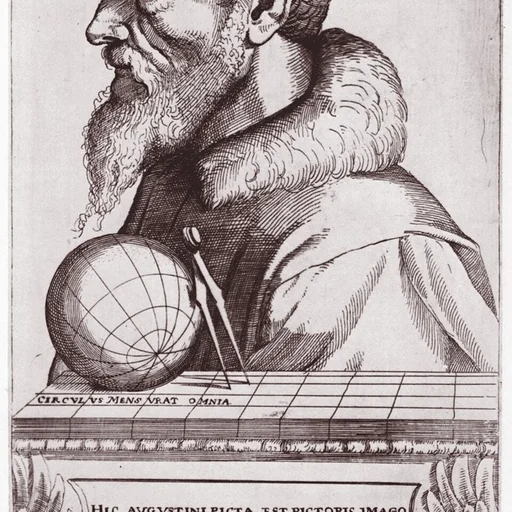
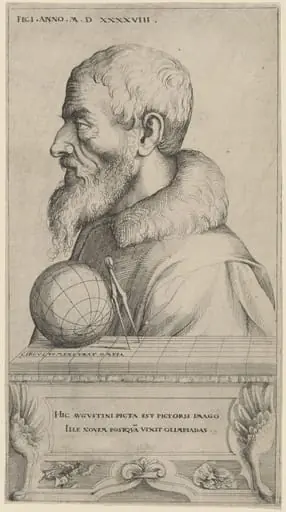
Augustin Hirschvogel (1503 – February 1553) was a German artist, mathematician, and cartographer known primarily for his etchings.

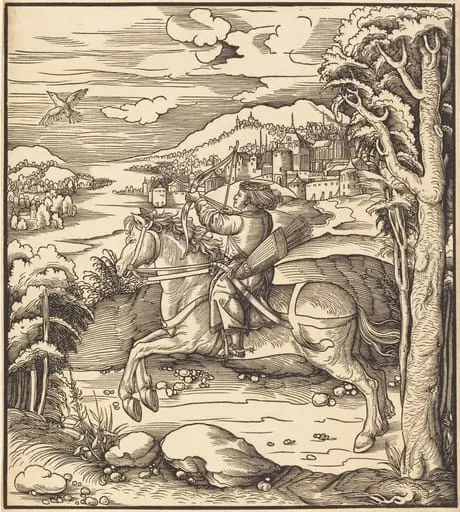 The Prince at the Bird-Catching
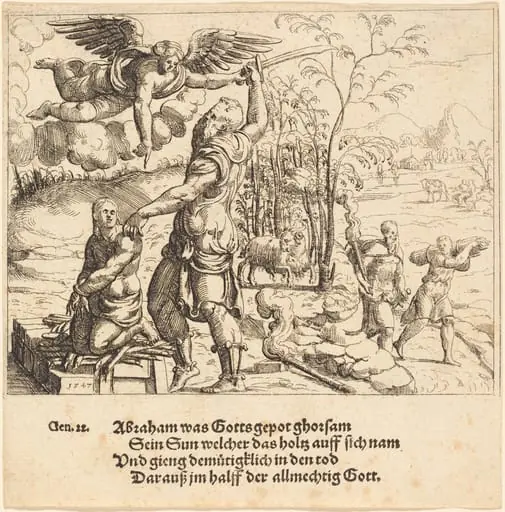 The Sacrifice of Isaac
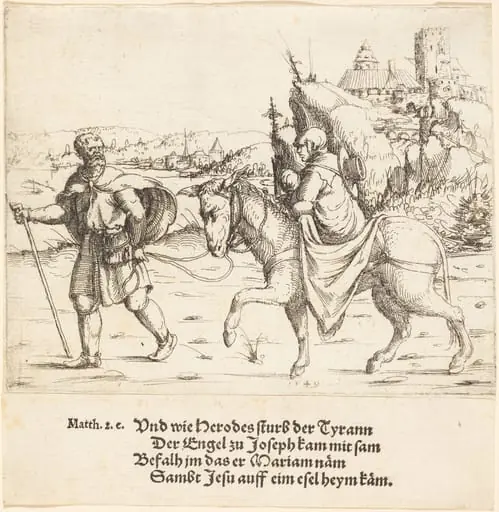 The Holy Family Returns from Egypt
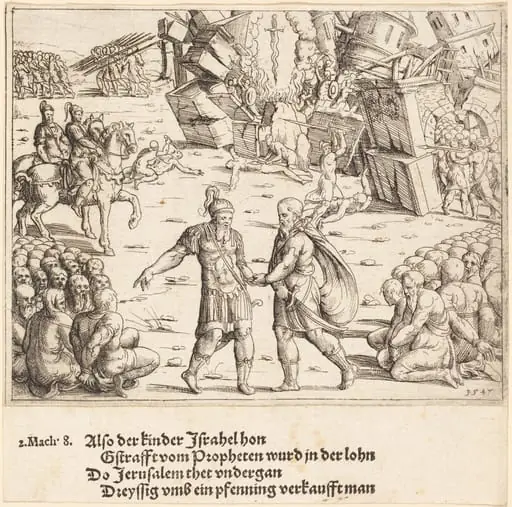 The Victory of Judas Maccabeus Over Niccanor
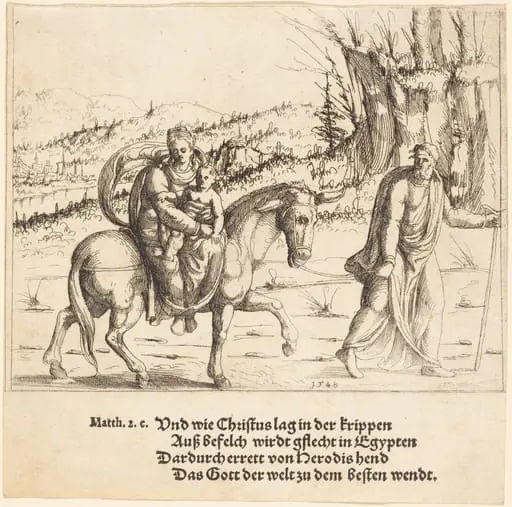 The Flight into Egypt
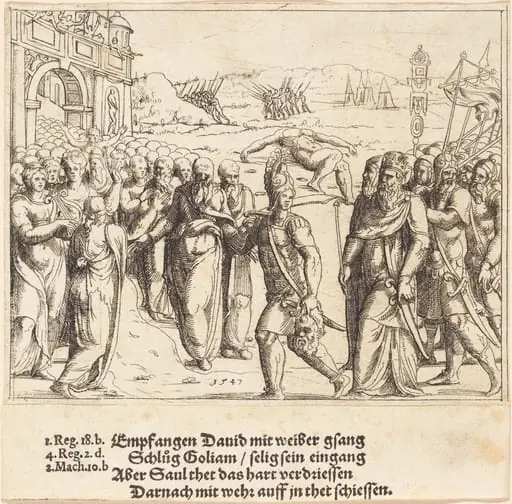 David is Welcomed after Killing Goliath, and Saul's Jealousy
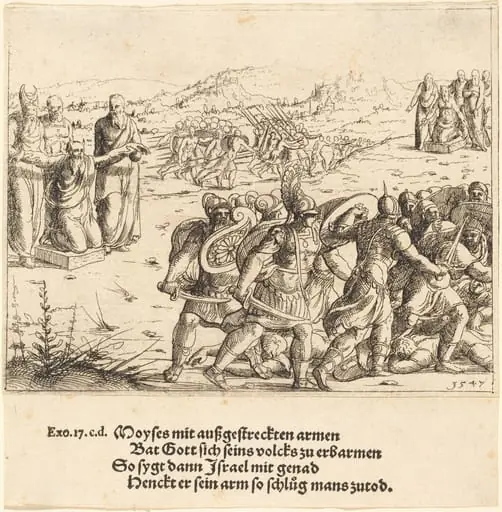 Moses with Outstretched Arms
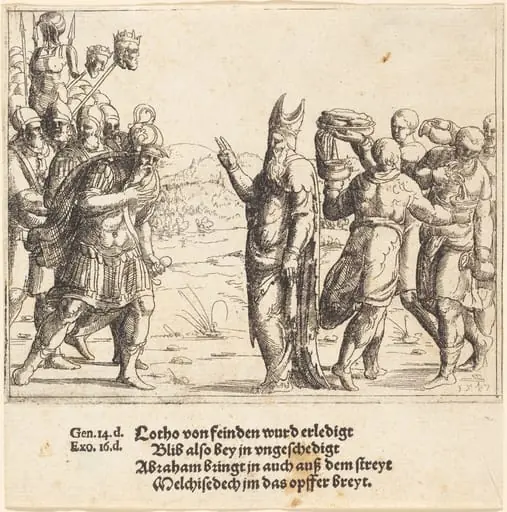 Melchizedek with Bread and Wine
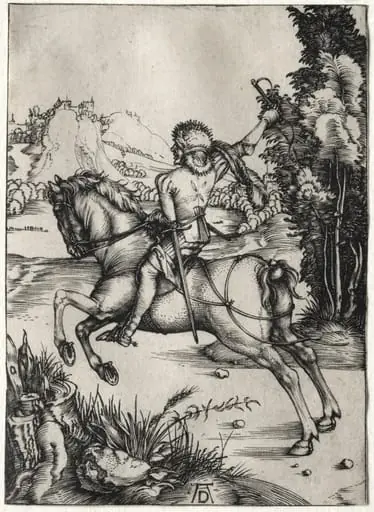 The Little Courier
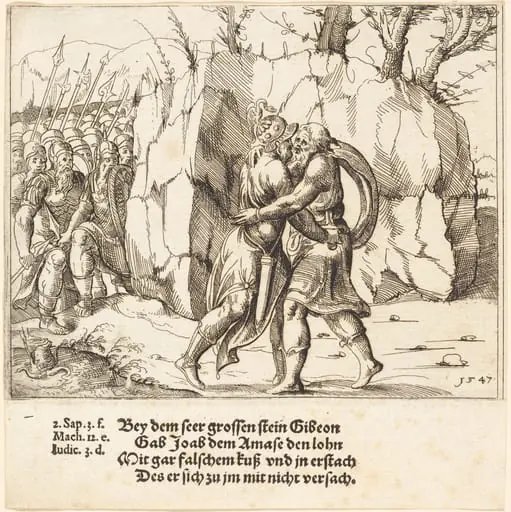 Joab Betrays Abner