Artwork
A Monstrance
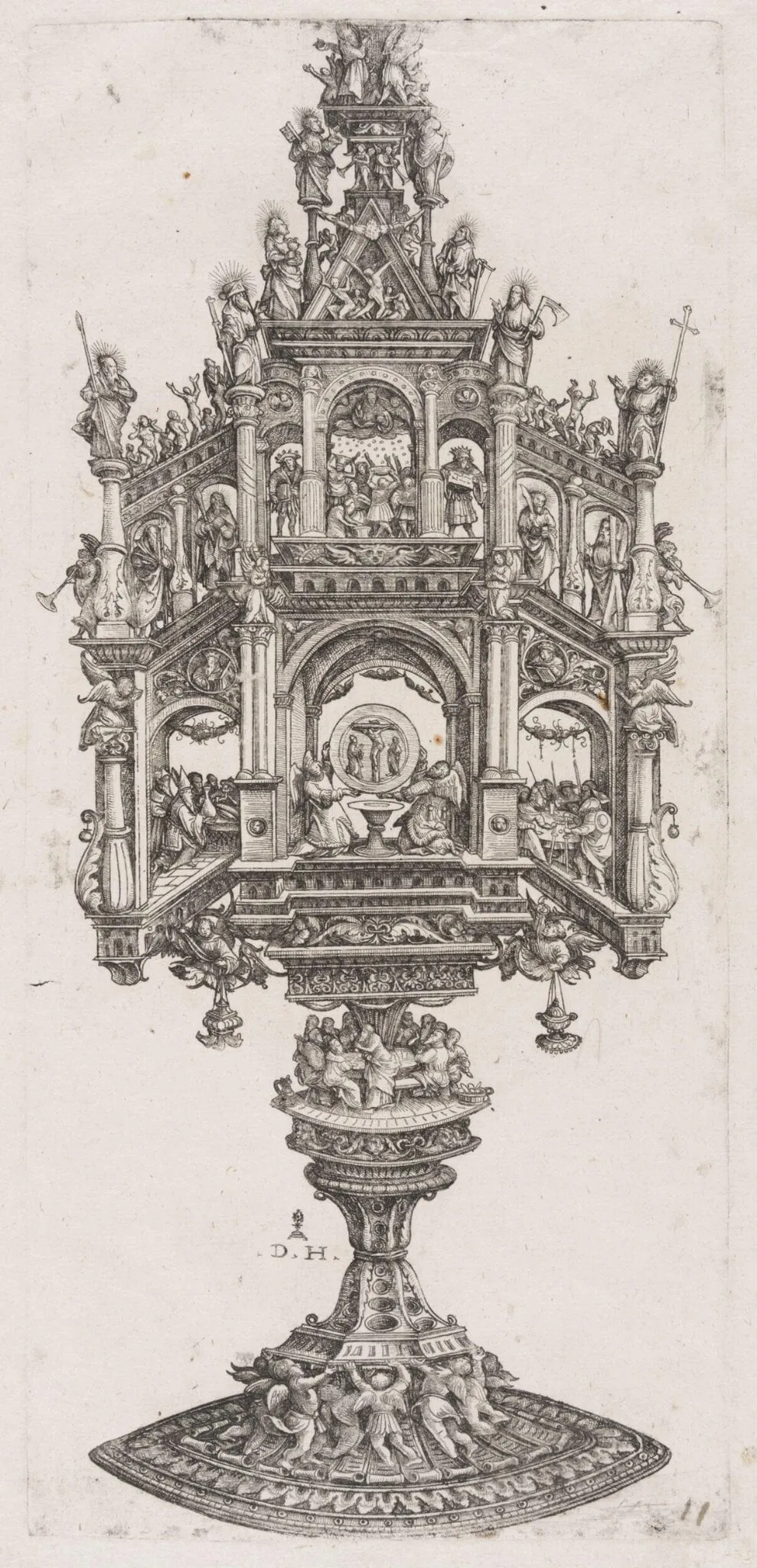
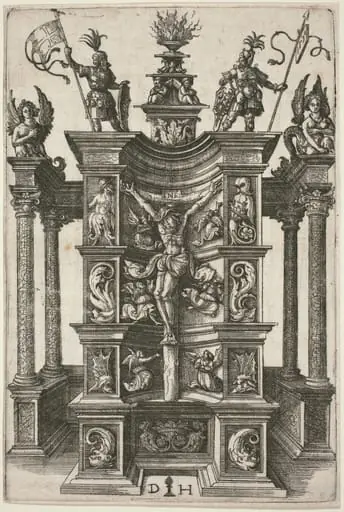
A Monstrance is a print by the Renaissance artist Daniel Hopfer. It dates from 1485 and is held in the collection of the Victoria and Albert Museum.
About this work
Overview
The image is an etched design for a monstrance, a liturgical vessel used in Roman Catholic worship to display the consecrated Host. Rendered as a detailed print, the drawing outlines a tall, ornamental structure that would be fashioned in gold or silver, with a central glazed compartment for the Eucharistic element.
Subject & Meaning
The central niche of the proposed monstrance holds the Sacred Host, symbolized by a circular disk bearing a crucifixion scene flanked by two apostles. Angelic figures are shown supporting the Host, emphasizing its sacred status during the Corpus Christi procession and the exposition of the Blessed Sacrament.
Technique & Style
Created by Daniel Ho, the work is an acid‑etched copper plate print. Etching allowed the artist to produce fine line work and intricate ornamentation, typical of 16th‑century workshop drawings that circulated among goldsmiths and silversmiths as templates for actual metal objects.
History & Provenance
The print originates from a goldsmith’s workshop context, intended as a reference for craftsmen constructing the actual monstrance. Such designs were commonly distributed in the early modern period to standardize liturgical metalwork across regions.
Context
Monstrances were central to Catholic ritual, especially during the feast of Corpus Christi, when the Host was carried in procession. The design reflects the Counter‑Reformation emphasis on visual splendor and the theological importance of the visible presence of Christ in the Eucharist.
Artist & collection

Artist
Daniel Hopfer (c. 1470 – 1536) was a German artist who is widely believed to have been the first to use etching in printmaking, at the end of the 15th century. He also worked in woodcut. Although his etchings were…

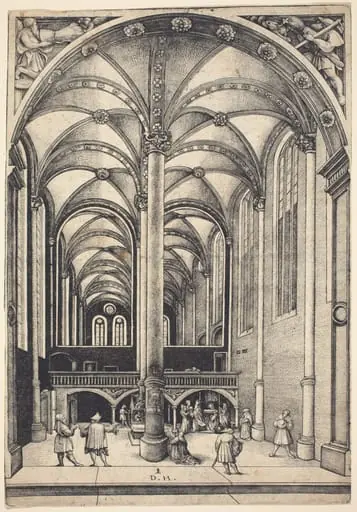 Interior of the Church of Saint Maria Magdalena with the Parable of the Offering of the Widow
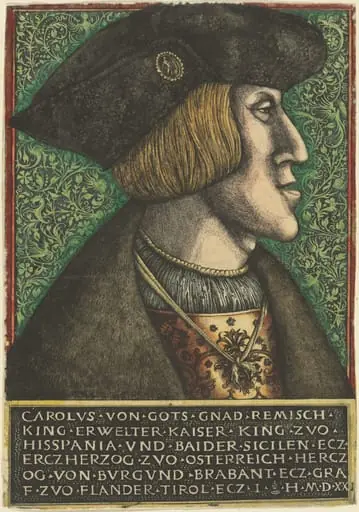 Emperor Charles V
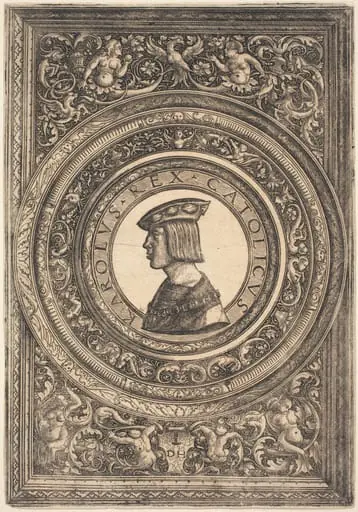 Emperor Charles V
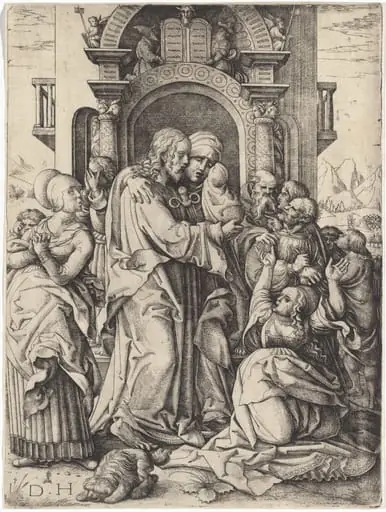 The Virgin Mary Taking Leave of Christ
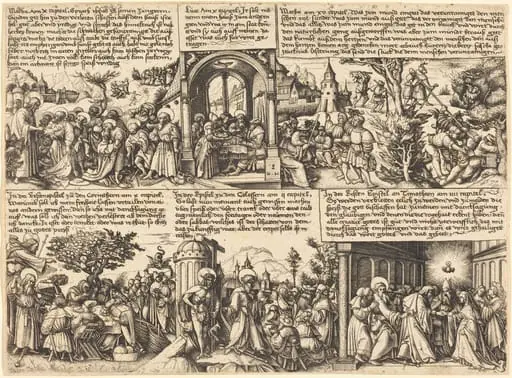 Jesus Christ Giving the Mission to the Apostles and Other New Testament Scenes
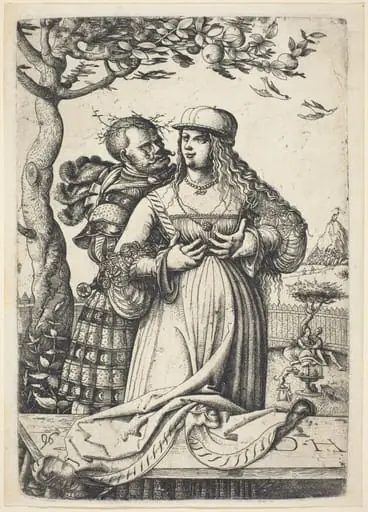 Soldier Embracing a Woman
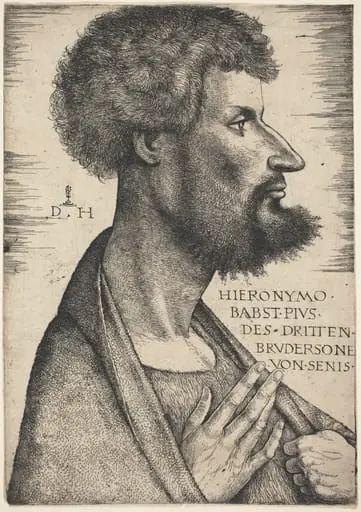 Girolamo da Siena
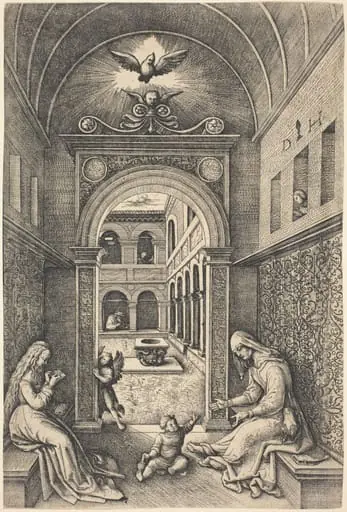 The Virgin and Child with Saint Anne by a Portal
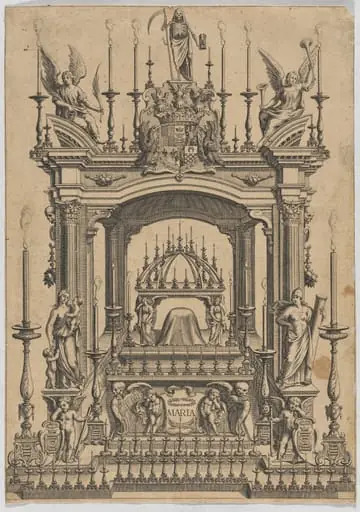 Catafalque for an Unknown Woman Named Maria
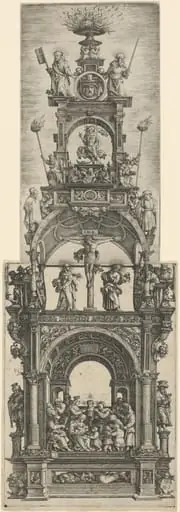 Triumphal Altar with Stages in the Life of Christ
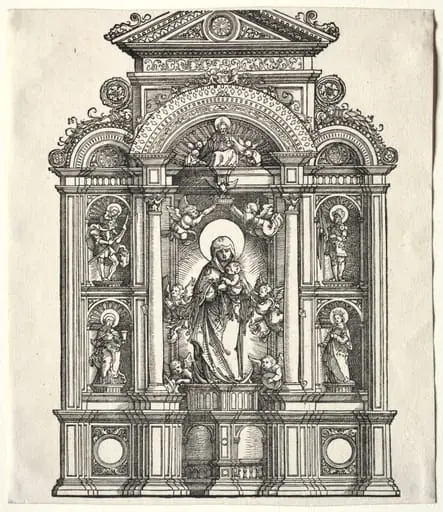 Great Altar with the Virgin, in a border with SS. Christopher, George, Barbara, Catherine
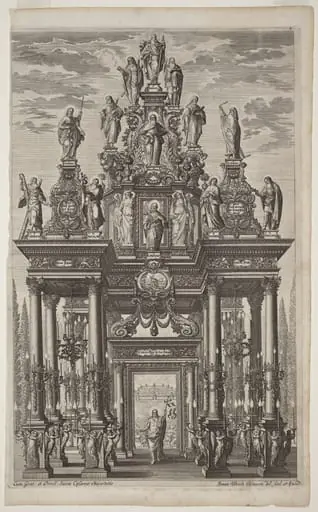 Frontispiece with Triumphal Arch with Christ and the Apostles
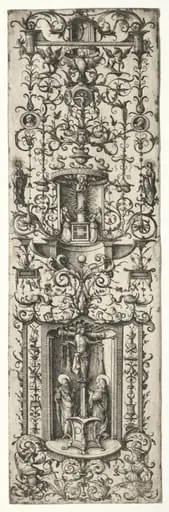 Ornamental fillet with the crucifixion and the virgin and child
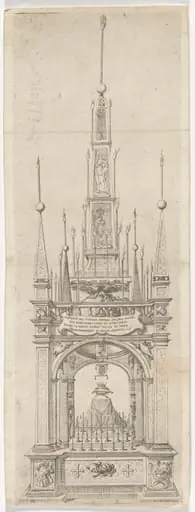 Catafalque for the Funeral of Giulio Thieni, Marquis of Scandiano
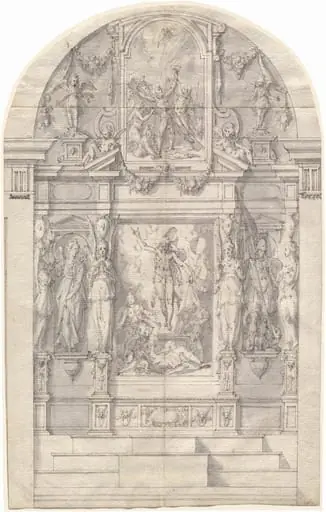 An Elaborate Altar with the Resurrection of Christ and the Martyrdom of Saint Andrew
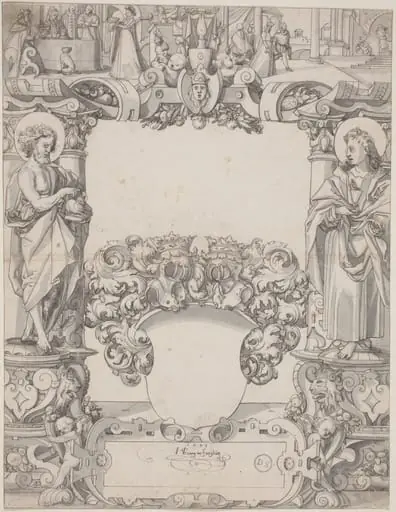 Glass Design with Saint John the Baptist and Saint John the Evangelist
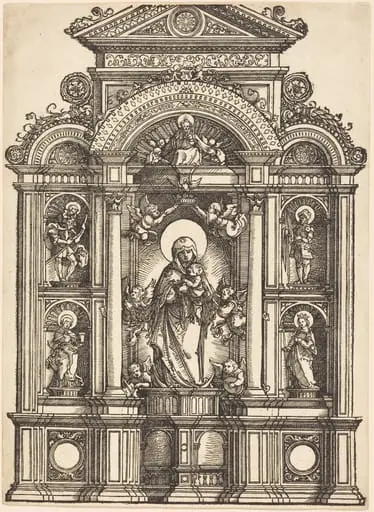 Altarpiece with the Beautiful Virgin of Regensburg and Saints Christopher, Mary Magdalene, Florian, and Catherine Standing in Niches, with God the Father Above
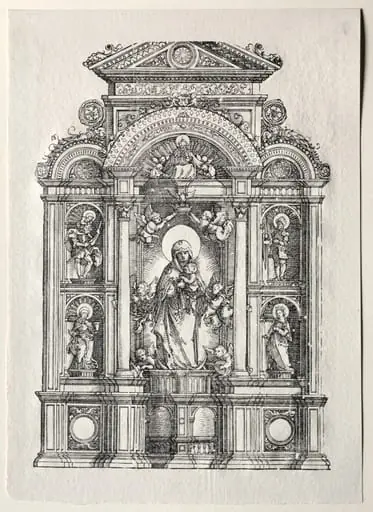 Altar mit der Schönen Maria von Regensburg
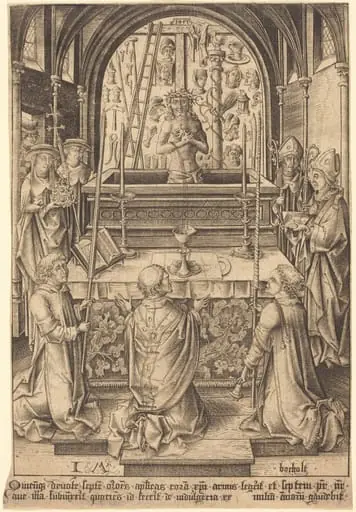 The Mass of Saint Gregory
 The Crucified Christ in a Decorated Niche