Artwork
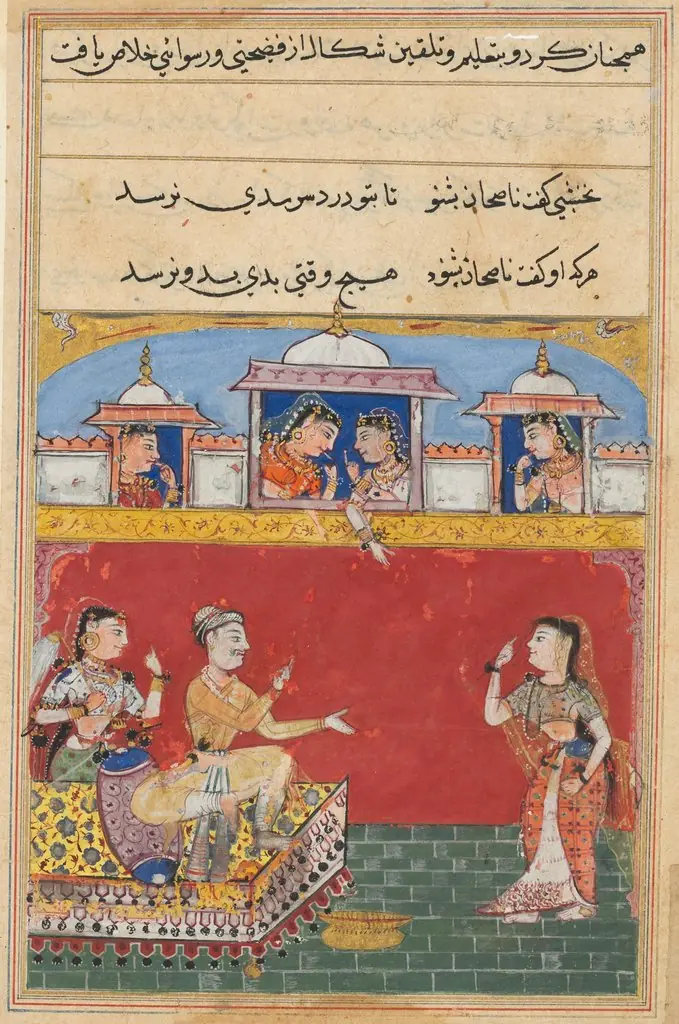
The dervish brings the King of Kings before the king of Bahilistan, from a Tuti-nama (Tales of a Parrot): Seventh Night
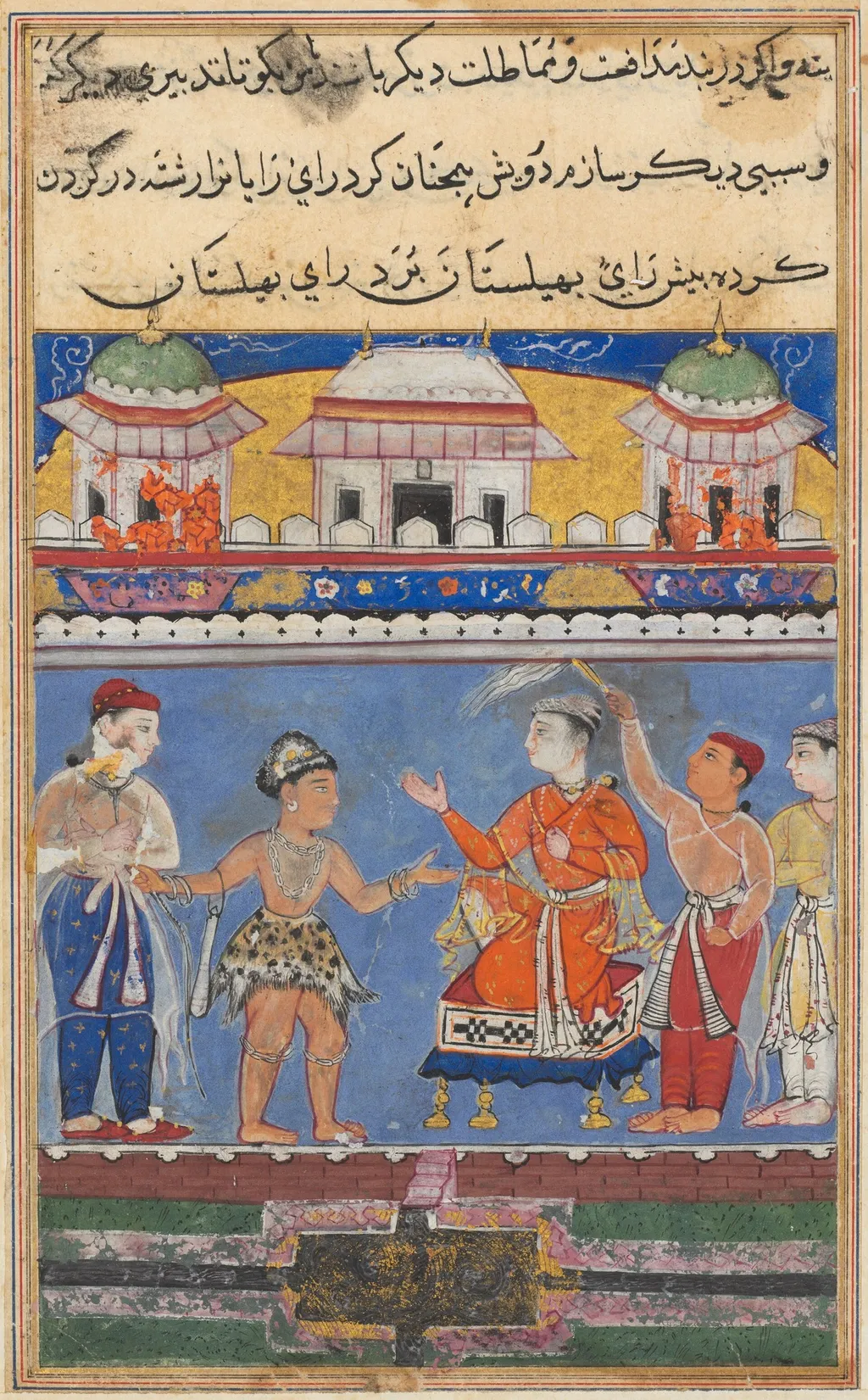
The dervish brings the King of Kings before the king of Bahilistan, from a Tuti-nama (Tales of a Parrot): Seventh Night is an unspecified painting. It dates from 1560 and is held in the collection of the Cleveland Museum of Art.
About this work
Overview
The work is a miniature painting illustrating the seventh night of the Persian narrative collection known as the Tuti‑nama, or “Tales of a Parrot.” Executed in vibrant pigments, it portrays a ceremonial encounter between a dervish and the ruler of Bahilistan, set before a palace with green domes and red tiled roofs under a clear blue sky.
Subject & Meaning
The central figure, dressed in orange and blue and holding a fan, represents the dervish who presents the “King of Kings” to the Bahilistani monarch. A second figure in a leopard‑patterned skirt faces him, while three onlookers observe, suggesting a formal audience that underscores themes of spiritual authority confronting earthly power within the story’s moral framework.
Technique & Style
Rendered in the traditional Persian miniature style, the painting employs fine brushwork, intricate patterning, and a rich palette of lapis, vermilion and gold. The composition is flattened, with decorative architectural elements and stylized figures that emphasize narrative clarity over naturalistic perspective, characteristic of courtly manuscript illumination of the Safavid period.
History & Provenance
The miniature is part of a larger illustrated manuscript of the Tuti‑nama, likely produced in the 17th‑century Persian workshop system. It entered the Cleveland Museum of Art’s collection through a mid‑20th‑century acquisition, where it has been catalogued as an example of Persian narrative painting and displayed in the museum’s Asian art galleries.
Context
The Tuti‑nama combines moral tales with allegorical episodes, often featuring dervishes as agents of divine wisdom. This scene reflects the broader cultural exchange between Persian literary traditions and visual arts, illustrating how courtly patrons commissioned illustrated books to convey ethical instruction alongside aesthetic pleasure.
Legacy
As a representative piece of Persian miniature illustration, the painting informs contemporary scholarship on manuscript production, iconography of Sufi figures, and the diffusion of Persian narrative art across Central and South Asian courts. Its preservation in a major U.S. museum facilitates ongoing study and public appreciation of this artistic heritage.
Artist & collection

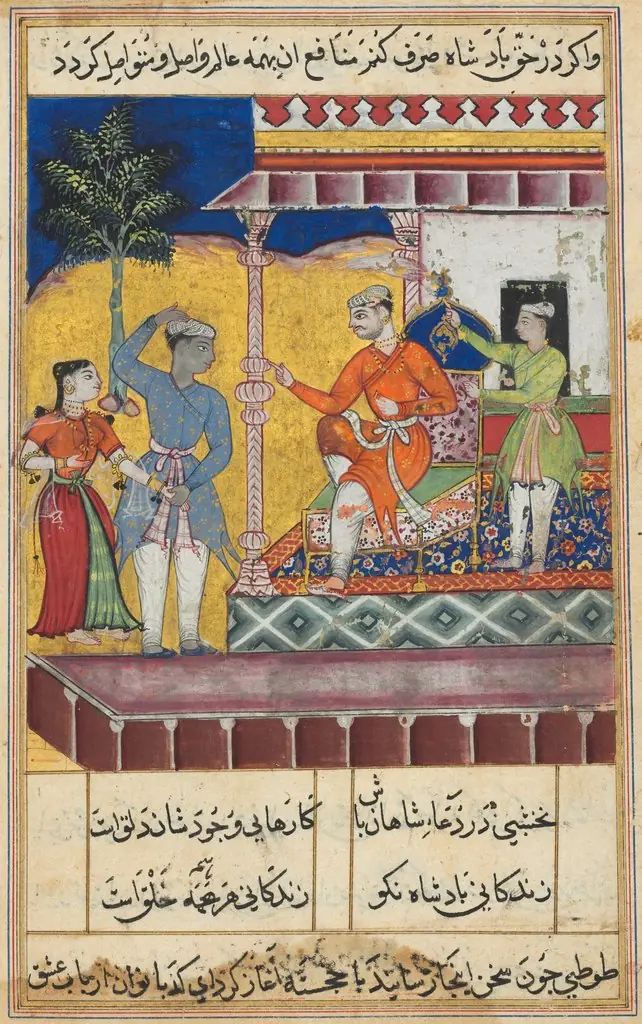 The rejuvenated old man and the daughter of the king of the jinns take leave of the King of Kings, from a Tuti-nama (Tales of a Parrot): Seventh Night
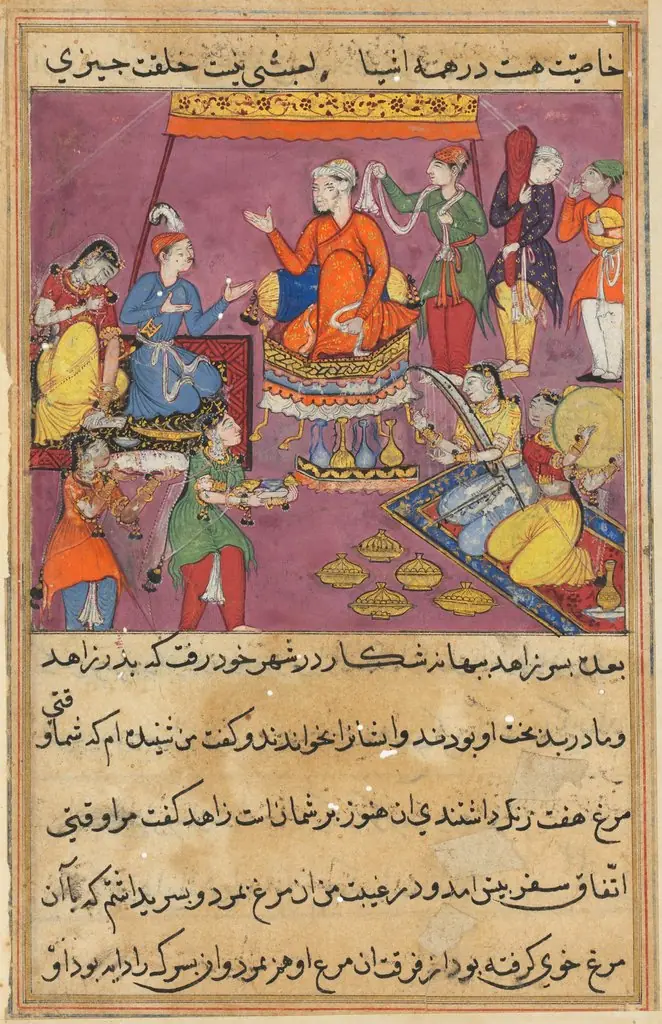 The king gives his daughter in marriage to the pious man’s son, from a Tuti-nama (Tales of a Parrot): Fifty-second Night
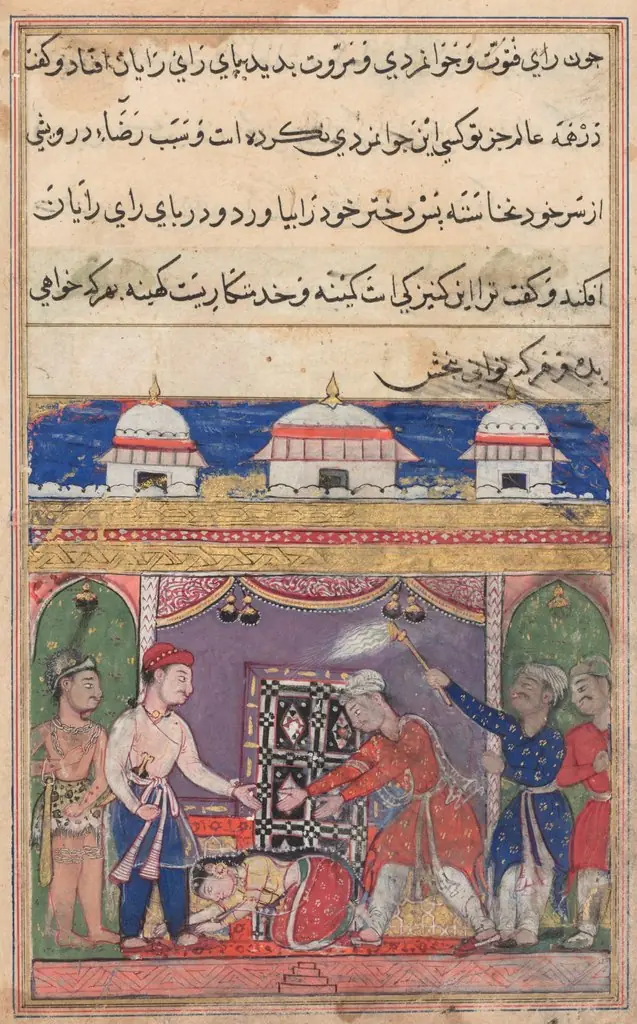 The king of Bahilistan offers his daughter to the King of Kings, from a Tuti-nama (Tales of a Parrot): Seventh Night
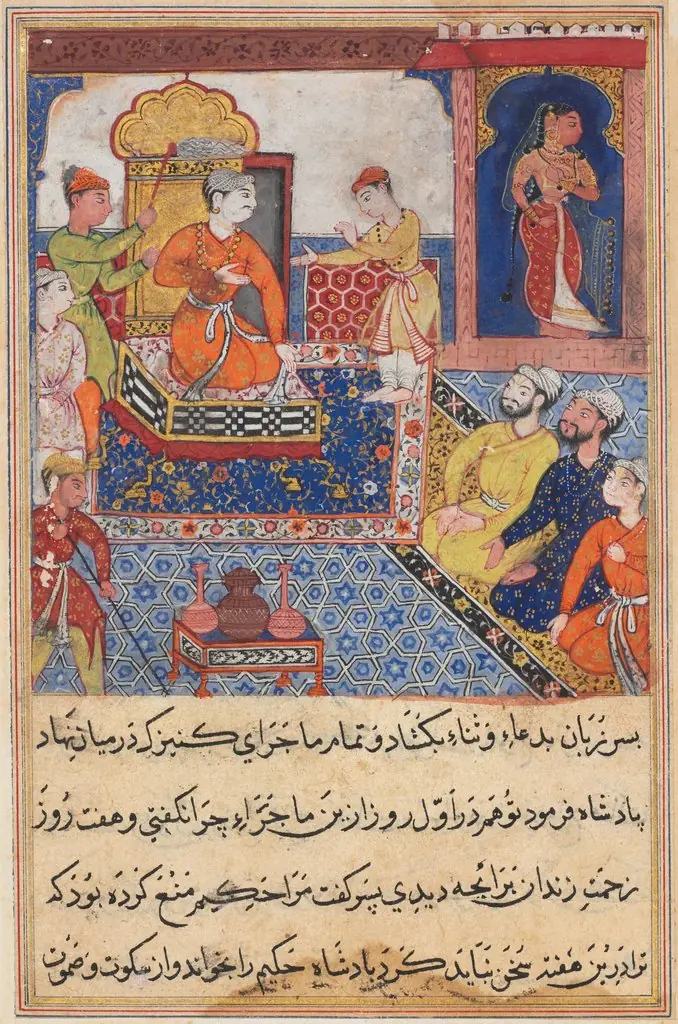 The young prince recounts his experiences to his father, the king, from a Tuti-nama (Tales of a Parrot): Eighth Night
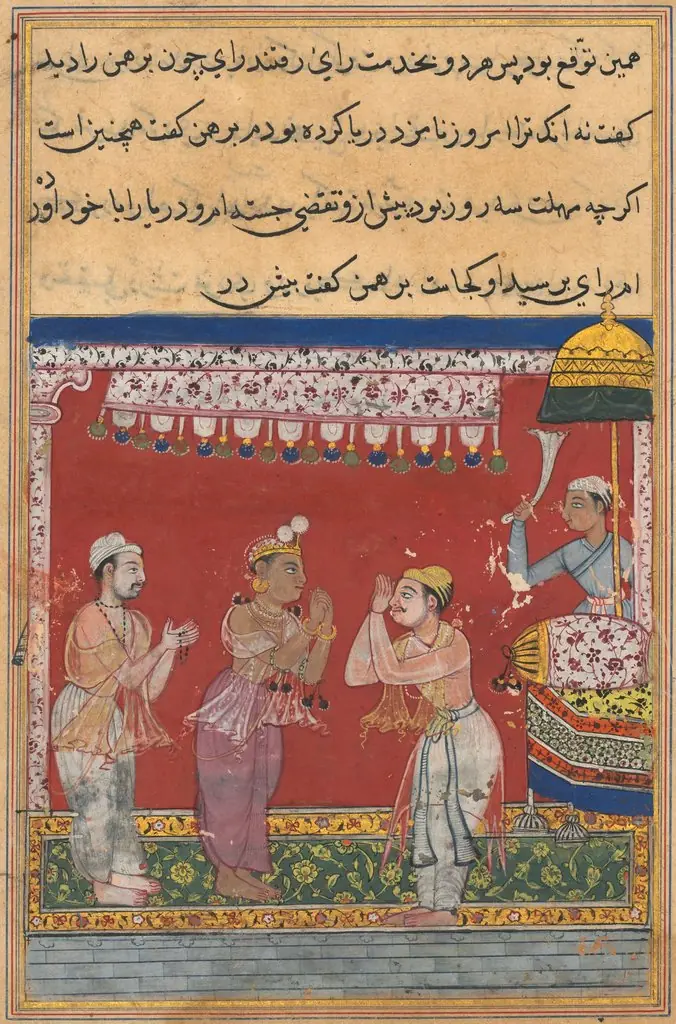 The king of the Ocean, having assumed human form, arrives at the court of the Raja, from a Tuti-nama (Tales of a Parrot): Eleventh Night
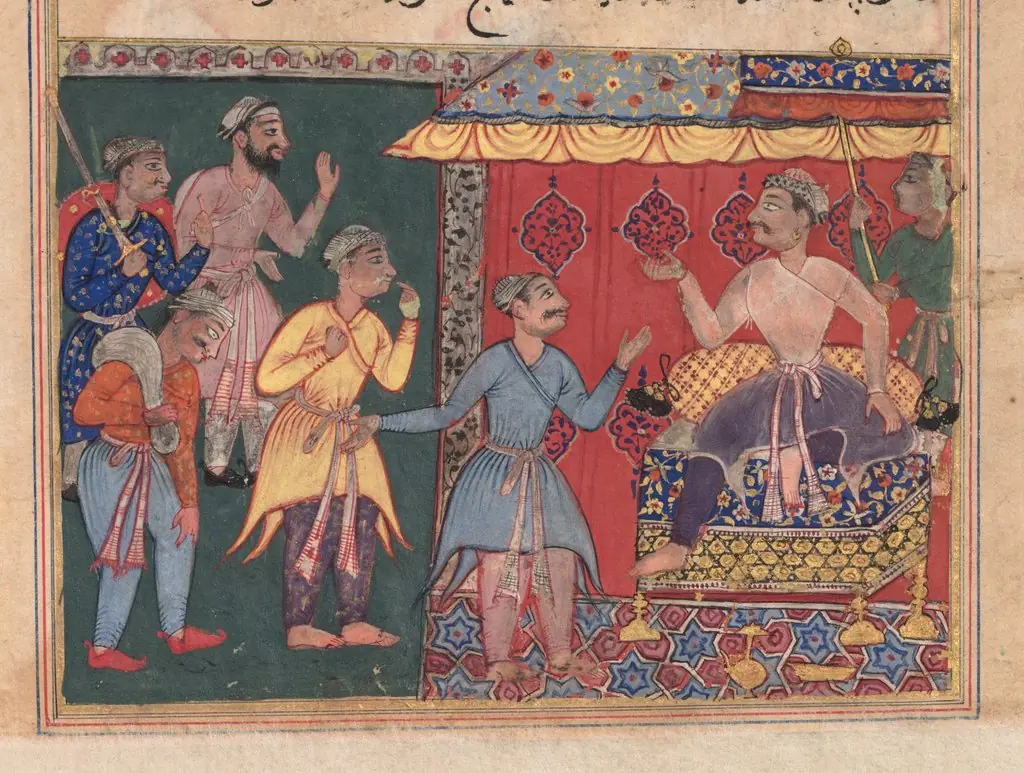 King Bhojaraja tries in vain to ascertain the whereabouts of the pearl from the four travelling companions, from a Tuti-nama (Tales of a Parrot): Twelfth Night
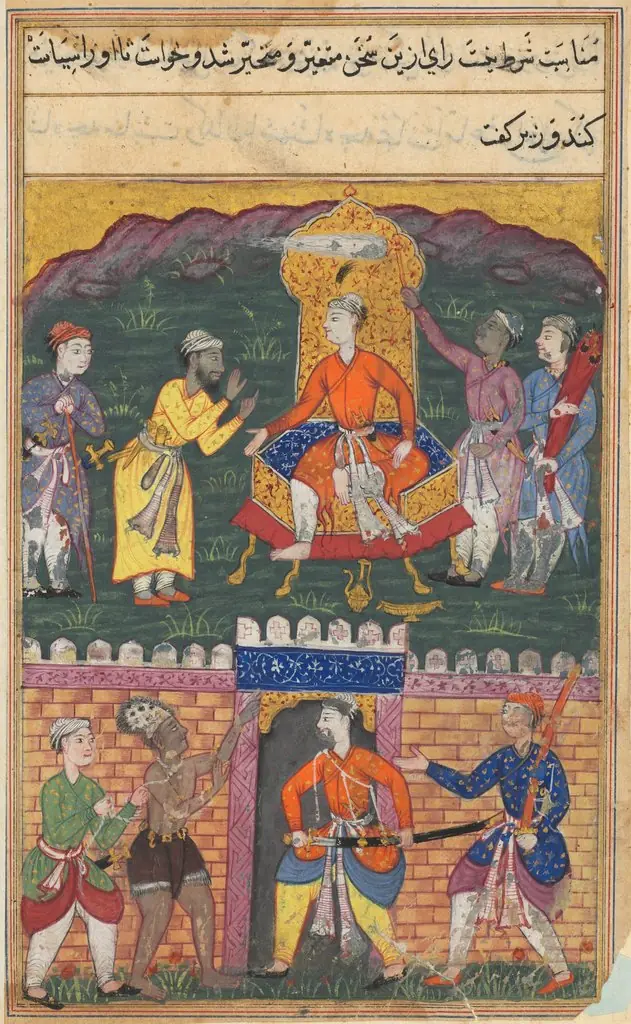 The vizier dissuades the king of Bahilistan from executing the dervish who asks for his daughter’s hand in marriage, from a Tuti-nama (Tales of a Parrot): Seventh Night
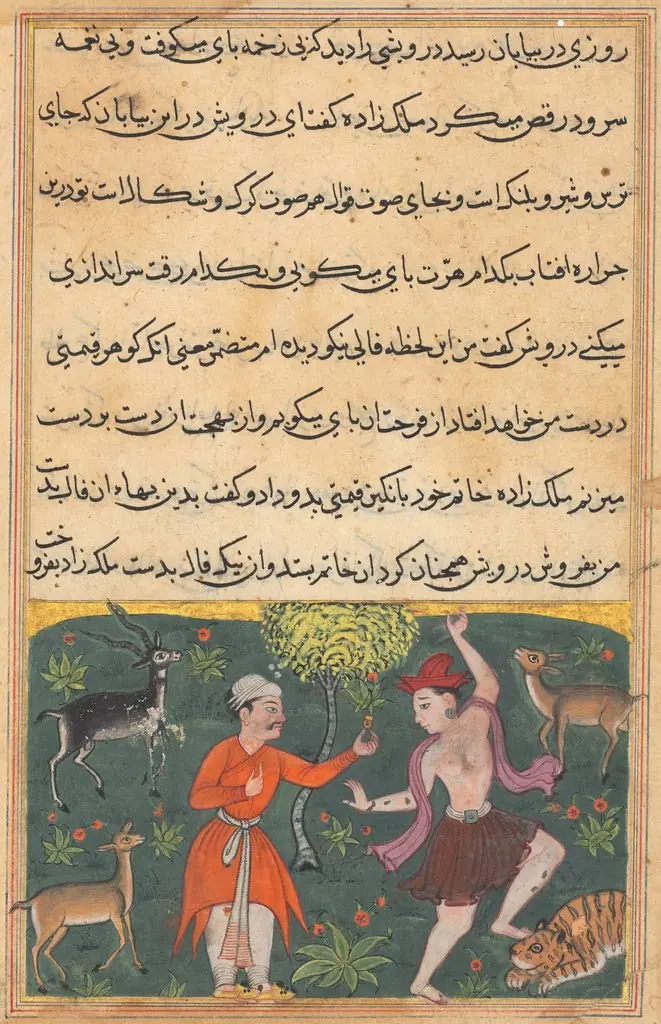 The prince meets a carefree dancing dervish whose good fortune he purchases for his ring, from a Tuti-nama (Tales of a Parrot): Eighteenth Night
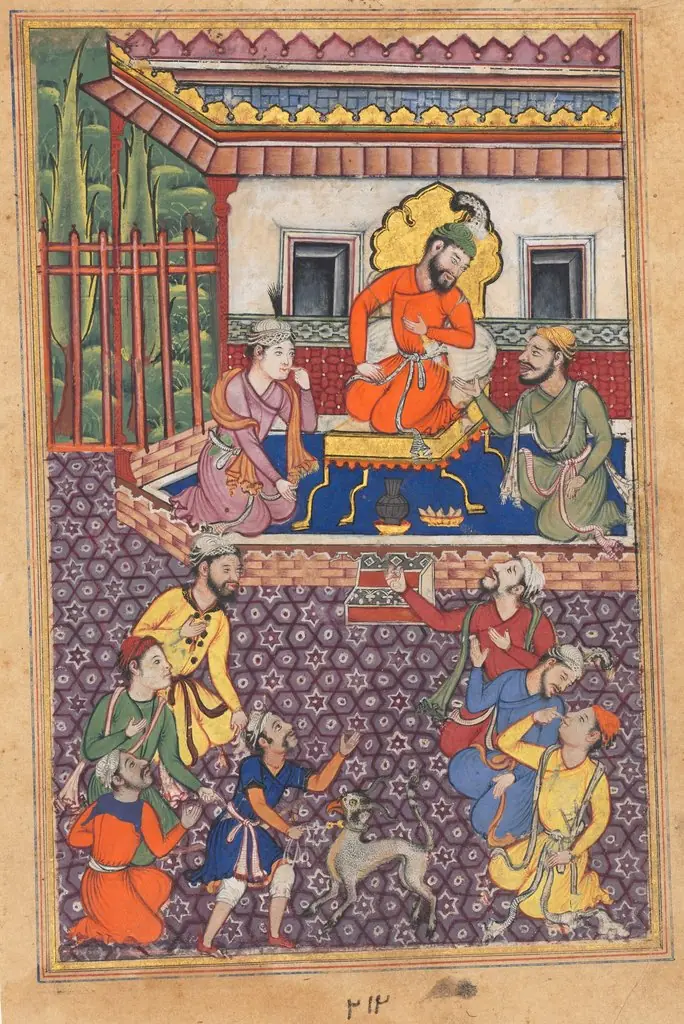 The court of the Raja of Ujjain, from a Tuti-nama (Tales of a Parrot): Forty-sixth Night
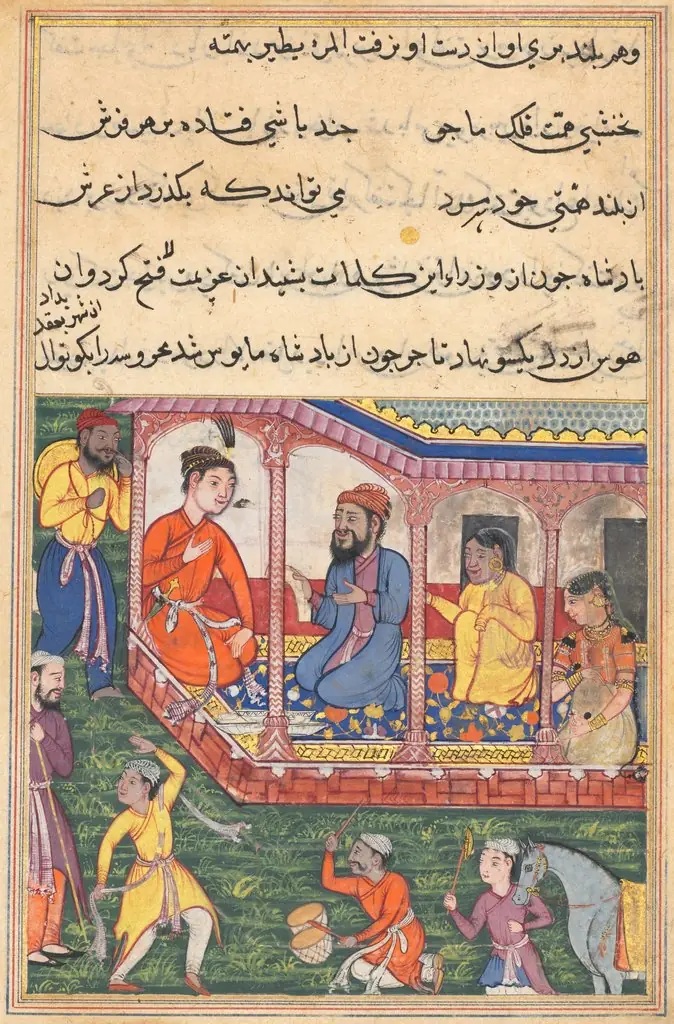 Mahrusa’s marriage to the prefect of the city, from a Tuti-nama (Tales of a Parrot): Thirty-sixth Night
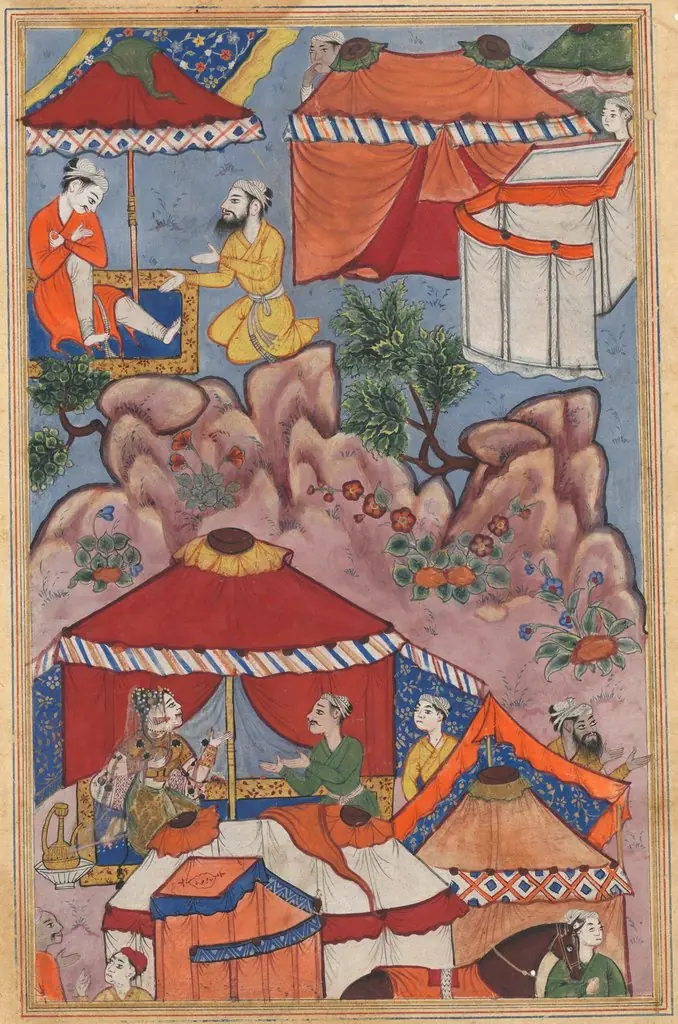 Bashir confides his love for Habbaza to an Arab friend, and sends him to her with a message, from a Tuti-nama (Tales of a Parrot): Twenty-fourth Night
 The daughter-in-law returns from her misadventure, feigning insanity, from a Tuti-nama (Tales of a Parrot): Sixteenth Night