Artwork
The Organ Player and His Wife
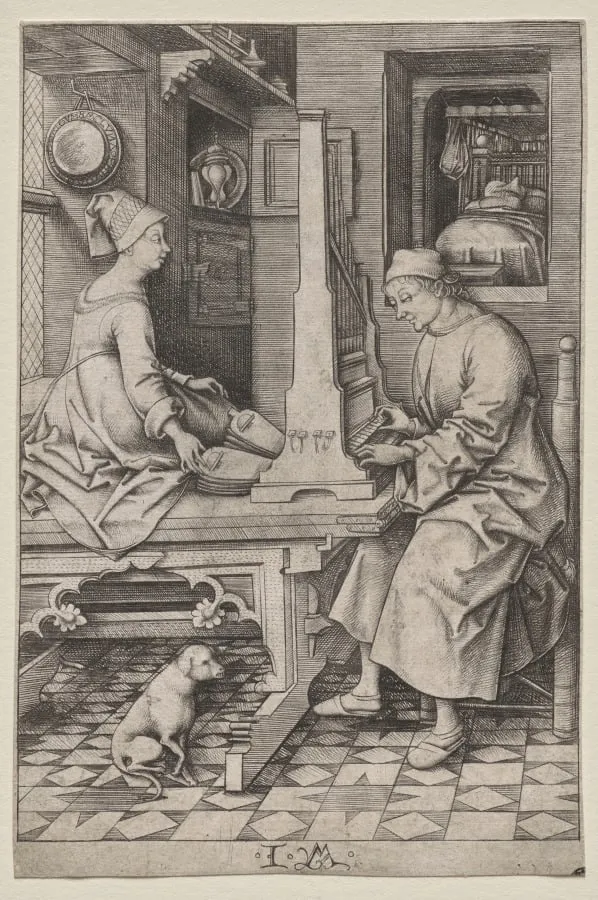
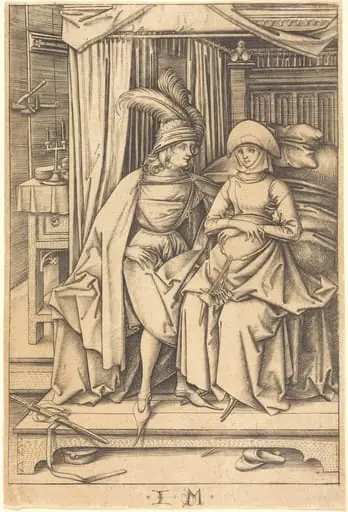
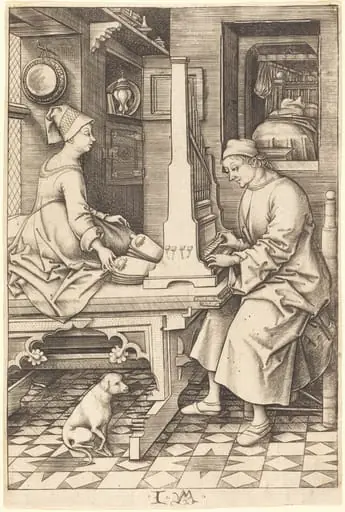
The Organ Player and His Wife is a print by the Renaissance artist Israhel van Meckenem. It dates from 1498 and is held in the collection of the Cleveland Museum of Art. This print depicts a domestic interior where a man plays a small portable organ while his wife manually pumps its bellows.
About this work
Overview
This print depicts a domestic interior where a man plays a small portable organ while his wife manually pumps its bellows. The scene captures a quiet, collaborative moment, emphasizing interdependence between the two figures. Their actions are physically and symbolically linked: neither can produce music without the other. A dog rests at their feet, reinforcing the sense of domestic unity.
Subject & Meaning
The couple’s synchronized labor reflects an ideal of marital cooperation, where each partner’s role is essential to the whole. The organ, requiring both performance and mechanical support, becomes a metaphor for their relationship. The dog, a traditional symbol of loyalty, anchors the composition and deepens the theme of faithful companionship within the home.
Technique & Style
Rendered in fine linear detail, the print uses precise engraving to distinguish textures—the fabric of clothing, the wood of the instrument, the fur of the dog. The composition is tightly framed, drawing focus to the intimate interaction between the figures. Light falls evenly, avoiding dramatic contrast, which enhances the calm, everyday atmosphere.
History & Provenance
The print originates from the Northern Renaissance, likely produced in the Low Countries during the early 16th century. It was part of a broader tradition of domestic genre scenes that celebrated ordinary life with moral or symbolic undertones. The Cleveland Museum of Art holds a known impression, acquired through early 20th-century collections of Northern European prints.
Context
During this period, prints often conveyed social ideals through domestic imagery. Music-making at home was a respected pastime, particularly among the urban middle class. Depictions of couples working in tandem, like this one, aligned with religious and humanist values promoting harmony, duty, and mutual support in marriage.
Legacy
This print contributed to a visual language that linked domestic labor with moral virtue. Its quiet dignity influenced later genre scenes in Northern art, where everyday acts were imbued with symbolic weight. Though not widely known today, it remains a quiet testament to the cultural value placed on partnership in early modern household life.
Artist & collection
Artist
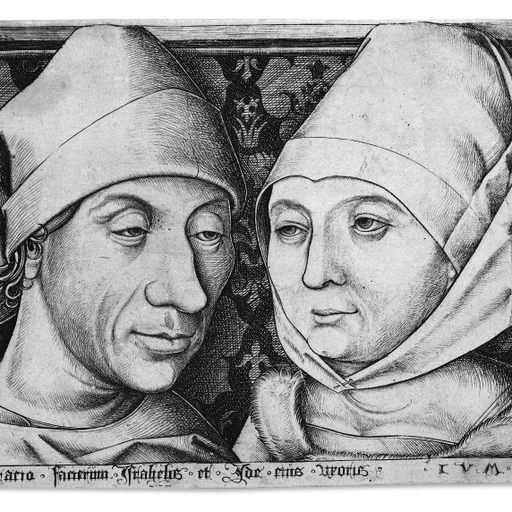
Israhel van Meckenem (c. 1445 – 10 November 1503), also known as Israhel van Meckenem the Younger, was a German printmaker and goldsmith, perhaps of a Dutch family origin. He was the most prolific engraver of the…