Artwork
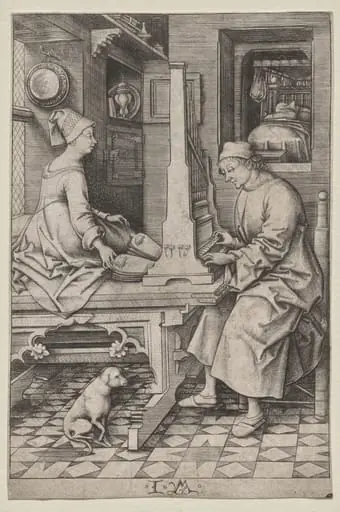
The Organ Player and His Wife
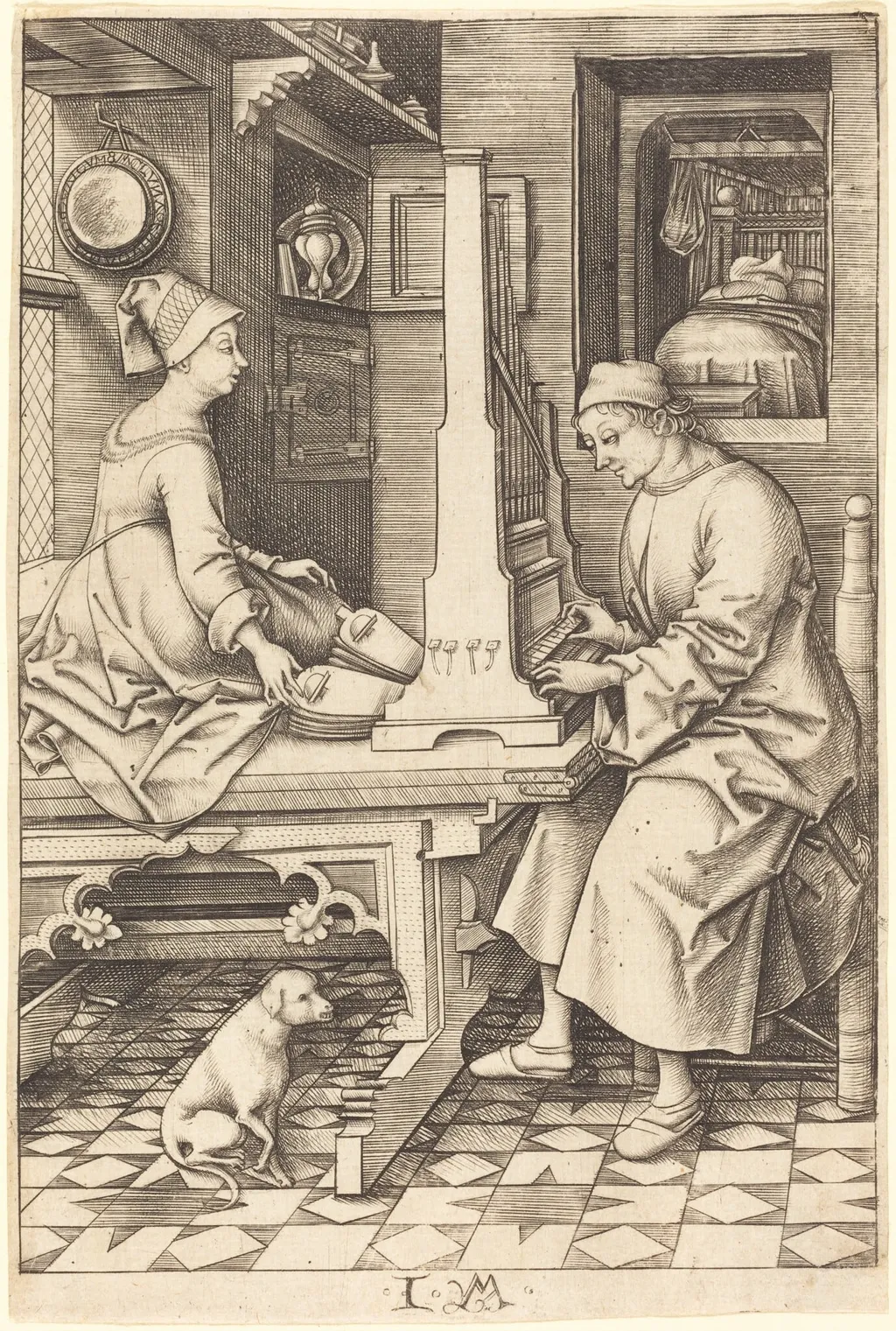
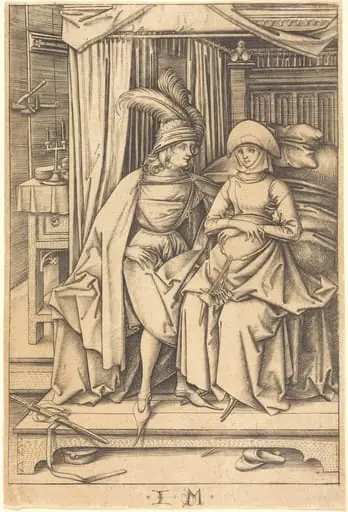
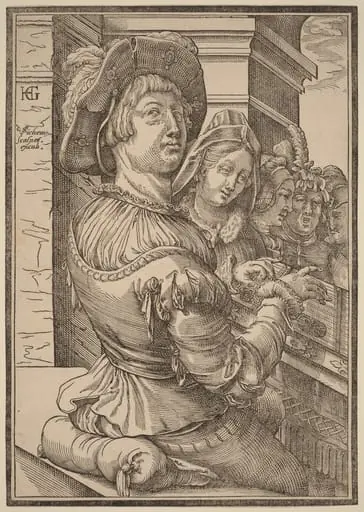
The Organ Player and His Wife is an ink print by the Renaissance artist Israhel van Meckenem. It dates from 1499 and is held in the collection of the National Gallery of Art.
About this work
Overview
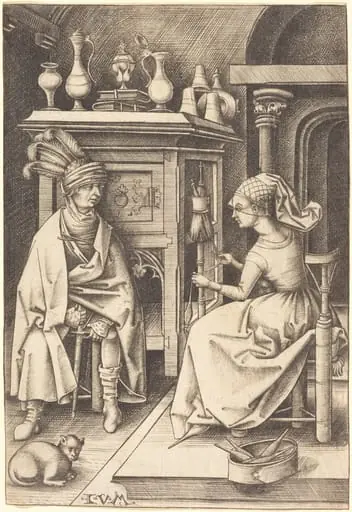
Created circa 1499, this copper‑plate engraving presents an intimate interior scene in which a man adjusts a sizeable organ while a woman, presumed his spouse, occupies a window seat. The composition balances musical activity with domestic objects, offering a glimpse into late‑15th‑century northern European household life.
Subject & Meaning
The work juxtaposes the act of music-making with everyday domesticity. The seated woman holds a small dog and a book, symbols of loyalty and learning, while the man’s focus on the instrument underscores the cultural value placed on music within the home. Together they embody a harmonious, middle‑class domestic ideal.
Technique & Style
Executed with delicate, intersecting lines, the engraving achieves subtle gradations of light and texture that give the room a convincing spatial depth. The fine hatching typical of late Gothic printmaking, transitioning toward Renaissance naturalism, renders the tiled floor, reflective surfaces, and animal fur with notable realism.
History & Provenance
The piece is attributed to Israhel van Meckenel, a German goldsmith and printmaker active between 1465 and 1503, who is documented as the most prolific engraver of his century, producing over six hundred prints. Many of his works were copies of contemporaries, including Albrecht Dürer, reflecting the era’s practice of disseminating popular images.
Context
Domestic and musical subjects were frequent in Northern European art of the period, serving both decorative and didactic purposes. The inclusion of everyday objects—pots, a mirror, a cat—aligns the engraving with contemporary genre scenes that celebrated the virtues of orderly, cultured household life.
Artist & collection
Artist
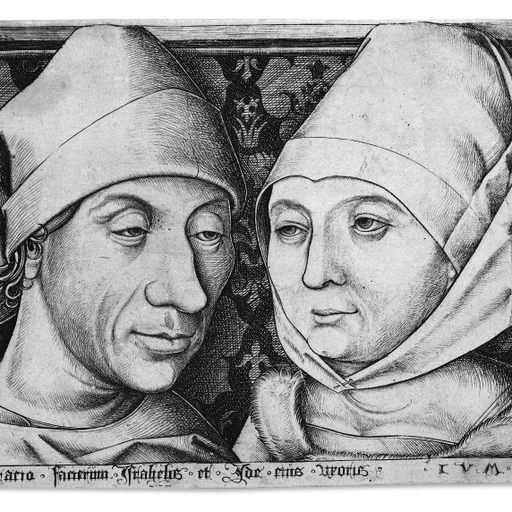
Israhel van Meckenem (c. 1445 – 10 November 1503), also known as Israhel van Meckenem the Younger, was a German printmaker and goldsmith, perhaps of a Dutch family origin. He was the most prolific engraver of the…