Artwork
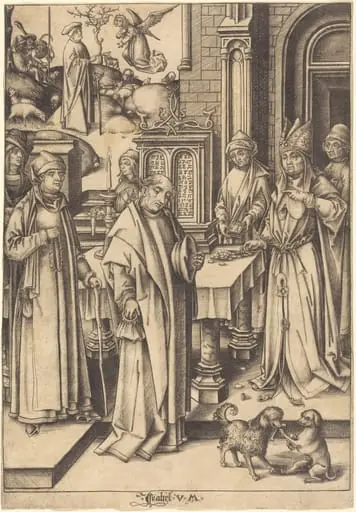
The Birth of the Virgin
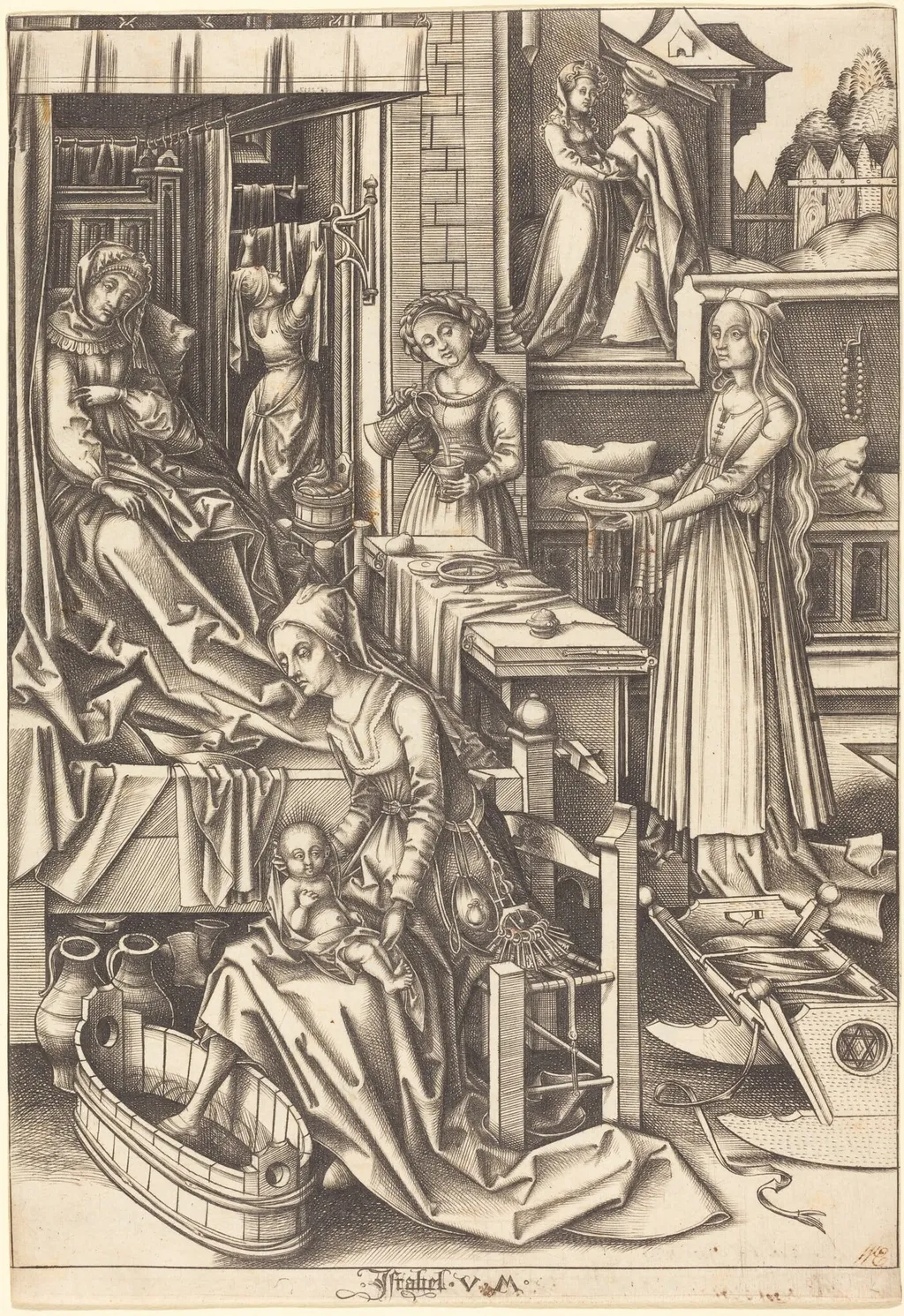
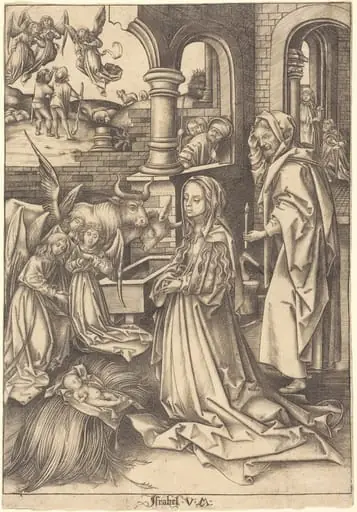
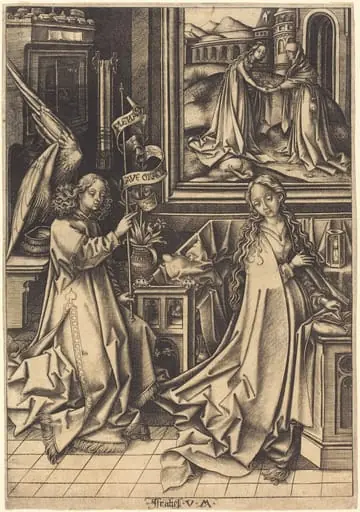
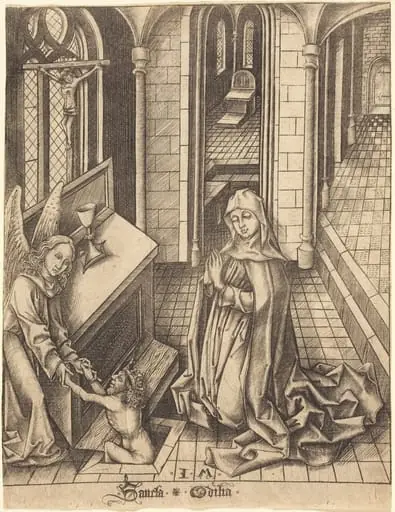
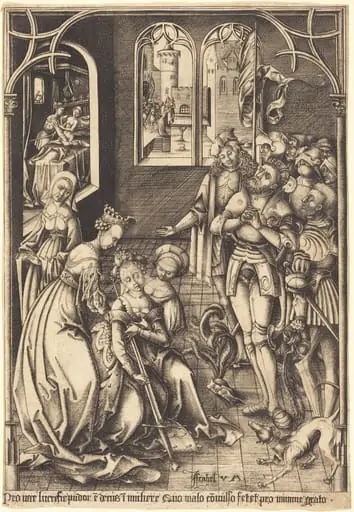
The Birth of the Virgin is an ink print by the Renaissance artist Israhel van Meckenem. It dates from 1495 and is held in the collection of the National Gallery of Art.
About this work
Overview
Among the most productive printmakers of the late 15th century, he created over six hundred engravings, often reinterpreting existing compositions.
Israhel van Meckenem, a German engraver and goldsmith active between 1465 and 1503, produced *The Birth of the Virgin* circa 1495. Among the most productive printmakers of the late 15th century, he created over six hundred engravings, often reinterpreting existing compositions. This work exemplifies his mastery of the medium and reflects the growing demand for devotional imagery in Northern Europe during the period.
Subject & Meaning
The scene illustrates the birth of the Virgin Mary, a popular subject in late medieval piety. It portrays a domestic interior where women attend to the newborn, one cradling the infant, others offering assistance. A statue of a female figure in the background may reference Mary’s future role or a devotional object. The inclusion of a man at a worktable suggests the blending of sacred and everyday life, reinforcing the humanity of the holy event.
Technique & Style
Van Meckenem employed fine, precise lines to construct form and shadow through cross-hatching, a hallmark of his engraving technique. The composition is densely packed with furniture, figures, and objects, each rendered with careful attention to texture and spatial arrangement. Despite the clutter, the scene maintains visual order, guiding the viewer’s eye through layered details and subtle tonal gradations achieved solely with inked lines.
History & Provenance
Created during the height of van Meckenem’s career, the print was likely produced for private devotion or sale in regional markets. As a prolific producer of reproductive engravings, he often adapted compositions from other artists, though this work may reflect an original design. Its survival in multiple impressions indicates its popularity and circulation among lay and clerical audiences in the late 15th century.
Context
In late 15th-century Northern Europe, engraved prints served as accessible devotional tools, especially in urban centers where literacy and piety were growing. The emphasis on domestic interiors and detailed interiors mirrored contemporary religious sentiment that sought to humanize sacred narratives. Van Meckenem’s output contributed to the spread of such imagery, bridging artistic innovation and popular religious practice.
Legacy
Van Meckenem’s technical precision and volume of work influenced subsequent generations of printmakers, particularly in the Low Countries and Germany. While his copies often overshadowed original compositions, *The Birth of the Virgin* demonstrates his ability to transform devotional themes into richly detailed visual narratives. His prints remain key documents in understanding the role of print culture in late medieval religious life.
Artist & collection
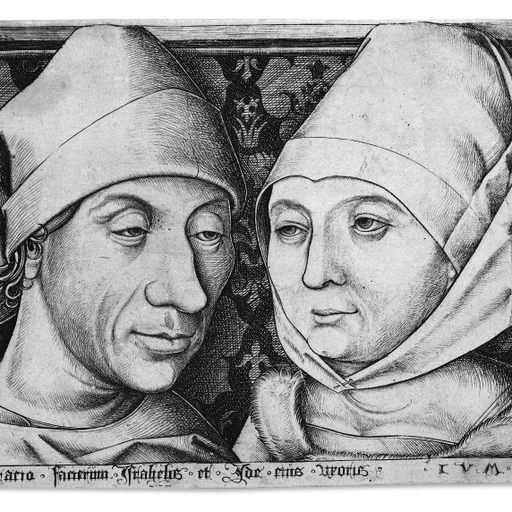
Artist
Israhel van Meckenem (c. 1445 – 10 November 1503), also known as Israhel van Meckenem the Younger, was a German printmaker and goldsmith, perhaps of a Dutch family origin. He was the most prolific engraver of the…