Artwork
Saint Stephen
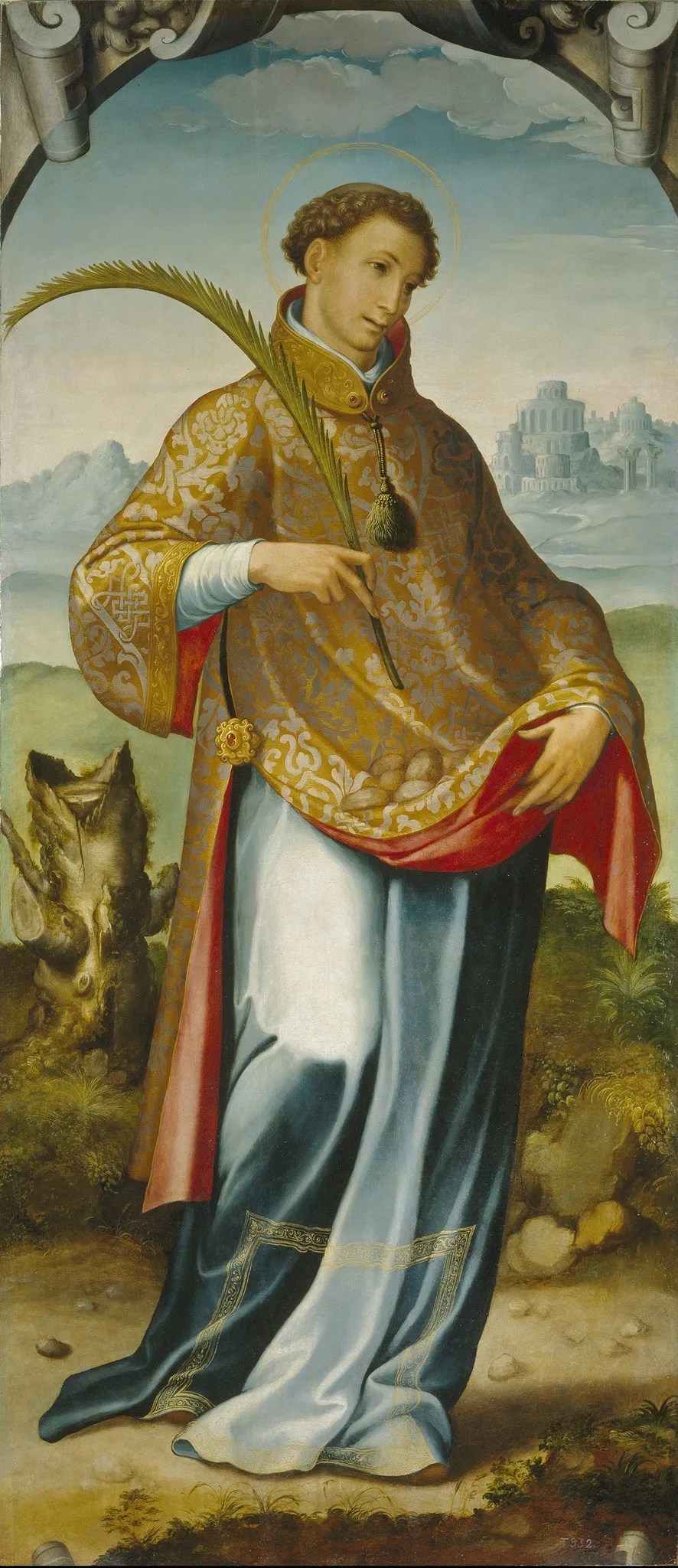
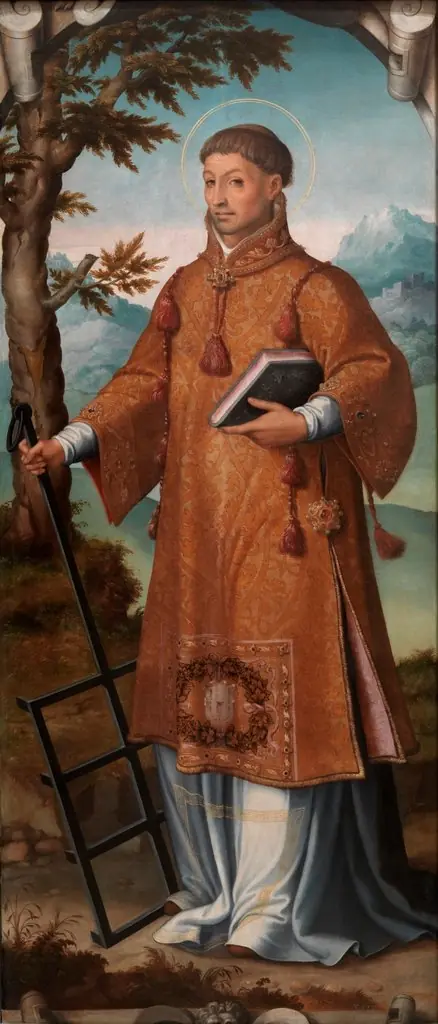
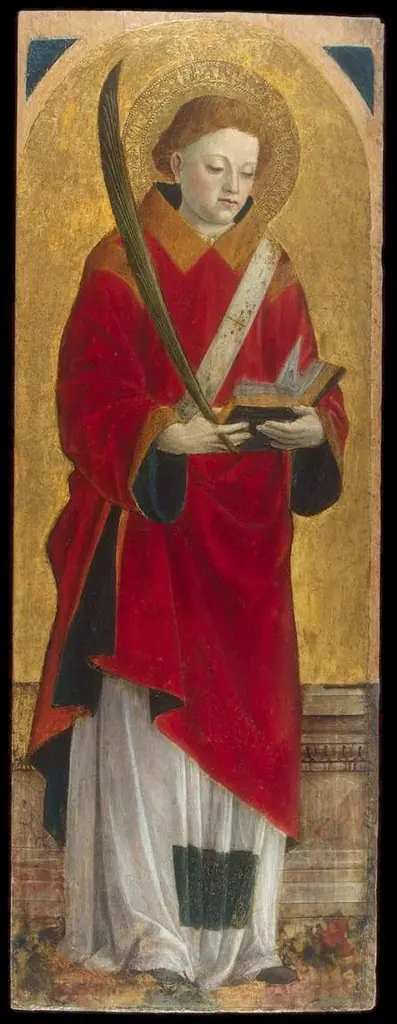
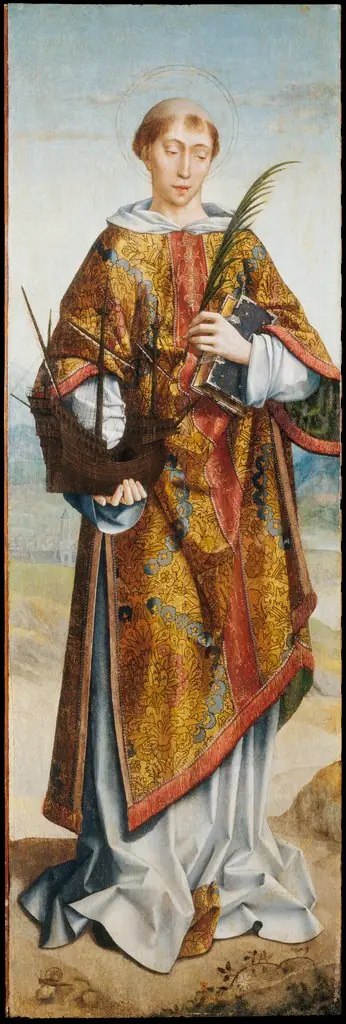
Saint Stephen is an oil painting by the Mannerist artist Juan Correa de Vivar. It dates from 1559 and is held in the collection of the Museo del Prado.
About this work
Overview
Juan Correa de Vivar’s oil on canvas, dated 1559, presents a solitary figure in a richly ornamented robe against a muted landscape of rocky outcrops and distant architecture. The composition is anchored by a golden halo and a staff crowned with a tassel, while a red cloth—suggestive of a liturgical vestment—slips from beneath the figure’s arm. The work resides in the collection of the Museo del Prado.
Subject & Meaning
The central figure is identified as Saint Stephen, the early Christian martyr, whose presence is emphasized by the halo and the solemn posture. The title also references the ritual of placing a chasuble on Saint Ildephonsus, linking the painting to a specific ecclesiastical ceremony that underscores themes of sanctity, clerical authority, and the transmission of holy vestments.
Technique & Style
Correa de Vivar employs a clear chiaroscuro, allowing light to strike the saint’s face and the gold‑trimmed cloak while casting surrounding folds into shadow.
Correa de Vivar employs a clear chiaroscuro, allowing light to strike the saint’s face and the gold‑trimmed cloak while casting surrounding folds into shadow. This contrast heightens the three‑dimensionality of the fabric and accentuates the delicate modeling of facial features. The palette of soft blues, muted earth tones, and vivid reds creates a balanced visual rhythm typical of mid‑16th‑century Spanish religious painting.
History & Provenance
Painted in 1559, the work entered the Spanish royal collections before being transferred to the Museo del Prado, where it has been displayed since the museum’s early acquisitions. Documentation traces its ownership through the Habsburg court, confirming its status as a valued example of Counter‑Reformation art commissioned for devotional purposes.
Context
The painting emerges from a period of intense Catholic reform in Spain, when artists were called upon to produce clear, didactic images that reinforced doctrinal messages. Correa de Vivar, active in Toledo, responded to these demands by integrating narrative clarity with refined naturalism, aligning his work with the broader objectives of the Council of Trent’s visual program.
Artist & collection