Artwork
The surrender of Belgrade in 1789
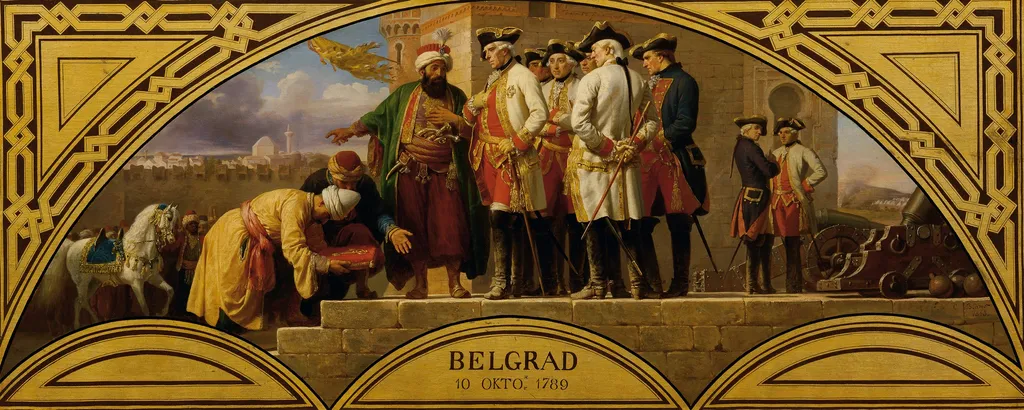
The surrender of Belgrade in 1789 is an oil painting by Karl von Blaas. It dates from 1868 and is held in the collection of the Kunsthistorisches Museum.
About this work
This painting depicts a scene of surrender, with a group of men in military attire standing on a stone platform.
This painting depicts a scene of surrender, with a group of men in military attire standing on a stone platform. One man, dressed in a green robe, points towards the cityscape in the background. The men are adorned with elaborate uniforms, featuring red, white, and gold accents.
In the foreground, a man in a yellow robe kneels, holding a red box. The background showcases a city with a mosque, while the sky is filled with smoke and a golden bird in flight. The painting's border is ornate, featuring a gold design with the words "BELGRAD 10 OKTO. 1789" inscribed at the bottom.
The level of detail in this painting suggests the use of chiaroscuro, a technique that utilizes strong contrasts between light and dark to create a sense of volume in depicted objects and spaces.
Overview
Karl von Blaas, an Austrian artist noted for portraiture and religious subjects, finished an oil canvas titled *The Surrender of Belgrade in 1789* in 1868. The work records the capitulation of Belgrade during the Austro‑Turkish War of 1788‑1791 and is part of the Kunsthistorisches Museum’s holdings.
Subject & Meaning
The composition centers on a group of uniformed officers on a stone platform, the central figure in a green robe gesturing toward the city beyond. A kneeling officer in a yellow robe clutches a red box, suggesting the transfer of authority. The distant skyline includes a mosque, indicating the Ottoman presence, while smoke and a golden bird overhead hint at the turmoil of the moment.
Technique & Style
Executed in oil on canvas, the painting employs pronounced chiaroscuro, creating dramatic light‑dark contrasts that model the elaborate red, white and gold military attire. Fine brushwork renders the intricate uniforms and architectural details, while the ornate gold border frames the scene and bears the inscription “BELGRAD 10 OKTO. 1789.”
History & Provenance
Since its completion, the canvas has remained in the Austrian imperial collection, eventually entering the Kunsthistorisches Museum. No records indicate later sales or transfers, confirming its continuous public display in Vienna.
Artist & collection
Artist
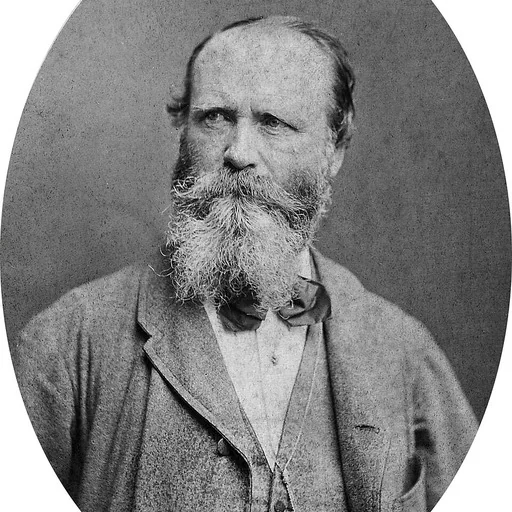
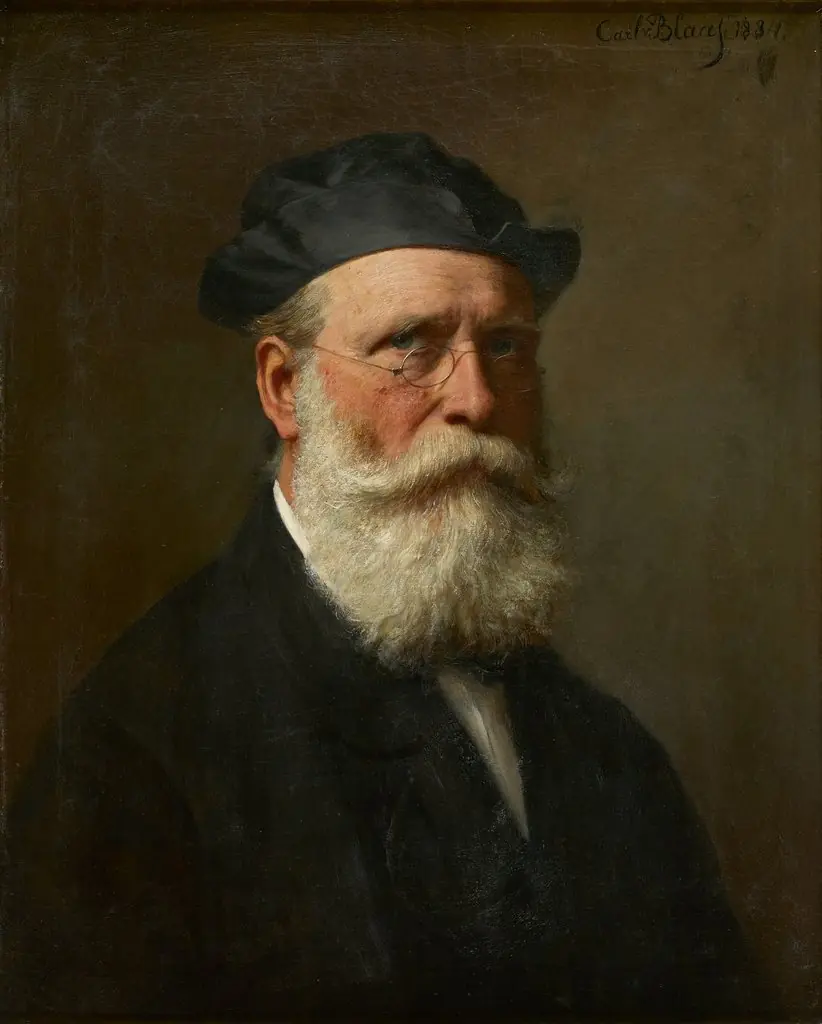
Karl von Blaas (28 April 1815 – 19 March 1894) was an Austrian painter known for his portraits and religious compositions executed on canvas as well as in the form of frescoes.

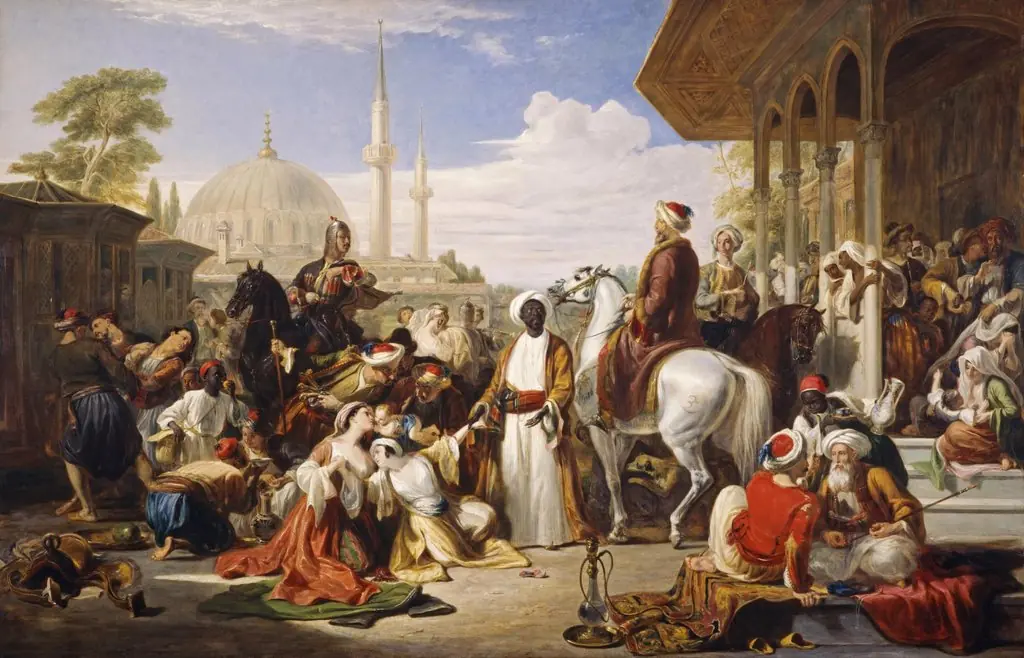 The Slave Market, Constantinople
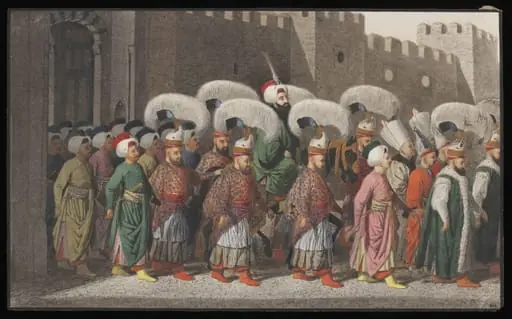 The Sultan riding out in procession to Friday Prayers
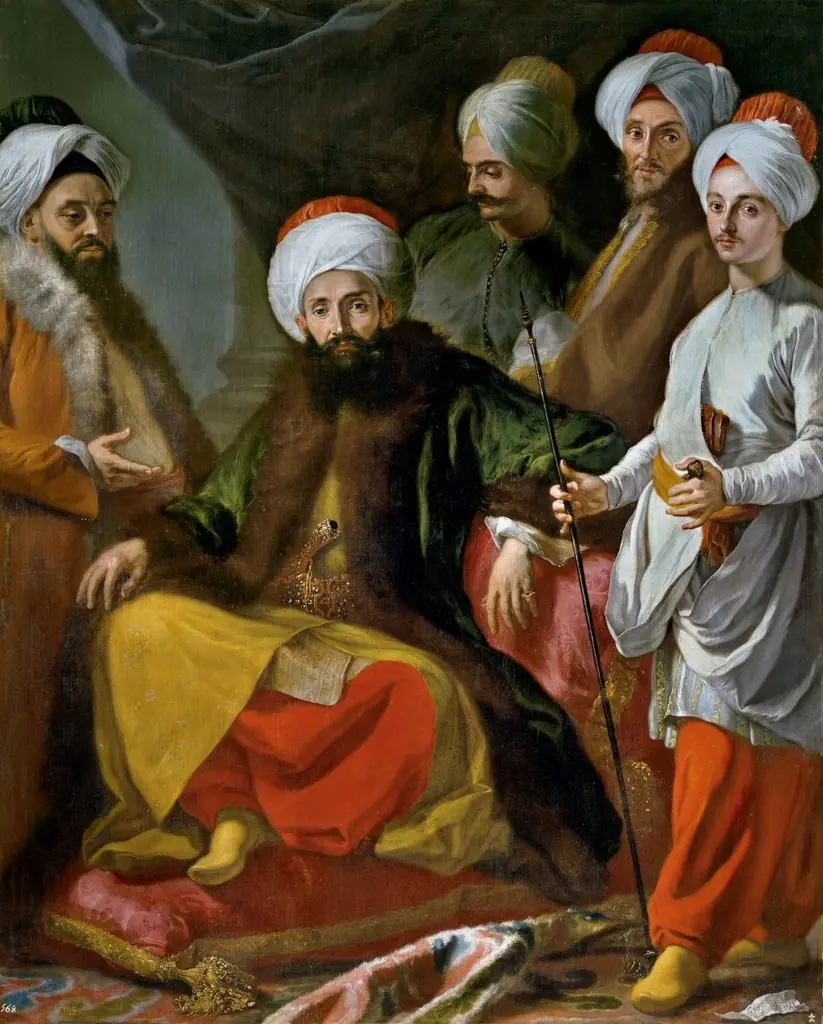 The Turkish Embassy in Naples
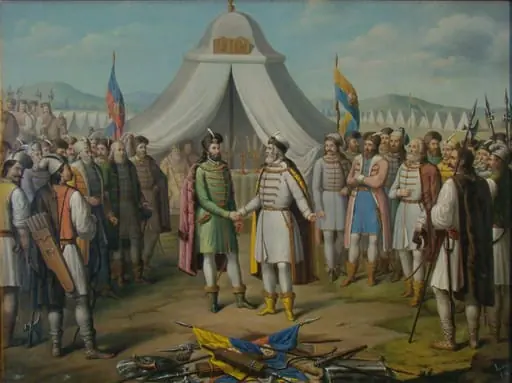 Întâlnirea dintre Bogdan Cel Orb și Radu Cel Mare
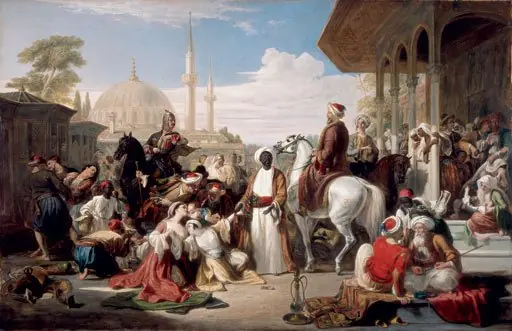 The Slave Market, Constantinople
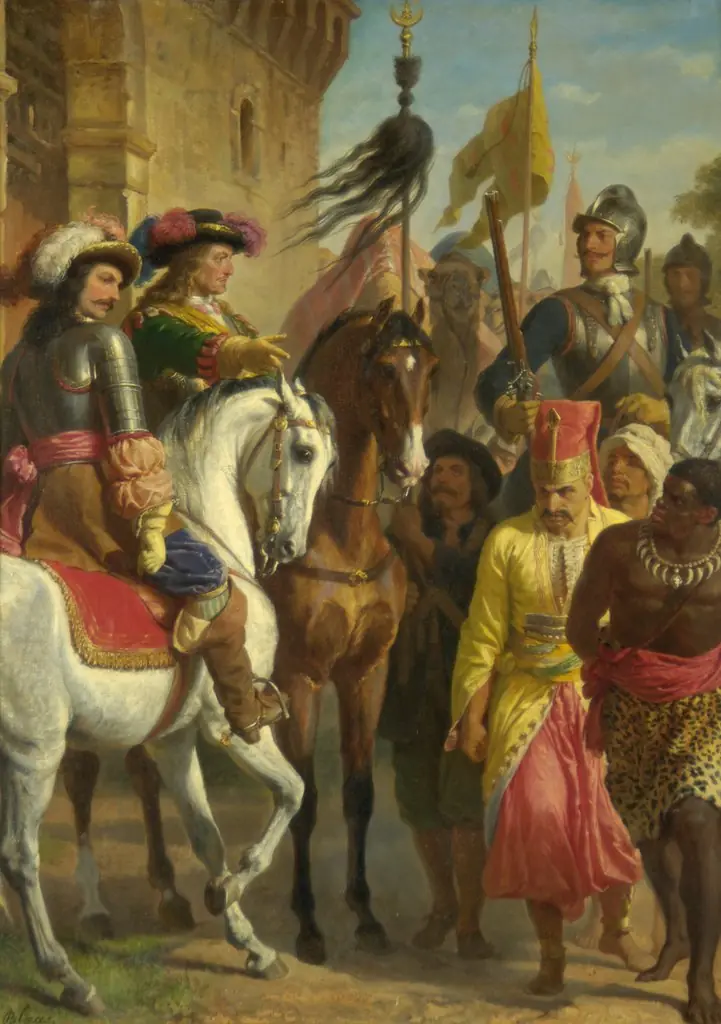 The Battle of Levenc 1664
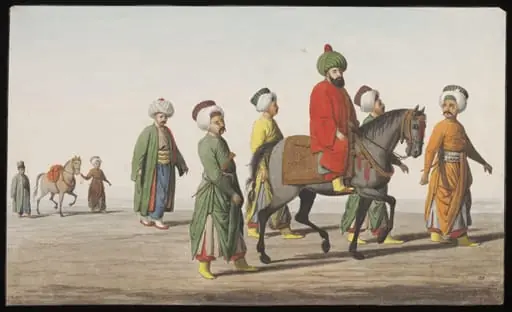 Kaymakam, or Govenor of Istanbul
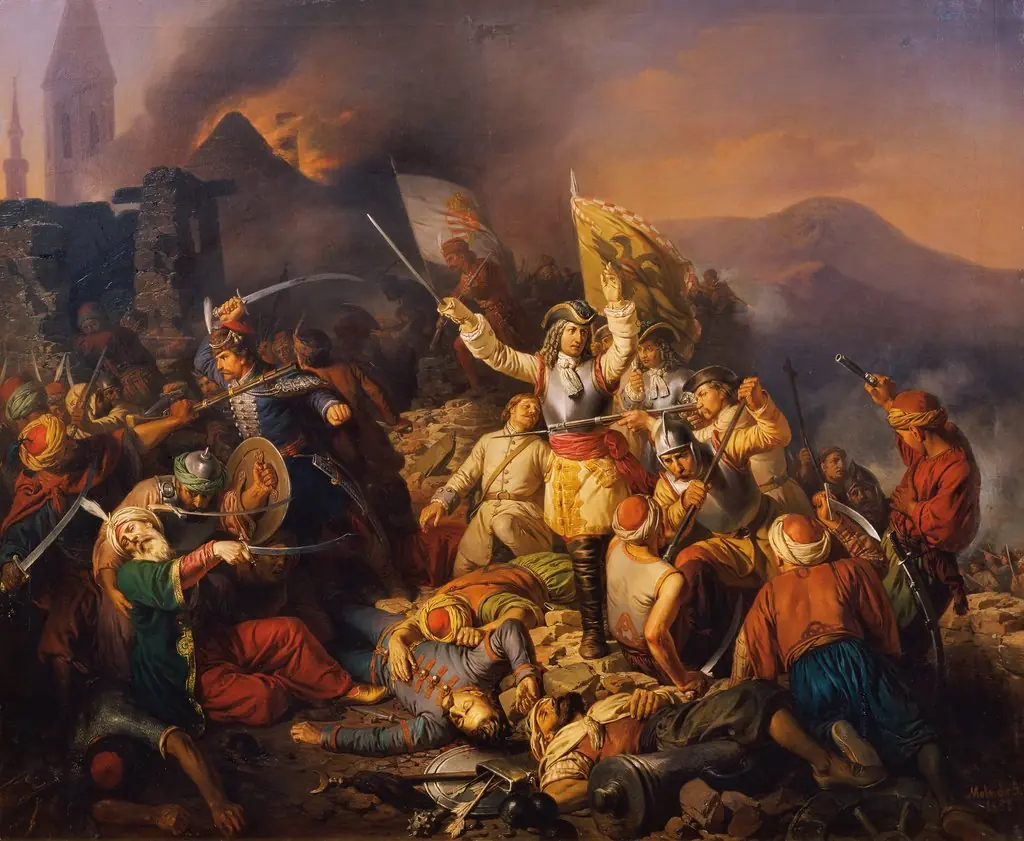 Die Rückeroberung Ofens aus der Hand der Türken im Jahr 1686
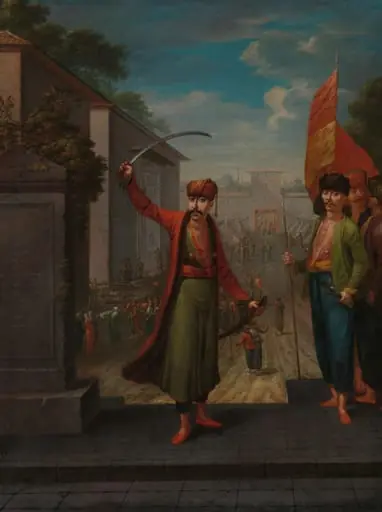 Patrona Halil
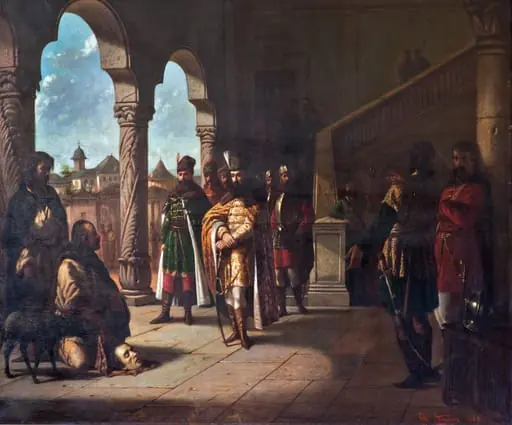 Mihai Viteazul contemplând capul lui Andrei Bathory
 Young Greek Man in Conversation with a Priest
 The surrender of Linz in 1742