Artwork
四季の花|Girls Picking Green Leaves, from the illustrated book Flowers of the Four Seasons
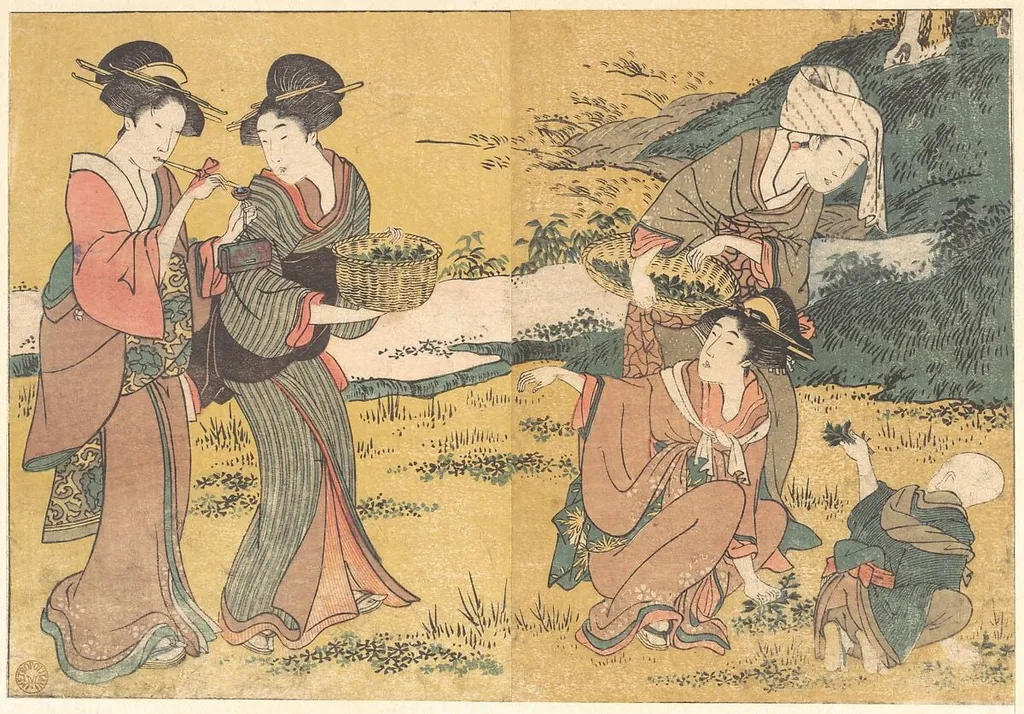
四季の花|Girls Picking Green Leaves, from the illustrated book Flowers of the Four Seasons is an ink print by the Romanticist artist Kitagawa Utamaro. It dates from 1801 and is held in the collection of the Metropolitan Museum of Art.
About this work
Overview
Rendered in ink and soft color on paper, the work exemplifies the ukiyo-e tradition of capturing everyday life with subtle grace.
This woodblock print is part of a series titled Flowers of the Four Seasons, produced in 1801 by Kitagawa Utamaro. It depicts a quiet rural moment involving four women engaged in seasonal activities. Rendered in ink and soft color on paper, the work exemplifies the ukiyo-e tradition of capturing everyday life with subtle grace. The print is currently held in the collection of The Metropolitan Museum of Art.
Subject & Meaning
The scene portrays women gathering plant material in a pastoral setting, suggesting a connection to seasonal rituals and domestic labor. One figure pauses to smell a bloom, another bends to collect leaves, while two others rest nearby with a dog and bundled goods. The absence of overt narrative emphasizes contemplation and routine, reflecting the quiet dignity of women’s daily tasks in early 19th-century Japan.
Technique & Style
Utamaro employed flat, layered pigments and precise linework to define forms without shading or perspective. Facial features are minimal yet evocative, drawing attention to gestures—hands reaching, heads tilted, bodies leaning. The color palette is restrained: muted pinks, greens, and browns harmonize with the natural setting. The composition balances figures against a sparse landscape, enhancing the sense of stillness and intimacy.
History & Provenance
Created as part of a published illustrated book, this print was originally one of several in a seasonal cycle. It entered The Metropolitan Museum of Art’s collection through documented acquisitions of Japanese prints in the early 20th century. Its preservation reflects growing Western interest in ukiyo-e during the Meiji era, though its original circulation among Japanese audiences remains less documented.
Context
In early 1800s Japan, woodblock prints often depicted urban pleasures or theatrical scenes. Utamaro’s focus on rural women engaged in quiet labor stood apart, aligning with a broader interest in nature and seasonal cycles within Edo-period culture. His depictions of women, often drawn from lower social strata, offered a nuanced counterpoint to idealized portrayals common in other genres.
Legacy
Utamaro’s approach to ordinary moments influenced later artists in both Japan and the West, contributing to the global appreciation of ukiyo-e as a refined visual language. This print, like others in the series, endures as a record of daily life rendered with restraint and sensitivity, offering insight into the rhythms of pre-modern Japanese society without romanticization.
Artist & collection


 Untitled
 Untitled
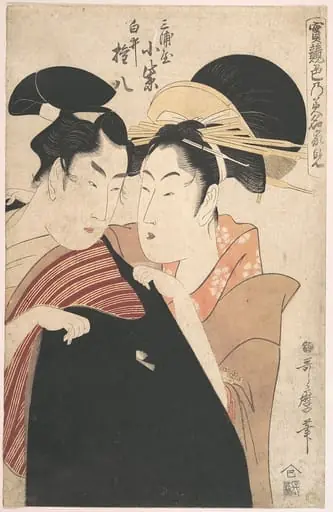 実競色乃美名家見 三浦屋小紫 白井権八|The Lovers Miura-ya Komurasaki and Shirai Gonpachi.
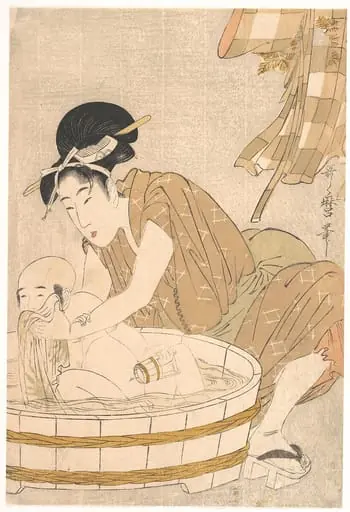 行水|Bathtime (Gyōzui)
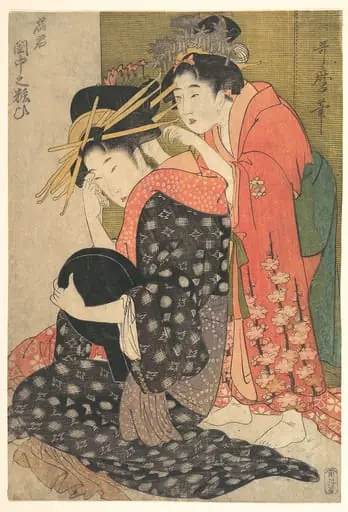 名君 閨中の粧ひ|The Oiran Yoso-oi Seated at Her Toilet
 Untitled
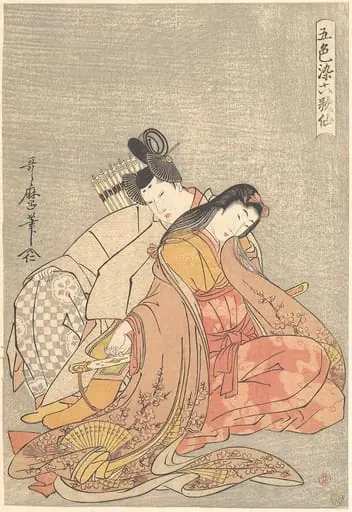 『五色染六歌仙』 在原業平と小野小町|“The Poet Ariwara no Narihira (825–880) and Ono no Komachi,” from the series Five Colors of Love for the Six Poetic Immortals (Goshiki-zome rokkasen)
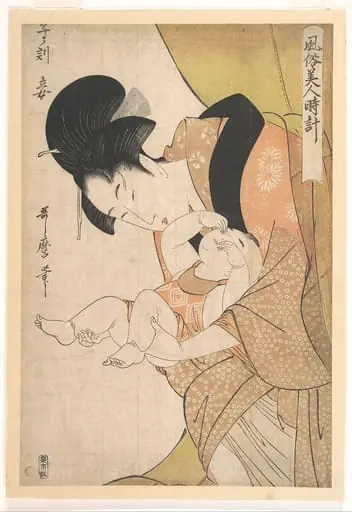 風俗美人時計 子ノ刻 妾|Midnight: Mother and Sleepy Child
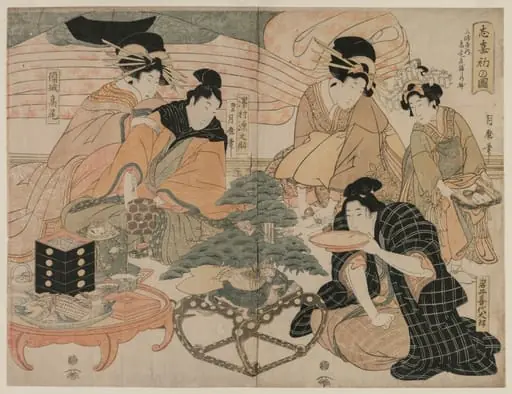 Picture of the First Visit to the Pleasure Quarters
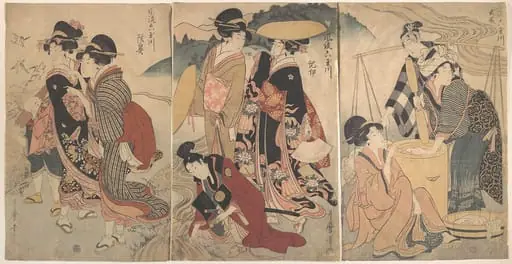 風流六玉川 武蔵 紀伊 陸奥|Women and a Man in the Country; Some pageant(?)
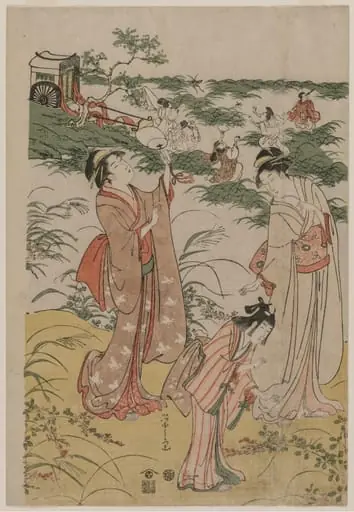 Women Chasing Crickets on an Autumn Moor
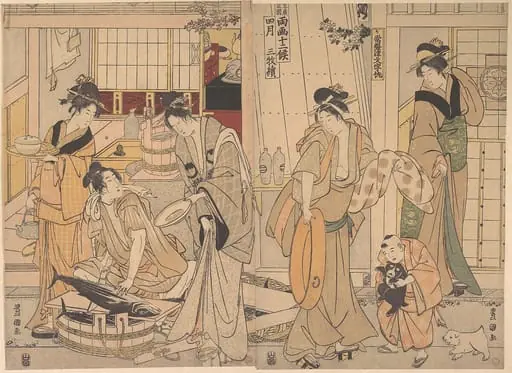 Untitled
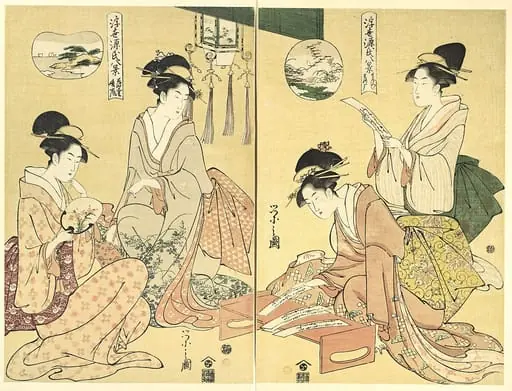 鳥文斎栄之画 「浮世源氏八景 幻 落雁 薄雲 晴嵐」|Spirit Summoner; Wild Geese Returning Home (Maboroshi; Rakugan) (right) and A Thin Veil of Clouds; Clearing Weather (Usugumo; Seiran) (left), from the series Eight Views of The Tale of Genji in the Floating World (Ukiyo Genji hakkei)
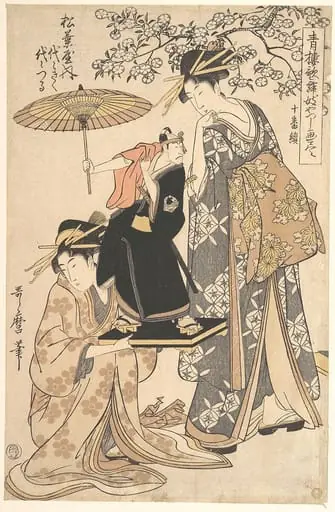 青楼歌舞妓やつし画尽 十番続|The Oiran Yoyogiku of Matsubaya Standing under a Cherry Tree
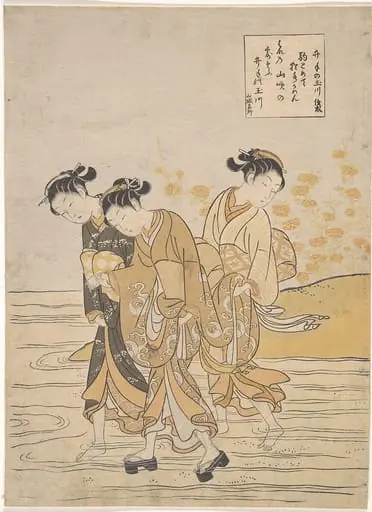 井手の玉川|Jewel River at Ide (Ide no Tamagawa)
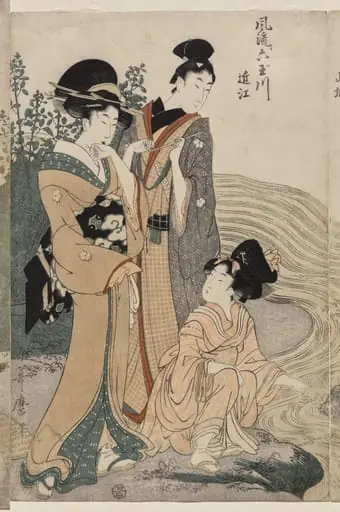 Omi Province from the series Fashionable Six Jewel Rivers (Furyu Mu Tamagawa)
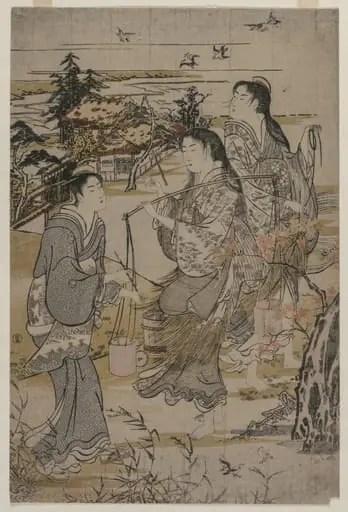 Women with Salt Pails; The Noda Tama River in Mutsu Province, from an untitled series of the Six Tama Rivers
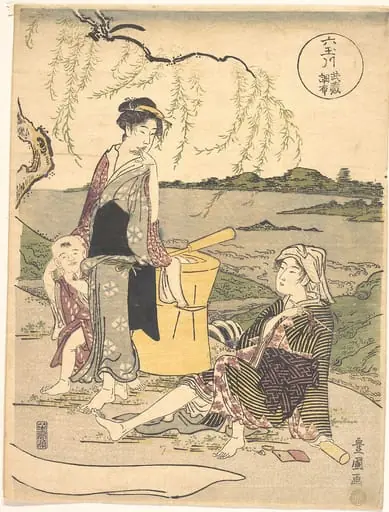 Untitled