Artwork
実競色乃美名家見 紙屋次兵衛 紀ノ国屋小春|Jihei of Kamiya Eloping with Koharu of Kinokuniya
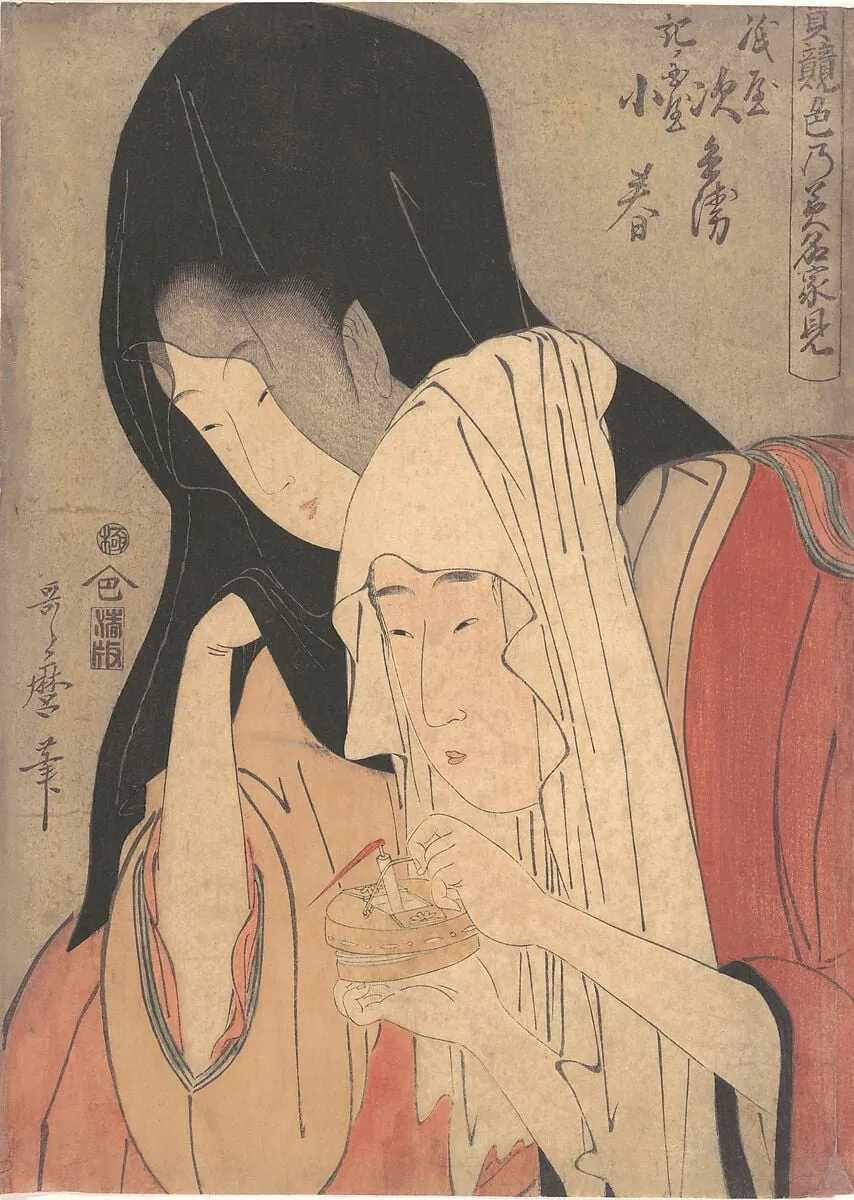
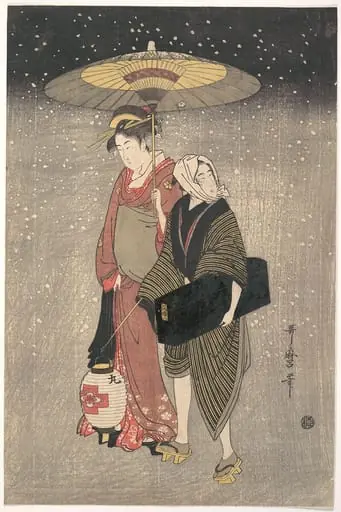
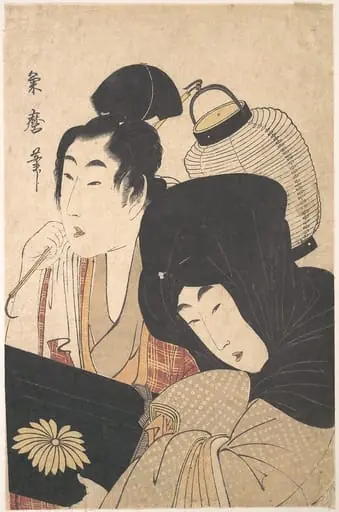
実競色乃美名家見 紙屋次兵衛 紀ノ国屋小春|Jihei of Kamiya Eloping with Koharu of Kinokuniya is an ink print by the Romanticist artist Kitagawa Utamaro. It dates from 1804 and is held in the collection of the Metropolitan Museum of Art. This woodblock print, dated around 1804, depicts a nocturnal elopement between two figures from the pleasure quarters of Edo.
About this work
Overview
This woodblock print, dated around 1804, depicts a nocturnal elopement between two figures from the pleasure quarters of Edo.
This woodblock print, dated around 1804, depicts a nocturnal elopement between two figures from the pleasure quarters of Edo. Created by Kitagawa Utamaro, it belongs to the ukiyo-e tradition of Japanese printmaking. Rendered in ink and color on paper, the composition captures a quiet, intimate moment rather than a dramatic spectacle. The work is part of the collection at The Metropolitan Museum of Art.
Subject & Meaning
The scene portrays Jihei of Kamiya and Koharu of Kinokuniya, a courtesan and her client, fleeing together under cover of night. Their embrace suggests a private decision to escape societal constraints, possibly to avoid debt or forced separation. The lantern held by Koharu symbolizes both guidance and vulnerability, illuminating their uncertain path beyond the licensed quarters into the unknown.
Technique & Style
Utamaro employed fine woodblock carving and delicate hand-coloring to render subtle textures in fabric and skin. The figures are rendered with soft contours and minimal background, focusing attention on their physical closeness. Delicate gradations in pink and cream robes contrast with the dark cloak and hat, while the lantern’s glow is suggested through restrained ink washes, enhancing the scene’s quiet tension.
History & Provenance
Produced during the late Edo period, the print was likely part of a series illustrating romantic or scandalous tales from the Yoshiwara district. It entered The Metropolitan Museum of Art’s collection through documented acquisitions of Japanese prints in the early 20th century. Its survival in good condition reflects its careful preservation among collectors of ukiyo-e.
Context
During the early 1800s, prints depicting illicit love between courtesans and patrons were popular among urban audiences. These scenes often blurred fact and fiction, drawing from real-life gossip and kabuki dramas. Utamaro’s focus on emotional nuance rather than overt spectacle aligned with a broader shift in ukiyo-e toward psychological depth and domestic intimacy.
Legacy
This print exemplifies Utamaro’s mastery in portraying intimate human moments within the rigid social structures of Edo. While not widely exhibited, it remains a reference point for scholars studying the intersection of romance, class, and gender in Japanese print culture. Its restrained composition influenced later artists seeking emotional realism over theatricality.
Artist & collection


 Untitled
 Untitled
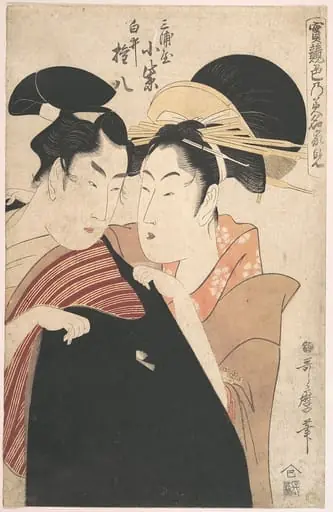 実競色乃美名家見 三浦屋小紫 白井権八|The Lovers Miura-ya Komurasaki and Shirai Gonpachi.
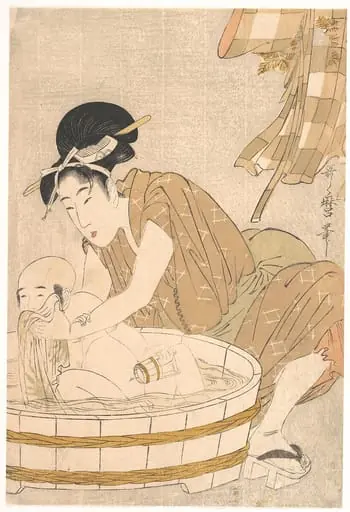 行水|Bathtime (Gyōzui)
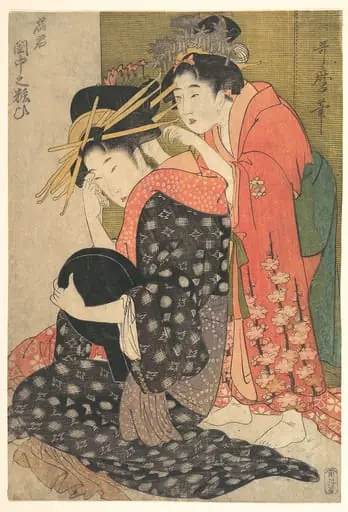 名君 閨中の粧ひ|The Oiran Yoso-oi Seated at Her Toilet
 Untitled
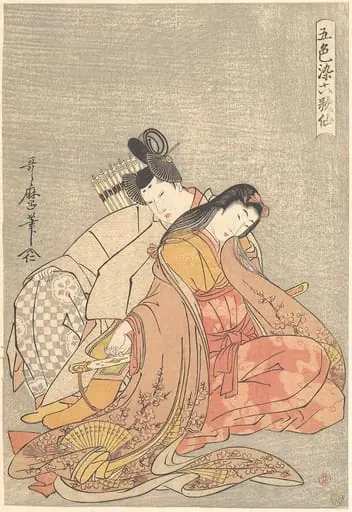 『五色染六歌仙』 在原業平と小野小町|“The Poet Ariwara no Narihira (825–880) and Ono no Komachi,” from the series Five Colors of Love for the Six Poetic Immortals (Goshiki-zome rokkasen)
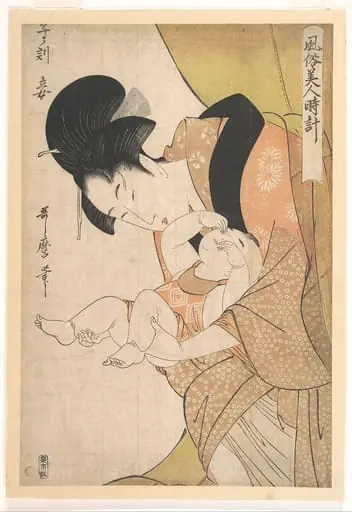 風俗美人時計 子ノ刻 妾|Midnight: Mother and Sleepy Child
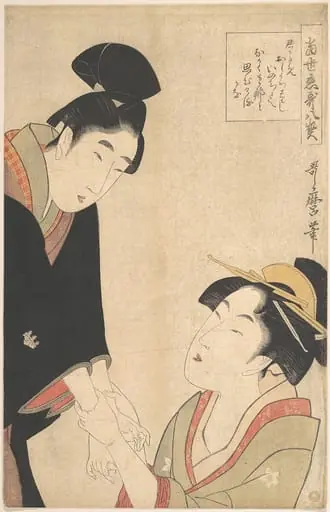 当世恋歌八契 お七と吉三郎|The Lovers Oshichi and Kichisaburo
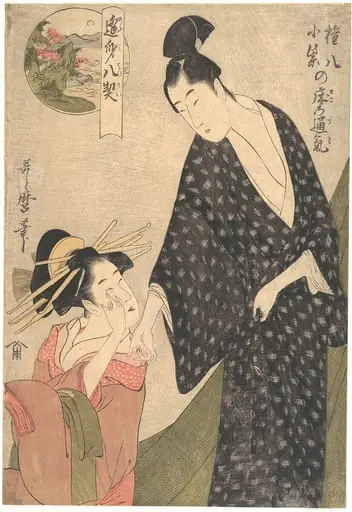 Gompachi Komurasaki no Toko no Tsuki|逢身八契 権八小紫の床の通気|Shared Feelings in the Bedchamber of Komurasaki and Gompachi
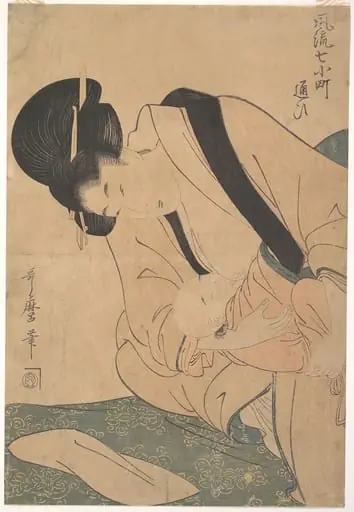 風流七小町 通ひ|Young MotHer Nursing Her Baby
 Untitled
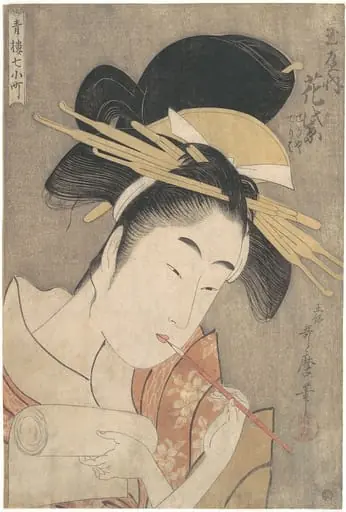 『青楼七小町』 「玉屋内花紫」|“Hanamurasaki of the Tamaya,” from the series Seven Komachi of the Pleasure Quarters (Seirō Nana Komachi)
 Untitled
 Untitled