Artwork
The Parish Priest
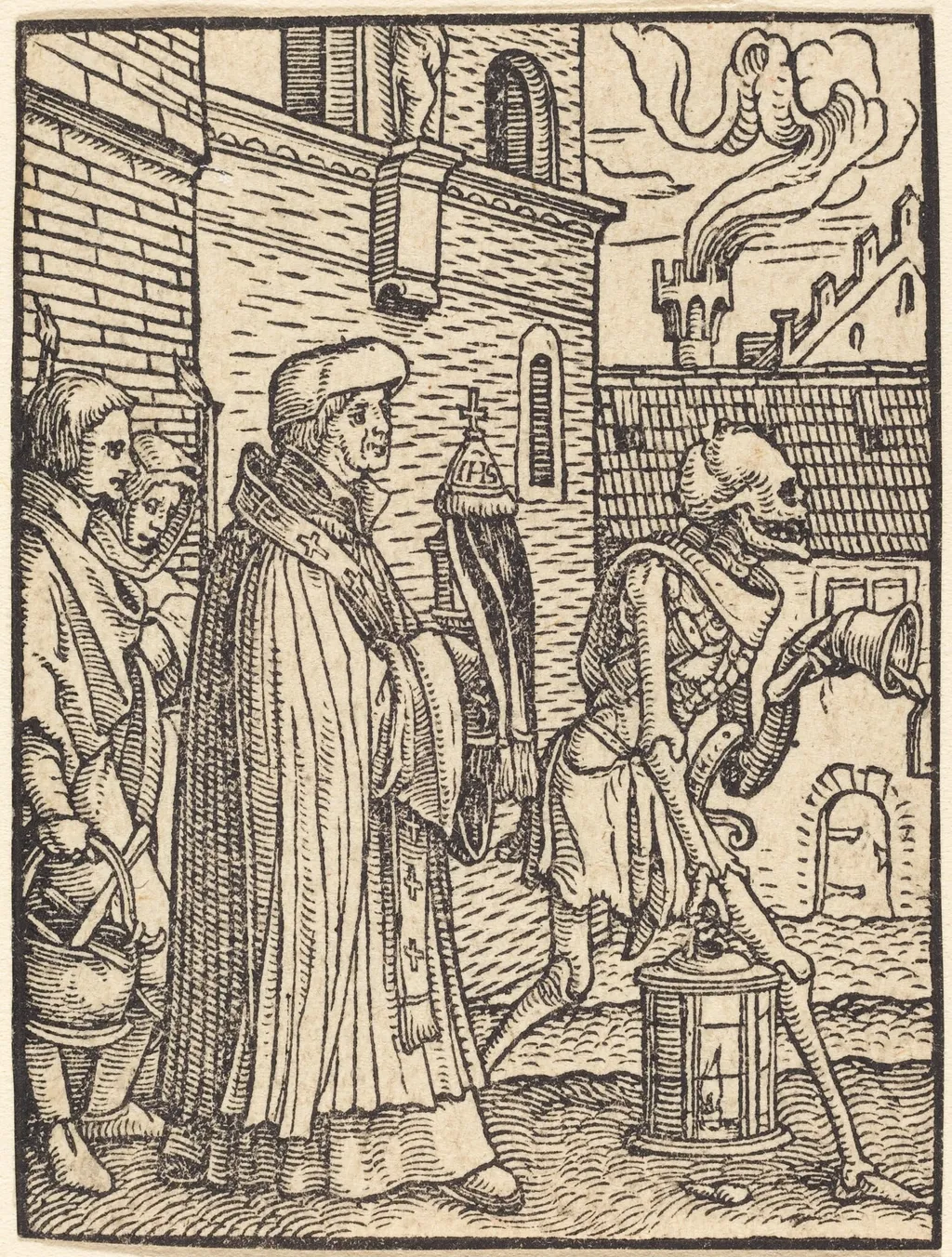
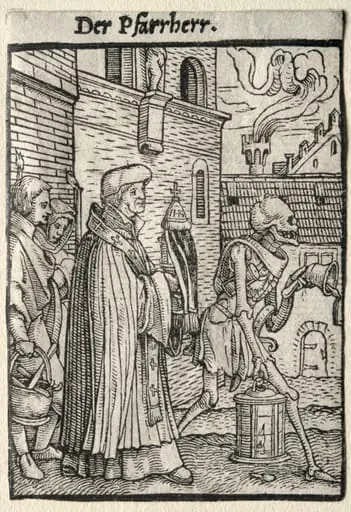
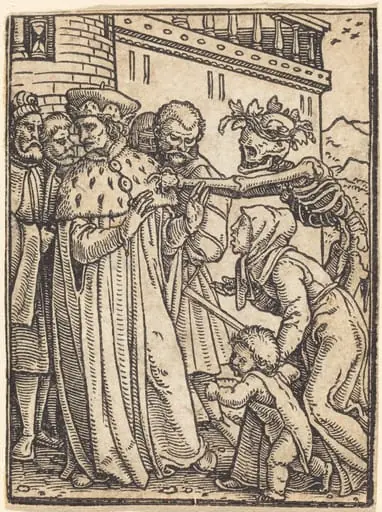
The Parish Priest is an ink print by the Renaissance artist Hans Lützelburger. It dates from 1526 and is held in the collection of the National Gallery of Art.
About this work
Overview
Created circa 1526, *The Parish Priest* is a small‑scale woodcut produced in Augsburg. The image was cut by Hans Lützelburger, a prominent German blockcutter noted for his meticulous technique. The print presents a cleric holding a cross and a miniature building, set before a brick wall while a skeletal figure emerges from a grave under a stormy sky.
Subject & Meaning
The central figure is a priest in liturgical attire, his calm posture juxtaposed with a surrounding crowd that appears anxious or praying. The emergence of a death‑like skeleton and the turbulent heavens suggest a moralizing theme common in Renaissance visual culture, linking ecclesiastical authority with the inevitability of mortality.
Technique & Style
Lützelburger’s carving reflects the refined, detailed approach typical of early sixteenth‑century Augsburg woodcuts. Fine lines and careful shading convey texture in the brick wall, clothing folds, and the skeletal form, demonstrating the cutter’s skill in translating complex designs into a printable matrix.
History & Provenance
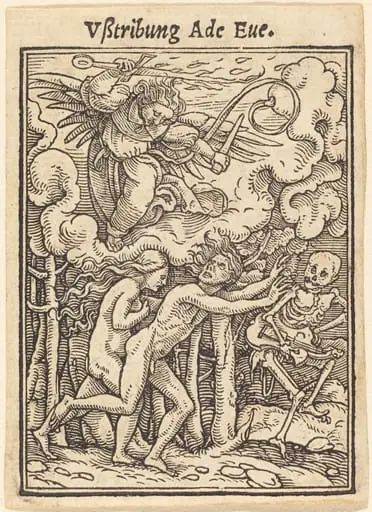
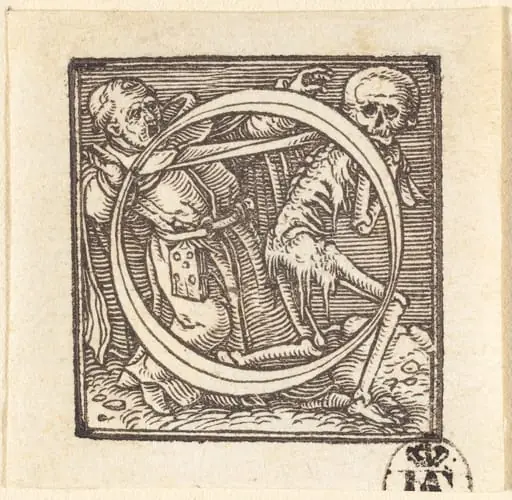
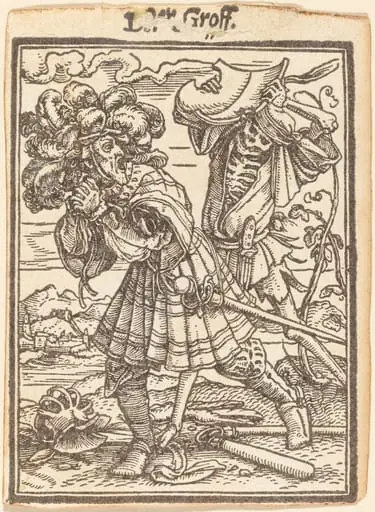
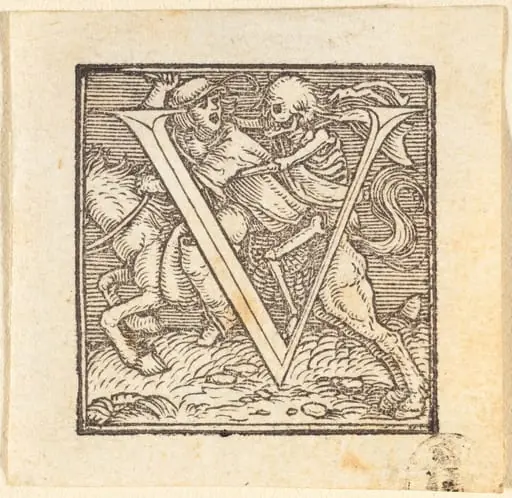
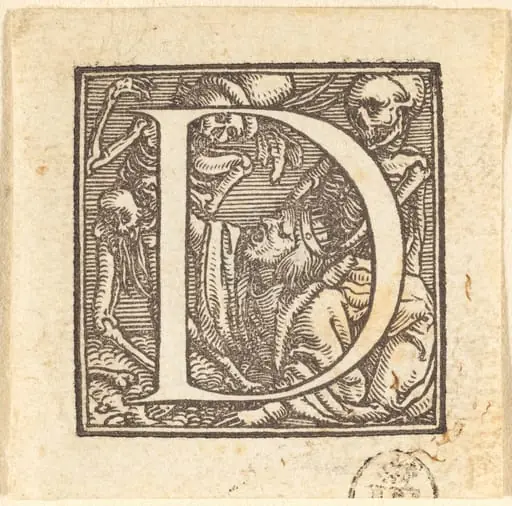
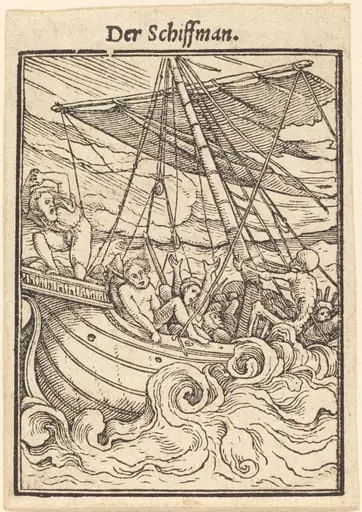
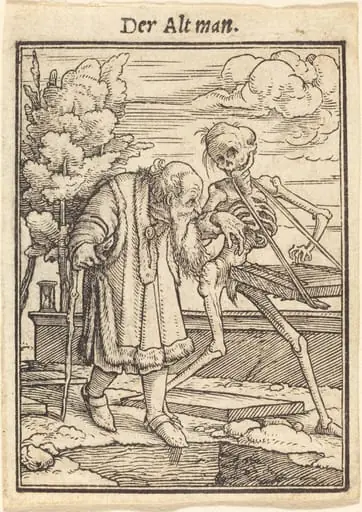
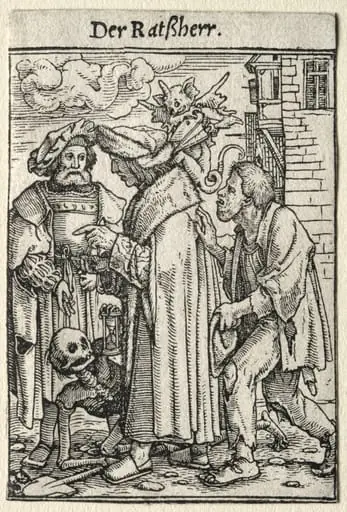
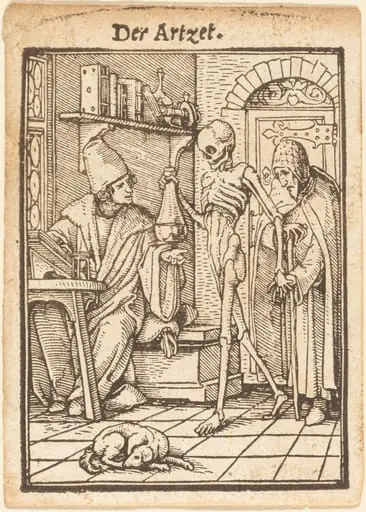
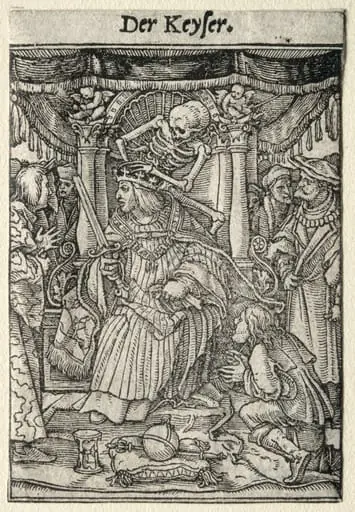
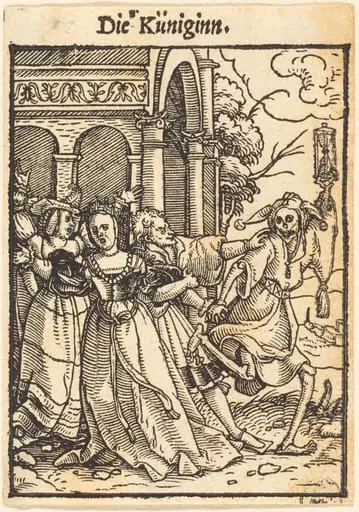
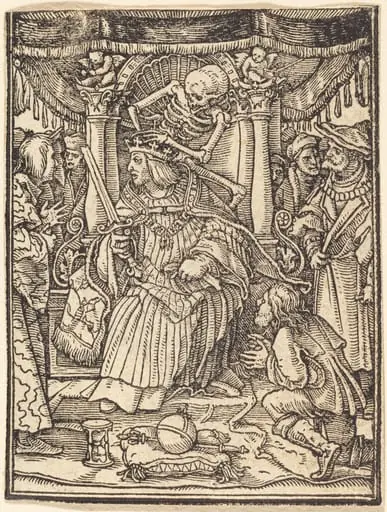
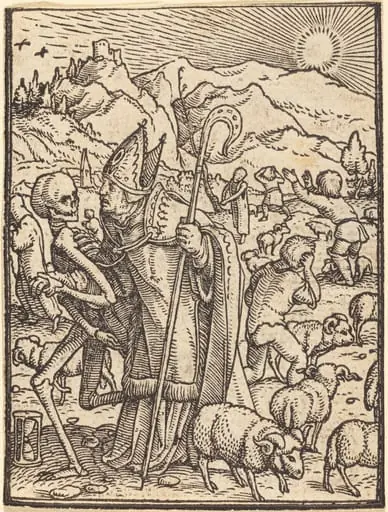
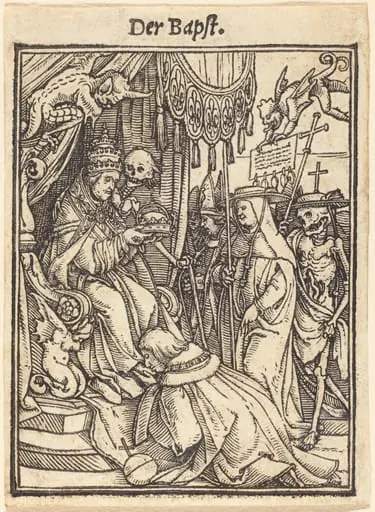
Hans Lützelburger worked in Augsburg from about 1516 and contributed to major projects such as Hans Holbein the Younger’s *Dance of Death* series, for which he cut 41 blocks before his death in June 1526. *The Parish Priest* belongs to the same productive period, illustrating his later output prior to his untimely passing.
Context
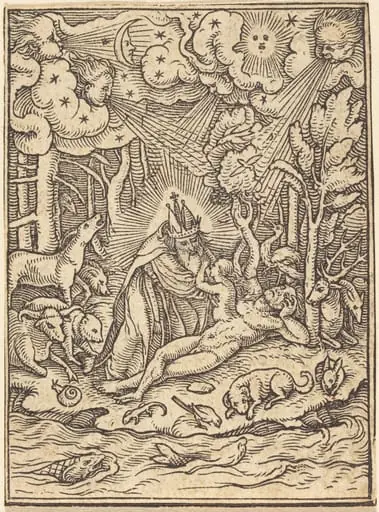
The print belongs to a broader Renaissance tradition of didactic imagery that combined religious subjects with allegorical representations of death. Such works were often used for moral instruction, reinforcing the transient nature of earthly life and the role of the clergy in guiding souls.
Artist & collection

Artist
Hans Lützelburger (died June 1526), also known as Hans Franck, was a German blockcutter ("formschneider") for woodcuts, regarded as one of the finest of his day.