Artwork
Emelie (Emma) Tamelander o.s. Crohns (1829-1868)
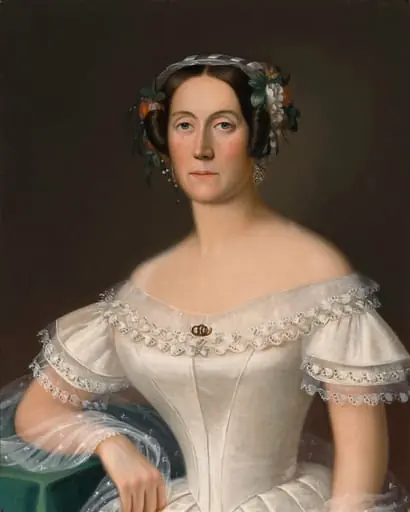
Emelie (Emma) Tamelander o.s. Crohns (1829-1868) is a drawing by Johan Erik Lindh. It is held in the collection of the Helsinki City Museum. This portrait depicts Emelie (Emma) Tamelander, born Crohns, who lived from 1829 to 1868.
About this work
Overview
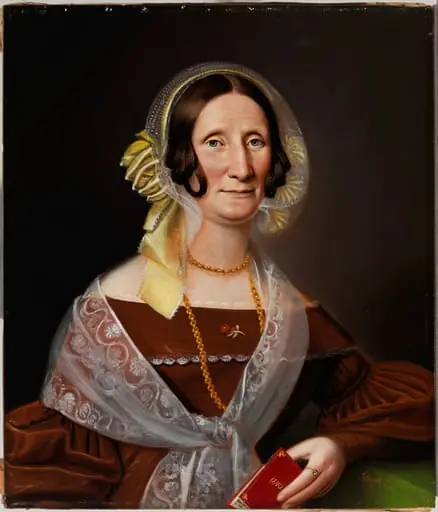
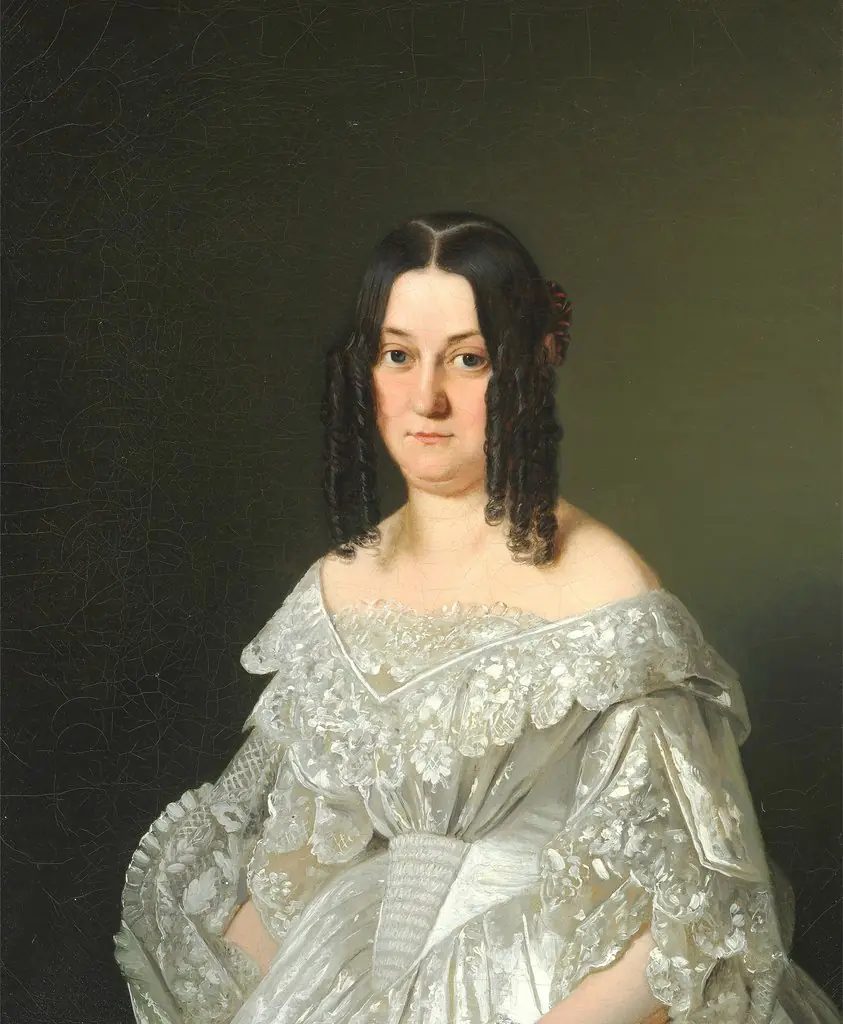
This portrait depicts Emelie (Emma) Tamelander, born Crohns, who lived from 1829 to 1868. Rendered in a detailed graphic medium, likely a drawing or print, the image captures her in quiet repose. The composition focuses tightly on her upper body, with a dark background isolating her figure and enhancing the delicacy of her attire and features.
Subject & Meaning
Her simple jewelry and modest dress reflect a preference for understated refinement, common among middle- or upper-middle-class women of the mid-19th century.
The sitter is portrayed with restrained dignity, her calm expression and slight head tilt suggesting introspection rather than performative elegance. Her simple jewelry and modest dress reflect a preference for understated refinement, common among middle- or upper-middle-class women of the mid-19th century. The portrait conveys personal presence rather than social status, emphasizing individuality over ornament.
Technique & Style
The artist employs fine cross-hatching to model form and texture, particularly in the lace detailing of the dress’s neckline and cuffs. This linear technique builds subtle gradations of light and shadow, giving the fabric a tactile quality. The smooth rendering of skin contrasts with the intricate patterns of the lace, demonstrating careful control and attention to surface variation.
History & Provenance
Emelie Tamelander was a Swedish woman whose life spanned the early to mid-1800s. The portrait likely originated in Sweden, where such intimate graphic portraits were produced for private collections. Its survival suggests it was valued within her family, though its specific creator and early ownership remain undocumented in available records.
Context
In the 1840s–1860s, detailed portrait drawings and engravings were common in Scandinavia as affordable alternatives to oil paintings. They served as personal mementos, often made for weddings or family records. The emphasis on lace and hair styling reflects contemporary ideals of feminine propriety, while the dark background aligns with the prevailing taste for focused, uncluttered portraiture.
Legacy
The portrait endures as a quiet testament to a woman whose life is otherwise little recorded. Its technical precision and emotional restraint offer insight into the visual culture of non-elite portraiture in 19th-century Sweden. It stands as an example of how personal identity was preserved through meticulous draftsmanship rather than grandeur.
Artist & collection
Artist
Johan Erik Lindh filled small sheets with soft pencil portraits of Finnish families in the early 1800s.