Artwork
Carding shawl wool prior to spinning
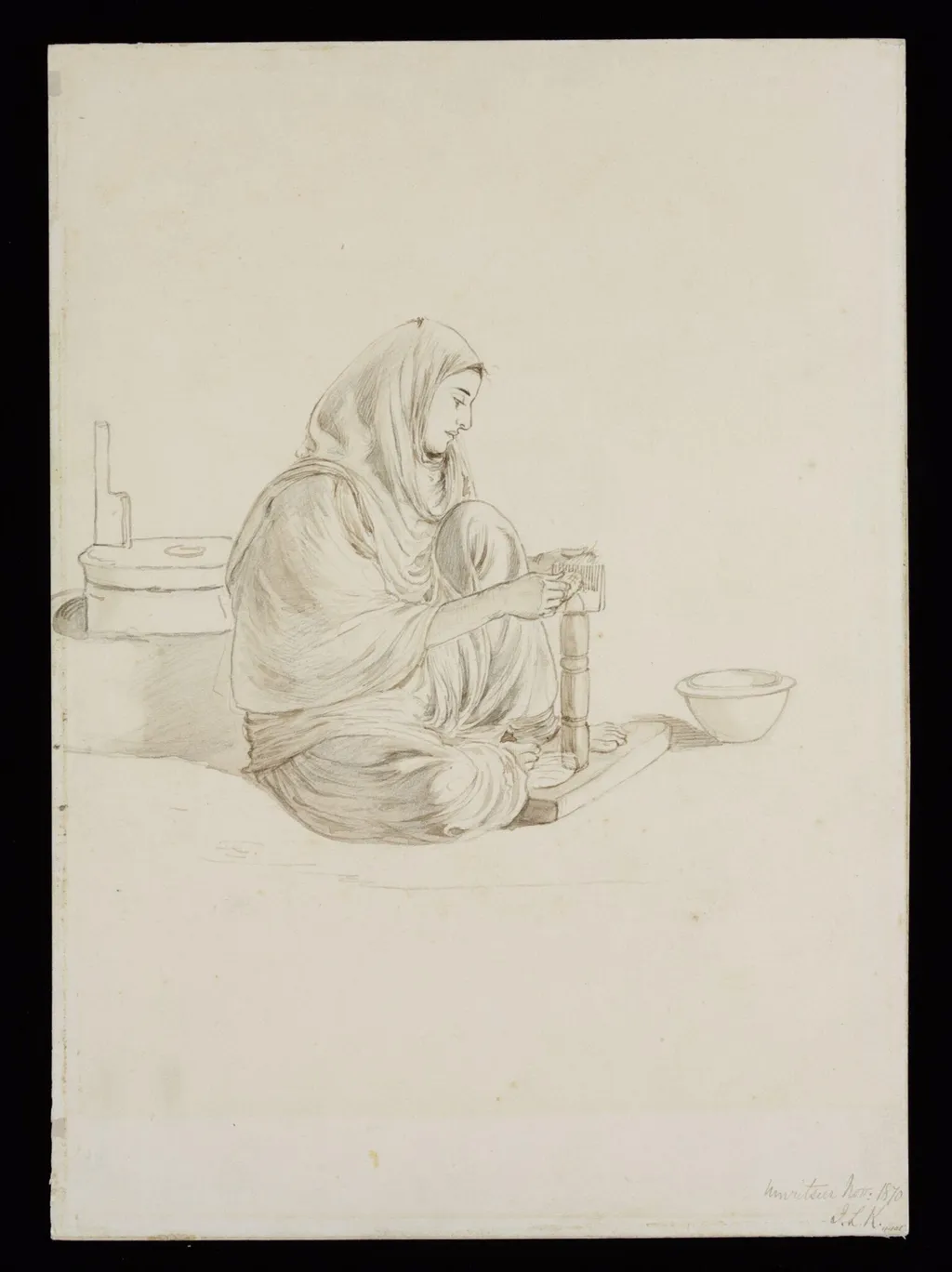
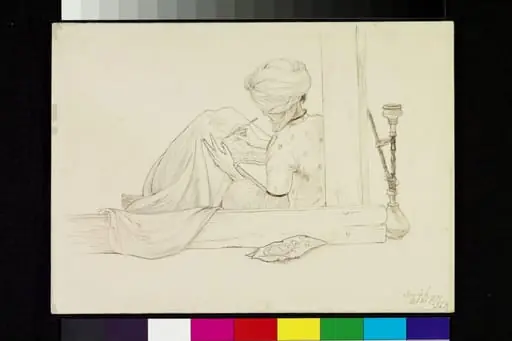
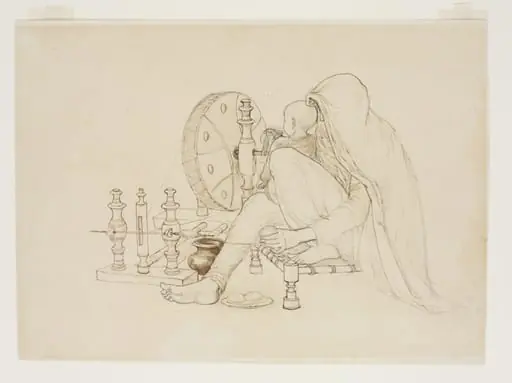
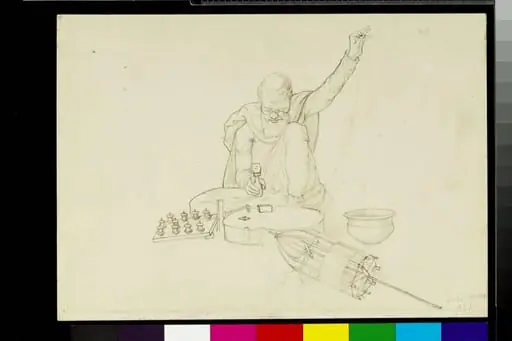
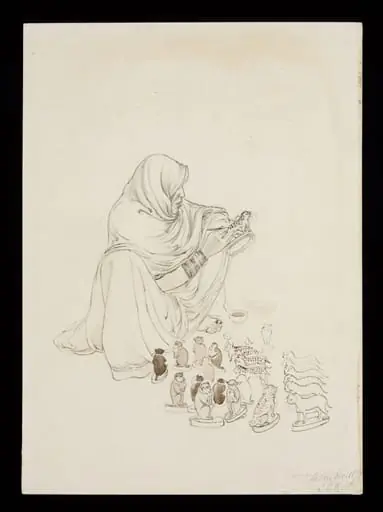
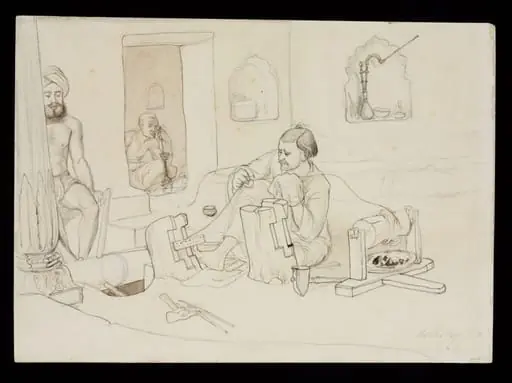
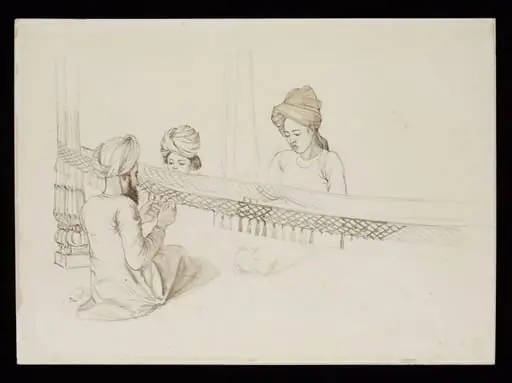
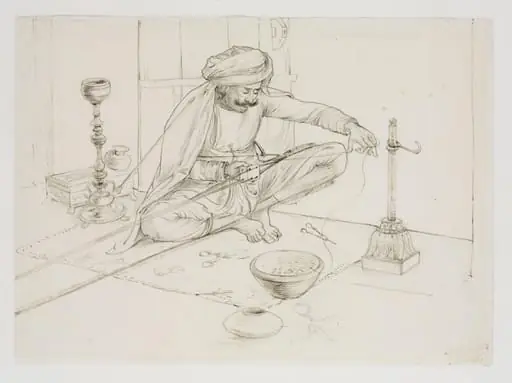
Carding shawl wool prior to spinning is a drawing by the Impressionist artist John Lockwood Kipling. It dates from 1870 and is held in the collection of the Victoria and Albert Museum.
About this work
John Lockwood Kipling made a drawing called Carding shawl wool prior to spinning in 1870. It shows a practical moment in textile work. The artist drew it by hand with clear lines.
This piece sits between Impressionism and Realism. It captures everyday life the way Realism does, but with a light, unfussy touch.
Next time you’re near London, check out the Victoria and Albert Museum.
Overview
The drawing entitled *Carding Shawl Wool Prior to Spinning* was executed in 1870 by John Lockwood Kipling, a British artist and architect active in colonial India. Rendered in precise line work, the image records a moment of textile preparation in Amritsar, depicting a craftsman handling raw wool before it is spun into yarn.
Subject & Meaning
The composition focuses on the hands and tools involved in carding, a labor-intensive stage that aligns fibers for spinning. By isolating this routine activity, the work highlights the skill and manual dexterity of Indian textile workers, offering a visual document of everyday craft rather than an idealized scene.
Technique & Style
Kipling employed a clean, linear drawing technique, emphasizing contour and texture without extensive shading. The style balances realist observation of material detail with a restrained, almost impressionistic lightness, allowing the viewer to discern both the physicality of the wool and the subtle rhythm of the task.
History & Provenance
Created during Kipling’s government‑commissioned tour of the North‑West Provinces, the drawing was produced shortly after his appointment as Architectural Sculptor at Bombay’s Sir Jamsetjee Jeejeebhoy School of Art. It later entered the collection of the Victoria and Albert Museum, where Kipling’s broader decorative work is also represented.
Context
At the time of its making, traditional Indian textile practices faced competition from imported European fabrics. Kipling’s documentation of local artisans aligns with his broader efforts, as head of the Mayo College of Arts, to preserve and promote indigenous crafts within the colonial framework.
Artist & collection
Artist
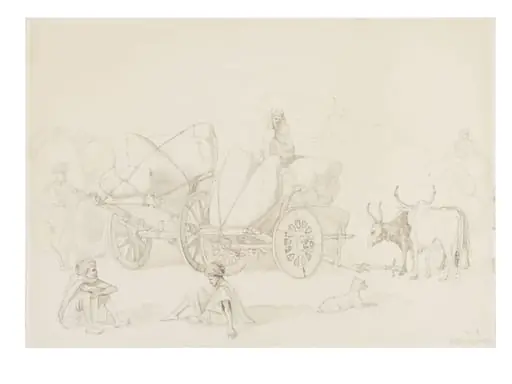
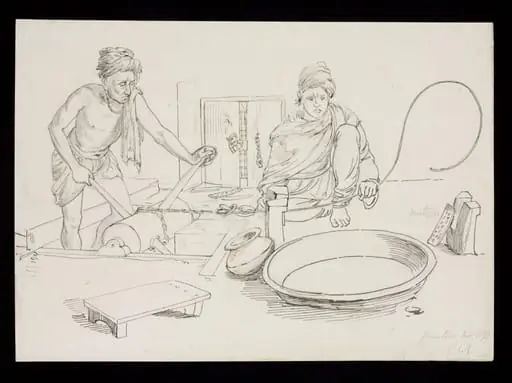
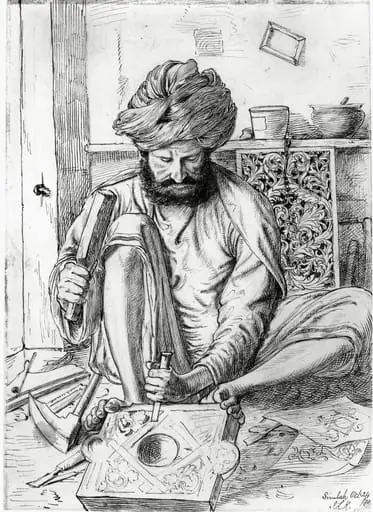
John Lockwood Kipling filled sketchbooks with the daily life he saw around him in British India, drawing craftsmen at work, farmers at market, and seed planters in fields.