Artwork
The Boodhist Tower of Sarnath, Bénarès
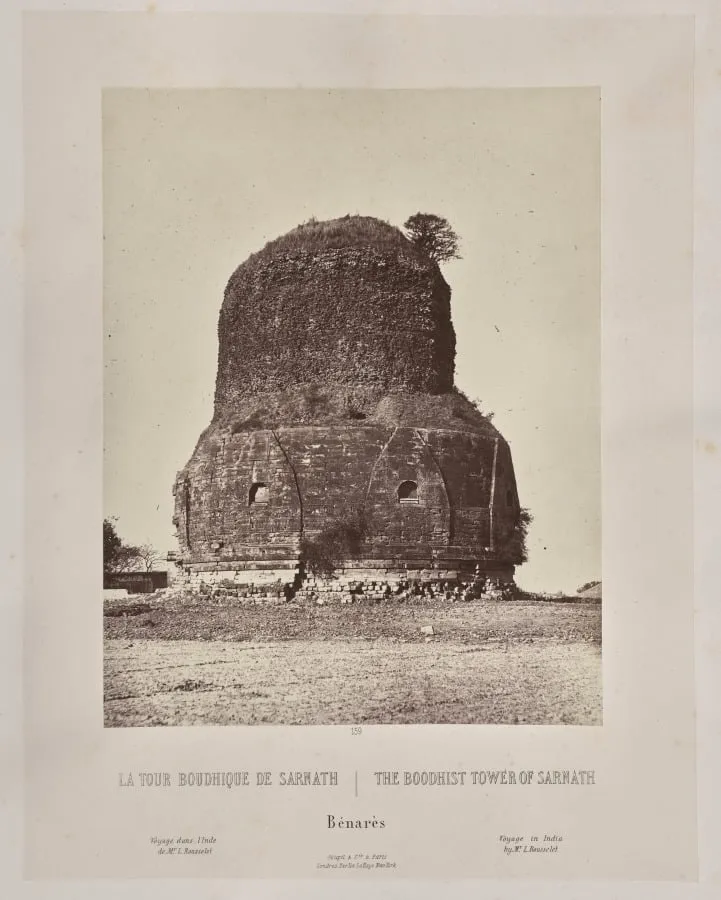
The Boodhist Tower of Sarnath, Bénarès is a photography by the Impressionist artist Louis-Théophile Marie Rousselet. It dates from 1866 and is held in the collection of the Cleveland Museum of Art.
About this work
So he taught himself photography there—no small feat in the 1860s—and later turned his photos into prints.
You see a tall, crumbling brick tower rising against a pale sky, its steps worn smooth by time.
Rousselet drew this while traveling in India, but he wasn’t happy with his sketches. So he taught himself photography there—no small feat in the 1860s—and later turned his photos into prints. The tower is real: it stands in Sarnath, where Buddha first taught.
If you like quiet ruins, look up the work of Louis-Théophile Marie Rousselet (French, 1845–1929).
Overview
This photograph captures a solitary brick tower in Sarnath, a historic site on the banks of the Ganges where the Buddha first delivered his teachings. The structure rises against a muted sky, its weathered steps indicating long exposure to the elements. The image is part of a series produced by Louis‑Théophile Marie Rousseau, a French artist who turned to photography while traveling in India during the 1860s.
Subject & Meaning
The tower, now in ruins, stands as a tangible reminder of the layered religious and cultural history of Sarnath, a place revered in Hindu, Buddhist, and later Islamic narratives. Its solitary presence evokes the passage of time and the fading of once‑prominent architectural forms within a sacred landscape.
Technique & Style
Rousseau, self‑taught in the photographic processes of the mid‑nineteenth century, employed a careful compositional balance, aligning the vertical thrust of the tower with the horizontal expanse of sky. The image’s tonal range highlights the texture of the brickwork and the smoothness of the worn steps, reflecting the photographer’s attention to detail and his effort to convey the monument’s atmosphere.
History & Provenance
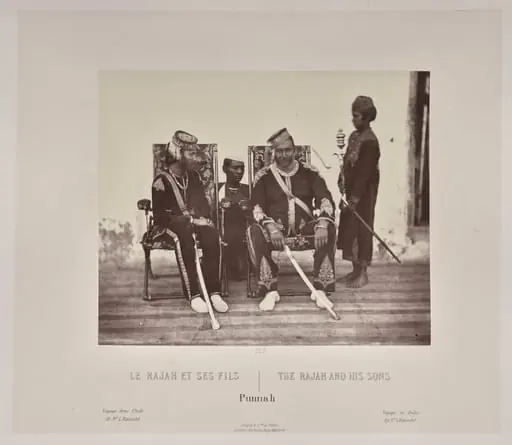
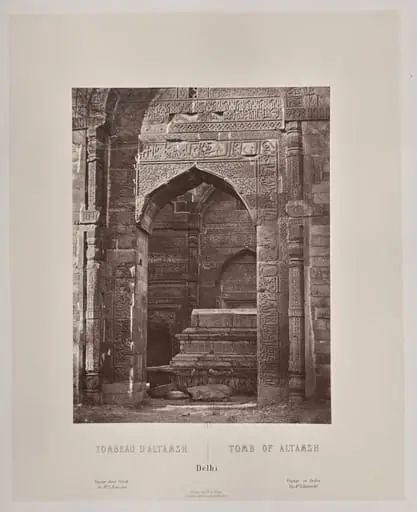
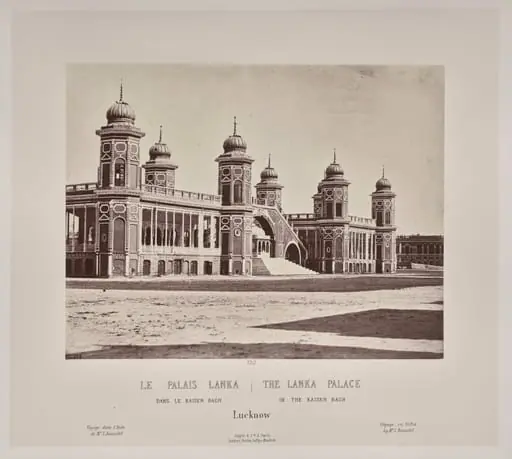
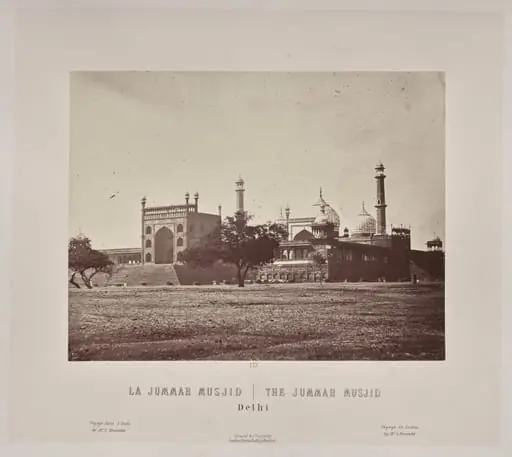
After finding his sketches inadequate for conveying the grandeur of Indian monuments, Rousseau learned photography in India—a notable achievement given the technical challenges of the era. He later produced prints from his negatives, distributing them in a volume that documented sites across northern India, including Hindu, Rajput, and Mughal locations, as well as portraits of local rulers.
Context
The photograph belongs to a broader visual record created during a period of heightened European interest in Indian architecture and antiquities. By documenting Sarnath alongside other northern Indian sites, Rousseau contributed to contemporary understandings of the subcontinent’s diverse historical layers, bridging artistic observation and emerging photographic documentation.
Legacy
Rousseau’s work, though less widely known than that of later photographers, offers valuable visual evidence of mid‑nineteenth‑century Indian monuments before extensive restoration or alteration. The image of the Sarnath tower remains a reference point for scholars studying the evolution of the site’s built environment and the early adoption of photography in colonial contexts.
Artist & collection
Artist
Louis-Théophile Marie Rousselet
Louis-Théophile Marie Rousselet (1845–1929) was a French artist.