Artwork
The Sacred Island of Devinath on the Ganges, Sultangunge
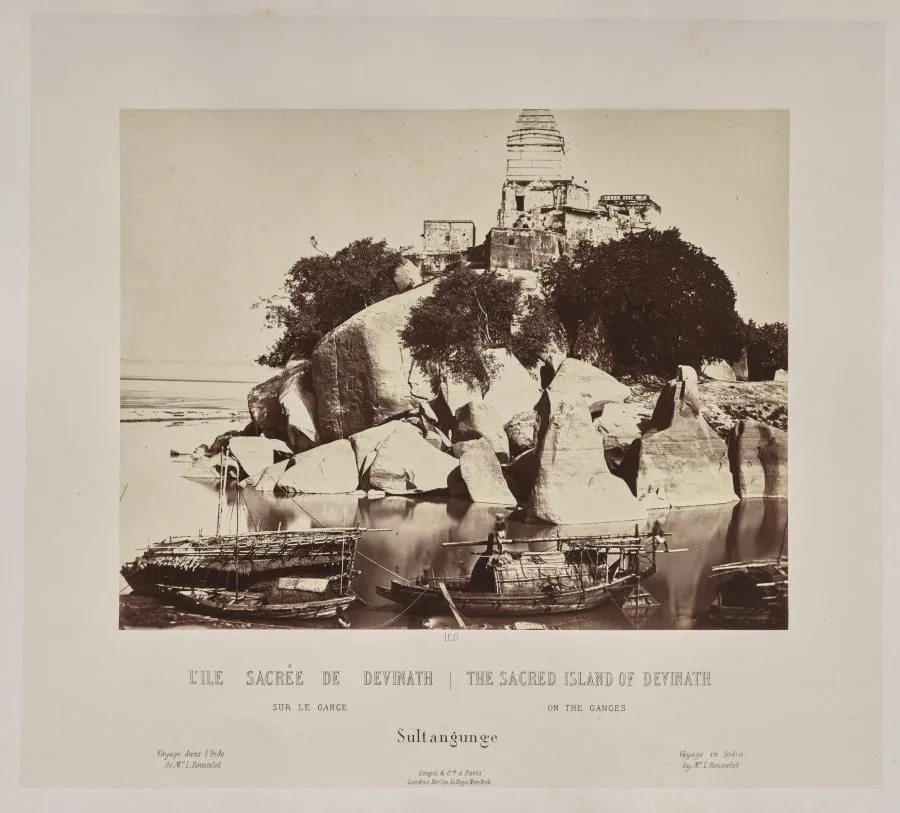
The Sacred Island of Devinath on the Ganges, Sultangunge is a photography by the Impressionist artist Louis-Théophile Marie Rousselet. It dates from 1866 and is held in the collection of the Cleveland Museum of Art.
About this work
Overview
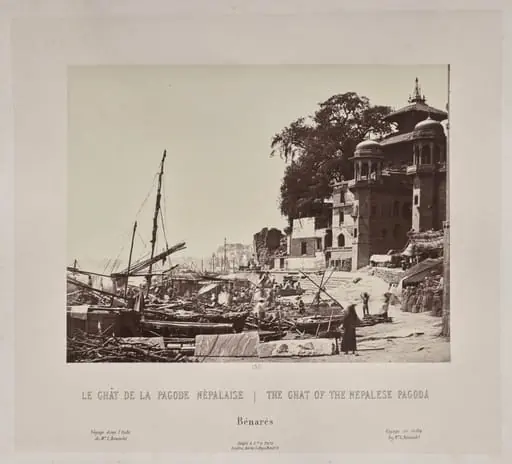
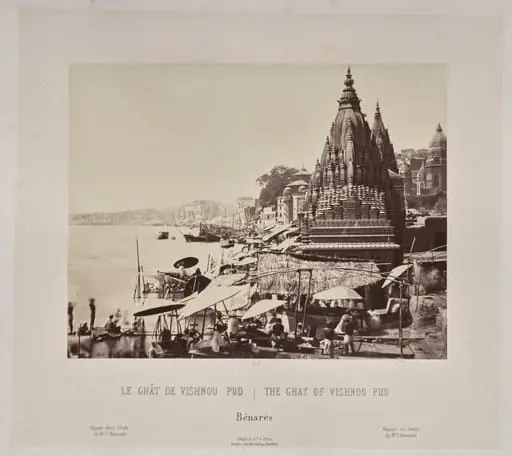
This photograph captures a tranquil island on the Ganges near Sultangunge, adorned with modest temples and vegetation beneath a soft, hazy sky.
This photograph captures a tranquil island on the Ganges near Sultangunge, adorned with modest temples and vegetation beneath a soft, hazy sky. Taken by French artist Louis Rousselet during his travels in India, it reflects his shift from drawing to photography after concluding that sketches failed to convey the spiritual and visual depth of Indian sacred sites. His adoption of the medium was uncommon among Europeans in the region at the time.
Subject & Meaning
The island, though unassuming in scale, holds religious significance as part of the Ganges’ sacred landscape. Its clustered temples and quiet isolation suggest a space of contemplation, removed from urban bustle. Rousselet framed it not as a tourist attraction but as a living spiritual environment, emphasizing serenity over grandeur, aligning with Hindu notions of sacred geography tied to rivers and solitude.
Technique & Style
Rousselet employed early photographic processes, likely wet plate collodion, to render subtle tonal gradations in the hazy atmosphere and delicate textures of temple stonework and foliage. His composition avoids dramatic angles, favoring balanced horizontals and muted contrasts that invite quiet observation. The lack of human figures enhances the sense of timeless stillness, reflecting his intent to document spiritual atmosphere rather than spectacle.
History & Provenance
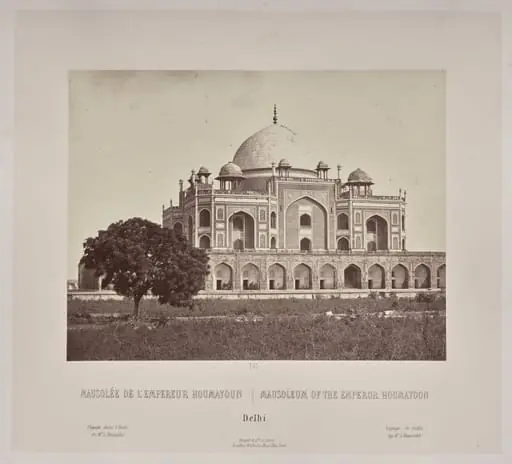
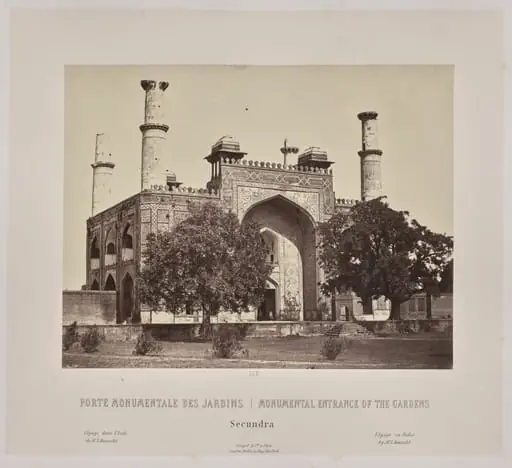
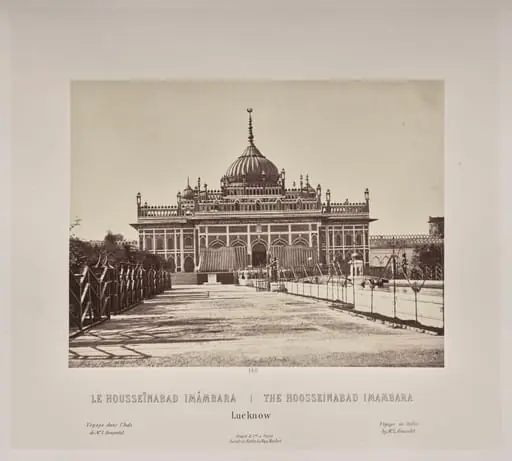
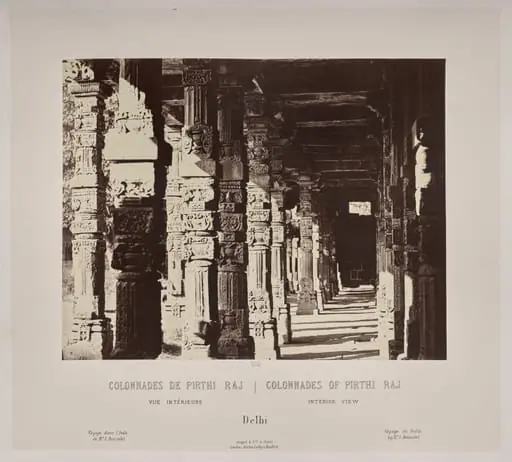
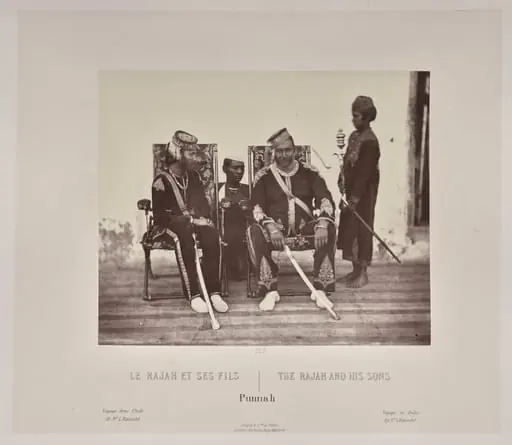
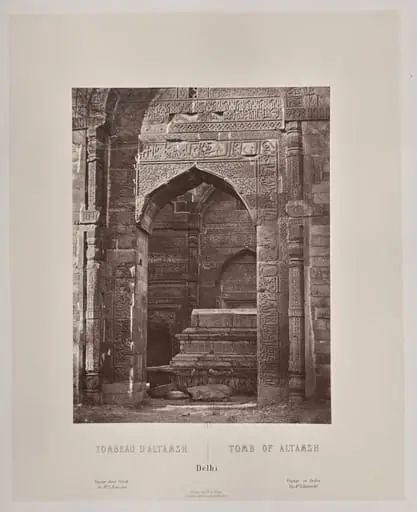
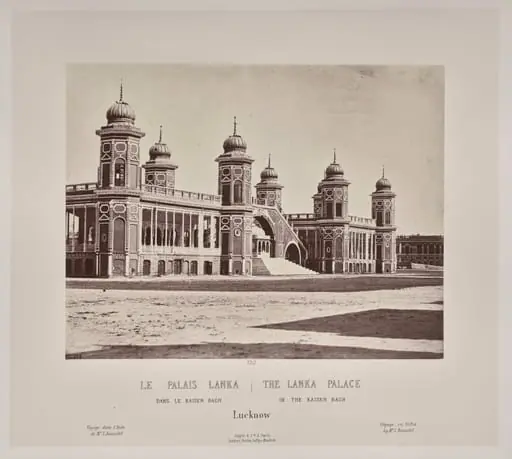
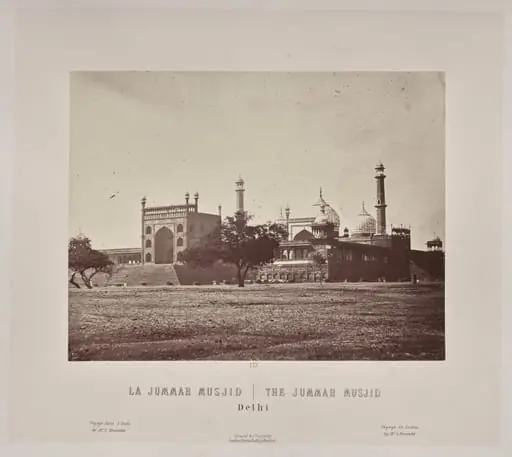
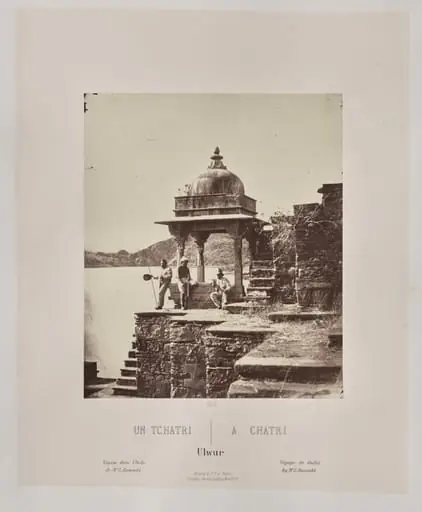
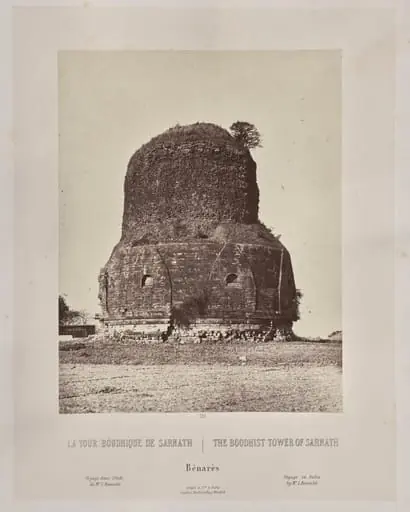
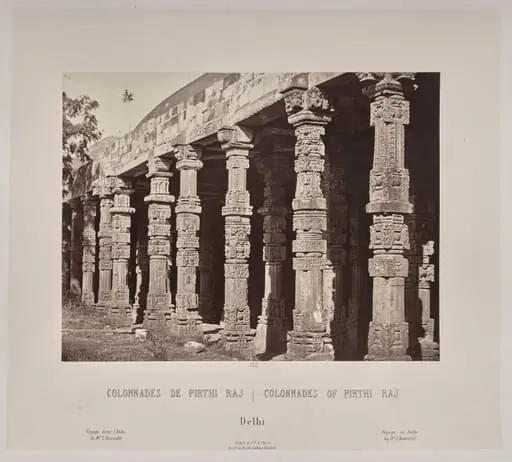
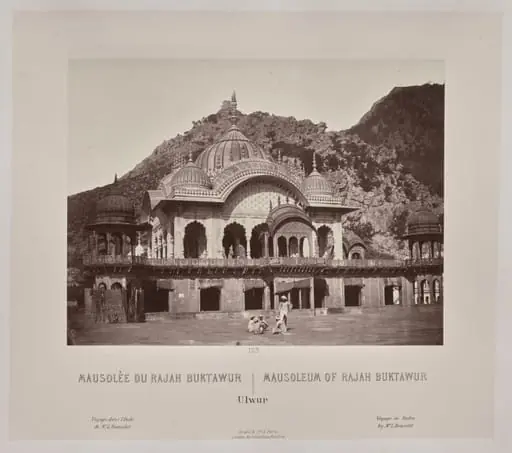
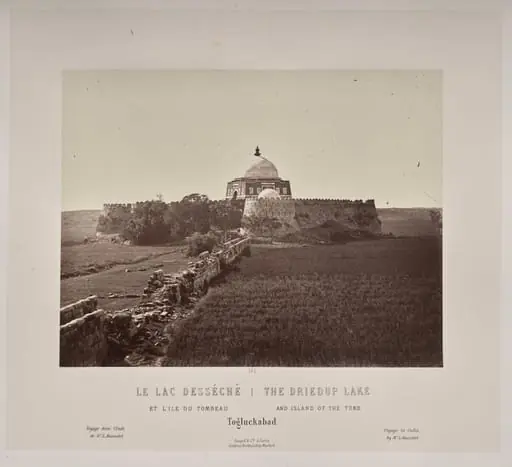
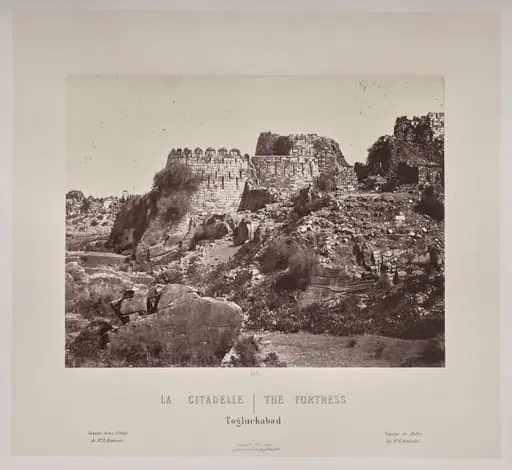
Rousselet acquired photographic skills in India during the 1860s, a rare pursuit for European travelers then. This image was part of a broader project documenting religious and political sites across northern India, including Varanasi and Alwar. The photograph later appeared in his published travelogue, contributing to European visual records of India’s cultural heritage during the colonial period.
Context
In mid-19th century India, photography was emerging as both a scientific tool and a colonial medium. Rousselet’s work stood apart by focusing on sacred and architectural sites with sensitivity, rather than solely on imperial or ethnographic subjects. His images entered Western collections as rare, firsthand records of India’s spiritual landscapes, offering an alternative to more sensationalized depictions.
Legacy
Rousselet’s photographs, including this one, influenced later European perceptions of India’s religious architecture by emphasizing quiet dignity over exoticism. His technical skill and compositional restraint set a precedent for documentary photography in South Asia. Institutions such as the Cleveland Museum of Art hold his work as valuable historical documents of a changing cultural landscape.
Artist & collection
Artist
Louis-Théophile Marie Rousselet
Louis-Théophile Marie Rousselet (1845–1929) was a French artist.