Artwork
Henry Cary, Earl of Monmouth
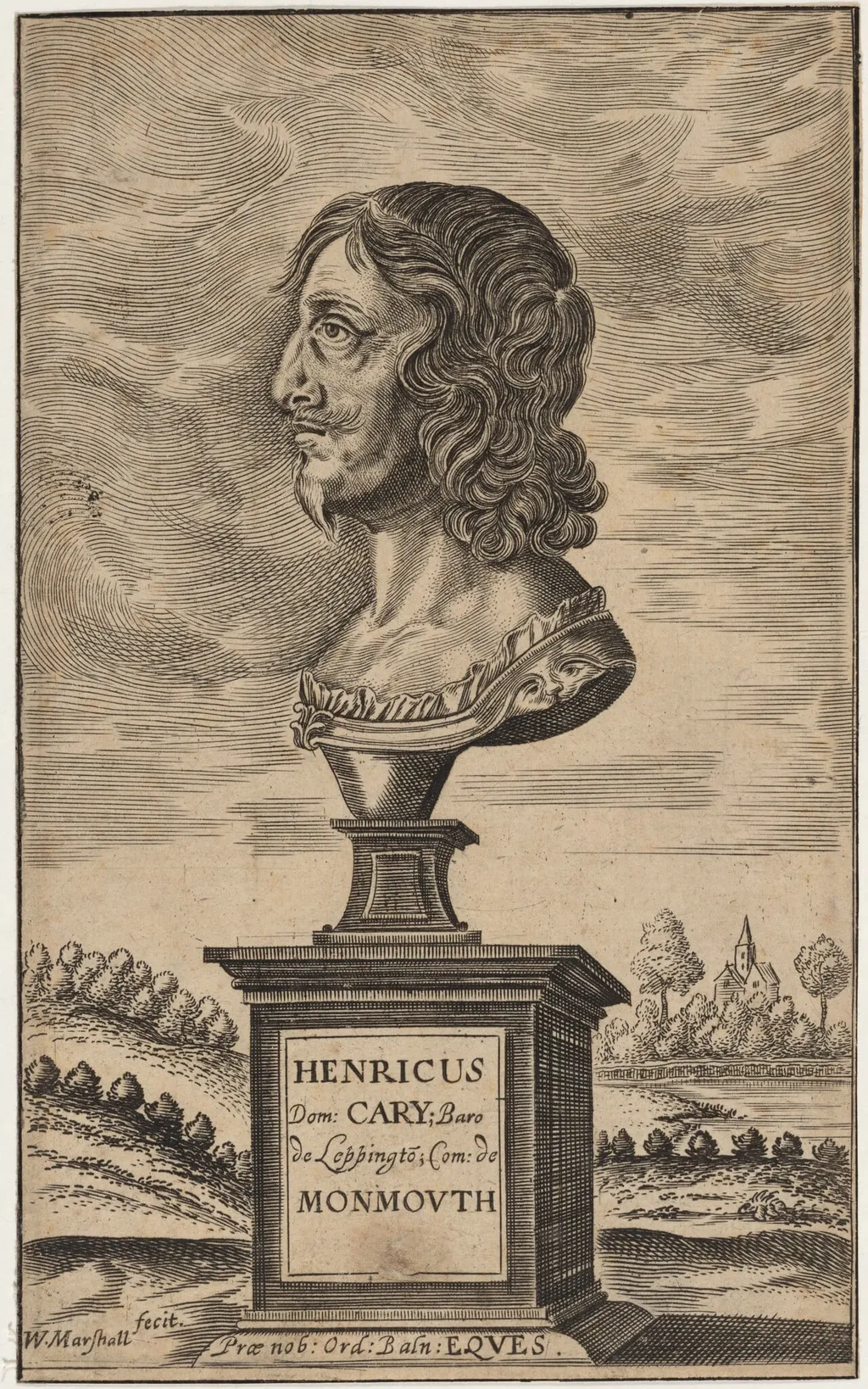
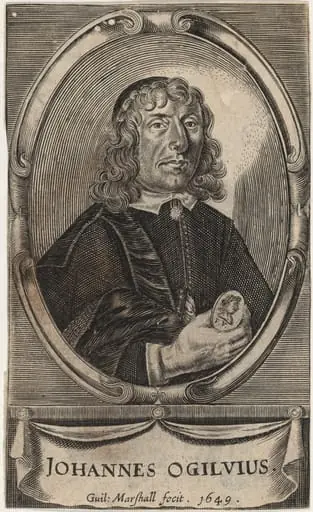
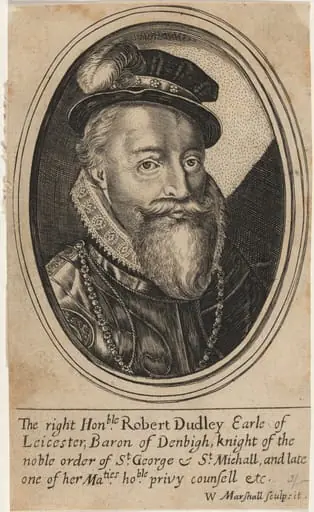
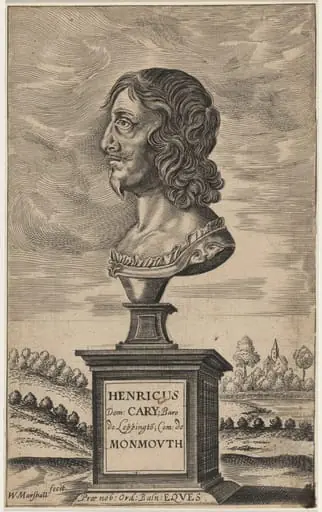
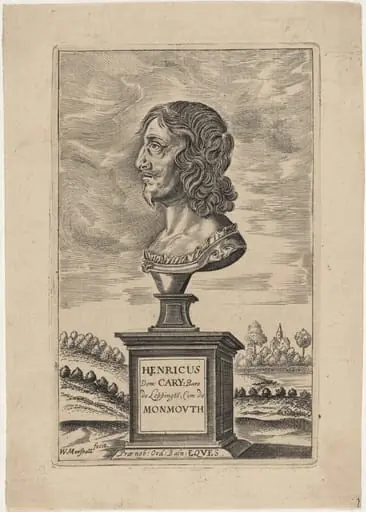
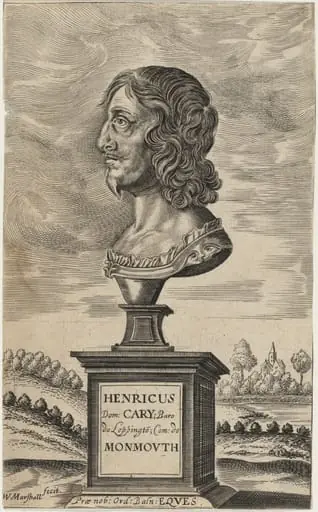
Henry Cary, Earl of Monmouth is an ink print by the Renaissance artist William Marshall. It dates from 1623 and is held in the collection of the National Gallery of Art.
About this work
Overview
The composition includes a Latin inscription on a pedestal and a faint background of trees and a church spire, typical of early 17th-century portraiture.
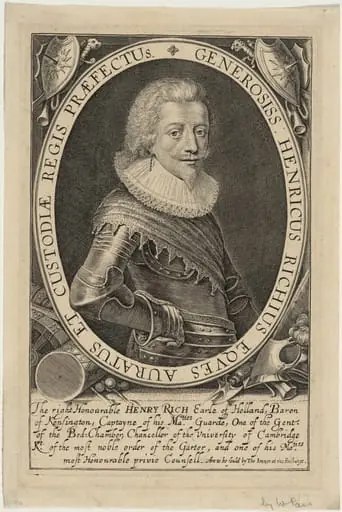
This 1623 engraving by William Marshall depicts Henry Cary, Earl of Monmouth, in profile bust form. Rendered in monochrome, the image captures the nobleman’s head and shoulders with fine linear detail. The composition includes a Latin inscription on a pedestal and a faint background of trees and a church spire, typical of early 17th-century portraiture. Marshall’s signature, 'W. Marshall fecit,' confirms his authorship and the handmade nature of the print.
Subject & Meaning
Henry Cary, Earl of Monmouth, was a prominent English courtier and politician. The portrait presents him with solemn composure, emphasizing dignity and status rather than individual expression. The Latin plaque identifies him formally as 'Henricus Dom. Cary,' reinforcing his noble rank. The inclusion of a distant landscape suggests a connection to land and lineage, common in aristocratic portraiture of the period.
Technique & Style
Marshall employed fine-line engraving on metal, using incised grooves to create tonal gradations and texture. The tightly curled hair and precise facial contours demonstrate skilled handwork, while the background elements are rendered with minimal detail to avoid distraction. The absence of color and the reliance on line reflect the conventions of printed portraiture, valued for its reproducibility and clarity among educated audiences.
History & Provenance
Created in 1623, the engraving likely served as a commemorative or diplomatic image, circulated among court circles. It was produced during Cary’s tenure as a trusted advisor to King James I. No definitive record of its early ownership exists, but its survival in institutional collections suggests it was preserved as a historical document of aristocratic representation in early Stuart England.
Context
In the early 1600s, engraved portraits were widely used to disseminate the likenesses of nobility beyond courtly circles. Marshall, a skilled printmaker, worked alongside other artists to meet demand for such images. This engraving aligns with broader trends in British print culture, where textual identification and restrained composition conveyed authority without overt embellishment.
Legacy
The engraving remains a documented example of early Stuart portraiture in print form. It contributes to the study of how noble identity was visually constructed and reproduced in the pre-photographic era. While not widely known today, it holds value as a material artifact reflecting the intersection of art, status, and print technology in 17th-century England.
Artist & collection