Artwork
Saint Roch
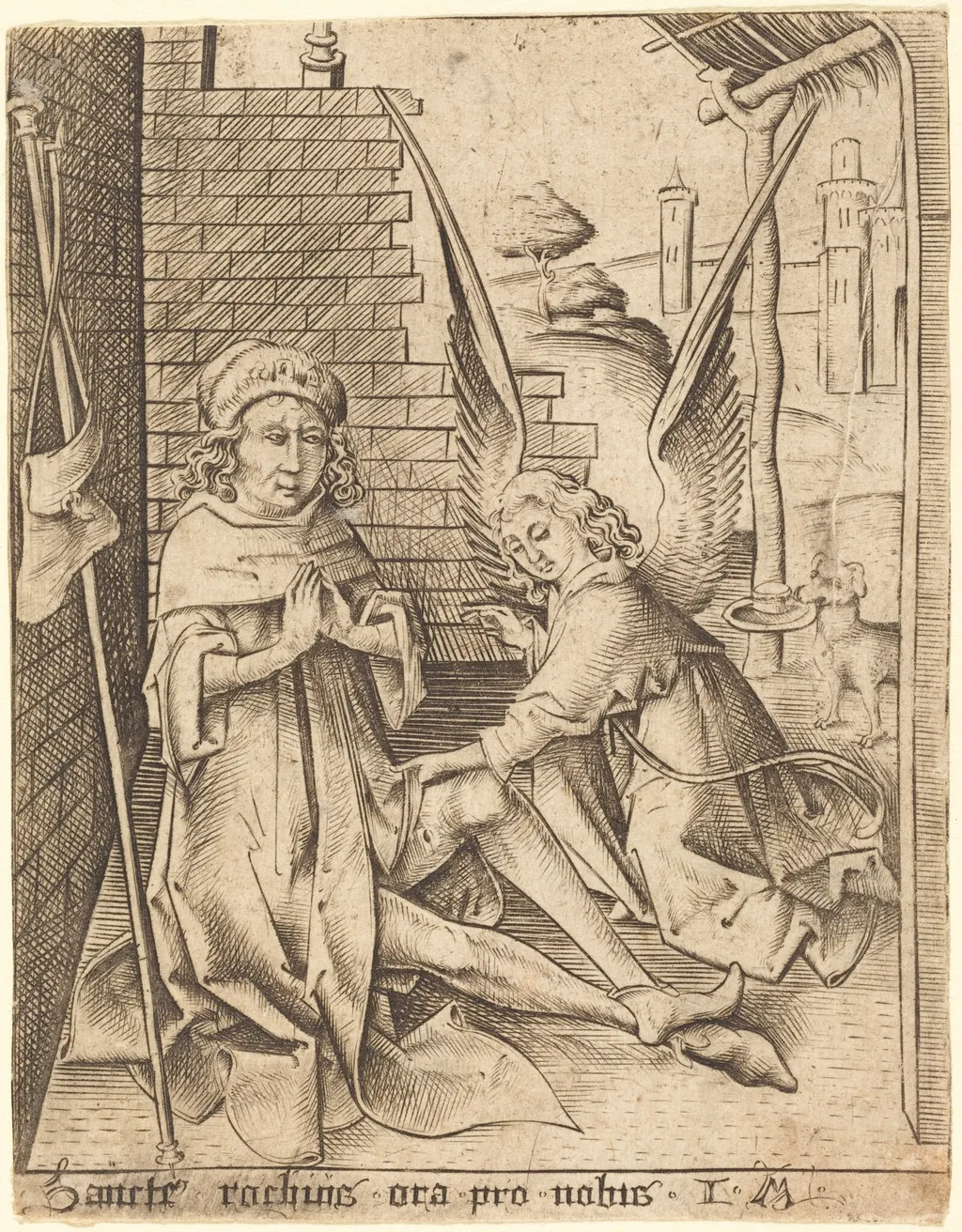
Saint Roch is an ink print by the Renaissance artist Israhel van Meckenem. It dates from 1495 and is held in the collection of the National Gallery of Art.
About this work
Overview
Created circa 1495, this engraving depicts Saint Roch, a bearded pilgrim leaning on a staff. The figure stands against an unadorned background, allowing the viewer to focus on his solemn expression and the fine linear details that define his clothing and the wooden staff.
Subject & Meaning
Saint Roch, venerated as a protector against plague, is presented here in a contemplative pose. His humble attire and the simplicity of the setting underscore his role as a wandering intercessor, emphasizing themes of piety and suffering common to late‑medieval devotional imagery.
Technique & Style
The work exemplifies the Northern European engraving tradition, employing intricate incised lines to render texture and volume. The artist’s control of hatching creates subtle gradations of tone, particularly evident in the rendering of fabric folds and the grain of the staff, reflecting the meticulous practice typical of late fifteenth‑century printmakers.
History & Provenance
Attributed to Israhel van Meckenem, a German goldsmith and printmaker active between 1465 and 1503, the piece belongs to the most extensive output of any fifteenth‑century engraver, who produced over six hundred prints, many of which were reinterpretations of existing compositions.
Context
The engraving aligns with the broader religious print market of the period, when devotional images were reproduced for private contemplation. Van Meckenem’s work circulated widely across Northern Europe, contributing to the spread of saintly iconography during a time of recurring epidemic fears.
Artist & collection
Artist
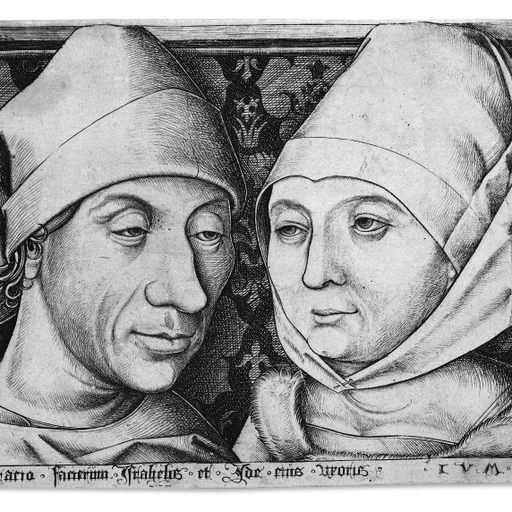
Israhel van Meckenem (c. 1445 – 10 November 1503), also known as Israhel van Meckenem the Younger, was a German printmaker and goldsmith, perhaps of a Dutch family origin. He was the most prolific engraver of the…

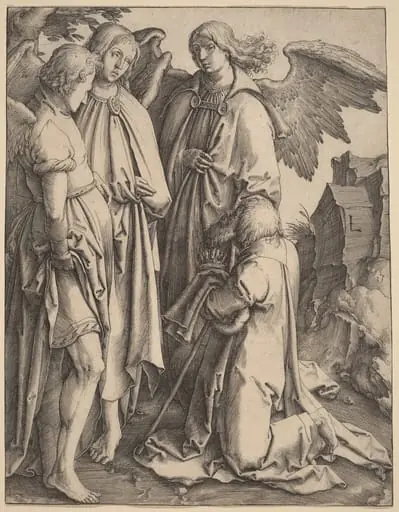 Abraham and the Three Angels
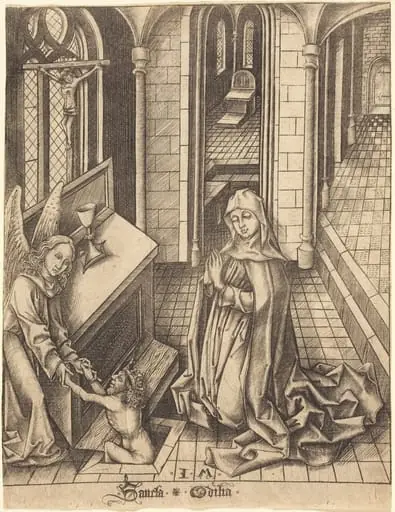 Saint Ottilia
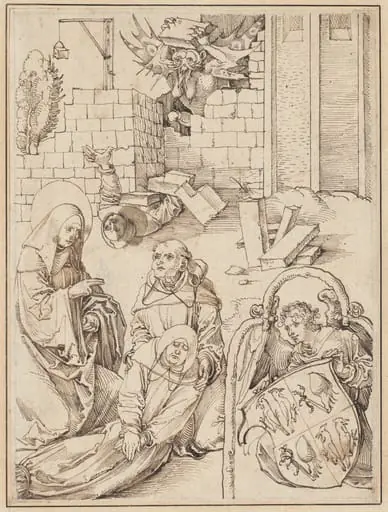 Saint Benedict Reviving a Monk Killed by the Devil
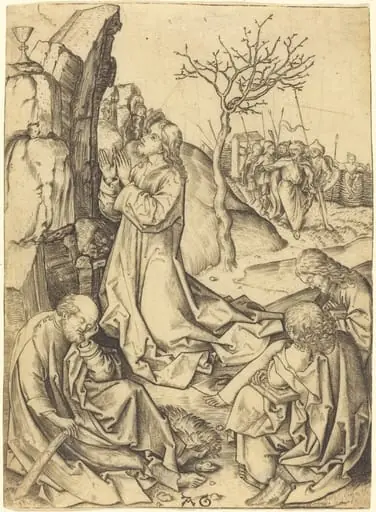 The Agony in the Garden
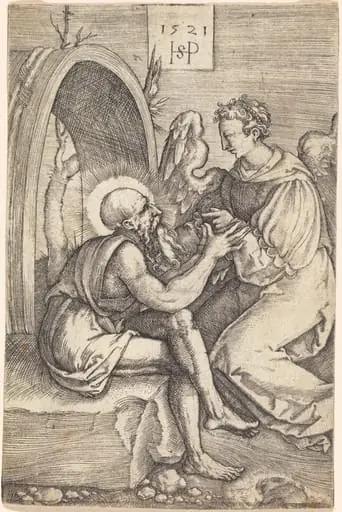 Saint Jerome with the Angel
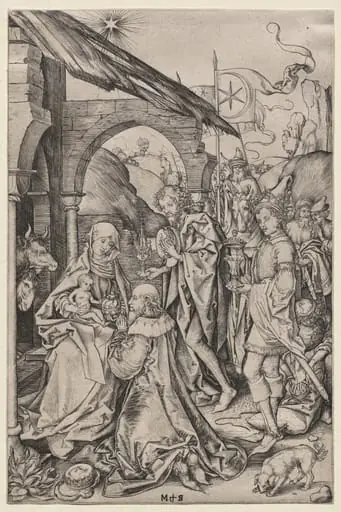 Adoration of the Magi
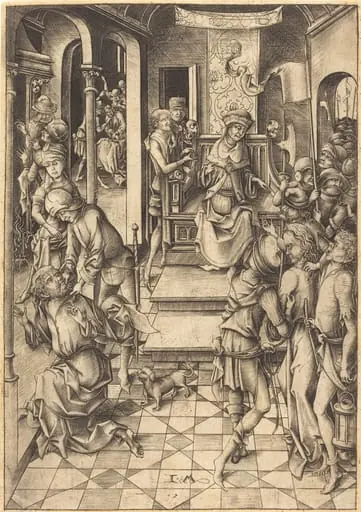
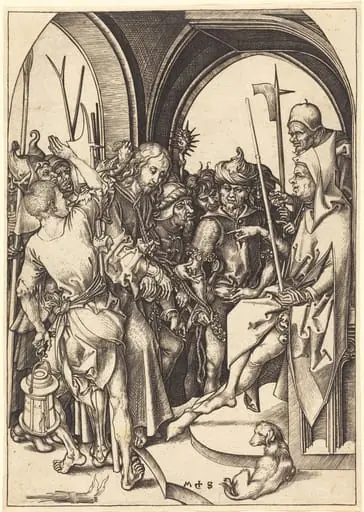 Christ before Annas
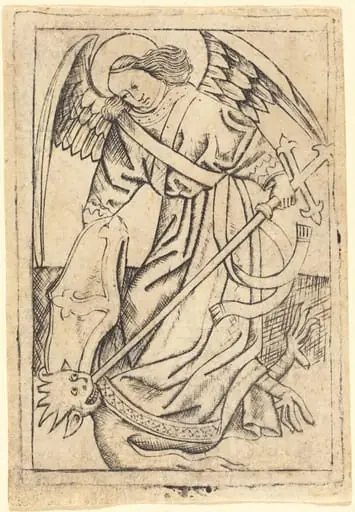 Saint Michael
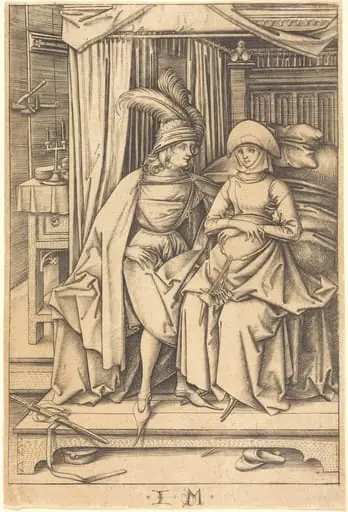 Couple Seated on a Bed
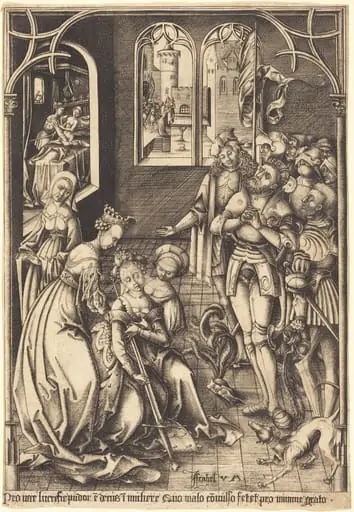 The Death of Lucretia
 Joachim and Anna at the Golden Gate
 The Angel of the Annunciation