Artwork
Title Page: Pendant, Surrounded by Eight Small Studs
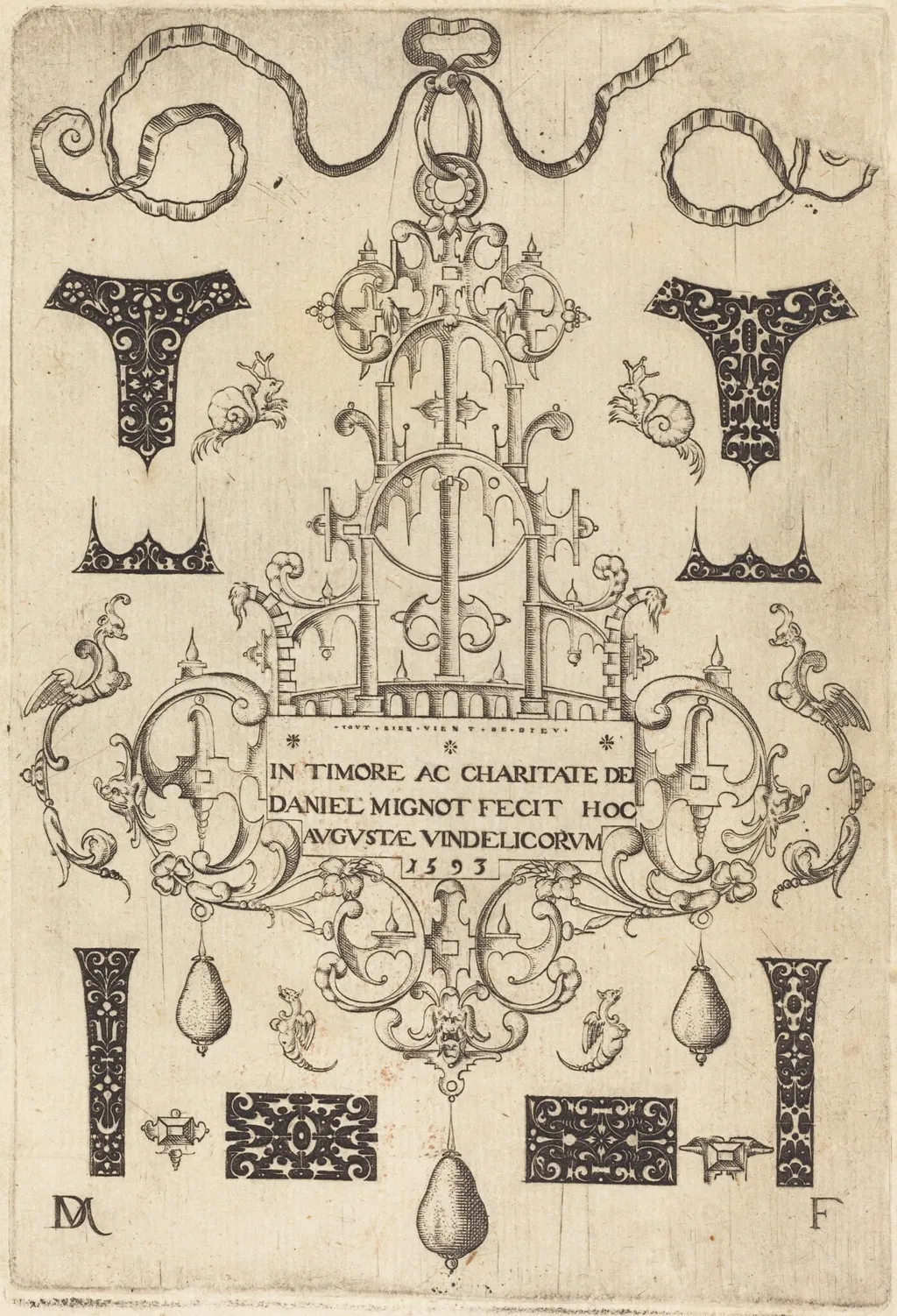
Title Page: Pendant, Surrounded by Eight Small Studs is an ink print by the Renaissance artist Daniel Mignot. It dates from 1593 and is held in the collection of the National Gallery of Art.
About this work
Around it are letters, tiny buildings, and strange symbols—some look like anchors, others like stylized flowers or birds.
This image is a black-and-white design with lots of swirling lines and shapes. At the center is a cross with a crown on top, surrounded by fancy patterns. Around it are letters, tiny buildings, and strange symbols—some look like anchors, others like stylized flowers or birds.
The text at the bottom reads something in Latin, with the year 1593 clearly visible. The whole thing looks like a detailed stamp or seal, with small decorative boxes at the corners.
Next, check out how this was made using engraving.
Overview
This 1593 engraving by Daniel Mignot functions as a decorative title page, likely intended for a printed text of religious or scholarly significance. Rendered in fine black-and-white lines, it presents a central emblematic composition framed by ornamental borders. The design is densely packed with symbolic elements, suggesting a purpose beyond mere illustration—perhaps as a visual signature or institutional mark tied to the publication's authority.
Subject & Meaning
At the center lies a cross surmounted by a crown, a common Christian symbol of divine sovereignty. Surrounding it are eight small studs, possibly representing virtues or celestial bodies. Additional motifs—anchors, stylized flora, avian forms, and architectural fragments—draw from Renaissance iconography, blending sacred and secular imagery. Latin inscriptions reinforce the devotional tone, while the arrangement implies a structured cosmology, aligning earthly order with spiritual hierarchy.
Technique & Style
Executed in the engraving technique, the design relies on precise incised lines to create texture and depth. The artist employs swirling, interlaced patterns and fine cross-hatching to render intricate details without color. Decorative corner boxes and minute symbols reflect the meticulous craftsmanship typical of late 16th-century printmaking. The absence of shading or tone emphasizes linearity, characteristic of Northern European engraving traditions of the period.
History & Provenance
Created in 1593, the engraving was likely produced for a specific printed work, though the original publication remains unidentified. Daniel Mignot, active in France during the late Renaissance, was known for his work in book illustration and heraldic design. The piece may have served as a printer’s mark or publisher’s device, common in early modern European printing to denote origin or quality. Its survival suggests it was valued as a standalone artifact.
Context
In the late 1500s, engraved title pages were standard in scholarly and religious publications, serving both decorative and authoritative functions. This work aligns with broader trends in Protestant and Catholic printing, where visual symbolism reinforced doctrinal messages. The fusion of religious emblems with secular motifs reflects the era’s intellectual climate, where theology, natural philosophy, and classical learning intersected in printed media.
Legacy
Though not widely reproduced or studied today, the engraving exemplifies the precision and symbolic richness of late Renaissance print culture. It contributes to the understanding of how visual language was used to convey authority and meaning in pre-modern texts. As a surviving artifact of Mignot’s craftsmanship, it remains a quiet testament to the role of engraving in shaping the aesthetics of early printed books.
Artist & collection


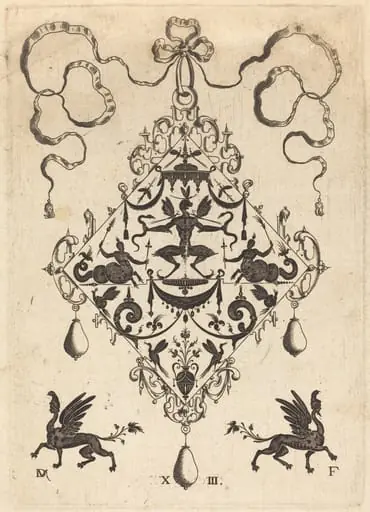 Large Pendant, Winged Fantasy Creature Holding Two Snakes
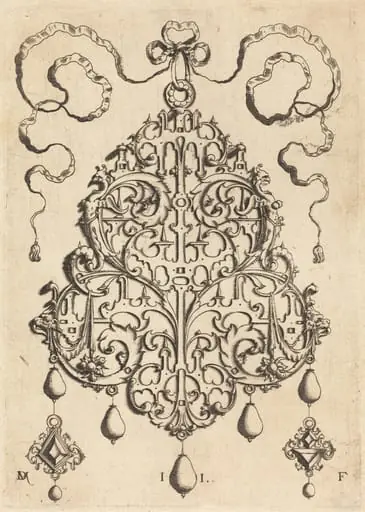 Large Strapwork Pendant with Two Hangers as Earrings at Left and Right
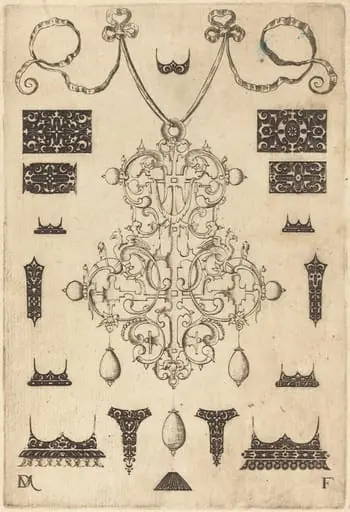 Large Pendant with Three Drops Below, Surrounded by Fifteen Different Studs
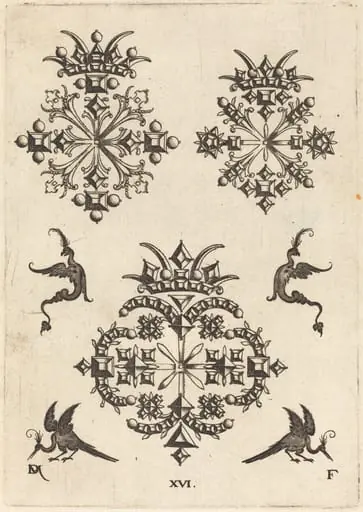 Three Brooches with Fantasy Birds at Left, Right, and Bottom
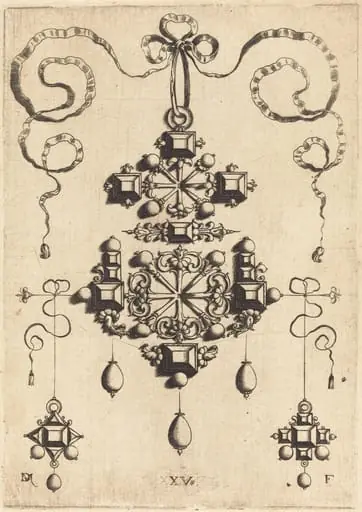 Pendant with Two Double Crosses, Surrounded by Four Diamond-Shaped Stones, Five Table-Stones, and Thirteen Pearls
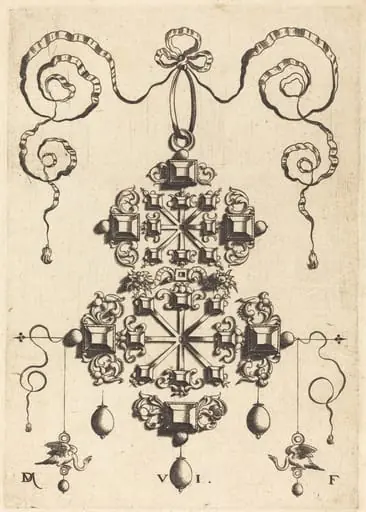 Large Pendant with Two Double Crosses, Surrounded by Six Large and Sixteen Small Table-Stones
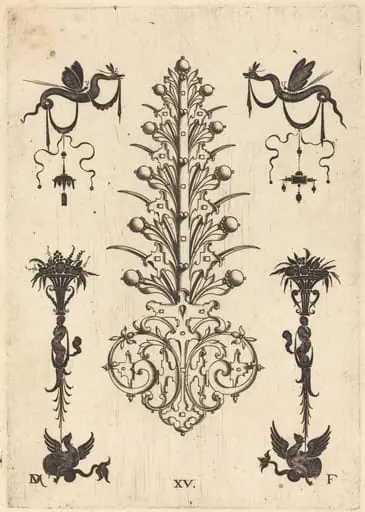 Hyacinth-Shaped Brooch with Winged Snakes at Top and Winged Animals at Bottom
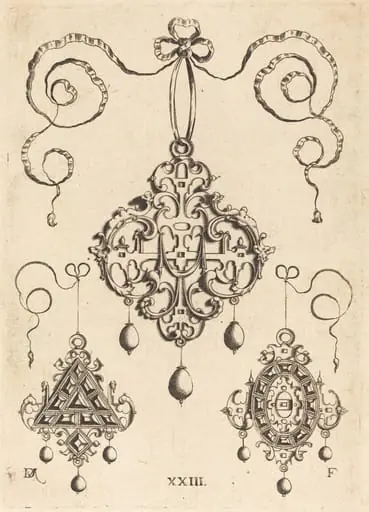 Three Strapwork Pendants, The Lower Ones Triangular and Oval
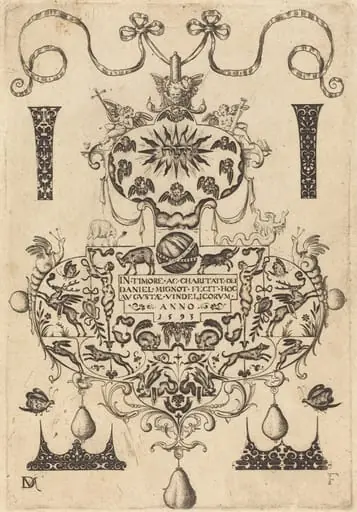 Title Page: Large Pendant
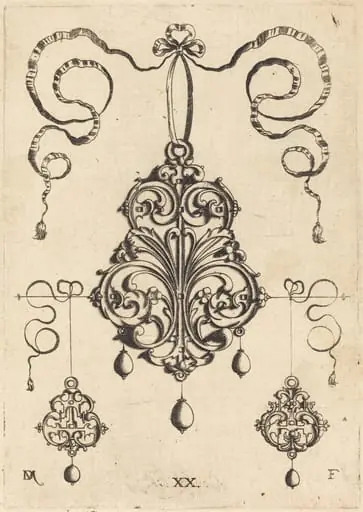 One Large and Two Smaller Strapwork Pendants
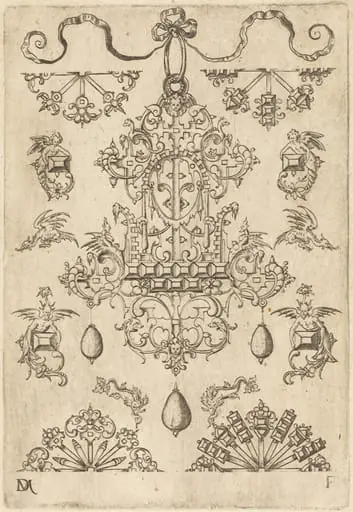 Large Pendant Surrounded by Ten Different Studs
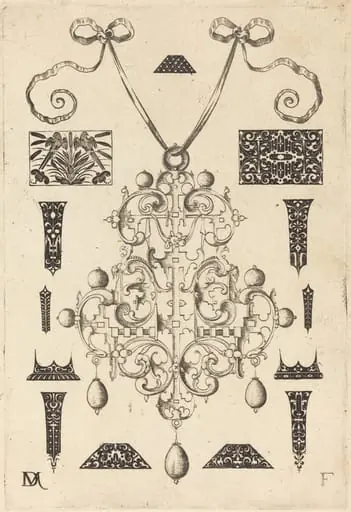 Large Pendant, Surrounded by Thirteen Studs
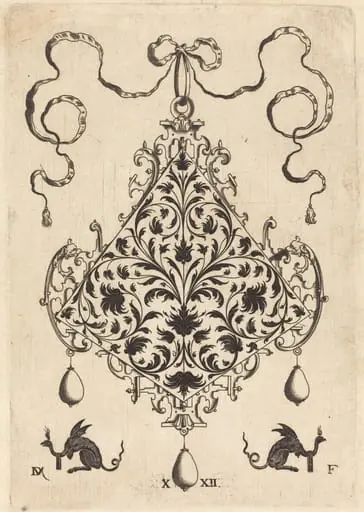 Large Pendant, Ornamental Foliage Design
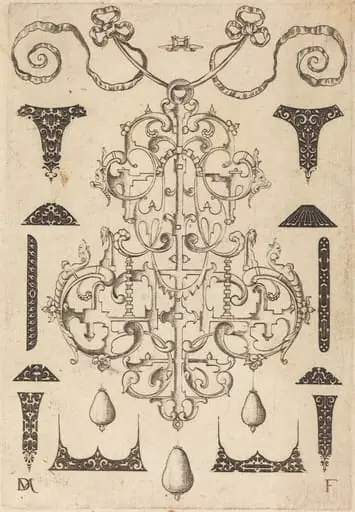 Large Pendant, Surrounded by Twelve Small Studs
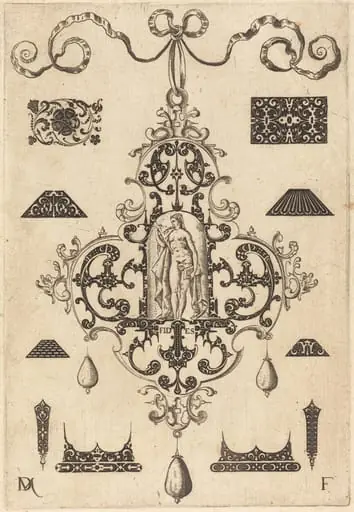 Large Pendant, Faith Standing at Centre
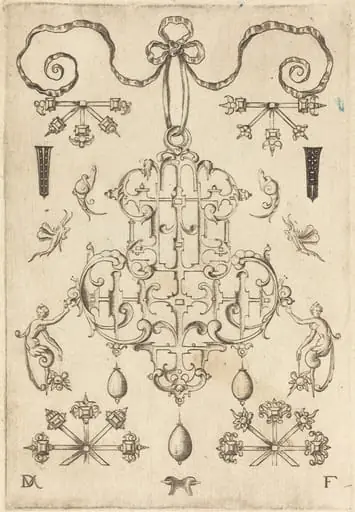 Large Pendant with Three Drops Below
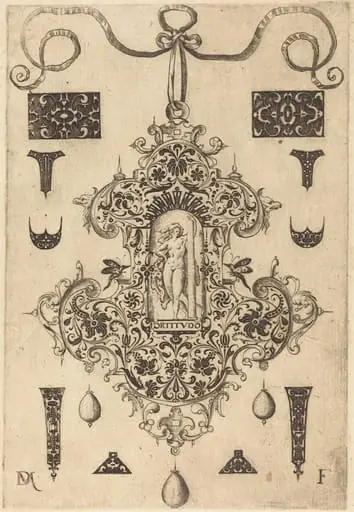 Large Pendant, Strength Standing at Centre