Artwork
Cleopatra
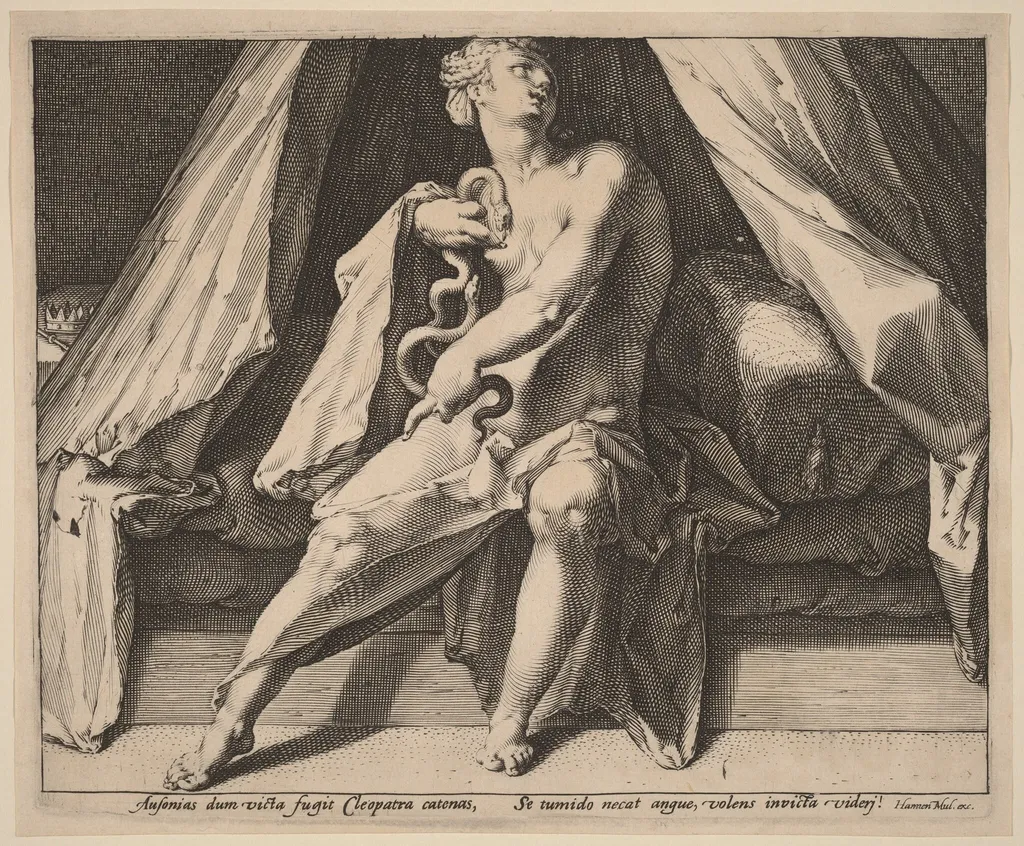
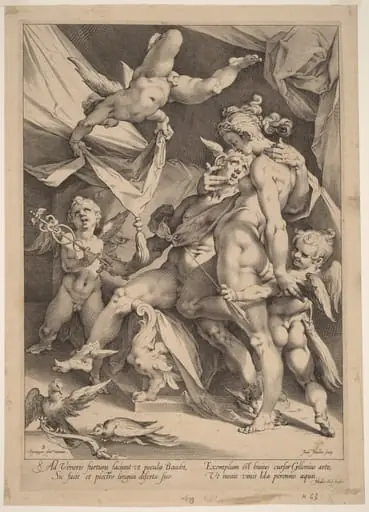
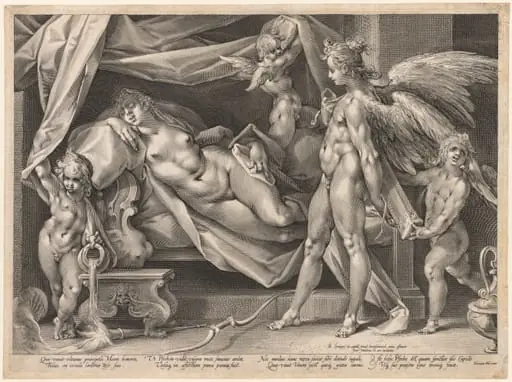
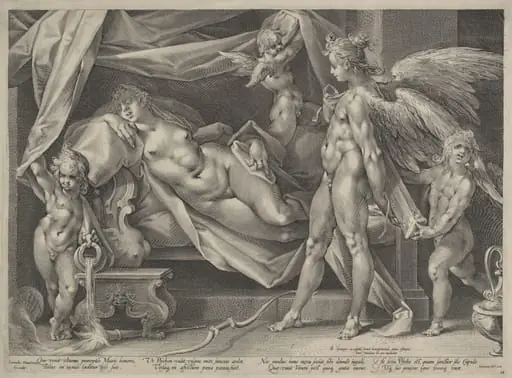
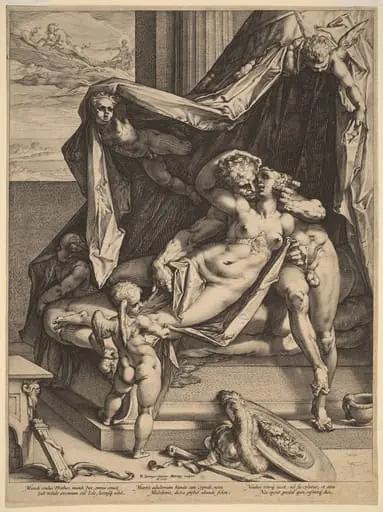
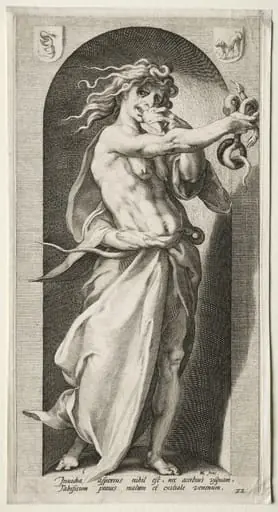
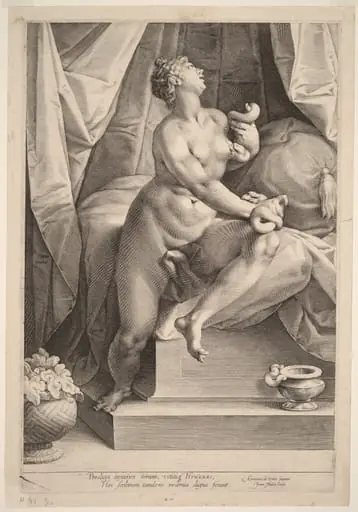
Cleopatra is an ink print by the Renaissance artist Jan Muller. It dates from 1592 and is held in the collection of the National Gallery of Art. This engraving on laid paper, created circa 1592 by Jan Harmensz.
About this work
Overview
Measuring approximately the dimensions of the sheet, the work reflects Muller’s training in reproductive printmaking and his engagement with classical themes.
This engraving on laid paper, created circa 1592 by Jan Harmensz. Muller, portrays an allegorical or historical figure identified as Cleopatra. Measuring approximately the dimensions of the sheet, the work reflects Muller’s training in reproductive printmaking and his engagement with classical themes. The composition centers on a seated female figure, rendered through meticulous line work characteristic of late 16th-century Northern European printmaking.
Subject & Meaning
The image presents Cleopatra in a moment of contemplative repose, her right hand grasping a serpent—a traditional attribute linking her to the narrative of her suicide. The serpent’s presence, combined with her composed demeanor, suggests a meditation on mortality, power, or sacrifice. While the precise symbolic intent remains ambiguous, the depiction aligns with contemporaneous interpretations of antiquity, where historical figures were often imbued with moral or dramatic significance.
Technique & Style
Muller’s engraving employs dense cross-hatching and fine parallel lines to model form, creating tonal gradations that lend volume to drapery and flesh. The technique reflects his apprenticeship in Amsterdam and subsequent exposure to Italian printmaking, merging Northern precision with Southern chiaroscuro. The controlled incisions and layered textures demonstrate the medium’s capacity to convey both detail and atmosphere, a hallmark of reproductive engravings intended for wide dissemination.
History & Provenance
Jan Harmensz. Muller, born in Amsterdam in 1571, trained under his father, a printer and publisher, before traveling to Italy. Upon returning, he assumed leadership of the family workshop, producing prints after works by prominent artists. This engraving likely originated within this context, serving as both an independent work and a reproductive interpretation of a now-lost composition. Its survival in collections underscores the role of prints in circulating visual motifs across Europe during the late Renaissance.
Context
The engraving emerges from a period in which Dutch and Flemish printmakers engaged with classical antiquity, often reinterpreting Italian models for Northern audiences. Cleopatra’s depiction here aligns with broader cultural fascinations with Egypt and the moralized retellings of Roman history. Prints like this one functioned as vehicles for artistic exchange, allowing themes from mythology and history to circulate beyond elite circles, while also reflecting the technical advancements of engraving as a medium.
Legacy
Muller’s *Cleopatra* exemplifies the reproductive print’s dual role as artistic object and cultural transmitter. While not a direct copy of a known painting, it participates in the visual discourse surrounding Cleopatra’s iconography, influencing later representations. The engraving’s technical refinement and symbolic ambiguity contribute to its endurance in print collections, offering insight into the intersection of craftsmanship, commerce, and classical revival in early modern Europe.
Artist & collection

Artist
Jan Harmensz. Muller (1571–1628) was a Dutch engraver and painter. Muller was born in Amsterdam. His father was a book printer, engraver and publisher. He learned the engraving trade while working in the family…