Artwork
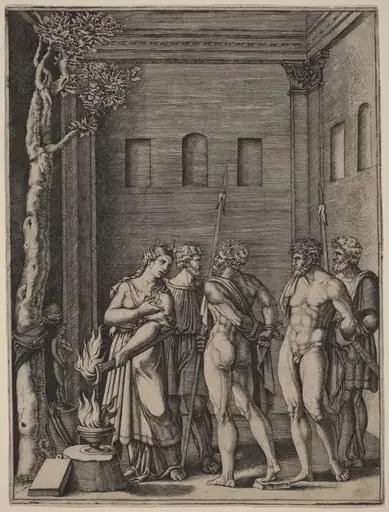
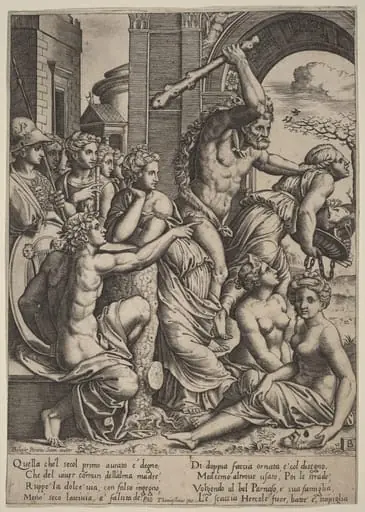
Orestes and Pylades brought to Iphigenia for Sacrifice
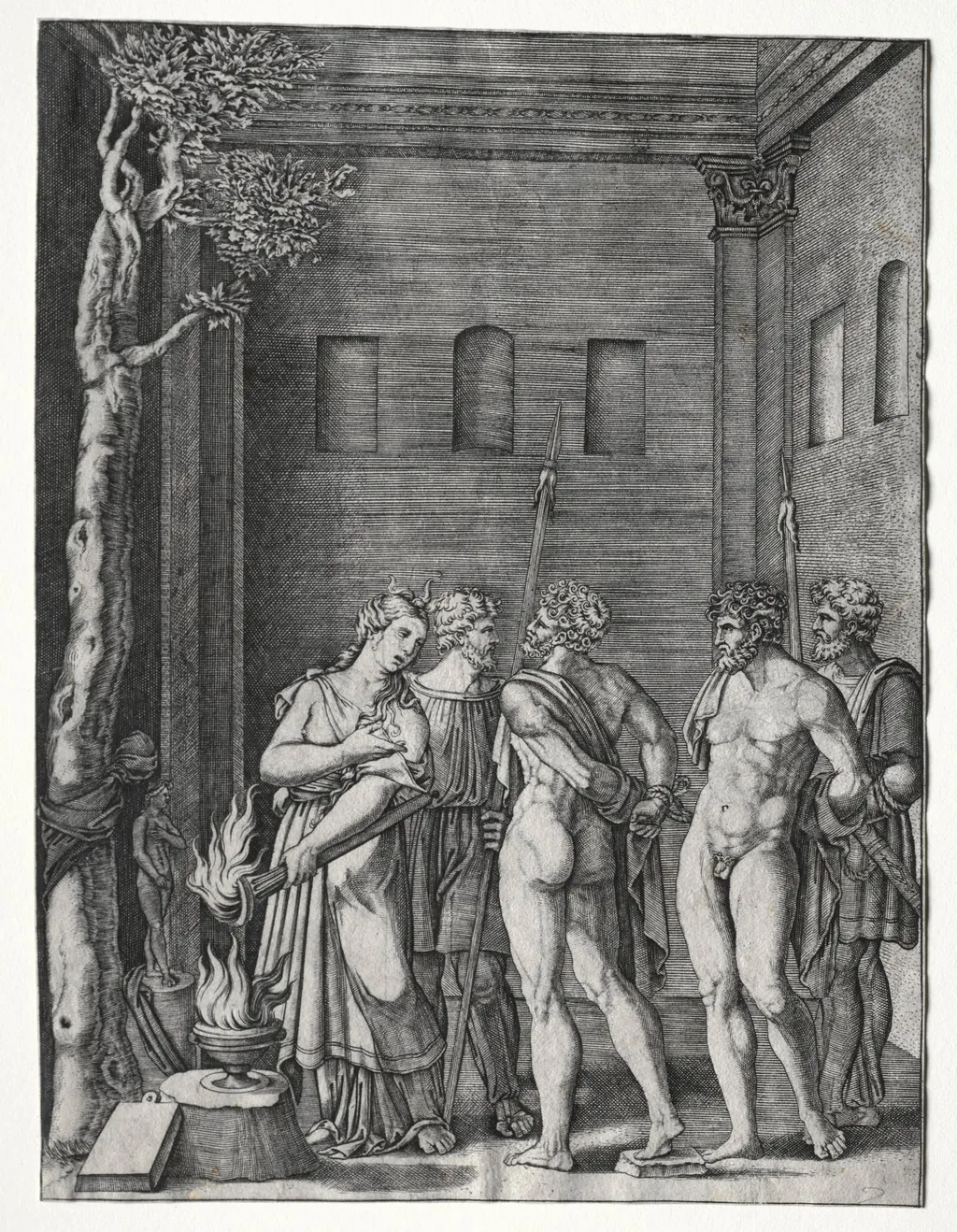
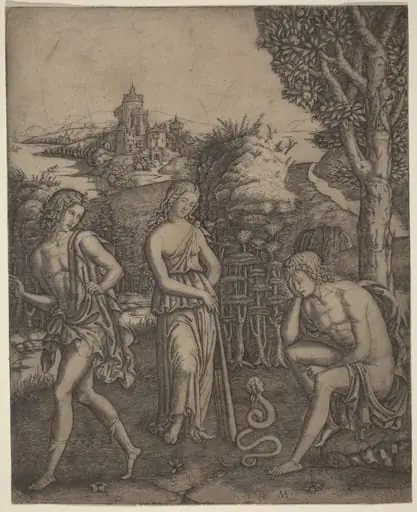
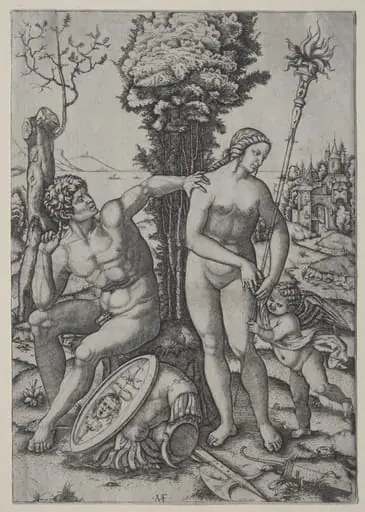
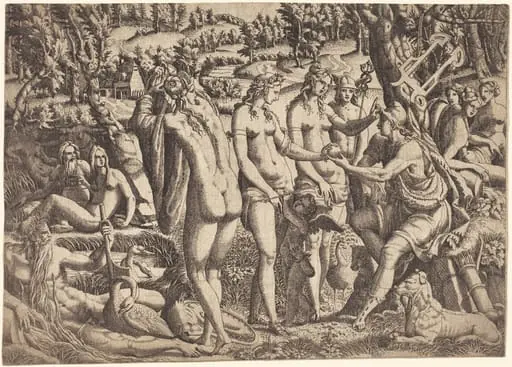
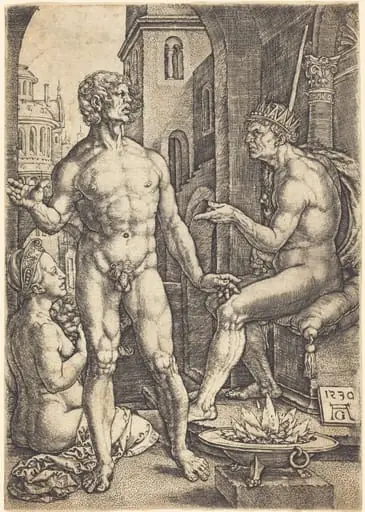
Orestes and Pylades brought to Iphigenia for Sacrifice is a print by the Renaissance artist Agostino dei Musi. It dates from 1525 and is held in the collection of the Cleveland Museum of Art.
About this work
Overview
This engraving depicts a pivotal moment from Greek mythology, where Orestes and Pylades, bound for sacrifice, are unexpectedly reunited with Iphigenia, the high priestess who turns out to be Orestes' long-believed-dead sister.
Subject & Meaning
The scene captures the tense instant before Iphigenia recognizes her brother, as she reaches out to touch Orestes' face, poised between her duty to sacrifice them and the impending revelation that will lead to their rescue.
Technique & Style
The engraving utilizes chiaroscuro, evident in the stark contrast between the darkness of the scene and the illuminating glow of a torch, which casts flickering light on the figures, emphasizing the emotional intensity of the moment.
History & Provenance
Created by Agostino Musi, a Venetian artist trained under Giulio Campagnola and later Marcantonio in Rome until 1520, this work reflects the artistic influences of his time, though specific details about its creation or ownership history are not provided.
Context
Drawing from a lesser-known variant of the Orestes myth, the piece reflects Renaissance interest in classical stories, while its dramatic lighting and emotional depth align with the artistic preoccupations of the period.
Artist & collection
Artist
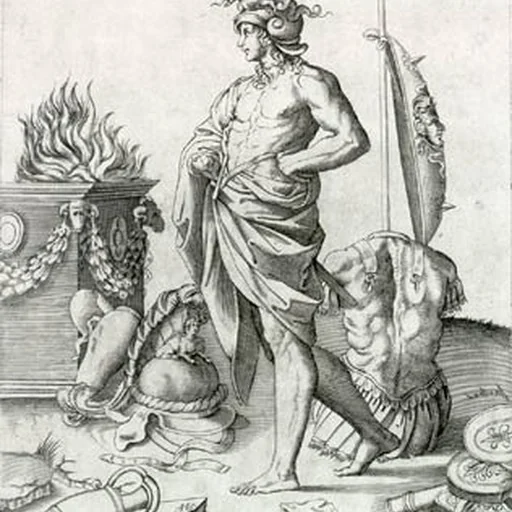
Agostino Veneziano ("Venetian Agostino"), whose real name was Agostino de' Musi (c. 1490 – c. 1540), was an important and prolific Italian engraver of the Renaissance.