Artwork
Jean Duvet as Saint John the Evangelist
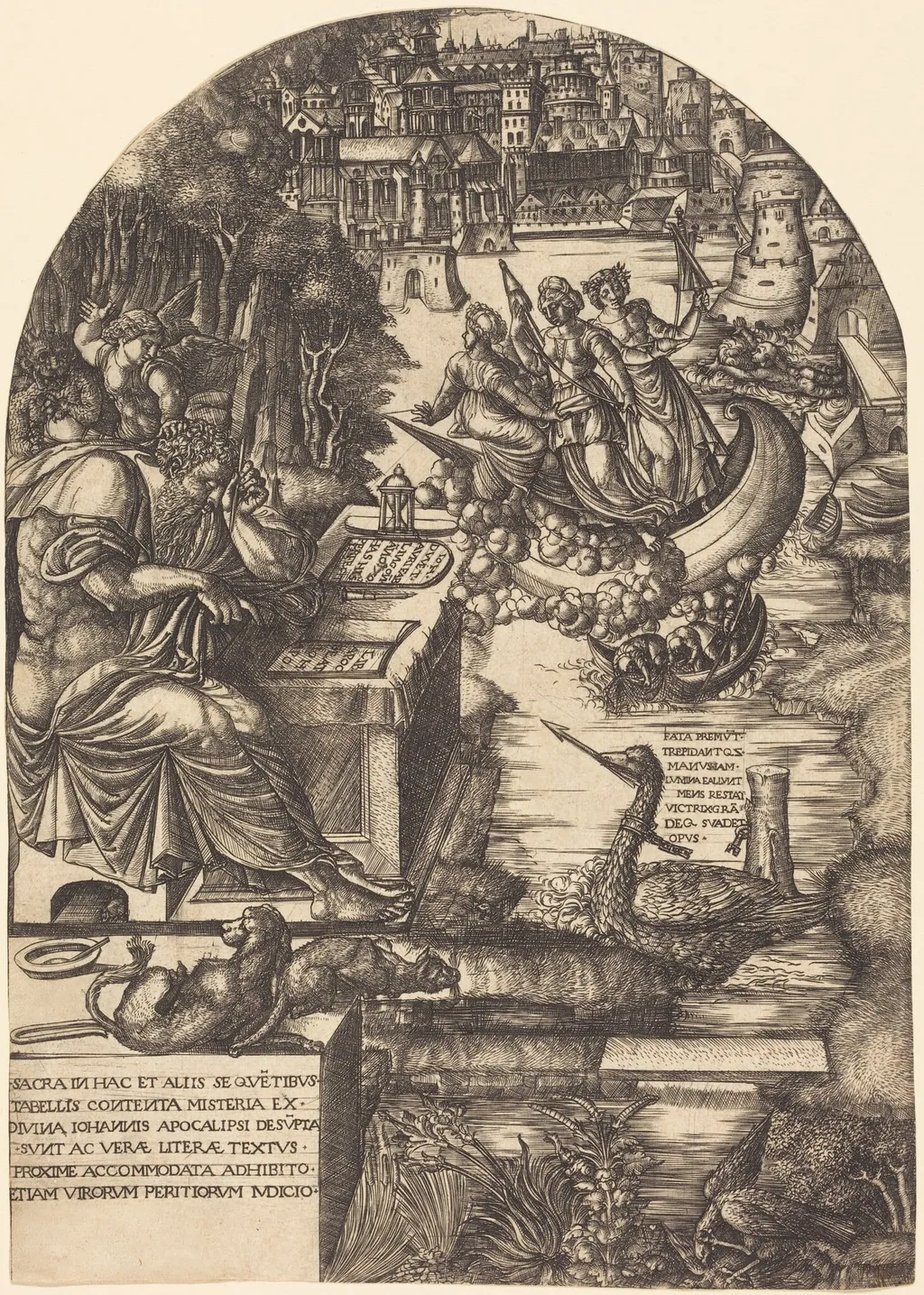
Jean Duvet as Saint John the Evangelist is an ink print by the Renaissance artist Jean Duvet. It dates from 1555 and is held in the collection of the National Gallery of Art.
About this work
Overview
Created in 1555, this engraving by Jean Duvet depicts the artist himself as Saint John the Evangelist, blending personal identity with sacred symbolism.
Created in 1555, this engraving by Jean Duvet depicts the artist himself as Saint John the Evangelist, blending personal identity with sacred symbolism. Executed on laid paper, the work is one of approximately 73 known engravings by Duvet, a French goldsmith who emerged as a pivotal figure in early French printmaking. Its intricate line work and dense composition distinguish it from the more restrained styles of his contemporaries.
Subject & Meaning
Duvet portrays himself as Saint John, the apostle traditionally associated with divine revelation and scholarly devotion. The laurel crown signifies both poetic inspiration and martyrdom, while the cluttered desk—filled with books, scrolls, and a lantern—evokes the act of theological study. The small dog at his feet may symbolize loyalty or vigilance, reinforcing the theme of faithful contemplation in the face of spiritual mystery.
Technique & Style
Duvet employed fine, deliberate engraving lines to render textures of fabric, paper, and stone with unusual precision. His compositions are densely packed, avoiding spatial clarity in favor of symbolic abundance. Unlike the balanced harmony typical of Italian Renaissance prints, his work embraces a tactile, almost hallucinatory intensity, where every detail contributes to an atmosphere of inward focus and mystical urgency.
History & Provenance
The print was produced during Duvet’s mature period, after his work as a goldsmith for the French court. Few of his engravings were widely circulated in his lifetime, and most surviving impressions were collected by private patrons and institutions in France and Germany. This particular impression retains the original paper quality and fine ink tone, suggesting early printing and careful preservation.
Context
In mid-16th century France, printmaking remained subordinate to painting and sculpture. Duvet’s engravings stood apart by their emotional intensity and idiosyncratic vision, diverging from the classical ideals promoted by Italian and Netherlandish models. His work reflects the spiritual anxieties of the Reformation era, merging personal piety with a distinctly French sensibility that resisted foreign stylistic dominance.
Legacy
Though largely overlooked during the 17th and 18th centuries, Duvet’s engravings were rediscovered in the 19th century for their expressive rawness and visionary quality. His unorthodox compositions and symbolic density drew comparisons to later Romantic and Symbolist artists. Today, his prints are valued not for technical perfection, but for their unfiltered psychological depth and singular artistic voice.
Artist & collection

Artist
Jean Duvet (1485 – after 1562) was a French Renaissance goldsmith and engraver, now best known for his engravings.

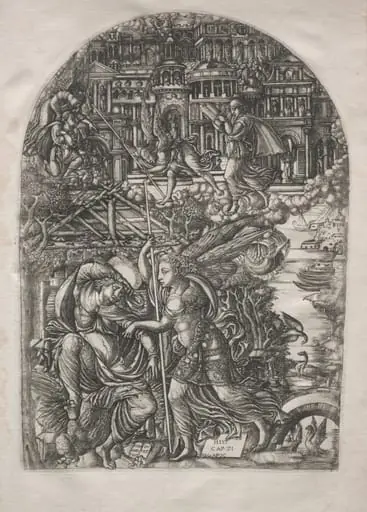 The Apocalypse: The Angel Shows St. John the New Jerusalem
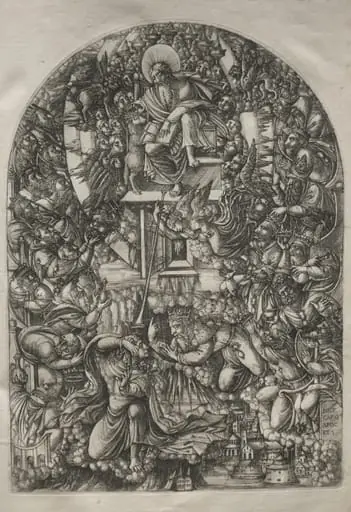 The Apocalypse: St. John Summoned to Heaven
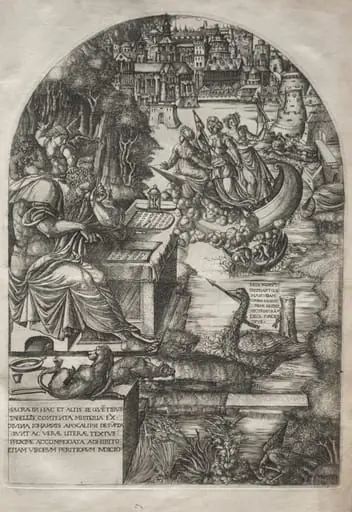 The Apocalypse: Duvet Studying the Apocalypse
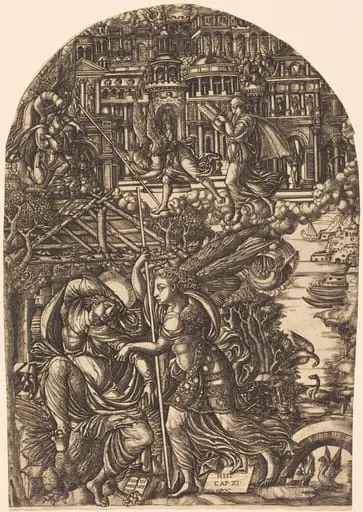 The Angel Shows Saint John the New Jerusalem
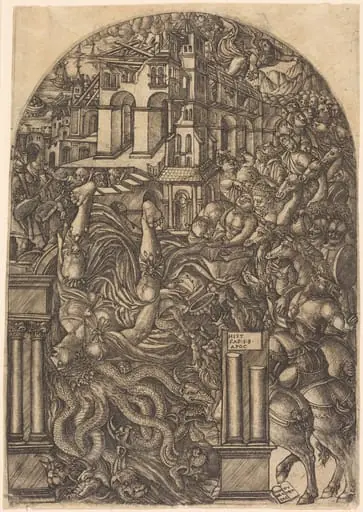 The Fall of Babylon
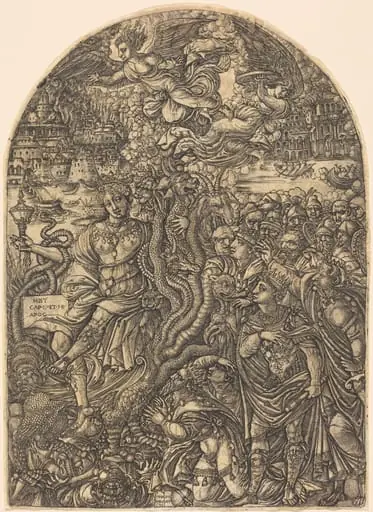 The Babylon Harlot
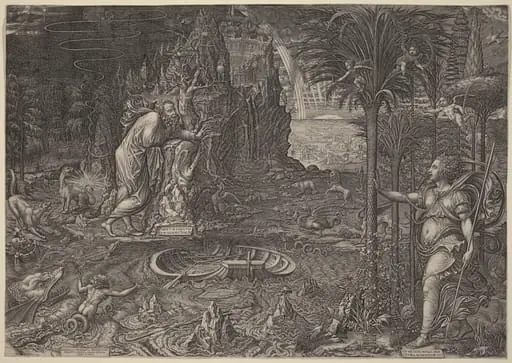 Allegory of Life
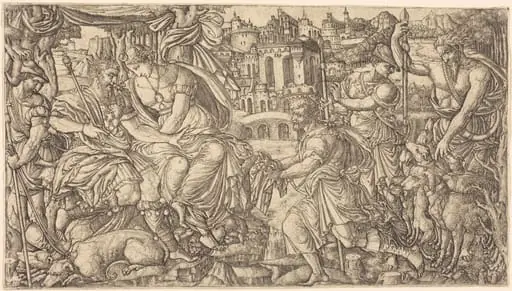 A King and Diana Receiving Huntsmen
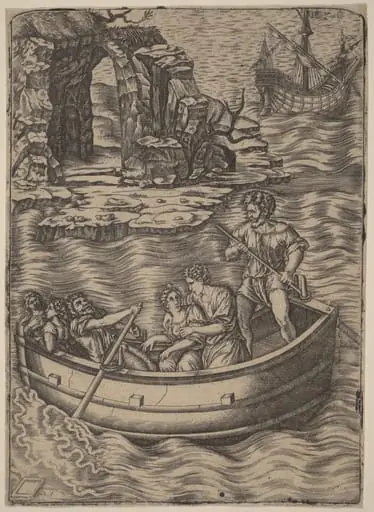 The Barc
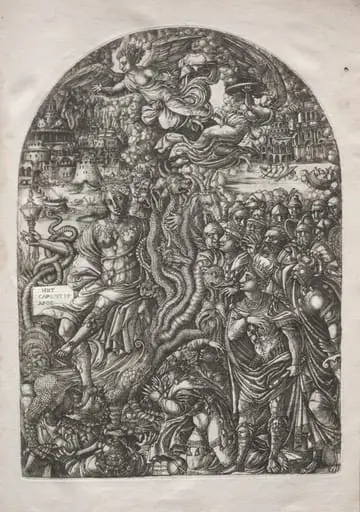 The Apocalypse: Babylon the Harlot, Seated on the Seven-headed Beast