Artwork
The Cumaen Sibyl
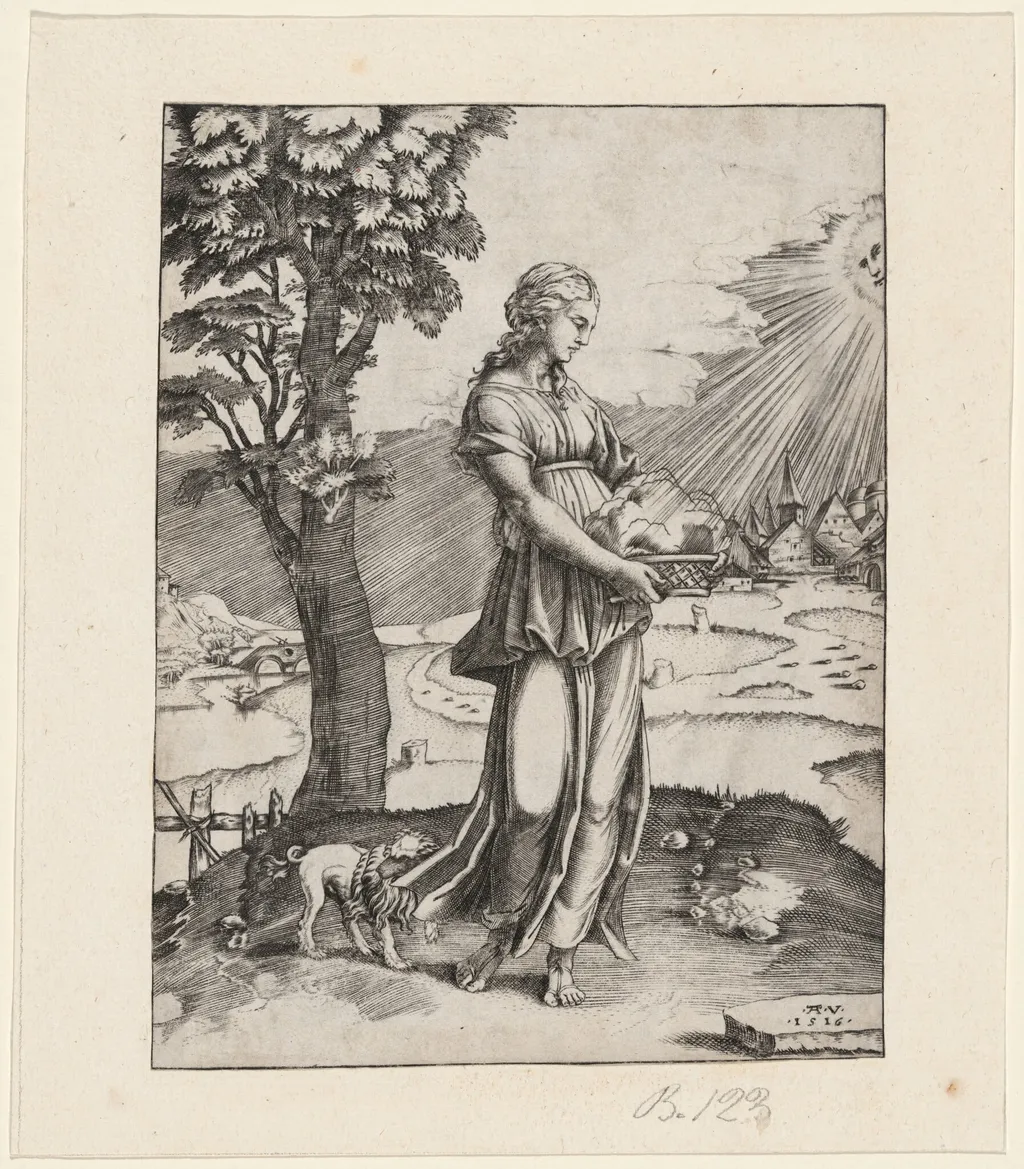
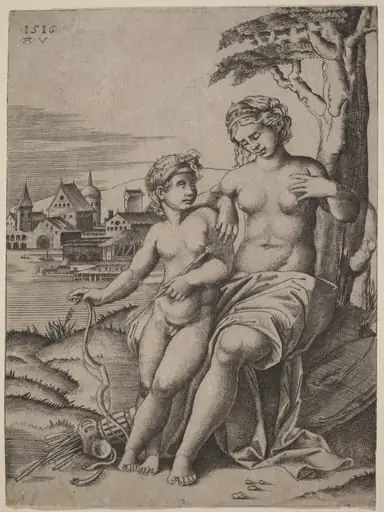
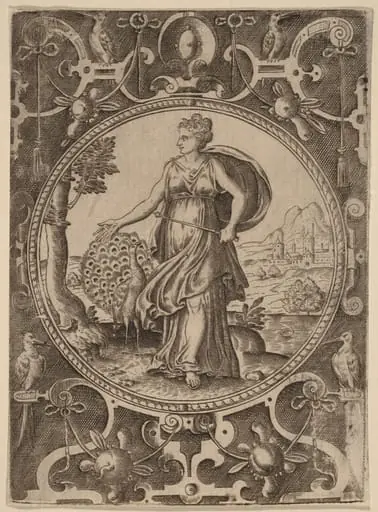
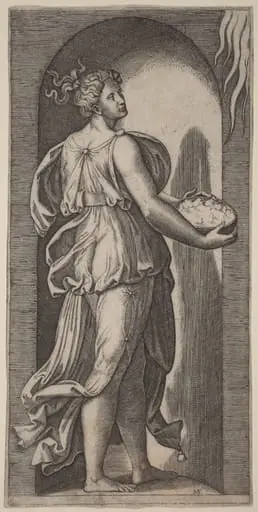
The Cumaen Sibyl is an ink print by the Renaissance artist Agostino dei Musi. It dates from 1516 and is held in the collection of the National Gallery of Art.
About this work
Overview
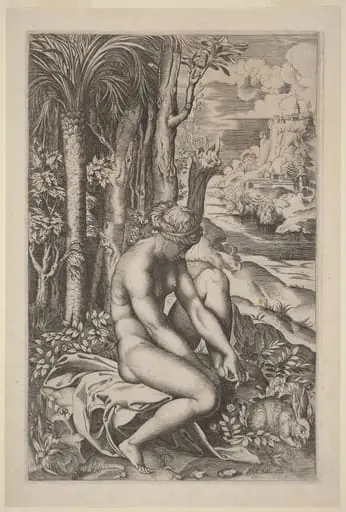
Created in 1516 by the Italian engraver Agostino Veneziano, this print presents a standing female figure beneath a tree, rendered on laid paper that has been mounted for preservation. The composition includes a modestly dressed, barefoot woman holding a basket of scroll‑like papers in one hand and an open book in the other, while a small dog rests nearby and a distant village unfolds behind her.
Subject & Meaning
The figure is identified as the Cumaean Sibyl, a prophetic woman from classical mythology whose image often merged with Christian symbolism.
The figure is identified as the Cumaean Sibyl, a prophetic woman from classical mythology whose image often merged with Christian symbolism. The open book she holds alludes to the transmission of divine or prophetic knowledge, while the basket of scrolls reinforces her role as a keeper of ancient revelations. The surrounding landscape situates the sibyl in a timeless, pastoral setting, emphasizing the universality of her vision.
Technique & Style
Veneziano employed delicate, intersecting lines to model the folds of the woman's robe and the bark of the tree, creating subtle gradations of shadow. The fine hatching conveys the texture of the ground and foliage, while the contrast between light and dark gives depth to the distant village. The use of laid paper, with its characteristic ribbed texture, enhances the tonal richness of the engraving.
History & Provenance
The print belongs to the collection of the National Gallery of Art in Washington, D.C., where it is displayed as part of the institution’s holdings of Renaissance prints. Agostino Veneziano was a prolific engraver whose works circulated widely in the early sixteenth century, contributing to the spread of artistic ideas through the burgeoning print market.
Artist & collection
Artist
Agostino Veneziano ("Venetian Agostino"), whose real name was Agostino de' Musi (c. 1490 – c. 1540), was an important and prolific Italian engraver of the Renaissance.