Artwork
Venus
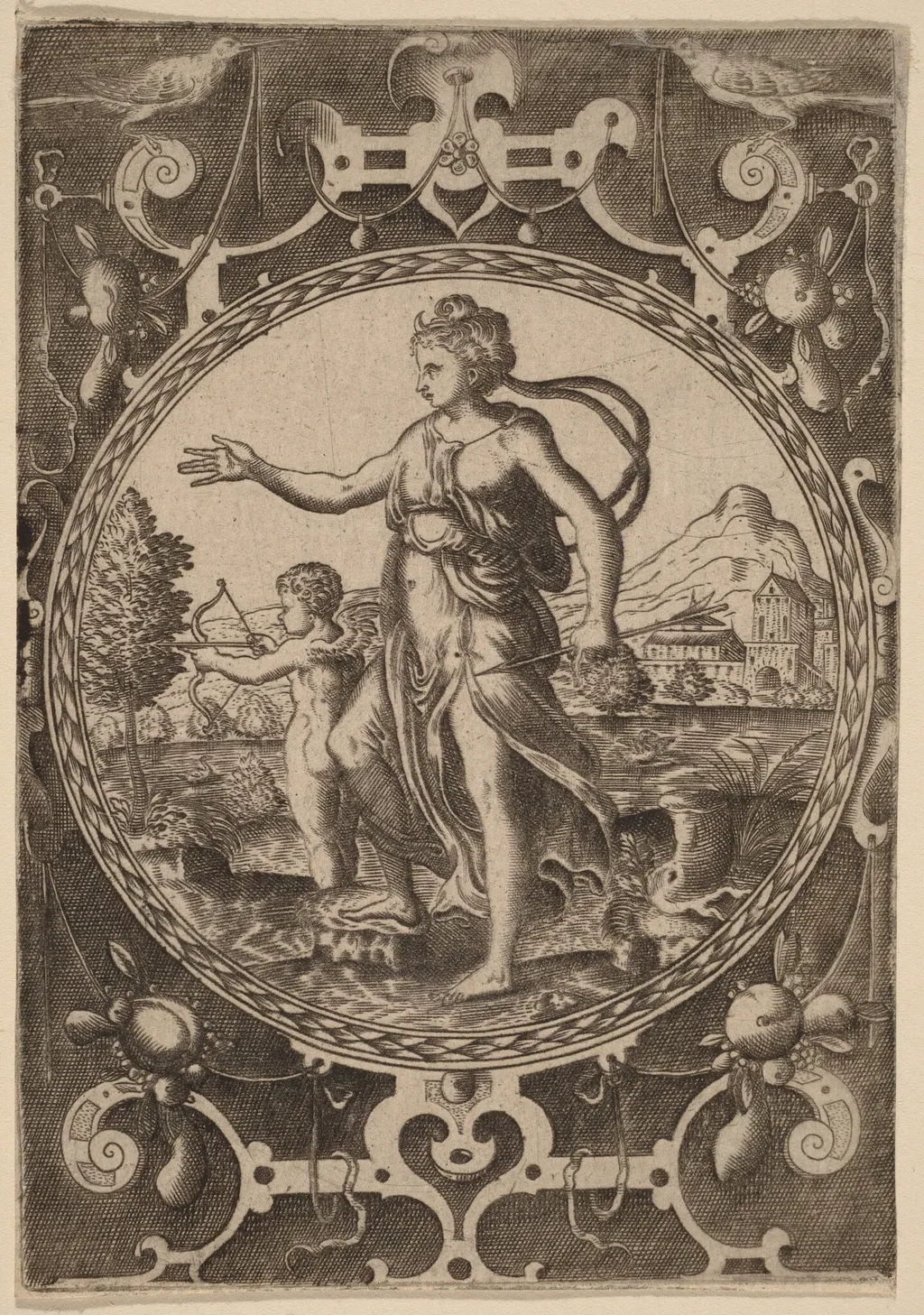
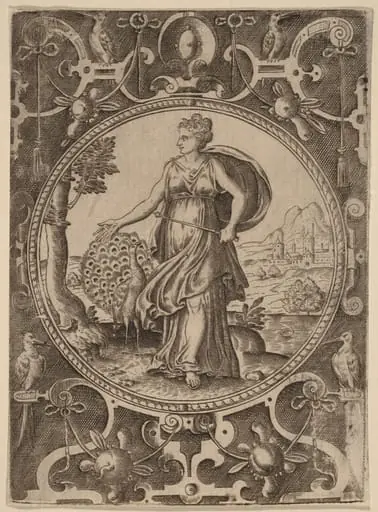
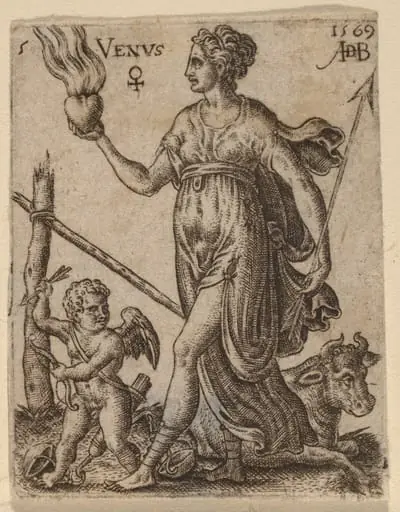
Venus is an ink print by the Renaissance artist Netherlandish 16th Century. It dates from 1564 and is held in the collection of the National Gallery of Art.
About this work
Overview
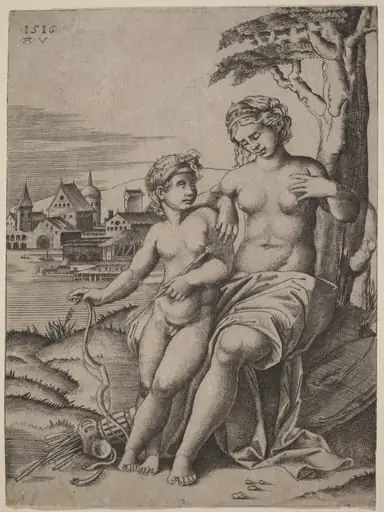
Rendered with fine linear precision, the composition centers on her poised stance and the presence of a cherub beside her.
This engraving on laid paper portrays a female figure, traditionally interpreted as Venus, within a pastoral landscape. Rendered with fine linear precision, the composition centers on her poised stance and the presence of a cherub beside her. The work exemplifies the technical demands of engraving, using incised lines to build form and atmosphere. The background recedes softly, balancing detail with spatial depth.
Subject & Meaning
The figure, likely Venus, is depicted with attributes associated with love and desire—a bow and arrow—held in both hands, suggesting mythological agency. The cherub, similarly armed, reinforces themes of affection and divine influence. The tranquil setting, with distant architecture and natural elements, may allude to an idealized realm of harmony, aligning with Renaissance humanist ideals that linked classical deities with moral or cosmic order.
Technique & Style
The image is executed through meticulous engraving, employing cross-hatching and fine parallel lines to model form and texture. The folds of the robe and the delicate wings of the cherub are rendered with precision, while the landscape background uses lighter, more diffuse strokes to suggest distance. This contrast in line weight and density demonstrates a controlled use of the burin to achieve both clarity and atmospheric nuance.
History & Provenance
The print’s origin is tied to the early modern European tradition of mythological engraving, likely produced in the 16th or 17th century. Though the artist remains unidentified, the style reflects influences from Northern Renaissance printmakers. Its survival on laid paper suggests it was part of a limited circulation, possibly collected by patrons interested in classical themes or artistic craftsmanship rather than mass reproduction.
Context
During the Renaissance and Baroque periods, engravings of mythological subjects like Venus were common among educated elites, serving as both artistic expression and intellectual reference. Such prints circulated widely, bridging visual culture and literary traditions. The inclusion of classical iconography in domestic settings reflected a broader revival of antiquity and its symbolic language in private and scholarly life.
Legacy
This engraving contributes to a broader corpus of early modern prints that preserved and disseminated classical imagery through mechanical reproduction. Its technical refinement exemplifies the role of engraving as a medium for artistic study and transmission. Though not attributed to a major name, it remains a representative artifact of how mythological narratives were visually sustained across generations of collectors and artists.
Artist & collection

Artist
This artist carved scenes with fine lines, mostly religious and mythological ones.