Artwork
A Turkish woman
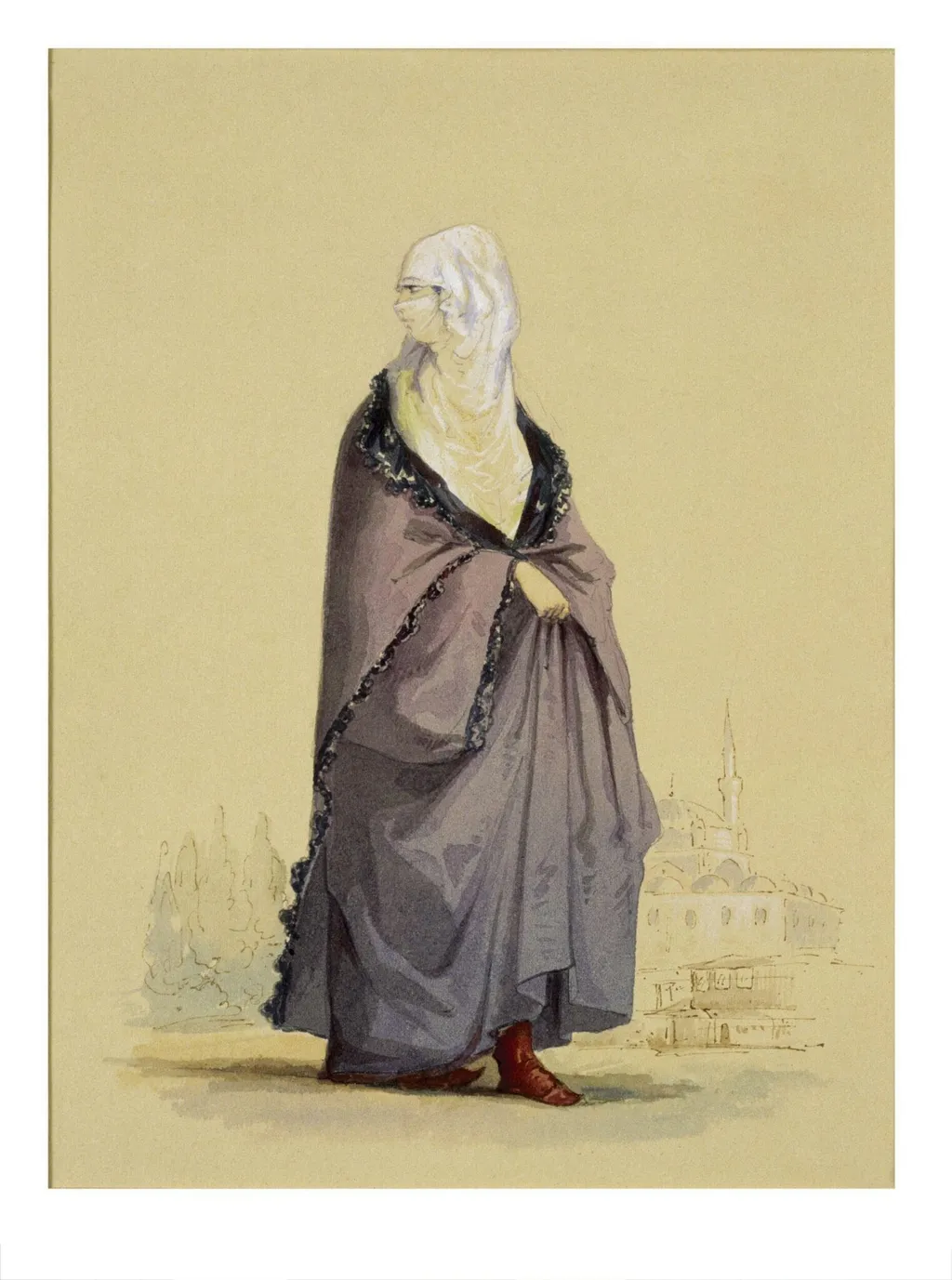
A Turkish woman is a watercolor work on paper by the Orientalist artist Aloysius Rosarius Amadeus Raymondus Andreas Preziosi. It dates from 1843 and is held in the collection of the Victoria and Albert Museum. This watercolour depicts a woman from Istanbul, rendered in delicate washes that capture the subtlety of light fabric and form.
About this work
Overview
The work belongs to a 19th-century tradition of travel-inspired portraiture, focusing on the nuanced dress of local women rather than exoticized stereotypes.
This watercolour depicts a woman from Istanbul, rendered in delicate washes that capture the subtlety of light fabric and form. The work belongs to a 19th-century tradition of travel-inspired portraiture, focusing on the nuanced dress of local women rather than exoticized stereotypes. The subject’s attire reflects a blend of modesty and urban sophistication, characteristic of elite Ottoman women during a period of cultural transition.
Subject & Meaning
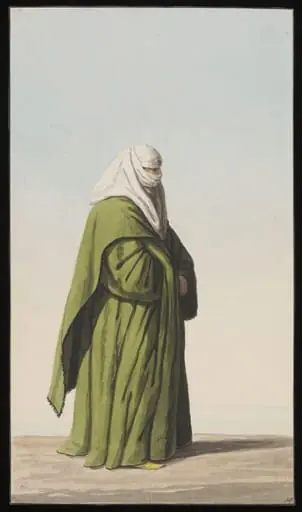
The woman is portrayed wearing a ferace, a long outer garment that concealed her inner garments while allowing movement through the city. Though veiled, her presence is not obscured but refined — the lace trim and tailored silhouette suggest status and taste. The image resists simplification, presenting her as a figure of quiet dignity within a society where public appearance was governed by both tradition and evolving fashion.
Technique & Style
Executed in watercolour, the piece employs translucent layers to suggest the sheen of fine cotton and the texture of lace. Soft, controlled brushwork defines the folds of the ferace without heavy outline, while the absence of facial detail shifts focus to the garment’s form and materiality. The palette is restrained, emphasizing blacks, creams, and muted tones that enhance the sense of elegance and restraint.
History & Provenance
The work likely originated from the circle of European travellers or artists stationed in Istanbul during the mid-1800s, who documented local life with observational precision. Its survival suggests it was collected by someone with interest in Ottoman culture beyond tourism. No definitive provenance is recorded, but its subject matter aligns with other watercolours produced for private European audiences seeking authentic glimpses of Ottoman society.
Context
In 19th-century Istanbul, elite women navigated public space through layered dress: undergarments of Parisian design were concealed beneath the ferace, a symbol of both modesty and social standing. The use of imported lace and fur trim signaled wealth and cosmopolitan taste. This attire reflected a broader cultural negotiation — maintaining Islamic norms while incorporating European influences in material culture.
Legacy
This watercolour contributes to a visual archive of Ottoman women’s lived experience, countering reductive Western portrayals. It preserves details of textile craftsmanship and social custom that were often overlooked in official records. As such, it remains a quiet but valuable record of how identity was expressed through dress during a time of profound societal change.
Artist & collection
Artist
Aloysius Rosarius Amadeus Raymondus Andreas Preziosi
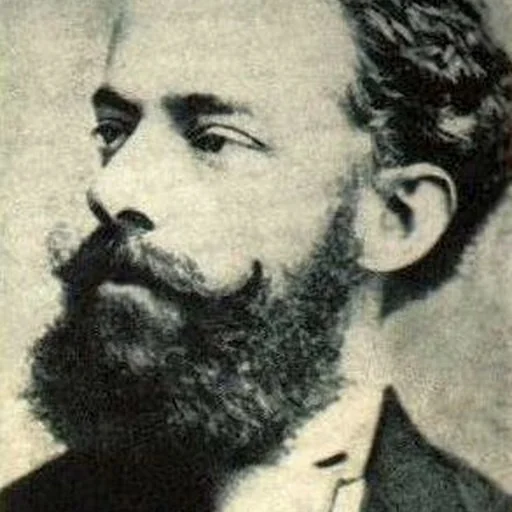
Amedeo Preziosi (2 December 1816 – 27 September 1882) was a Maltese painter and traveler known for his watercolours and prints of Constantinople, the Balkans, Ottoman Empire, and Romania.

![Portrait of Trehem[?]Walid 'Abdullah, an Arab from Iraq, by Aloysius Rosarius Amadeus Raymondus Andreas Preziosi](https://artifactworldgallery.com/img/aloysius-rosarius-amadeus-raymondus-andreas-preziosi--portrait-of-trehem-walid-abdullah-an-arab-from-iraq--2476a3692d0929a5-w320.webp)
![A Seller of Milk-puddings [Mahallebi], by Aloysius Rosarius Amadeus Raymondus Andreas Preziosi](https://artifactworldgallery.com/img/aloysius-rosarius-amadeus-raymondus-andreas-preziosi--a-seller-of-milk-puddings-mahallebi--3da9fd2db017402d-w320.webp)
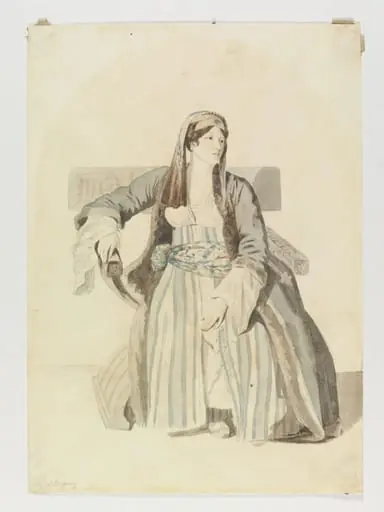 Une Demoiselle Grecque de Livadie
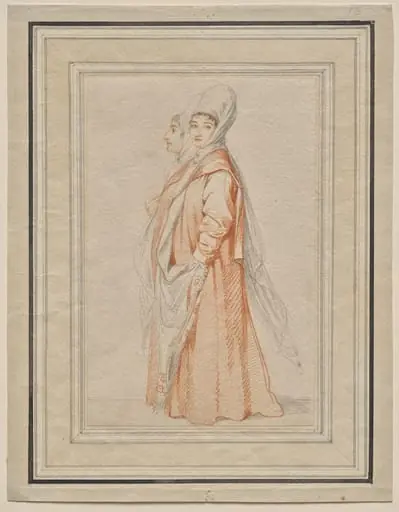 Two Veiled Young Women, probably Lilla Amnani and Her Sister
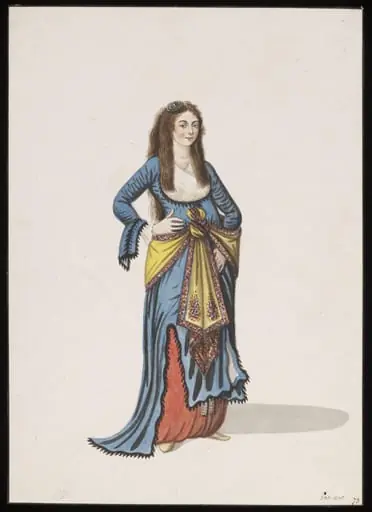 A young woman in Turkish dress
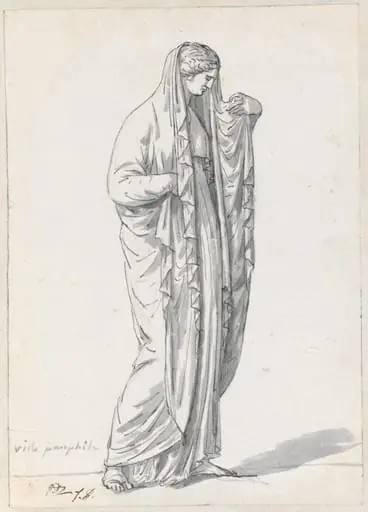 Draped Woman from the Villa Pamphili
 Untitled
 A veiled Turkish woman
 Woman Standing
 Miss Lovejoy
![A Greek woman[?], by Anonymous Greek artist](https://artifactworldgallery.com/img/anonymous-greek-artist--a-greek-woman--6cf3019da43d0709-w320.webp) A Greek woman[?]
A Greek woman[?]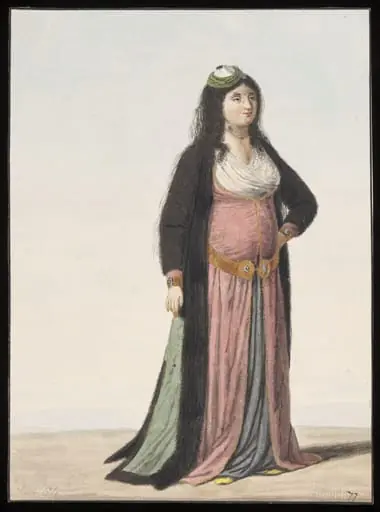 A Turkish woman
 Figure d'une Femme Arabe de Alexandrie
 A Turkish lady in Walking Dress