Artwork
John Harington, Second Baron of Exton
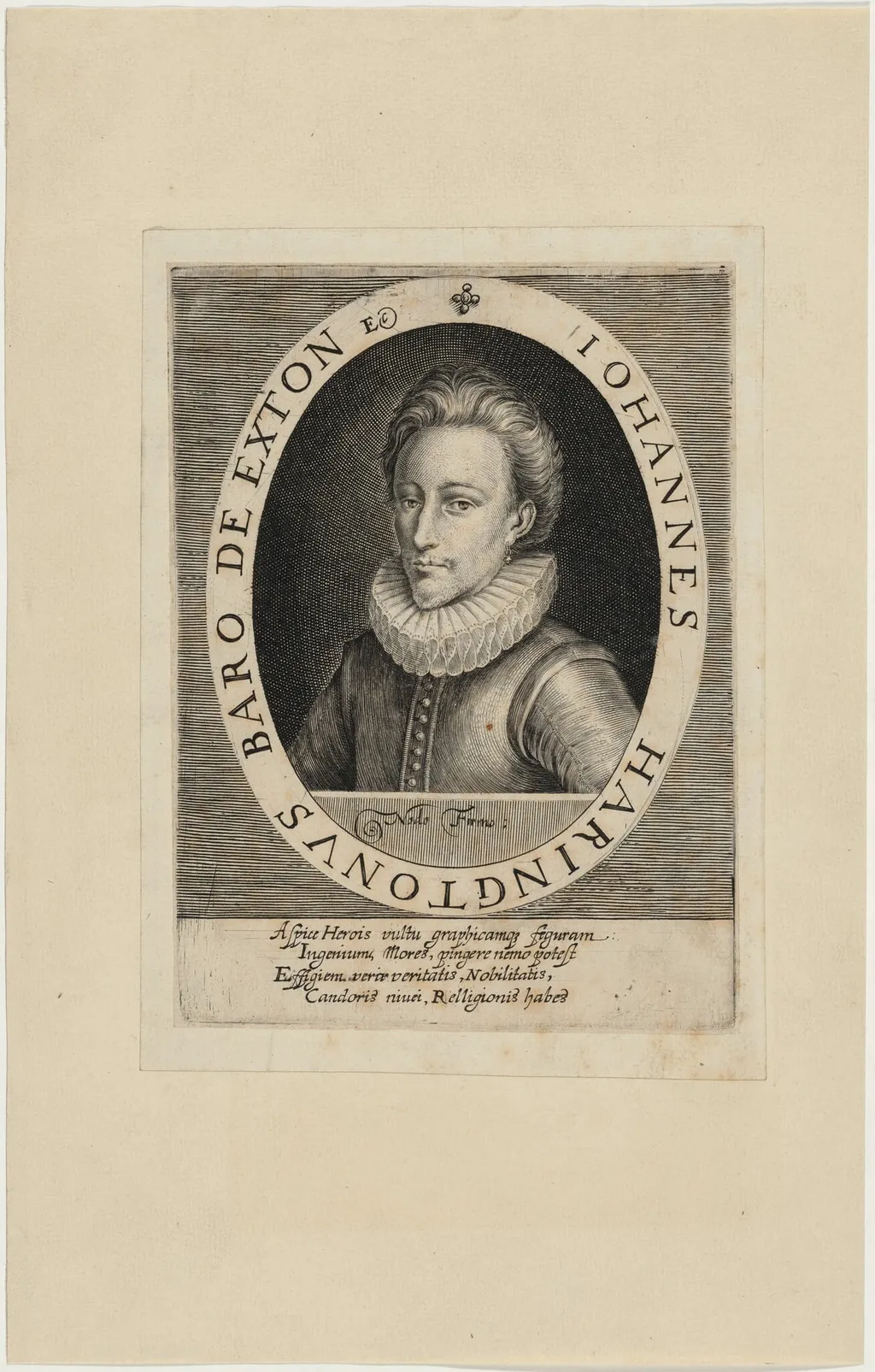
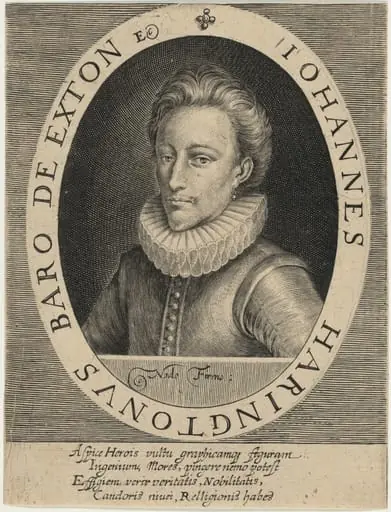
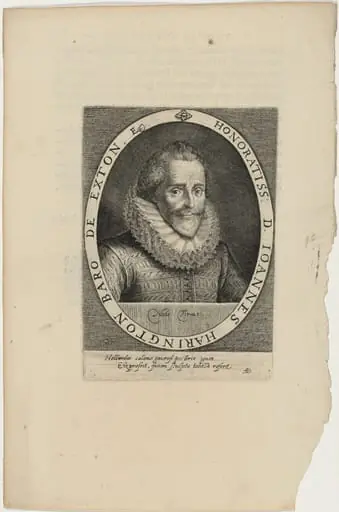
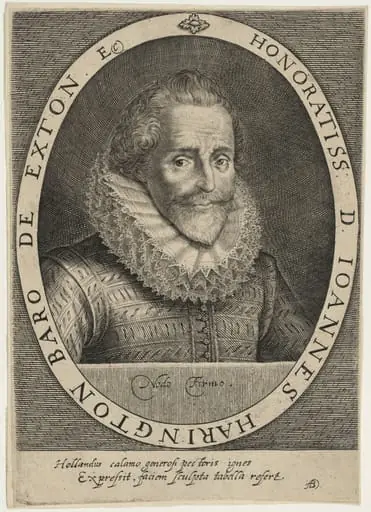
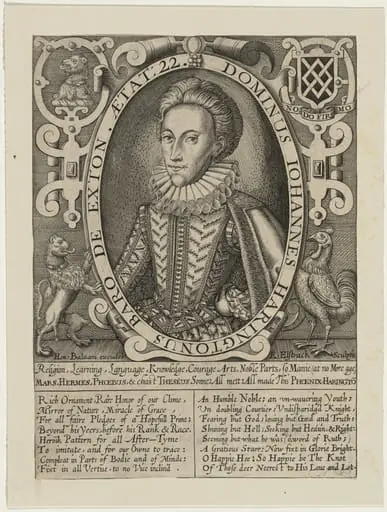
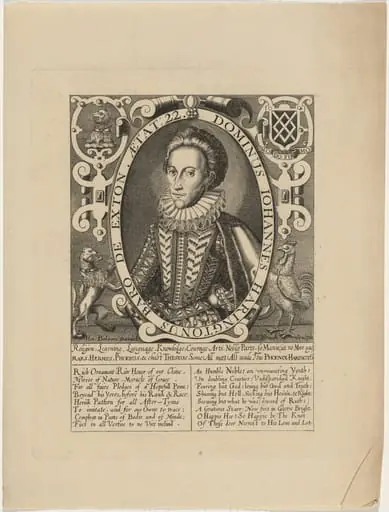
John Harington, Second Baron of Exton is an ink print by the Baroque artist Magdalena van de Passe. It dates from 1620 and is held in the collection of the National Gallery of Art.
About this work
Overview
The composition emphasizes his status through restrained detail and precise line work, typical of early 17th-century print portraiture.
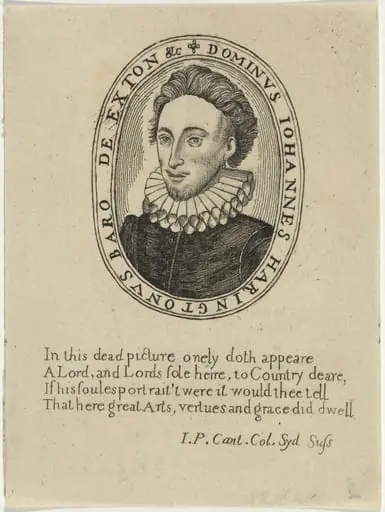
This 1620 engraving depicts John Harington, Second Baron of Exton, executed by Magdalena van de Passe. Rendered in monochrome, the portrait presents a formal, frontal view of the nobleman against a featureless background. The composition emphasizes his status through restrained detail and precise line work, typical of early 17th-century print portraiture. His name encircles the image in a circular inscription, a common convention for identifying sitters in engraved likenesses.
Subject & Meaning
John Harington, a member of the English gentry and courtier, is portrayed with solemn dignity. His attire—a high-collared dark jacket and a starched white ruff—signals his social rank and adherence to contemporary courtly dress. The absence of symbolic objects or elaborate settings focuses attention on his demeanor, suggesting an ideal of stoic nobility. The circular text reinforces his identity, aligning the image with heraldic and genealogical traditions of the period.
Technique & Style
Magdalena van de Passe employed fine, controlled lines to model the sitter’s face and clothing, creating subtle gradations of light and shadow. The engraving technique, involving incised lines on a metal plate, allowed for sharp detail and tonal depth without color. The background remains unadorned, directing focus to the face and attire. The method reflects the precision valued in Dutch and English printmaking circles, where line quality conveyed both likeness and refinement.
History & Provenance
Created in 1620, the engraving likely served as a personal or familial keepsake, possibly distributed among Harington’s associates or used in genealogical records. Magdalena van de Passe, part of a renowned family of printmakers, produced numerous portraits of European nobility during this era. While specific early ownership is undocumented, the work aligns with the broader practice of using engraved portraits to affirm social standing among the aristocracy in early modern England.
Context
In early 17th-century England, engraved portraits were increasingly used to circulate images of the elite beyond courtly circles. Van de Passe, working in the Netherlands, catered to an international clientele, including English families seeking refined likenesses. This portrait reflects the transnational nature of print culture, where Dutch technical skill met English aristocratic demand. Such images reinforced social hierarchies through visual representation, even as printing technology democratized access to portraiture.
Legacy
The engraving endures as an example of Magdalena van de Passe’s contribution to portrait printmaking and as a record of John Harington’s public image. It illustrates how women printmakers played a significant, though often underrecognized, role in early modern visual culture. Today, it remains a valuable artifact for studying aristocratic identity, the dissemination of likeness, and the technical capabilities of line-based reproduction in the pre-photographic era.
Artist & collection

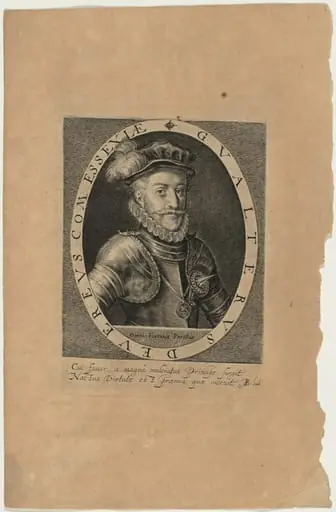 Walter Devereux, First Earl of Essex
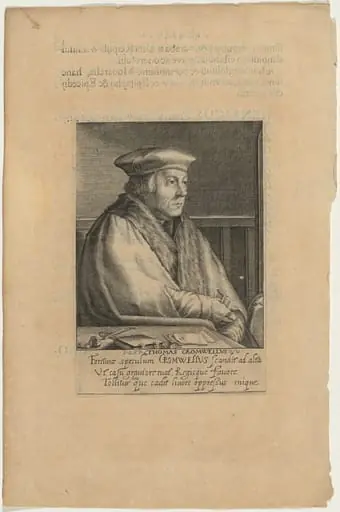 Thomas Cromwell, Earl of Essex
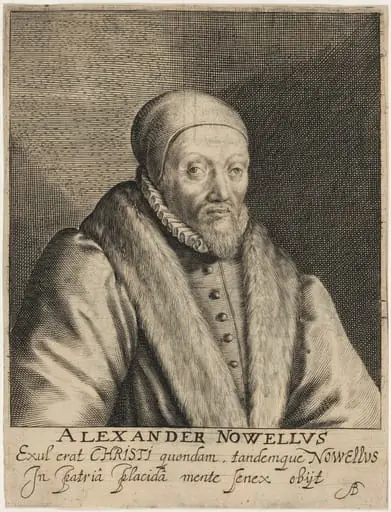 Alexander Nowell, Dean of Saint Paul's
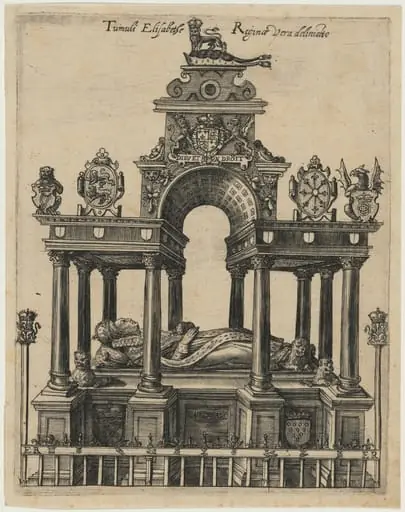 Elizabeth's Tomb
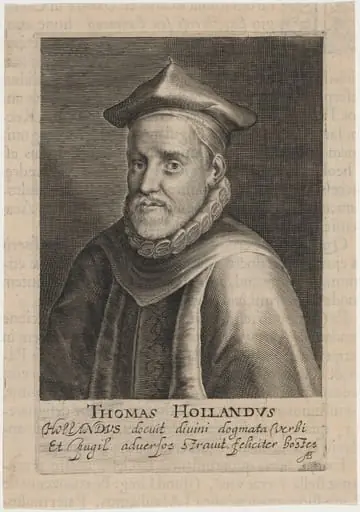 Thomas Holland, Regius Professor of Divinity at Oxford, and Rector of Exeter College
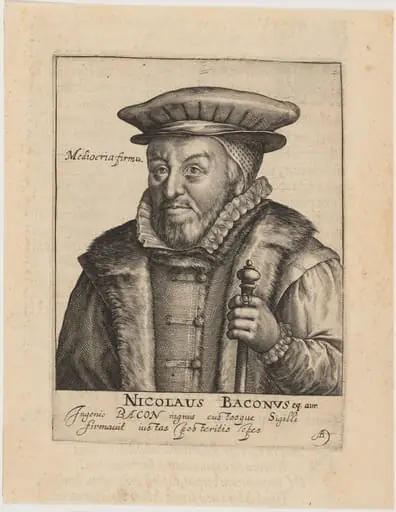 Sir Nicholas Bacon, Lord Keeper
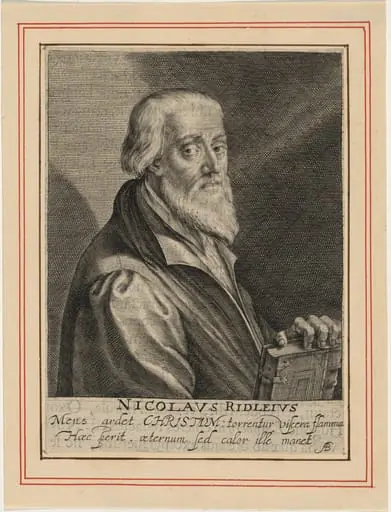 Nicholas Ridley, Bishop of London, Protestant Martyr
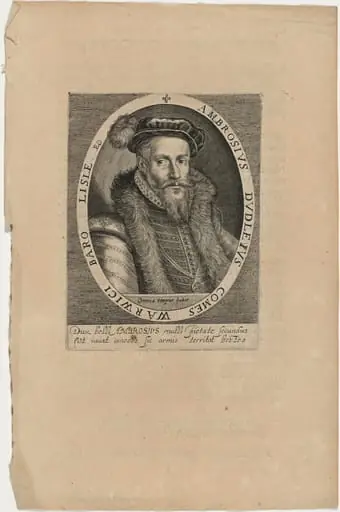 Ambrose Dudley, Earl of Warwick