Artwork
Joseph and Potiphar's Wife
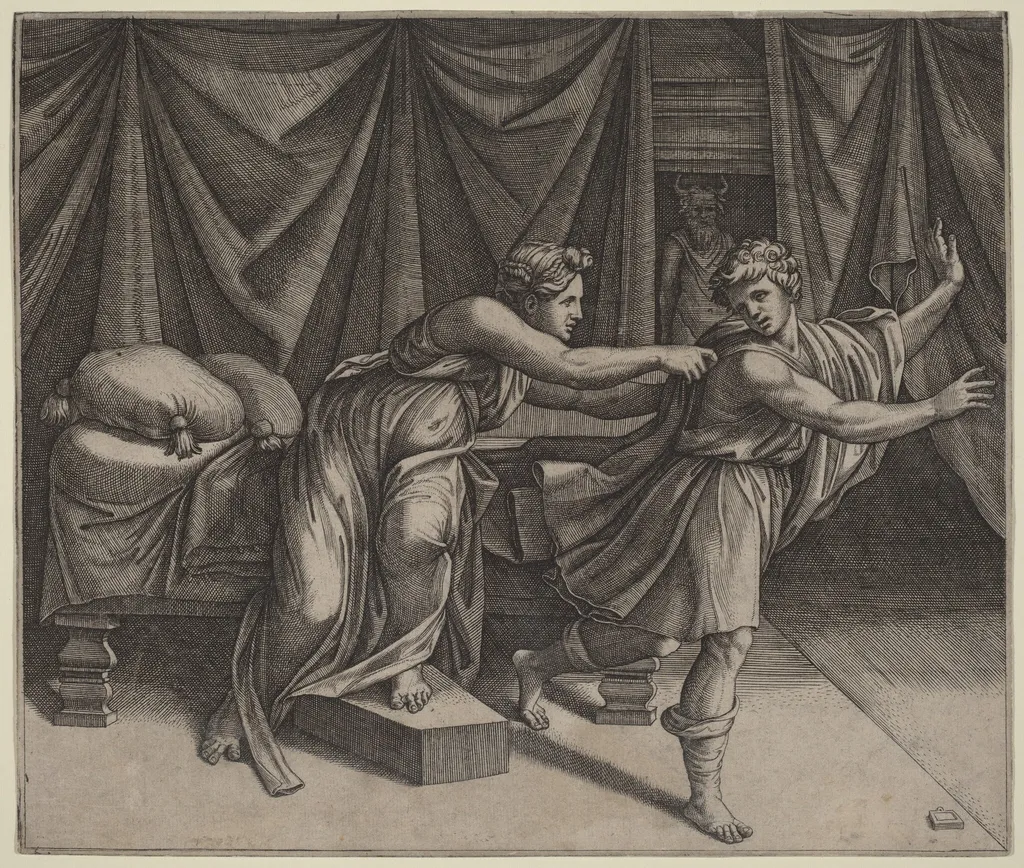
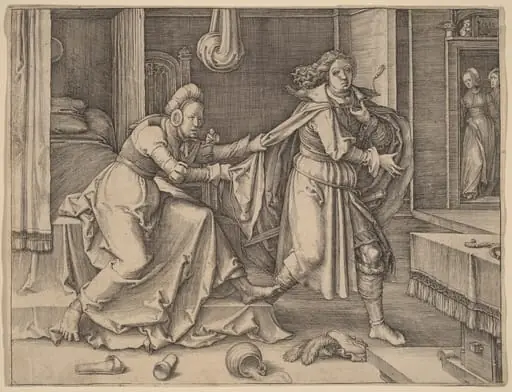
Joseph and Potiphar's Wife is an ink print by the Renaissance artist Marcantonio Raimondi. It dates from 1520 and is held in the collection of the National Gallery of Art.
About this work
Overview
Joseph and Potiphar's Wife is an engraving created by Italian artist Marcantonio Raimondi around 1520. This print reproduces a biblical scene, characteristic of Raimondi's work in disseminating High Renaissance designs through innovative printmaking techniques.
Subject & Meaning
The engraving depicts a pivotal moment from the Bible: Joseph's resistance to the seduction attempts of Potiphar's wife. The composition captures the intense drama of the scene, with Joseph attempting to flee while Potiphar's wife grasps his cloak, and a sandal flying off in the turmoil.
Technique & Style
Raimondi's precise line work and masterful engraving technique, which he systematized, convey the tension and movement of the figures. The super-fine details, such as the folds of their clothing, underscore the High Renaissance aesthetic.
History & Provenance
Created circa 1520, this engraving is part of Raimondi's collaborative efforts with painters like Raphael, adapting their designs for wide dissemination. The exact provenance of this specific print is not detailed here, reflecting the commonality of such works in circulating Renaissance art.
Context
As a reproductive print, *Joseph and Potiphar's Wife* facilitated the rapid spread of High Renaissance styles and biblical narratives across Europe, leveraging the reproducibility of engraving. The process involved carving into metal plates, inking the grooves, and pressing the design onto paper.
Artist & collection

Artist
Marcantonio Raimondi, often called simply Marcantonio (c. 1470/82 – c. 1534), was an Italian engraver, known for being the first important printmaker whose body of work consists largely of prints copying paintings. He…

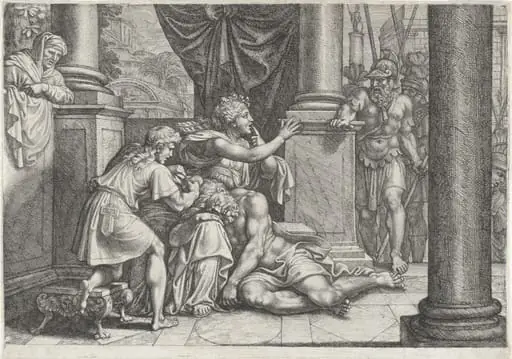 Samson and Delilah
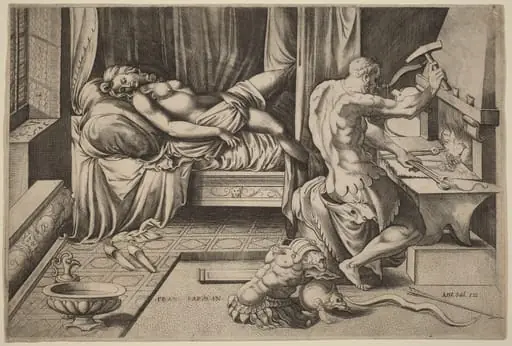 Venus Reclining with Vulcan at His Forge
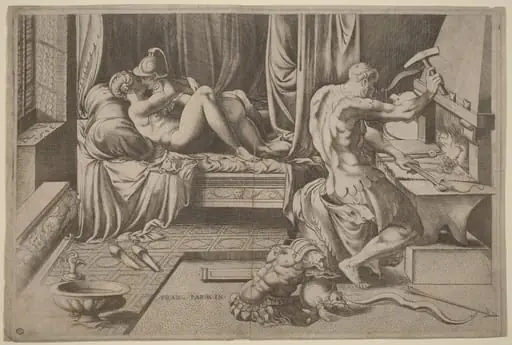 Venus and Mars Embracing with Vulcan at his Forge
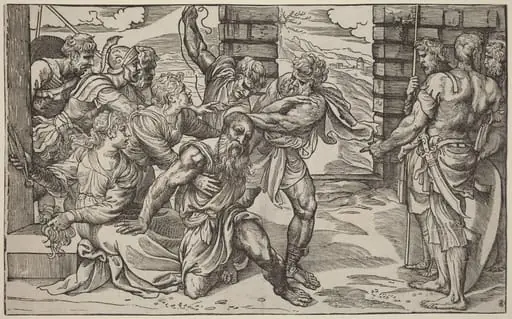 Samson and Delilah
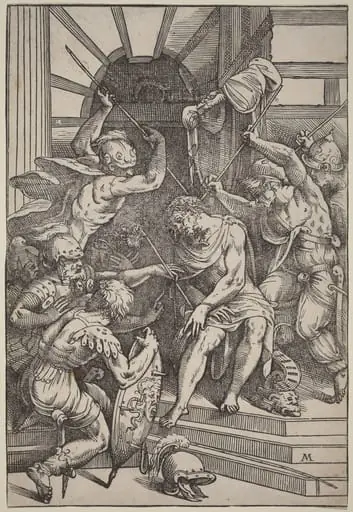 Christ Crowned with Thorns
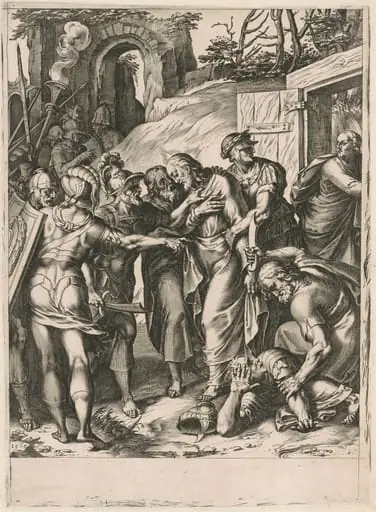 The Betrayal of Christ
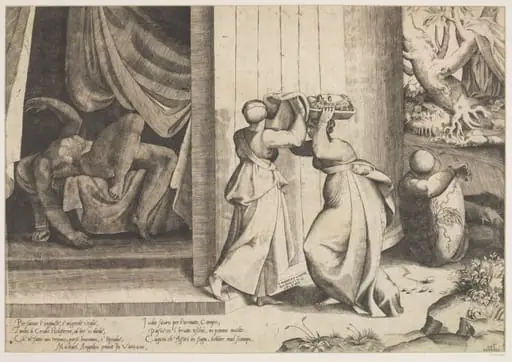 Judith with the head of Holofernes
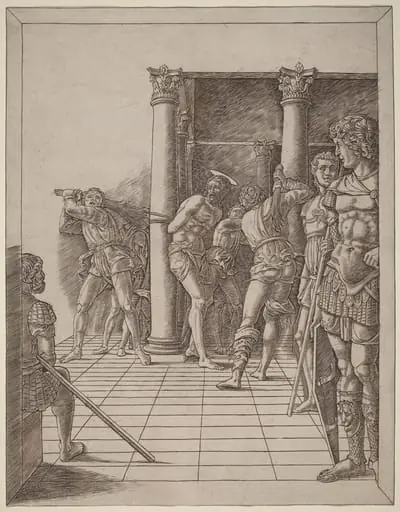 Flagellation of Christ, with the Pavement
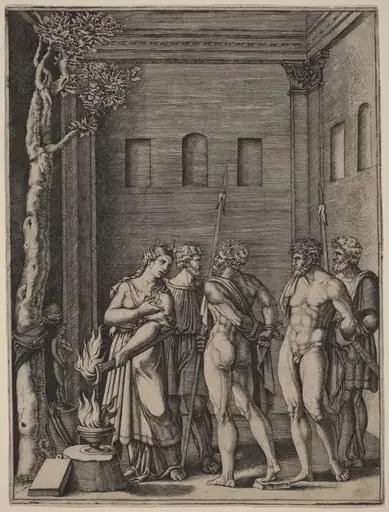 Iphigenia Recognizing Her Brother
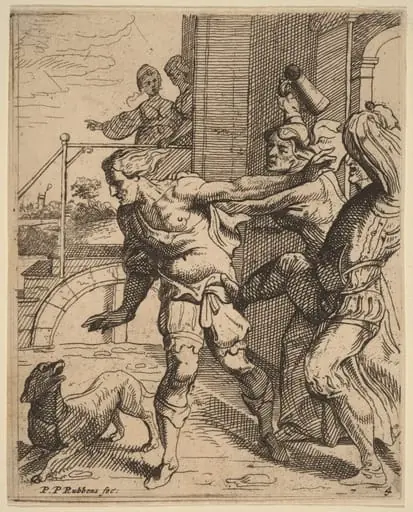 The Prodigal Son Driven from the Tavern
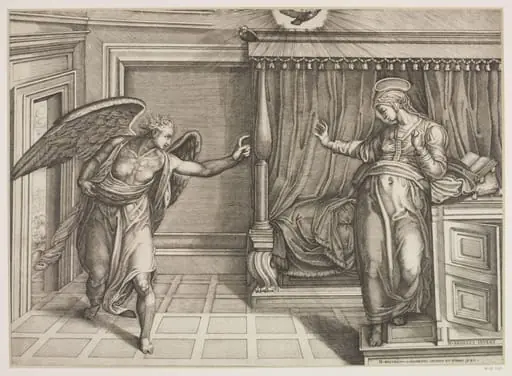 The Annunciation
 Joseph Escaping Potiphar's Wife