Artwork
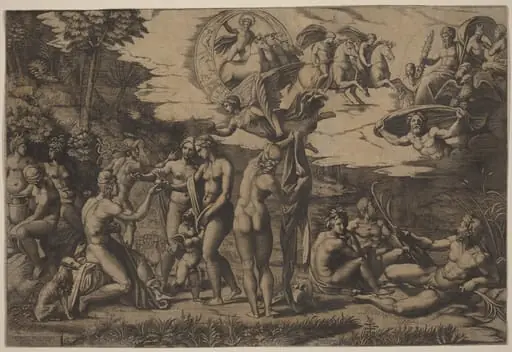
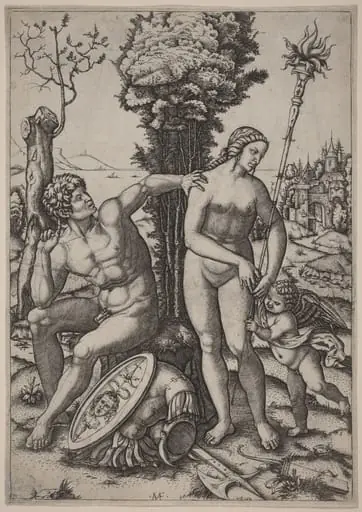
Venus Appearing to Aeneas
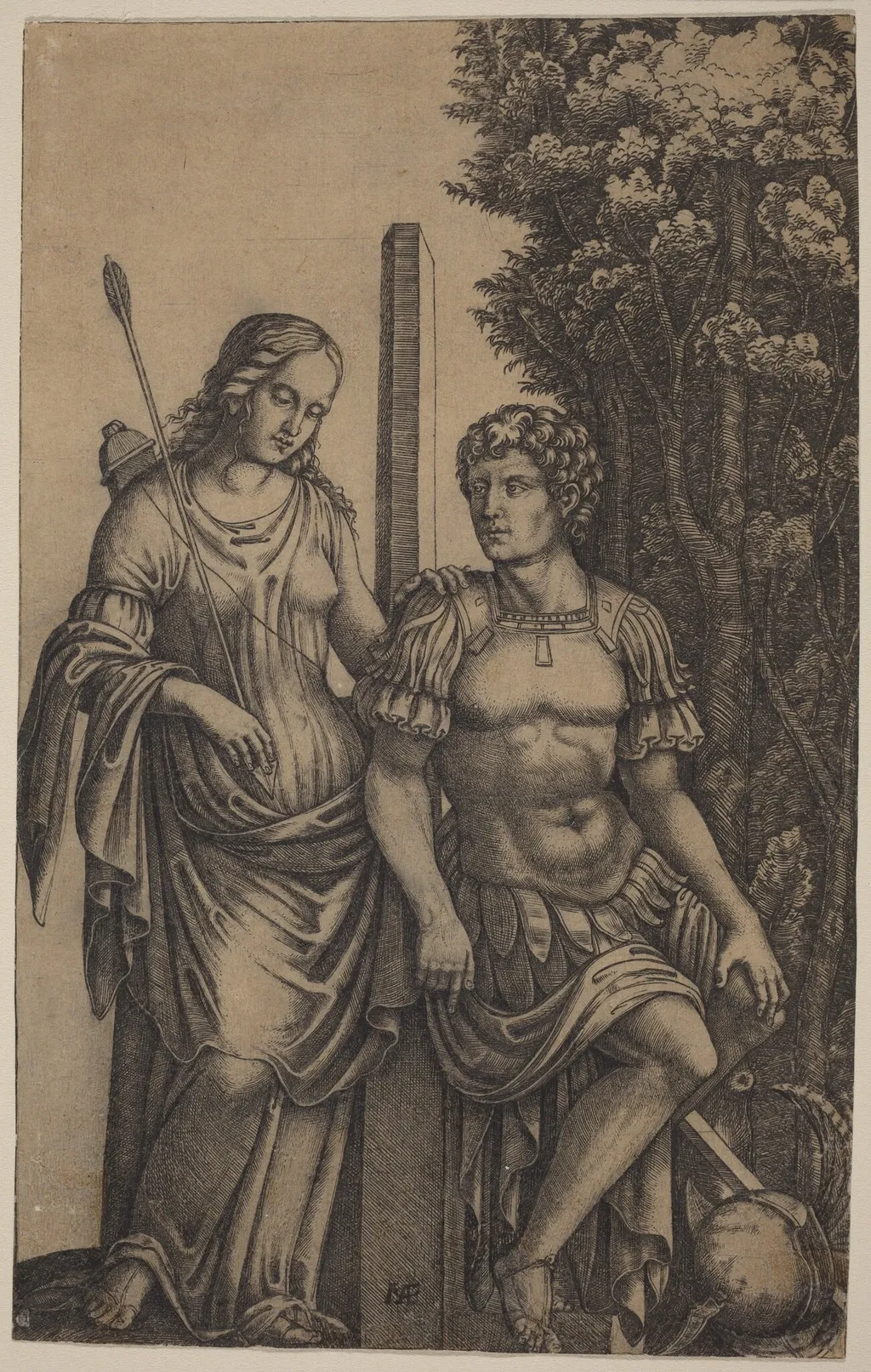
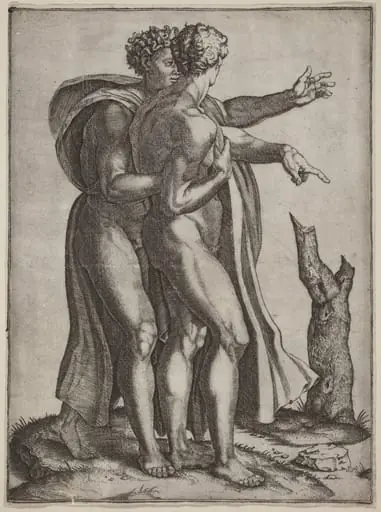
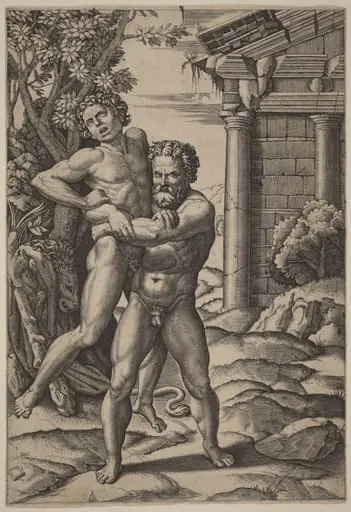
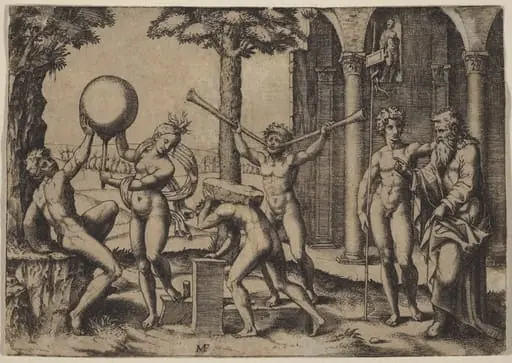
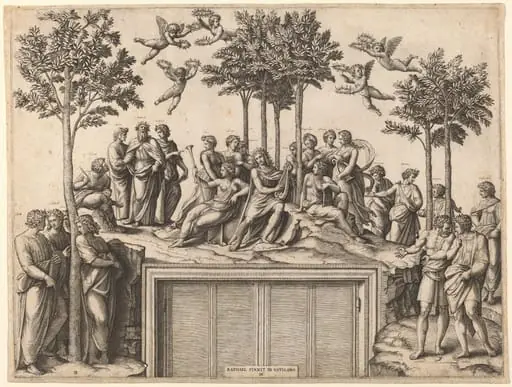
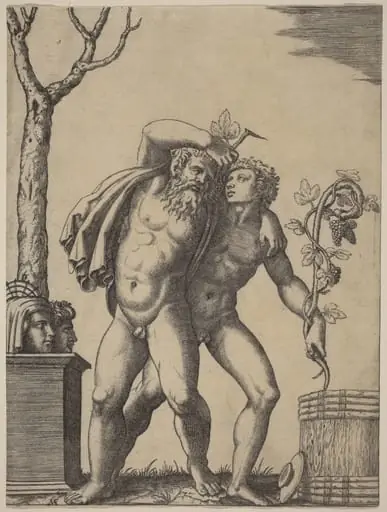
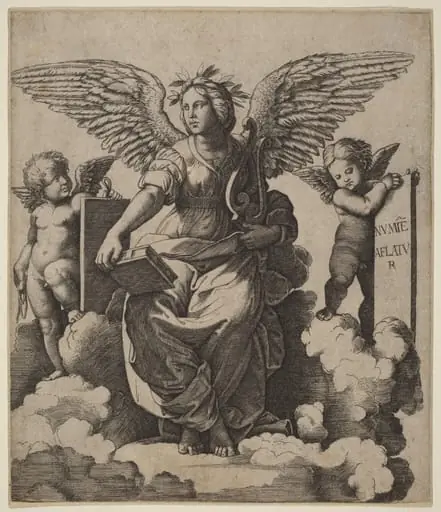
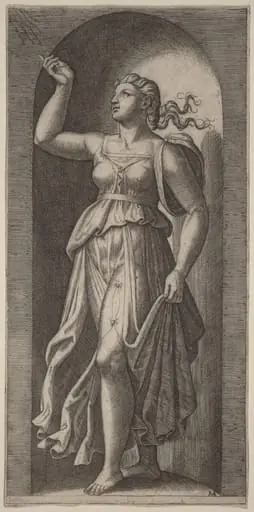
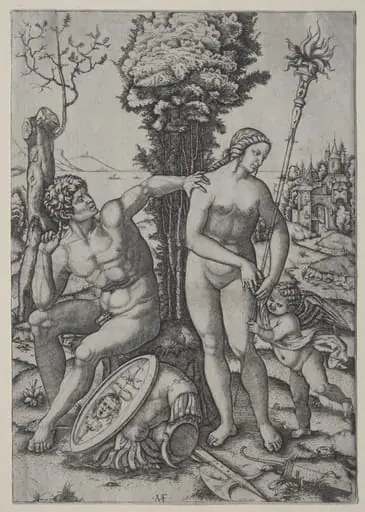
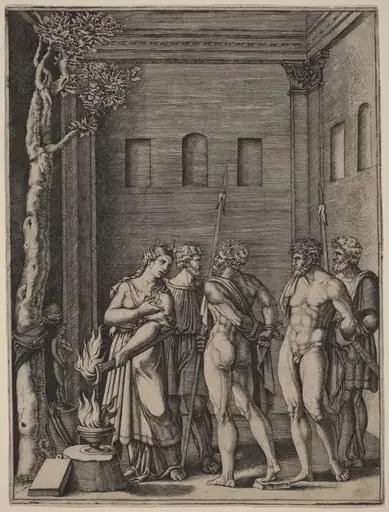
Venus Appearing to Aeneas is an ink print by the Renaissance artist Marcantonio Raimondi. It dates from 1505 and is held in the collection of the National Gallery of Art.
About this work
Overview
Venus Appearing to Aeneas is an engraving on laid paper created by Marcantonio Raimondi, a prominent Italian engraver of the early 16th century. The work exemplifies Raimondi's role in reproductive printmaking, particularly in spreading the High Renaissance style through his collaborations.
Subject & Meaning
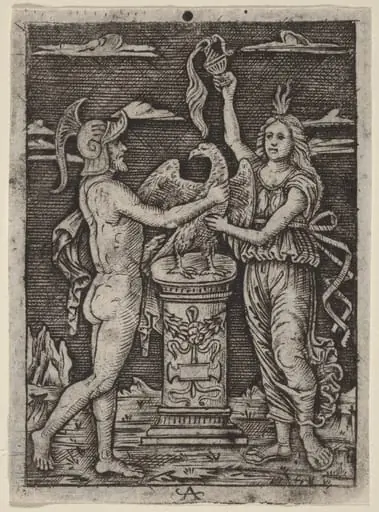
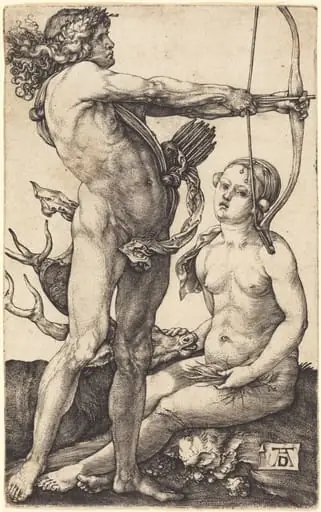
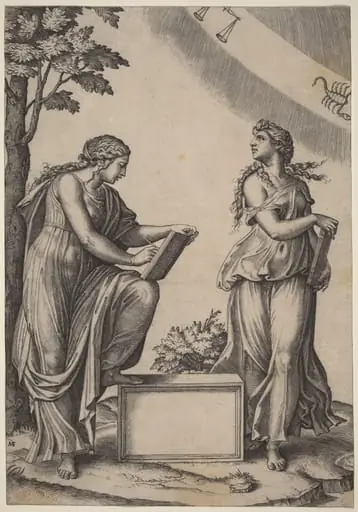
The engraving illustrates a mythological scene where Venus, goddess of love, appears to Aeneas. Venus, identifiable by her bow and arrow, gently places her hand on Aeneas's shoulder as he sits amidst his armor and weaponry, conveying a moment of intimate interaction between the divine and mortal realms.
Technique & Style
Executed in meticulous line work, the engraving showcases Raimondi's technical prowess in capturing subtle human emotions. The classical attire and detailed setting against a backdrop of trees reflect the High Renaissance influences, notably from Raimondi's association with Raphael.
History & Provenance
Active around 1505, Raimondi's career was significantly marked by his partnership with Raphael, through which he played a key role in disseminating the High Renaissance style across Europe. Specific provenance details for *Venus Appearing to Aeneas* are not provided.
Context
This work is contextualized within the Renaissance movement, where mythological themes and precise renderings of classical motifs were prevalent. For deeper insight into this artistic period, exploring the broader Renaissance movement is recommended.
Artist & collection

Artist
Marcantonio Raimondi, often called simply Marcantonio (c. 1470/82 – c. 1534), was an Italian engraver, known for being the first important printmaker whose body of work consists largely of prints copying paintings. He…