Artwork
The prince being taken away for execution on the false complaint of the handmaiden, from a Tuti-nama (Tales of a Parrot): Eighth Night
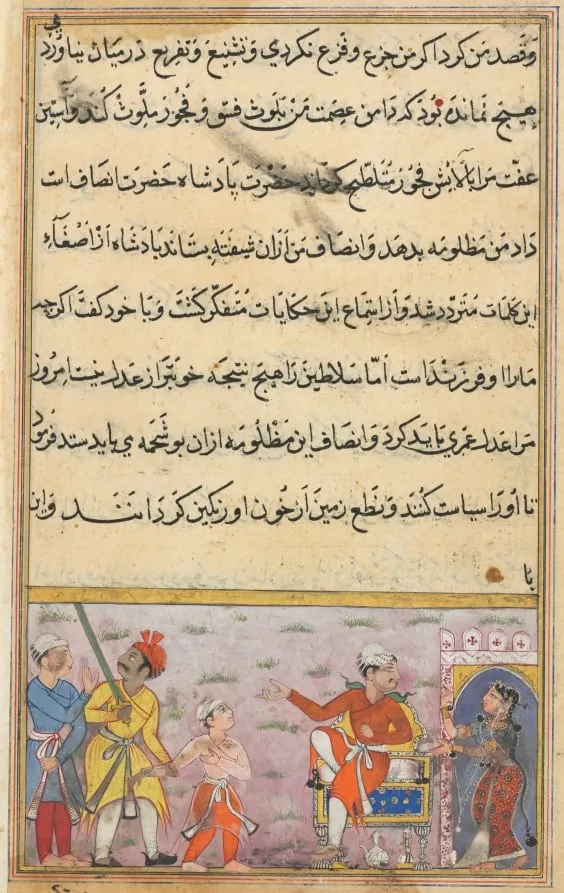
The prince being taken away for execution on the false complaint of the handmaiden, from a Tuti-nama (Tales of a Parrot): Eighth Night is an unspecified painting by the Mughal Painting artist Unknown. It dates from 1560 and is held in the collection of the Cleveland Museum of Art.
About this work
If you like this scene, look up *Mughal India, court of Akbar (reigned 1556–1605)*.
You see a prince in chains, guards dragging him toward a sword. A woman in fine clothes points at him, her face twisted. The king sits on a throne, watching.
The prince took a vow of silence, so he can’t defend himself. The handmaiden lies to save her reputation. The painting shows the moment just before the execution—no blood, just tension.
If you like this scene, look up *Mughal India, court of Akbar (reigned 1556–1605)*.
Overview
The canvas captures a dramatic moment from the eighth night of a Persian tale, depicting a prince bound in chains as royal guards pull him toward a looming execution sword. A richly dressed woman gestures accusatorily, while a seated monarch observes the scene, emphasizing the tension of impending judgment.
Subject & Meaning
The narrative centers on a handmaiden who, fearing the prince’s rejection and potential exposure of her impropriety, fabricates a charge of assault. The prince, bound by a self‑imposed vow of silence, cannot refute the accusation, leading the king to decree his beheading. The painting visualizes the consequences of deceit and enforced silence.
Technique & Style
Rendered with meticulous attention to costume detail and spatial composition, the work employs a balanced arrangement that draws the eye from the accusing woman to the restrained prince and up to the observing king. The palette contrasts the muted tones of the prison setting with the vivid fabrics of the accuser, heightening the emotional charge.
Context
The scene derives from a Tuti‑nama, a collection of moral stories popular in Mughal courts during Akbar’s reign (1556–1605). Such narratives were often illustrated to convey ethical lessons, and the painting reflects the courtly aesthetic and storytelling traditions of that period.
Artist & collection

 Domestic Scene
 Giacomo and Cardinal Marco, investing Andrea, Abbot of San Zeno, with his Benefice
 The Nymph of Fontainebleau
 Portrait of a Woman
 Madonna and Child with Saints in the Enclosed Garden
 Venus and Minerva
 Family Group of Four on Sofa
 Wall painting from Room H of the Villa of P. Fannius Synistor at Boscoreale
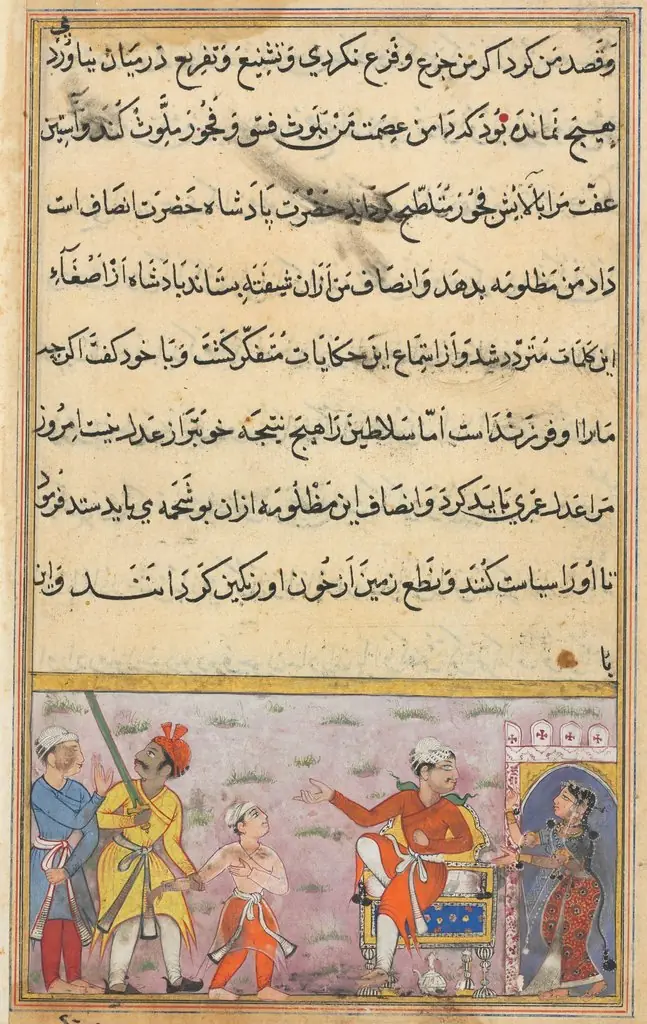 The prince being taken away for execution on the false complaint of the handmaiden, from a Tuti-nama (Tales of a Parrot): Eighth Night
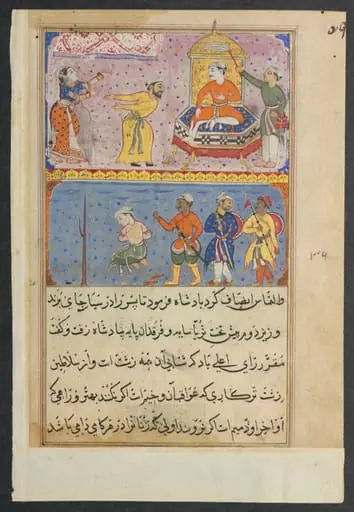 The prince, once reprieved, is returned to the palace of execution a second time on the plea of the king’s handmaiden, from a Tuti-nama (Tales of a Parrot): Eighth Night
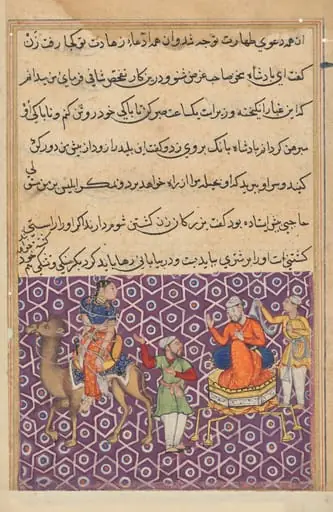 King Bahram, who has married Khassa’s daughter, has her tied to a camel to be abandoned in the desert as a result of false accusations made by Khulasa, from a Tuti-nama (Tales of a Parrot): Fifty-first Night
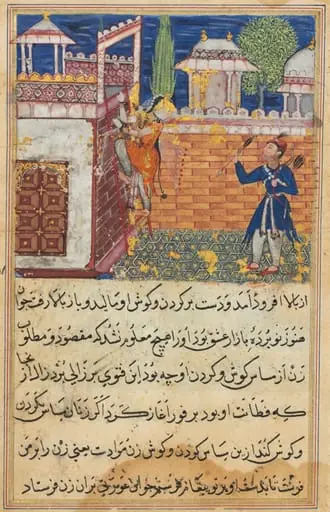 The deceitful wife returns to her terrace after caressing her lover, from a Tuti-nama (Tales of a Parrot): Eighth Night
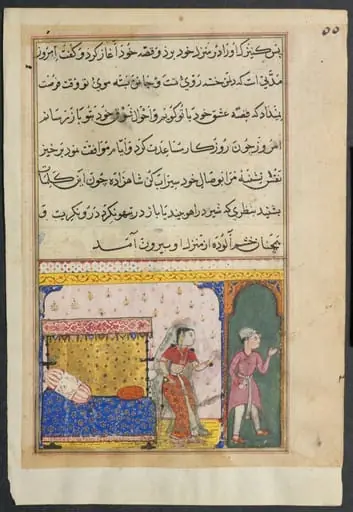 The prince rejects the amorous advances of the king’s handmaiden, from a Tuti-nama (Tales of a Parrot): Eighth Night
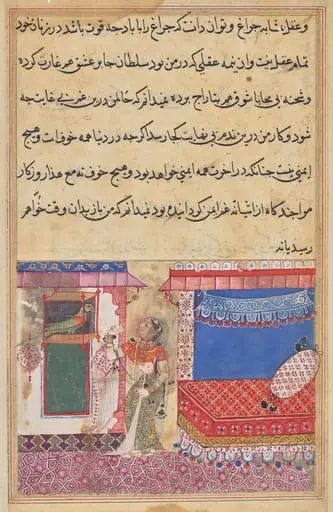 The Parrot Addresses Khujasta at the Beginning of the Eighteenth Night, from a Tuti-nama (Tales of a Parrot)
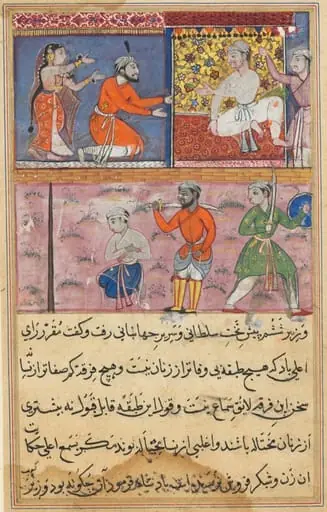 The prince sent back to the place of execution for the sixth time, from a Tuti-nama (Tales of a Parrot): Eighth Night
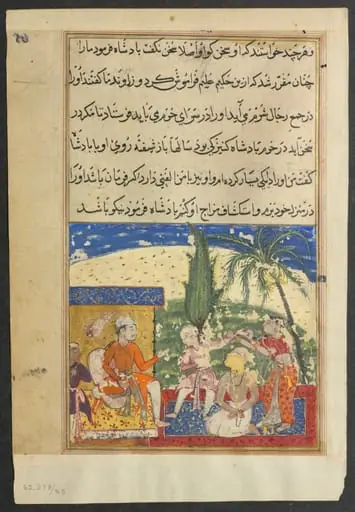 The king’s handmaiden takes the prince away to the harem, from a Tuti-nama (Tales of a Parrot): Eighth Night
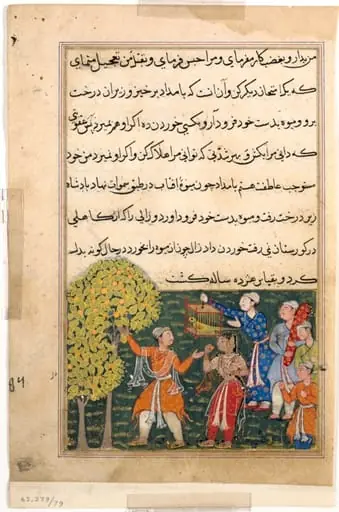 The king plucks fruit from the Tree of Life with his own hands and feeds it to a lady, from a Tuti-nama (Tales of a Parrot): Ninth Night
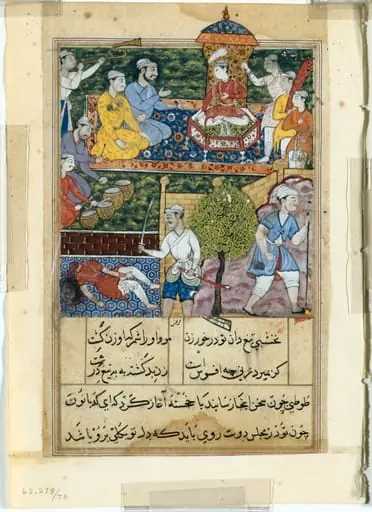 The young prince is crowned and the wicked handmaiden is executed, from a Tuti-nama (Tales of a Parrot): Eighth Night