Artwork
Ancient Observatory, Jantar Mantar, Delhi
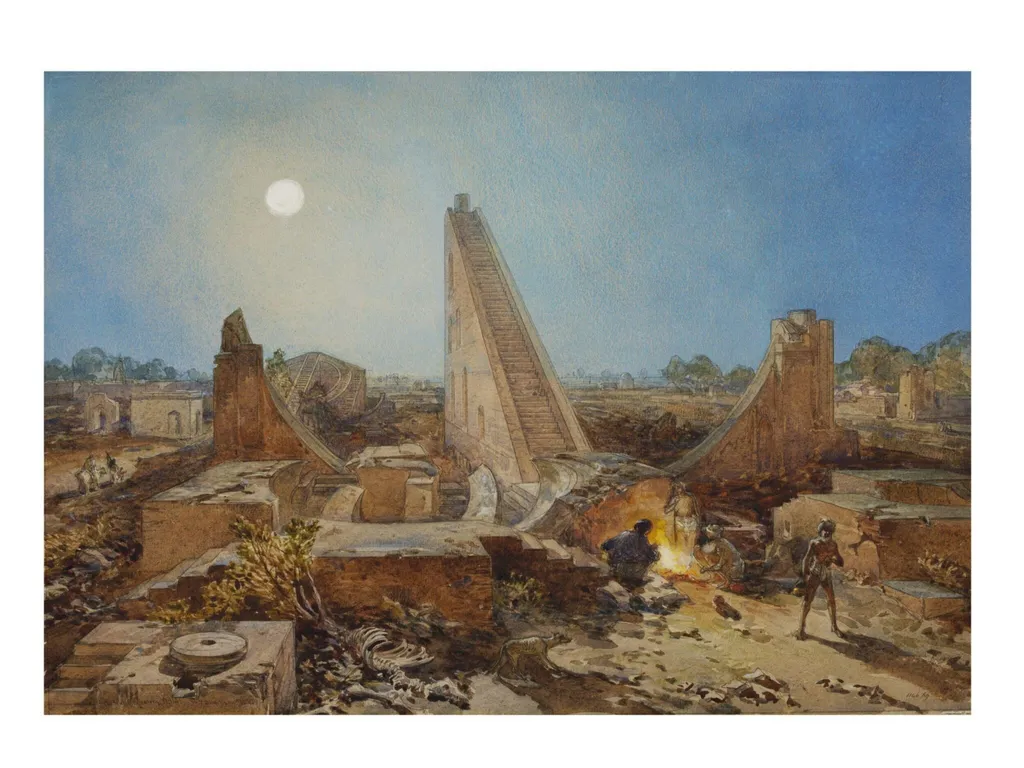
Ancient Observatory, Jantar Mantar, Delhi is a paint painting by the Impressionist artist William Simpson. It dates from 1864 and is held in the collection of the Victoria and Albert Museum. The work is a moonlit view of the Jantar Mantar complex in Delhi, rendered in watercolor in 1864.
About this work
This painting shows the Jantar Mantar ruins in Delhi. It’s a quiet scene, not grand or flashy. William Simpson painted it in 1864.
Simpson made many trips to India after sketching there in 1859. He turned quick pencil sketches into watercolors back in London.
His work blends Impressionism and Realism. See more of his pieces at the Victoria and Albert Museum.
movement: Impressionism, Realism
Overview
The work is a moonlit view of the Jantar Mantar complex in Delhi, rendered in watercolor in 1864. It captures the austere silhouette of the 18th‑century astronomical instruments against a dark sky, emphasizing the quiet atmosphere of the ruined observatory rather than any dramatic narrative.
Subject & Meaning
The composition focuses on the remains of the observatory commissioned by Raja Sawai Jai Singh in 1725. By portraying the site at night, the artist underscores the passage of time and the fading of scientific ambition, inviting contemplation of the structure’s historical purpose.
Technique & Style
Executed in watercolor after preliminary pencil sketches, the image blends the immediacy of Impressionist brushwork with the careful observation typical of Realist practice. Subtle colour washes convey the faint lunar illumination while preserving fine architectural detail.
History & Provenance
The picture was produced by Scottish artist William Simpson, who first visited India in 1859 to document sites linked to the 1857‑58 uprising. After returning to London, he developed the sketch into a finished watercolor. The work later entered the collection of the Victoria and Albert Museum.
Context
Simpson’s Indian series emerged from a commission by the lithographic firm Day and Sons, intended to illustrate a planned volume on the rebellion. Financial difficulties prevented the publication, and the artist’s extensive watercolour set was eventually sold as bankruptcy stock, marking a personal setback despite the artistic merit of pieces like this one.
Artist & collection
Artist
William Simpson drew what he saw during the Crimean War in the 1850s, including sketches of battles and camps in Crimea and Constantinople.

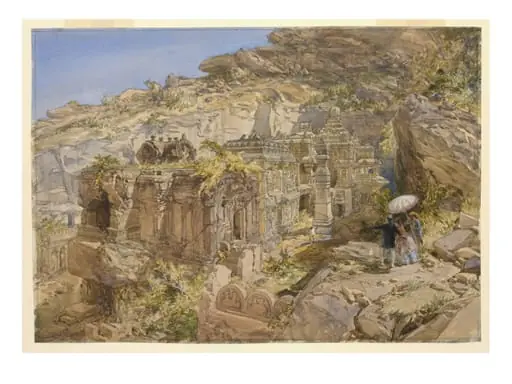
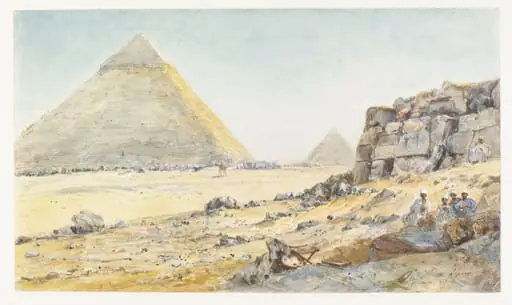 Tombeau de Lipsius. Pyramide. Chefren. 1880-1890
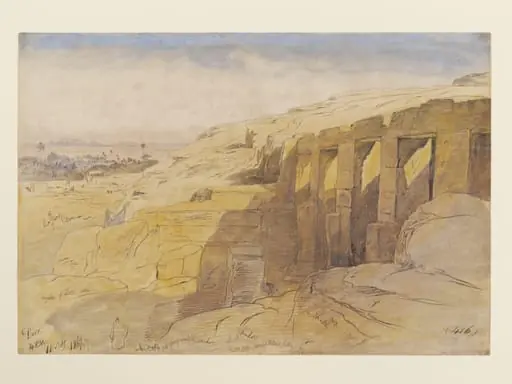 Temple at Derr, Nubia, Egypt
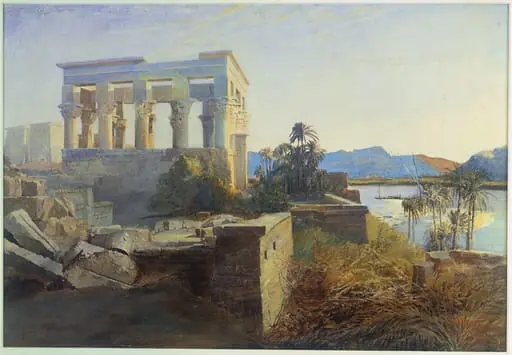 The Island of Philae with the Kiosk
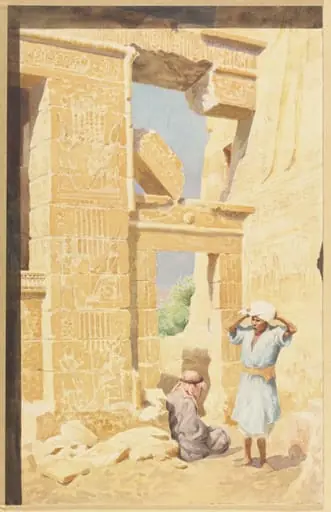 A Doorway at Philae
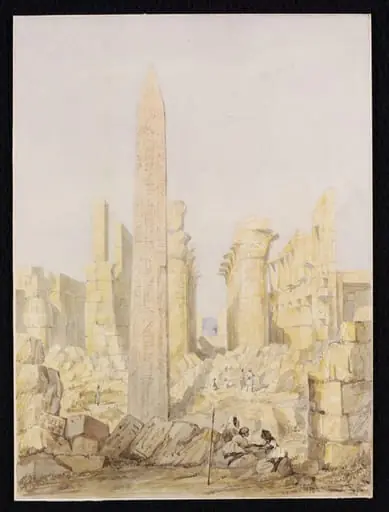 Great Temple. Karnac. Thebes
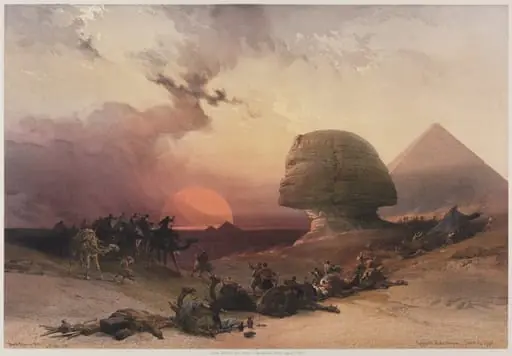 Egypt and Nubia, Volume III: Approach of the Simoon-Desert at Gizeh
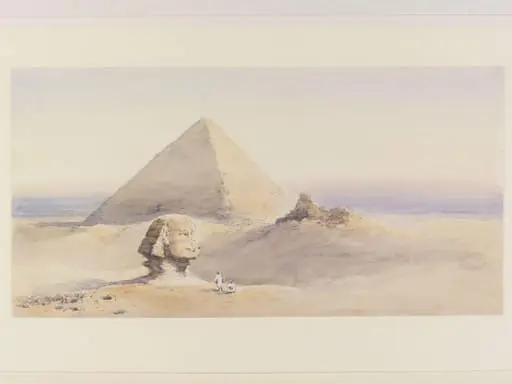 Sphinx & Great Pyramid
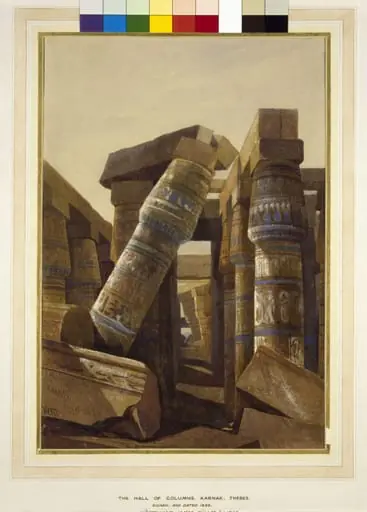 The Hall of Columns at Karnak, Thebes
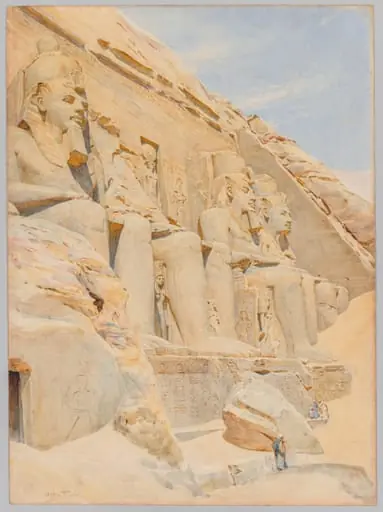 The Great Temple of Abu Simbel
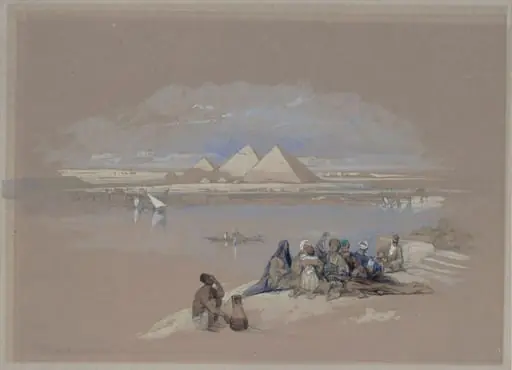 Pyramids of Gizeh from Old Cairo
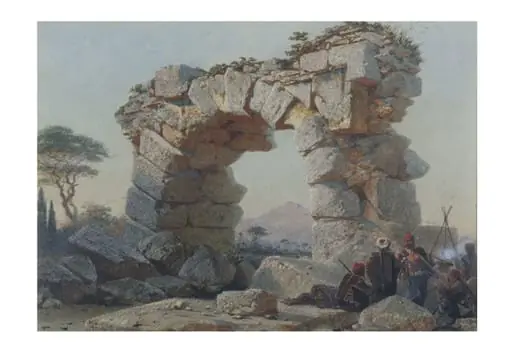 Roman Arch at Spalato
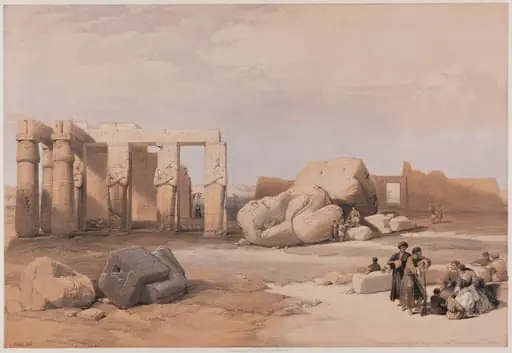 Egypt and Nubia, Volume II: Fragments of the Great Colossi at the Memnonium, Thebes