Artwork
Halt after a March
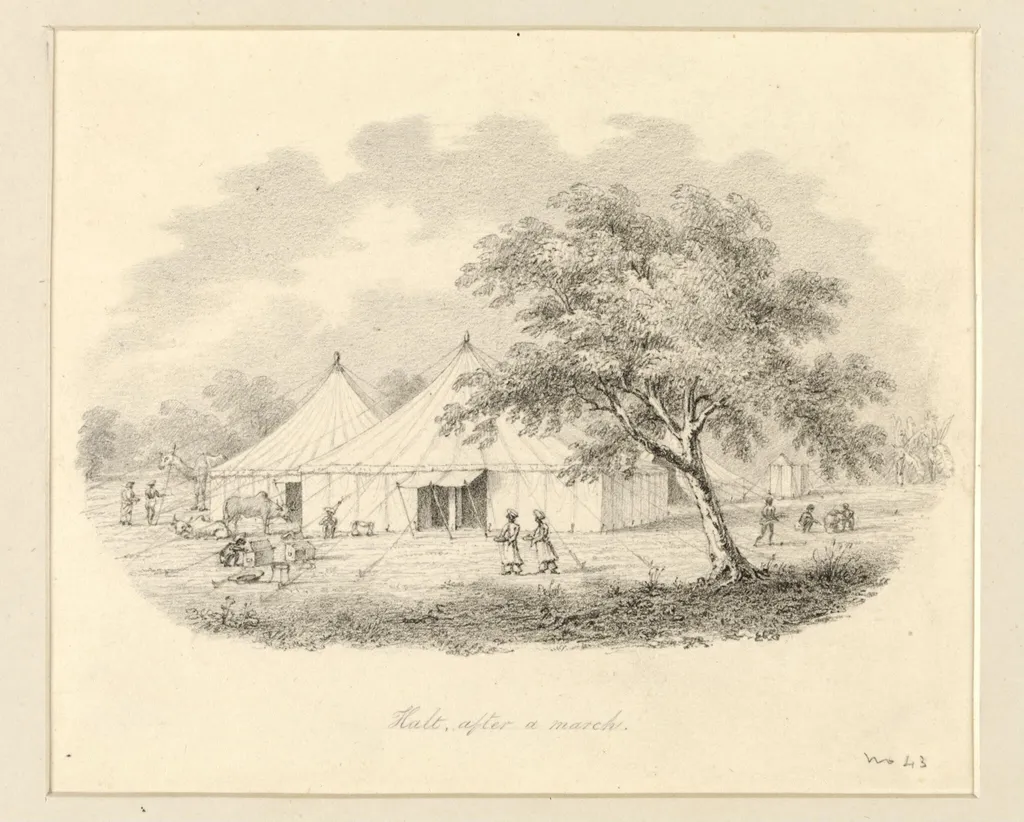
Halt after a March is a drawing by the Romanticist artist Robert Captain Smith. It dates from 1830 and is held in the collection of the Victoria and Albert Museum. This pencil drawing is one of sixty-five illustrations from a travel journal compiled by Captain Robert Smith of the 44th Regiment of Foot.
About this work
Overview
Created during his service in northern India between 1828 and 1832, the sketches were assembled into a bound volume after his retirement in 1833.
This pencil drawing is one of sixty-five illustrations from a travel journal compiled by Captain Robert Smith of the 44th Regiment of Foot. Created during his service in northern India between 1828 and 1832, the sketches were assembled into a bound volume after his retirement in 1833. The work entered a public collection in 1915 through a donation by W. M. Biden, preserving a firsthand visual record of British military life in early 19th-century India.
Subject & Meaning
The scene captures a moment of rest following a military march, set in a wooded rural area. A large tent, shaded by a broad tree, serves as the focal point, surrounded by figures and tethered animals. The muddy ground and scattered details suggest temporary occupation, reflecting the logistical realities of movement through unfamiliar terrain. The image conveys neither grandeur nor conflict, but the quiet routine of duty in a foreign landscape.
Technique & Style
Smith employed fine, controlled pencil lines to render textures and forms with precision. Folds in the tent fabric, bark on trees, and the uneven ground are suggested through delicate hatching and cross-hatching. The absence of wash or color emphasizes line and tone, aligning with the functional purpose of the journal as a documentary record rather than a finished artistic piece.
History & Provenance
The drawing originated in Captain Smith’s personal travel journal, maintained during his postings along the Ganges and in key North Indian cities. After returning to Ireland, he compiled the sketches into a cohesive set. The volume remained in private hands until 1915, when W. M. Biden donated it to a public collection, ensuring its preservation as a historical artifact of British military observation.
Context
Smith’s drawings reflect the broader practice of British officers documenting their postings in India during the early colonial period. These sketches served both personal and administrative purposes, offering visual references for unfamiliar environments. The focus on encampments, architecture, and daily routines reveals an interest in recording conditions rather than celebrating imperial power.
Legacy
The series stands as a modest but valuable archive of military life in early 19th-century India. Unlike grander official records, these intimate drawings provide unembellished glimpses into routine moments of travel and rest. Their survival and accessibility allow modern viewers to engage with the material culture and spatial awareness of British soldiers in a period of expanding colonial presence.
Artist & collection

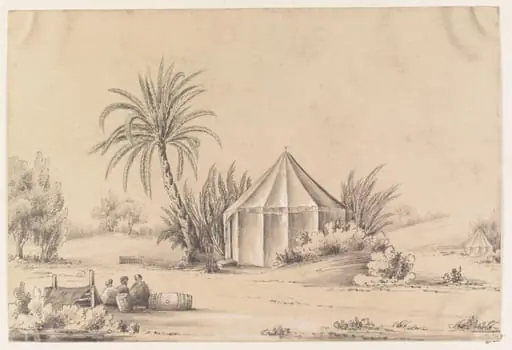 A Scene in the Desert Wady Gharendl
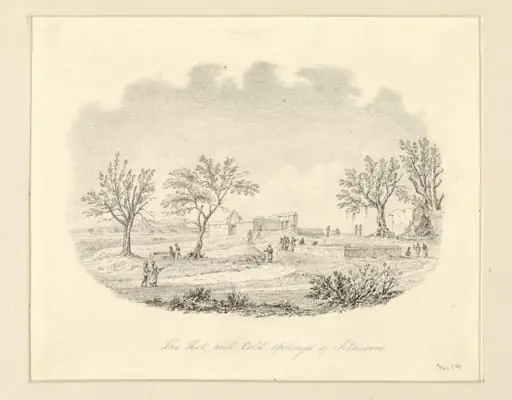 The hot and cold springs of Sitacoon
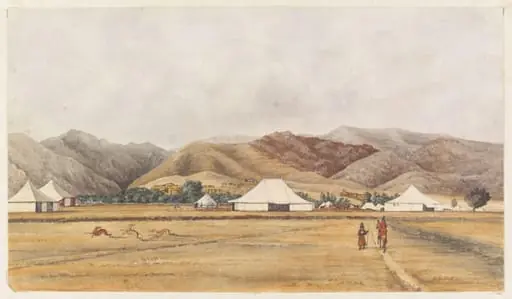 Camp at Aveen near Tehran
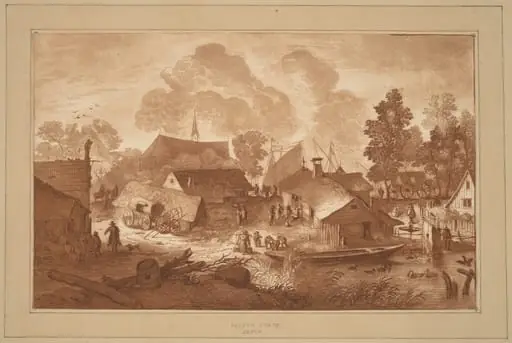 Village with Pond
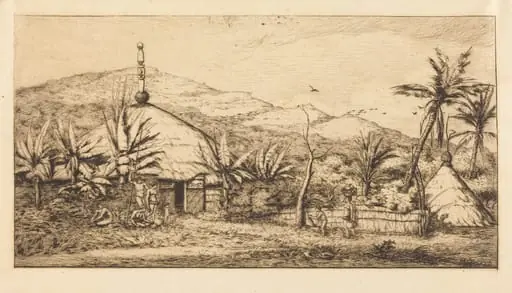 Nouvelle-Calédonie: Grande case indigène sur le chemin de Ballade à Poepo, 1845 (New Caledonia: Large Native Hut on the Road from Balade to Puebo, 1845)
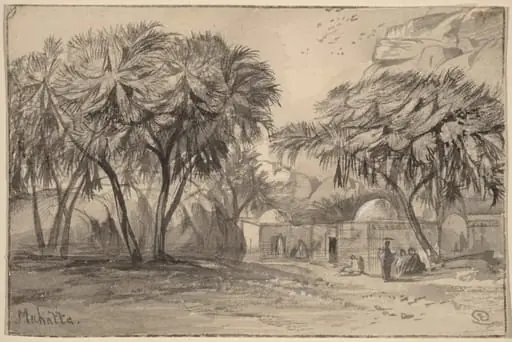 Mahatta
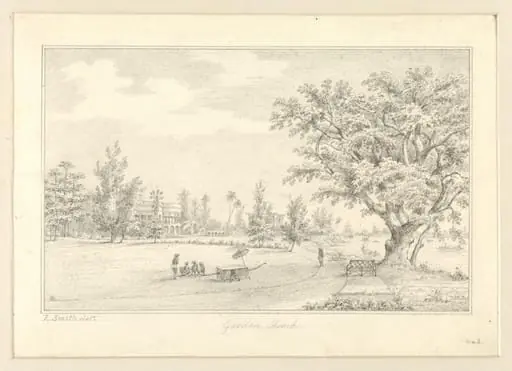 Garden Reach
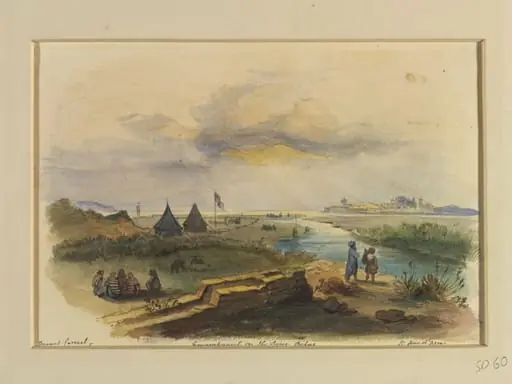 Encampment on the River Belus
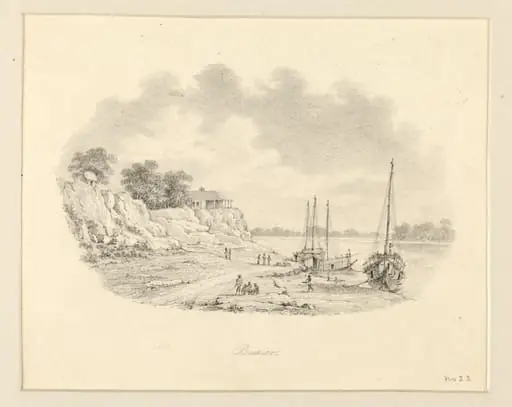 Buxar
Buxar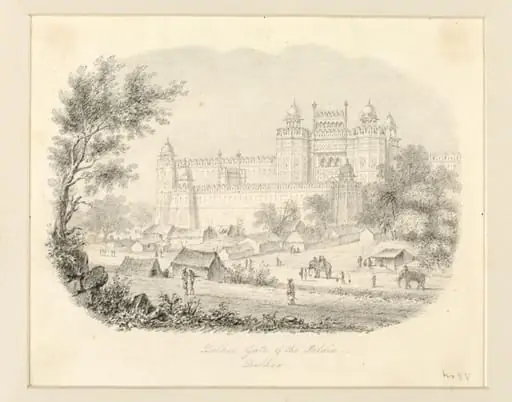 Delhee Gate of the Palace, Delhee