Artwork
Intrarea lui Mihai Viteazul în Alba-Iulia
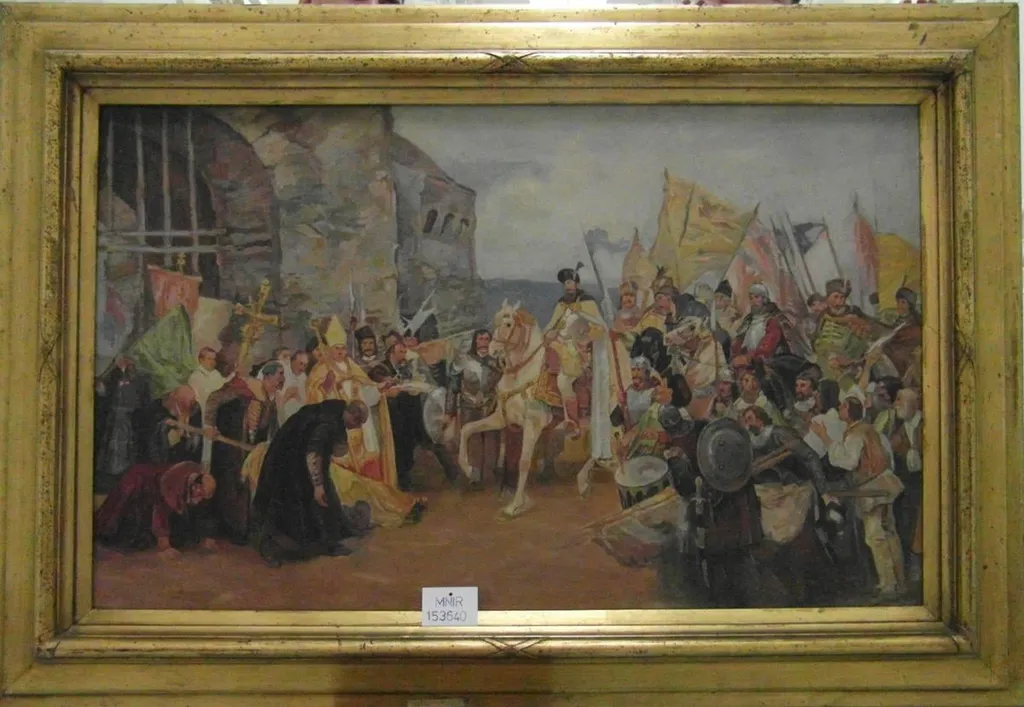
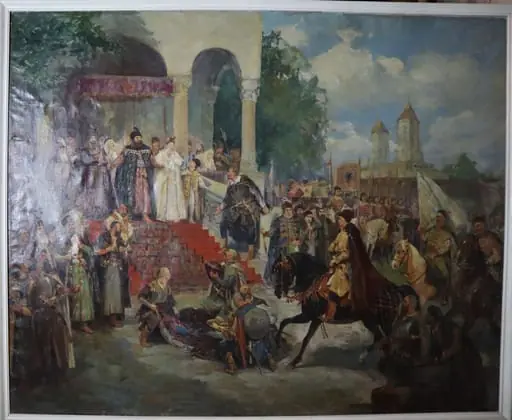
Intrarea lui Mihai Viteazul în Alba-Iulia is a print by Ion Stoica Dumitrescu. It is held in the collection of the National Museum of Romanian History.
About this work
Overview
A central figure on horseback, dressed in elaborate attire and bearing a banner, is surrounded by armed soldiers and a diverse crowd.
The painting depicts the entry of Michael the Brave into Alba-Iulia, capturing a moment of political and military significance in late 16th-century Transylvania. A central figure on horseback, dressed in elaborate attire and bearing a banner, is surrounded by armed soldiers and a diverse crowd. The composition directs attention to this leader, framed against a stone fortress gate. Earth-toned hues dominate the scene, with vivid flags providing focal contrast against the muted backdrop.
Subject & Meaning
The scene illustrates Michael the Brave’s arrival in Alba-Iulia following his unification of Wallachia, Transylvania, and Moldavia under his rule. The kneeling and standing figures suggest submission or homage, reinforcing the political weight of the moment. The fortress gate symbolizes the city’s strategic importance, while the banners and armor reflect the military cohesion of his forces. The image serves as a visual assertion of authority and territorial consolidation.
Technique & Style
The artist employs a realistic, narrative style with careful attention to group dynamics and spatial depth. Figures are arranged in layered formations to guide the viewer’s eye toward the central rider. Brushwork is detailed but not overly ornate, favoring naturalistic textures in fabric, metal, and stone. Color is restrained except for the flags, which act as visual anchors, enhancing the hierarchy of importance within the composition.
History & Provenance
The painting originates from the 19th century, created during a period of renewed interest in national historical figures in Romanian art. It was likely commissioned or produced to commemorate Michael the Brave’s legacy amid rising nationalist sentiment. Its current location is not specified, but similar works from this era are held in institutions such as the Museum of Ethnography and Romanian national collections.
Context
Michael the Brave’s brief unification of the three principalities in 1600 was a pivotal moment in Romanian history, though short-lived due to external pressures. In the 1800s, as Romania sought to define its national identity, artists revisited such events to construct a shared historical narrative. This painting reflects that 19th-century effort to visually anchor collective memory in moments of perceived sovereignty and unity.
Legacy
The image contributes to a broader 19th-century artistic movement that romanticized medieval rulers as symbols of national resilience. While not a contemporary record, it shaped public perception of Michael the Brave as a unifying figure. Its stylistic approach influenced later historical paintings in Romanian art, reinforcing the use of visual narrative to convey political and cultural ideals.
Artist & collection
Artist
Ion Stoica Dumitrescu made paintings, prints, and sculpture that look like historical scenes you’d see in old books.

 La farsa de Ávila
 Entrada triunfal en Valencia del rey don Jaime el Conquistador (año 1238)
 Battle of Poitiers, 25 October 732
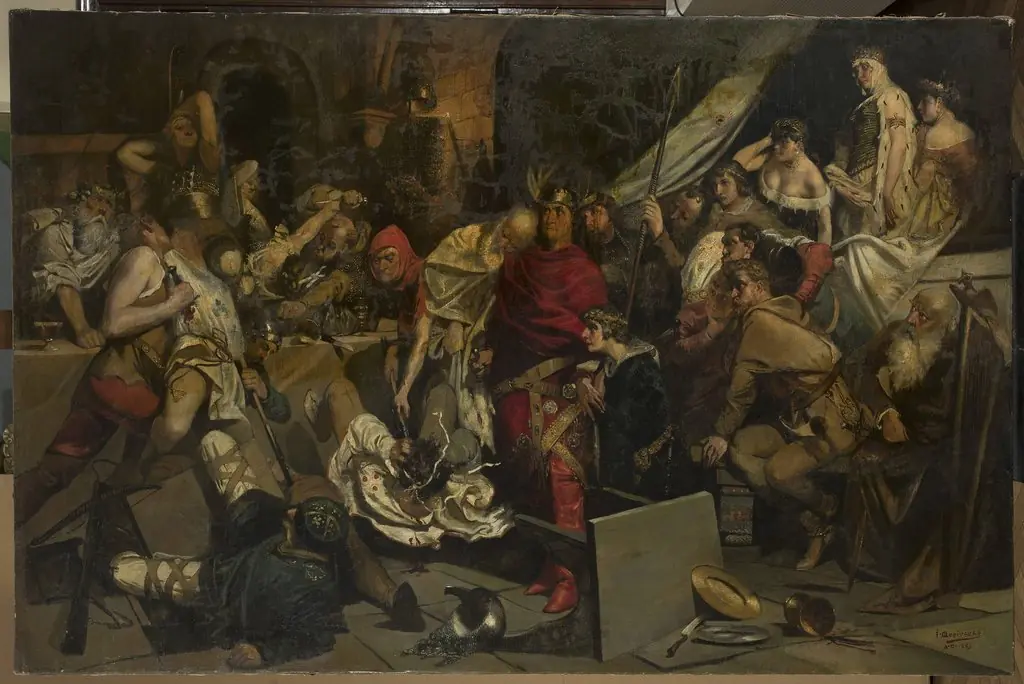 Bloody feast of Count Gero
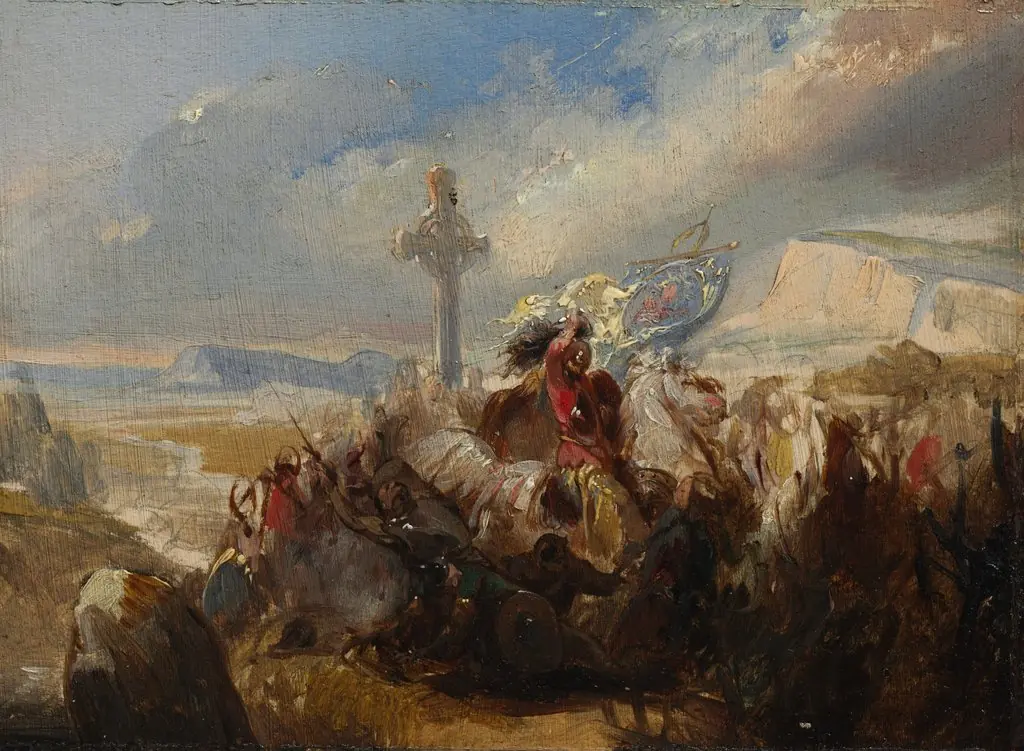 Battle of Poitiers, 25 October 732
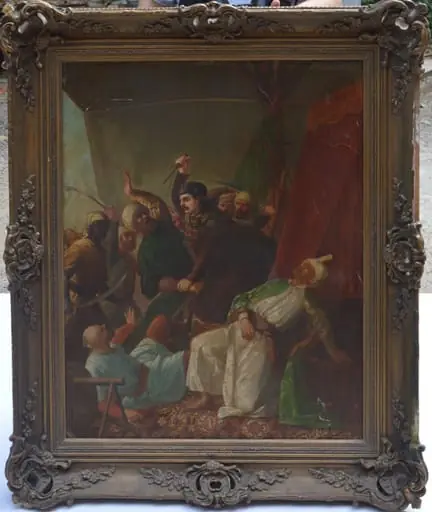 Omorârea lui (Grigore al-III-lea) Ghica
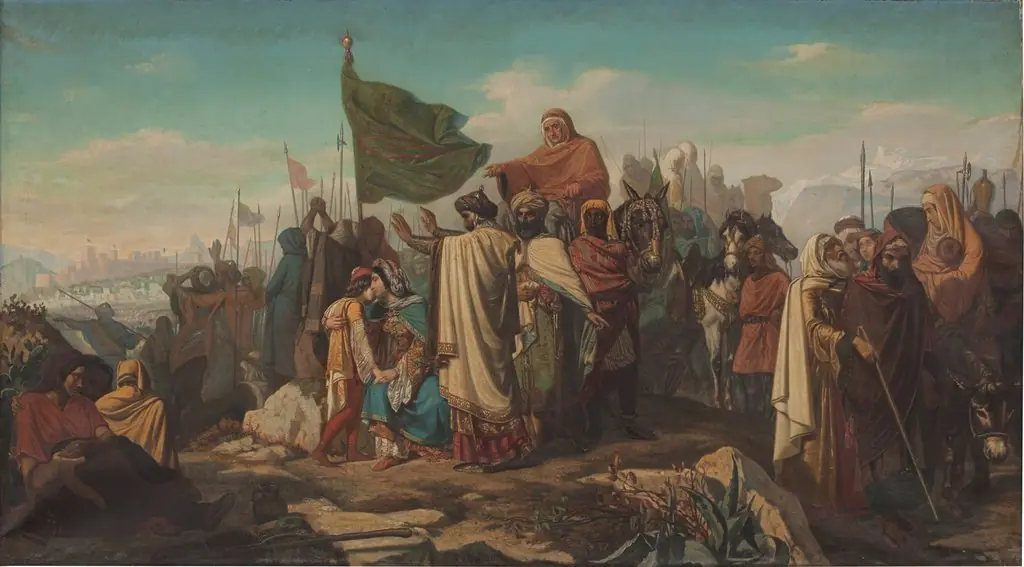 The sigh of the Moor
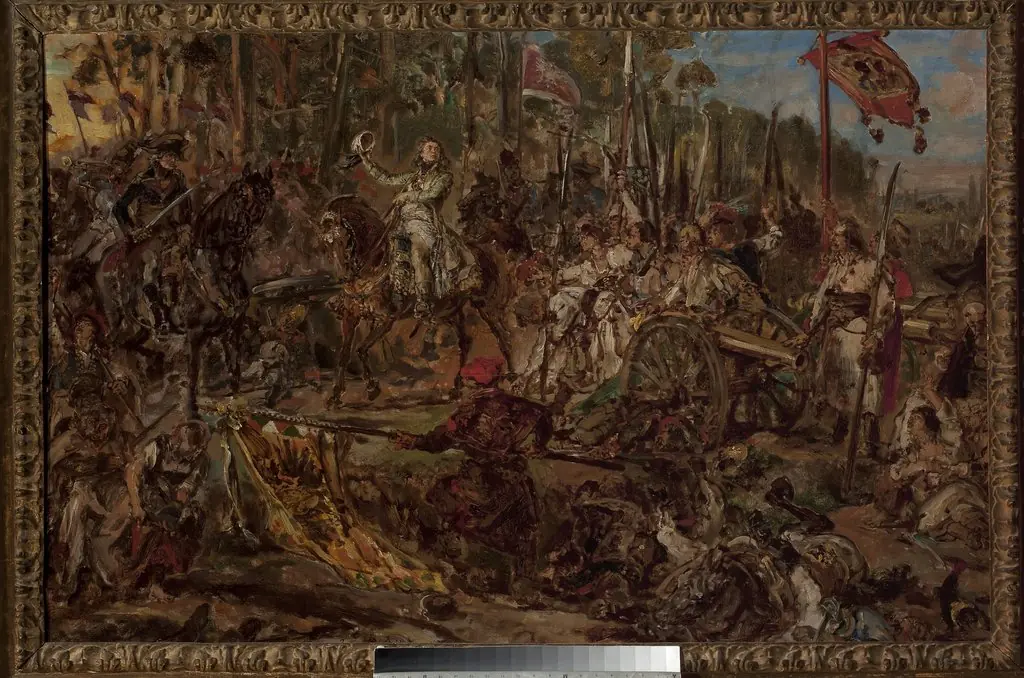 Kościuszko at Racławice, sketch
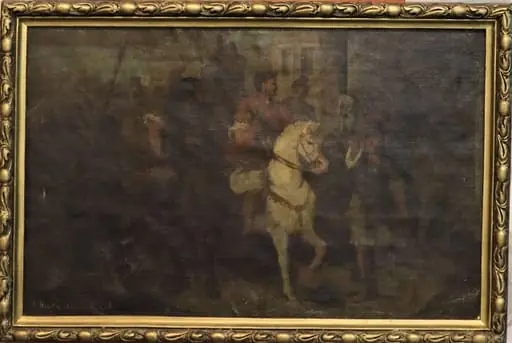 Intrarea lui Traian în Sarmizegetusa