Artwork
The Parrot Addresses Khujasta at the Beginning of the Thirteenth Night, from a Tuti-nama (Tales of a Parrot)
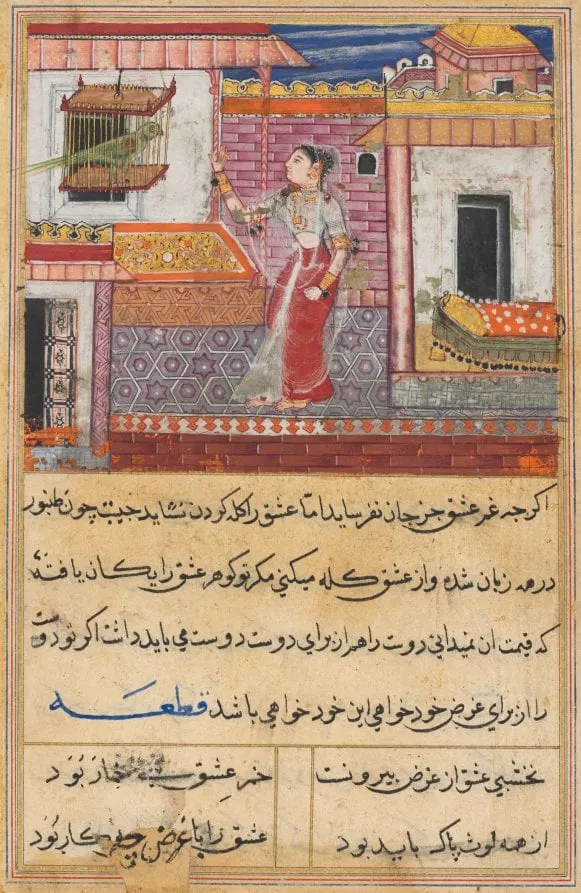
The Parrot Addresses Khujasta at the Beginning of the Thirteenth Night, from a Tuti-nama (Tales of a Parrot) is an unspecified painting by the Mughal Painting artist Tara 1. It dates from 1560 and is held in the collection of the Cleveland Museum of Art.
About this work
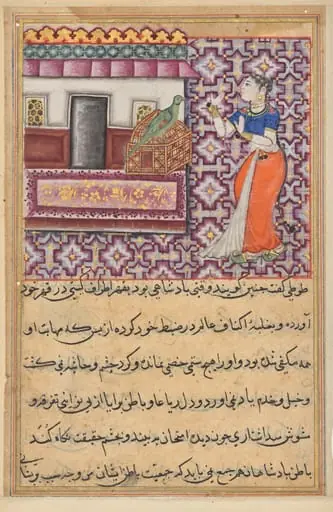
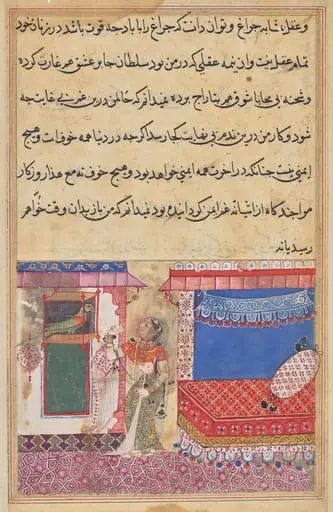
You see a woman in a red dress sitting on a carpet, a green parrot perched on a stand beside her, talking.
You see a woman in a red dress sitting on a carpet, a green parrot perched on a stand beside her, talking.
This painting comes from a book of stories told by a parrot to delay a woman’s secret meeting. The tiny details—embroidery on her sleeve, the parrot’s feathers—show how carefully the artist worked. It’s like a snapshot from a royal Indian court in the 1500s.
If you like this, look up *mughal india, court of akbar (reigned 1556–1605)*.
Overview
This painting is one of many illustrations from a Tuti-nama manuscript, a collection of frame stories in which a parrot narrates tales to distract its mistress from illicit rendezvous. Created during the Mughal period, it captures a quiet moment before the night’s story begins. The composition centers on Khujasta, seated on a richly patterned carpet, while the parrot, perched on a stand, initiates its narrative, establishing the tale’s structure of delay and moral reflection.
Subject & Meaning
The scene depicts Khujasta, a noblewoman, preparing to meet a lover, but is halted by the parrot’s intervention. The parrot’s stories serve as moral lessons meant to dissuade her from transgression. This moment, frozen at the outset of the thirteenth night, underscores the tension between desire and restraint. The narrative device reflects a broader cultural interest in using storytelling as a tool for ethical guidance within courtly life.
Technique & Style
The artist rendered fine details with precision: the embroidery on Khujasta’s sleeve, the individual feathers of the parrot, and the intricate patterns of the carpet reveal a meticulous hand. Soft modeling and delicate brushwork characterize the figures, while the use of vibrant pigments—especially the red of her dress and the green of the parrot—creates visual harmony. The composition is intimate, focusing attention on the interaction between woman and bird within a contained, domestic space.
History & Provenance
Produced in the Mughal atelier during the reign of Akbar, this painting belonged to a manuscript commissioned to illustrate the Tuti-nama, a Persian-derived collection of tales. Such manuscripts were often created for royal patrons as both entertainment and moral instruction. The work reflects the imperial workshop’s emphasis on narrative illustration, blending Indian, Persian, and emerging Mughal styles into a cohesive visual language.
Context
The Tuti-nama tradition flourished in Mughal courts as a vehicle for courtly leisure and ethical discourse. Stories told by animals to delay forbidden acts mirrored real court dynamics, where advisors used allegory to influence behavior. This painting’s setting—private, opulent, and quiet—echoes the controlled environments of royal women’s quarters, where storytelling was both pastime and subtle social control.
Legacy
Illustrated manuscripts like this one helped define Mughal painting’s early development, influencing later courtly art through their narrative clarity and attention to detail. While the Tuti-nama itself is less widely known today, its visual language contributed to the evolution of Indian miniature painting, preserving a unique fusion of literary tradition and artistic refinement from the 16th-century imperial studios.
Artist & collection

Artist
Meet Tara, the sharp-eyed painter who turned a collection of bawdy parrot tales into glowing miniatures.

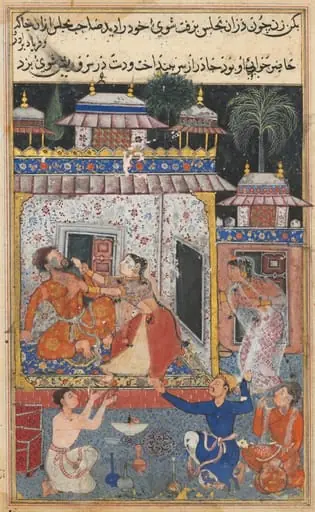
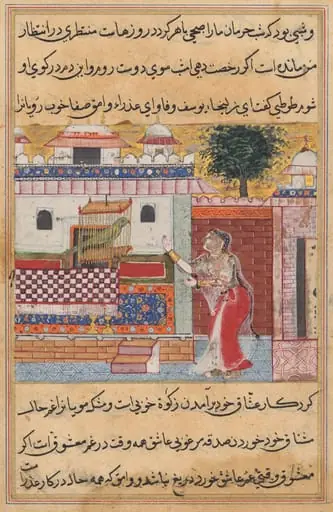
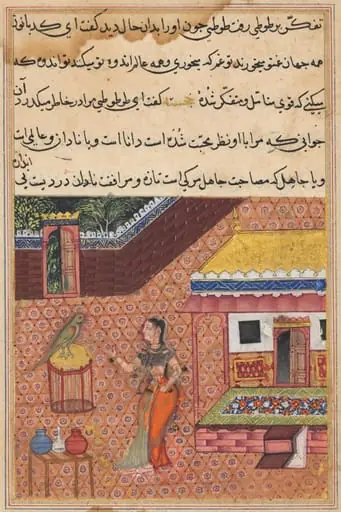 The parrot addresses Khujasta at the beginning of the thirty-fourth night, from a Tuti-nama (Tales of a Parrot)
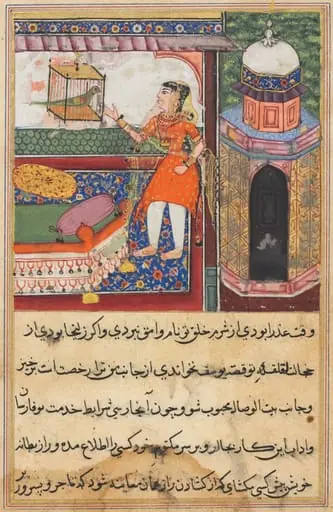 The Parrot Addresses Khujasta at the Beginning of the Tenth Night, from a Tuti-nama (Tales of a Parrot)
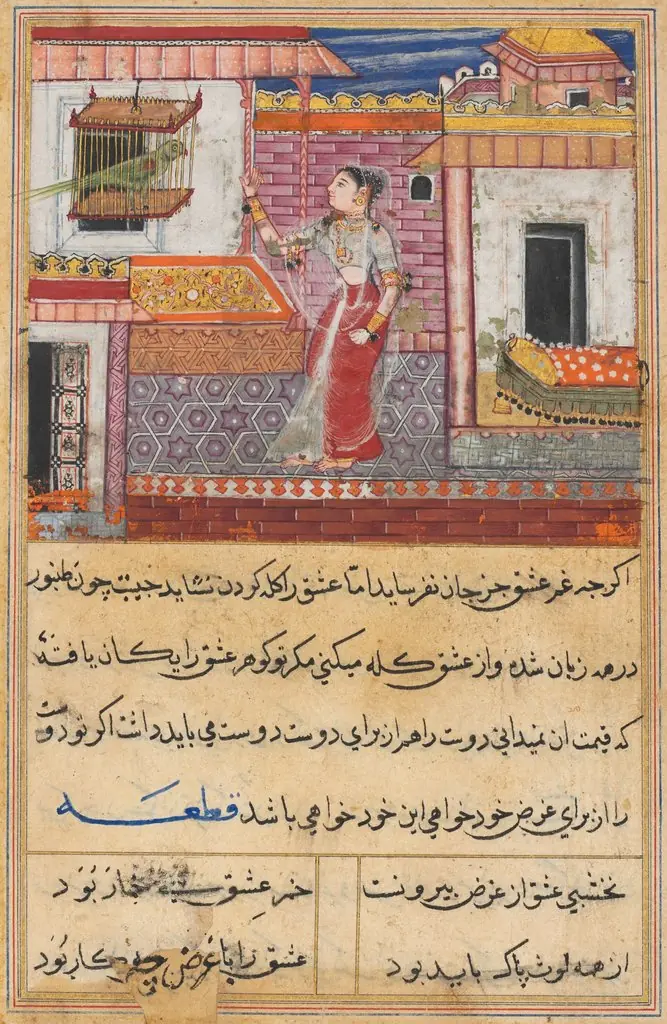 The Parrot Addresses Khujasta at the Beginning of the Thirteenth Night, from a Tuti-nama (Tales of a Parrot)
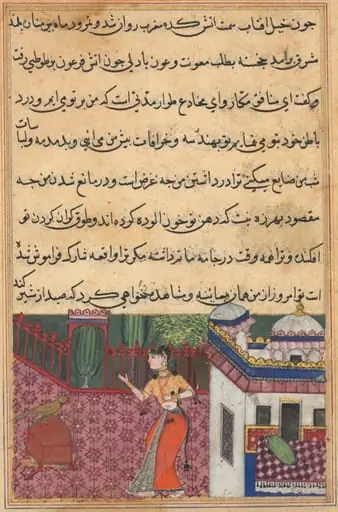 The parrot addresses Khujasta at the beginning of the thirty-third night, from a Tuti-nama (Tales of a Parrot)
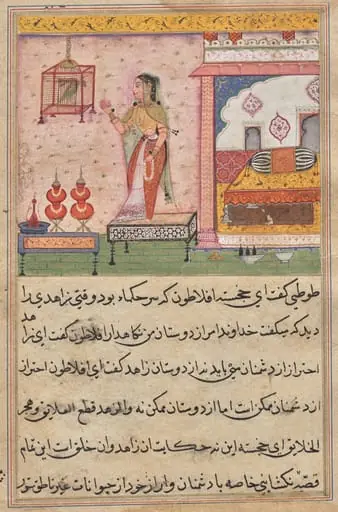 The Parrot Addresses Khujasta at the Beginning of the Twenty-third Night, from a Tuti-nama (Tales of a Parrot)
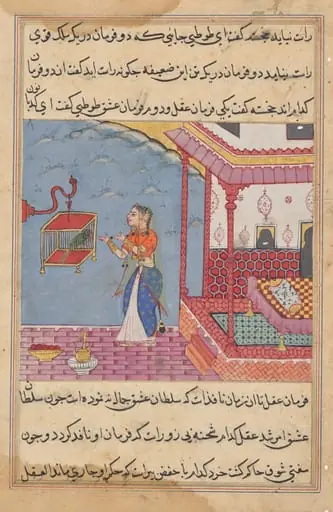 The Parrot Addresses Khujasta at the Beginning of the Twenty-Fourth Night, from a Tuti-nama (Tales of a Parrot)
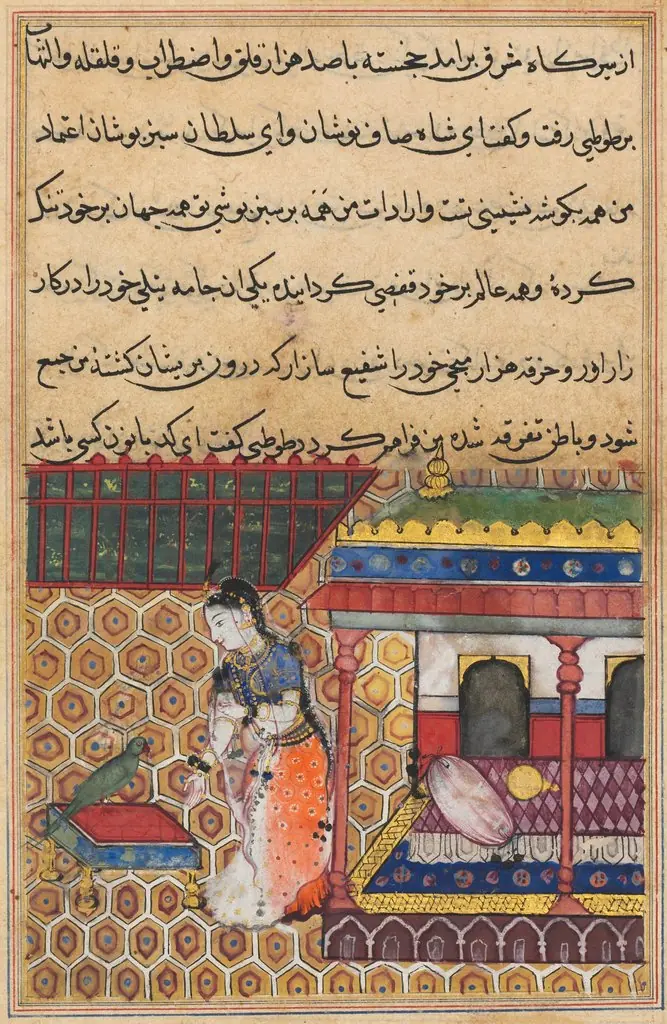 The parrot addresses Khujasta at the beginning of the thirty-eighth night, from a Tuti-nama (Tales of a Parrot)
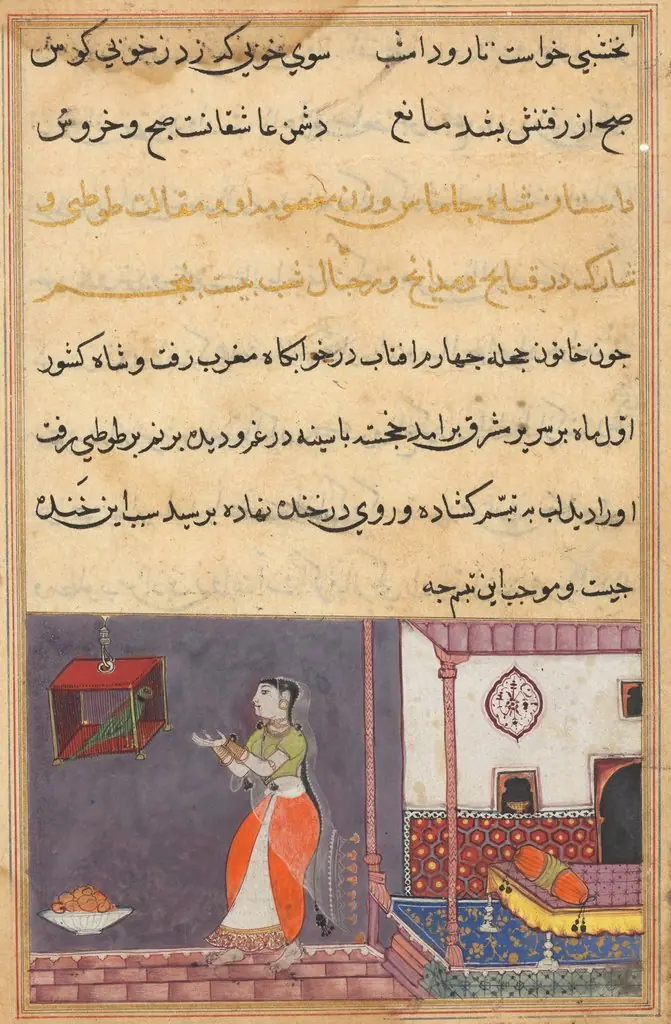 The Parrot Addresses Khujasta at the Beginning of the Twenty-fifth Night, from a Tuti-nama (Tales of a Parrot)
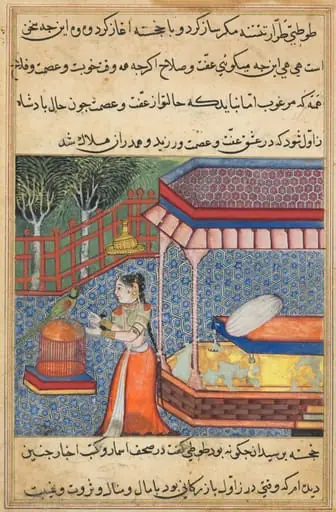 The parrot addresses Khujasta at the beginning of the thirty-sixth night, from a Tuti-nama (Tales of a Parrot)
 The parrot addresses Khujasta at the beginning of the fiftieth night, from a Tuti-nama (Tales of a Parrot): Fiftieth Night
 The Parrot Addresses Khujasta at the Beginning of the Eighteenth Night, from a Tuti-nama (Tales of a Parrot)