Artwork
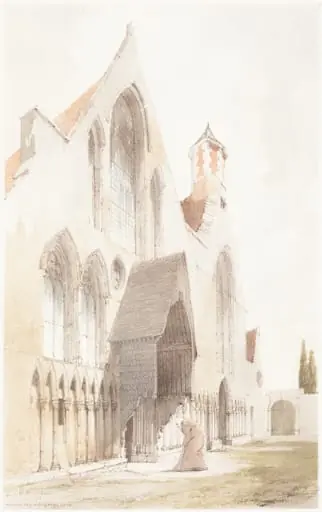
Picturesque Architecture in Paris, Ghent, Antwerp, Rouen, Etc.: South Porch of Chartres Cathedral,
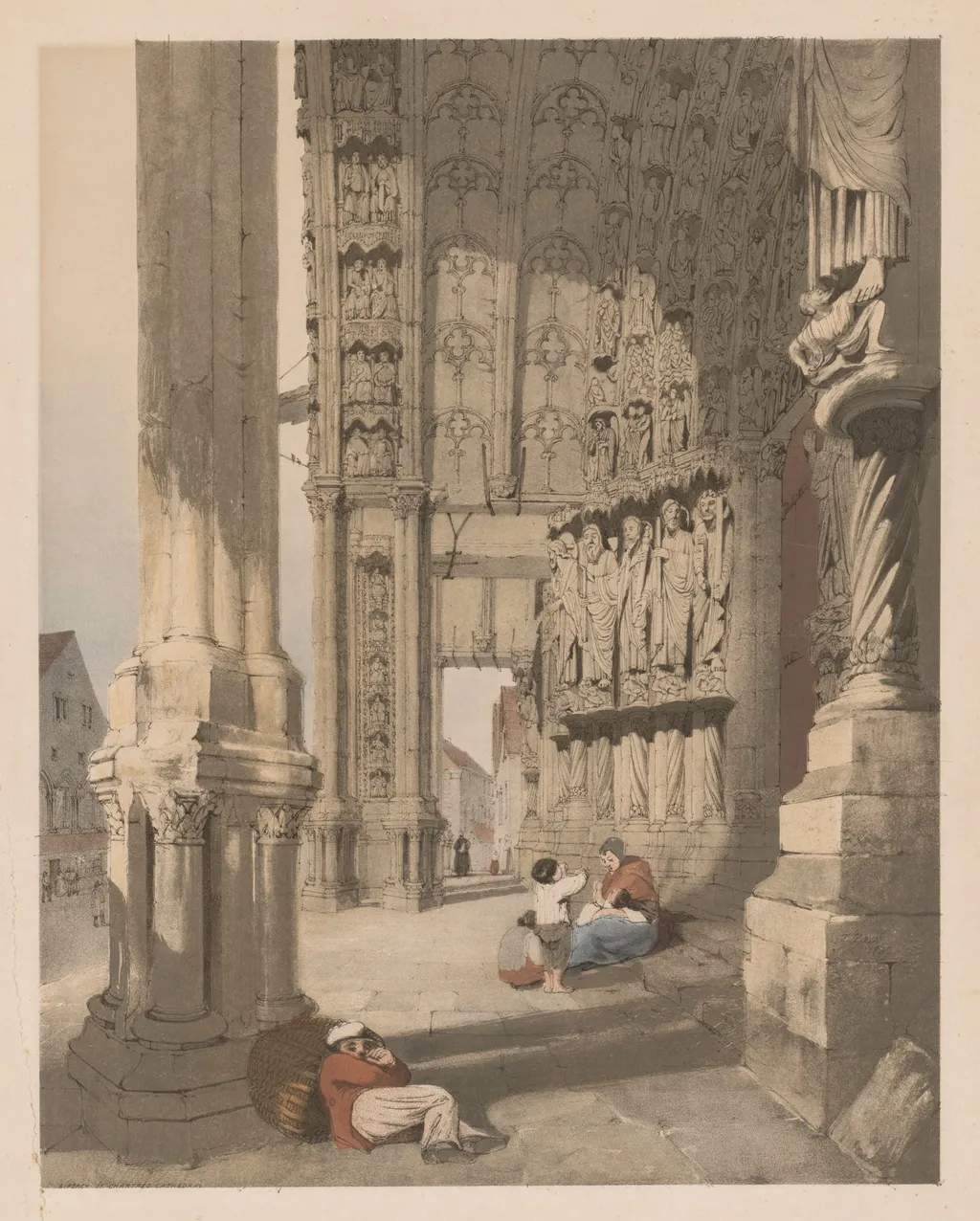
Picturesque Architecture in Paris, Ghent, Antwerp, Rouen, Etc.: South Porch of Chartres Cathedral, is a print by the Romanticist artist Thomas Shotter Boys. It dates from 1839 and is held in the collection of the Cleveland Museum of Art.
About this work
Overview
The work captures the south porch of Chartres Cathedral, emphasizing its sculptural richness and structural grandeur.
Thomas Shotter Boys, an English artist known for architectural subjects, produced this lithograph in 1839 as part of a series documenting European cathedrals and urban facades. The work captures the south porch of Chartres Cathedral, emphasizing its sculptural richness and structural grandeur. Executed in watercolor and lithographic technique, it reflects Boys’s dedication to precise, observational rendering of historic monuments across France, Belgium, and the Netherlands.
Subject & Meaning
The scene centers on the cathedral’s elaborately carved entrance, where rows of saintly figures overlook the portal. Below, three figures—a woman with a basket, a seated man, and a child—introduce quiet human presence amid the monumental stone. Their casual postures contrast with the sacred architecture, suggesting everyday life unfolding within a sacred space. The composition invites contemplation of the intersection between devotion and daily routine in medieval urban contexts.
Technique & Style
Boys employed fine-line lithography to replicate the tonal effects of watercolor, achieving subtle gradations of light and shadow. The stone surfaces are rendered with sharp, incised lines that define each carving’s depth, while areas of dense shadow enhance the three-dimensionality of the figures and architecture. This method, rooted in 19th-century topographical drawing, prioritizes accuracy over ornamentation, aligning with contemporary interest in documentary precision.
History & Provenance
Created during a period of growing antiquarian interest in Gothic architecture, the print was likely issued as part of a commercial series aimed at educated European audiences. It may have been distributed through print dealers or included in illustrated travel volumes. While its exact early ownership is undocumented, its inclusion in institutional collections today reflects its value as a record of pre-restoration architectural conditions.
Context
In the 1830s, European artists and scholars increasingly turned to medieval architecture as subjects of study and preservation. Boys’s work emerged alongside publications by French and British antiquarians documenting cathedrals before widespread 19th-century restorations. His focus on Chartres—already recognized for its sculptural integrity—aligned with broader efforts to visually archive heritage sites threatened by neglect or renovation.
Legacy
The print endures as a precise visual record of Chartres Cathedral’s south porch prior to major 19th-century interventions. It contributes to the archive of architectural documentation that informed later conservation practices. Though not widely exhibited today, it remains a reference point for scholars studying the representation of Gothic architecture in early lithographic media and the role of British artists in European heritage observation.
Artist & collection
Artist
Thomas Shotter Boys (1803–1874) was an English watercolour painter and lithographer, mostly producing cityscapes and images of buildings, although he produced some rural landscapes and marine subjects.

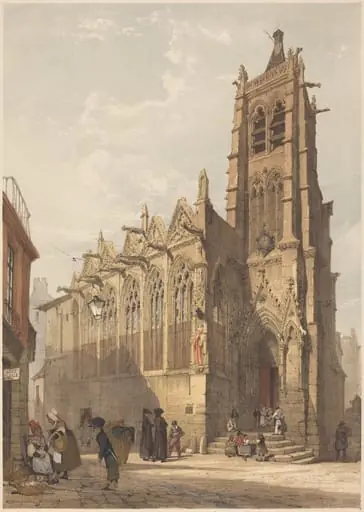
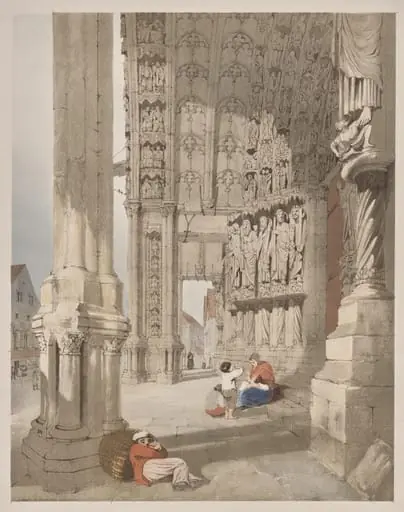 Picturesque Architecture in Paris, Ghent, Antwerp, Rouen: South Porch of Chartres Cathedral, Chartres, France
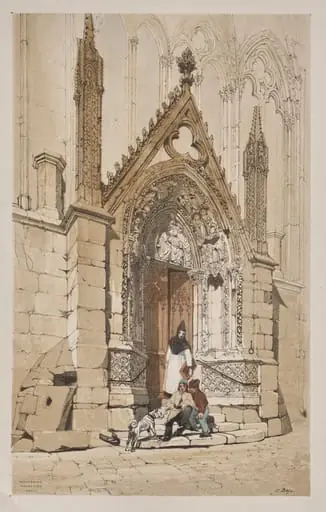 Picturesque Architecture in Paris, Ghent, Antwerp, Rouen: Porte Rouge, Nôtre Dame, Paris
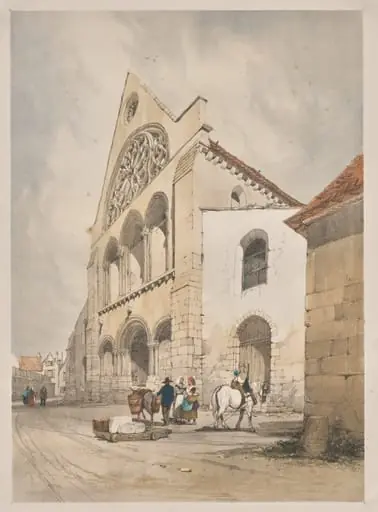 Picturesque Architecture in Paris, Ghent, Antwerp, Rouen: St. Andre, Chartres, France
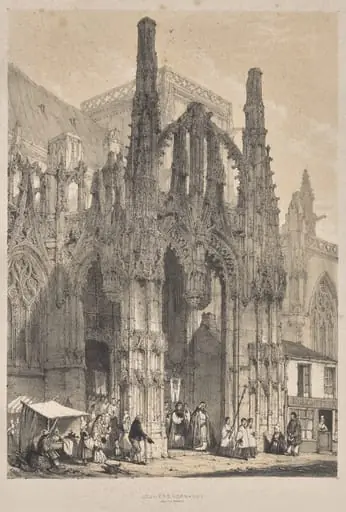 Architecture of the Middle Ages: Louviers, Normandy, South Porch
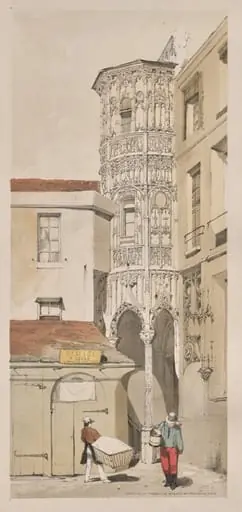 Picturesque Architecture in Paris, Ghent, Antwerp, Rouen: Hôtel de la Tremouille, Rue des Bourbonnois, Paris
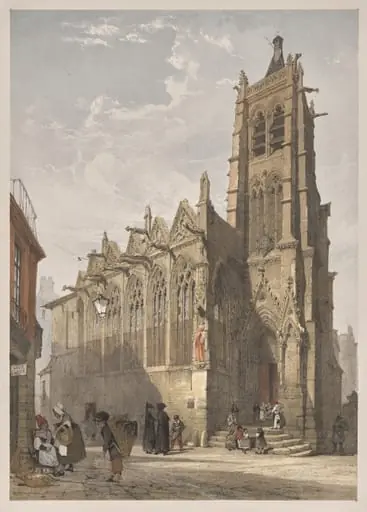 Picturesque Architecture in Paris, Ghent, Antwerp, Rouen: St. Severin, Paris
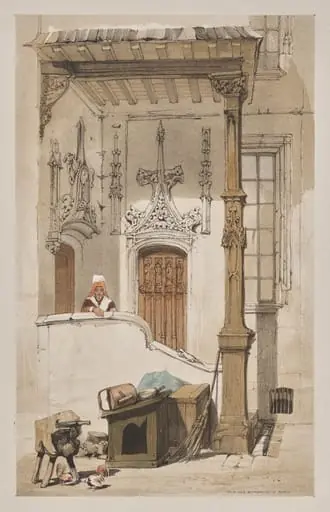 Picturesque Architecture in Paris, Ghent, Antwerp, Rouen: Rue des Marmousets, Paris
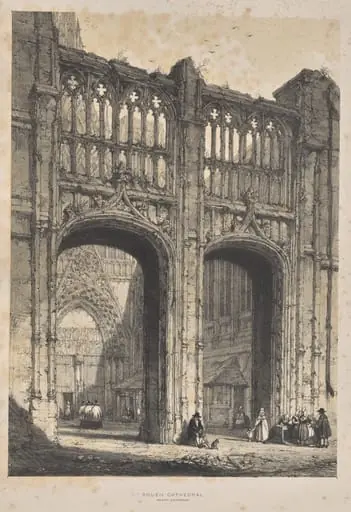 Architecture of the Middle Ages: Rouen Cathedral, North Entrance
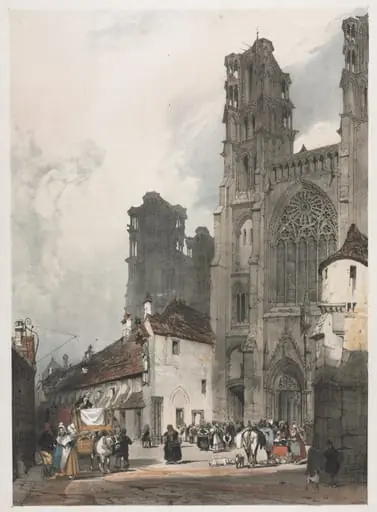 Picturesque Architecture in Paris, Ghent, Antwerp, Rouen: Laon, France
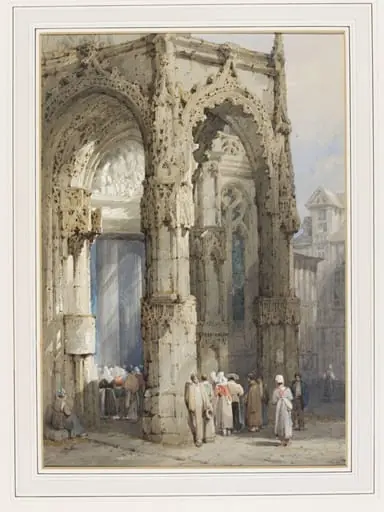 West Porch of the Church of St. Vincent, Rouen
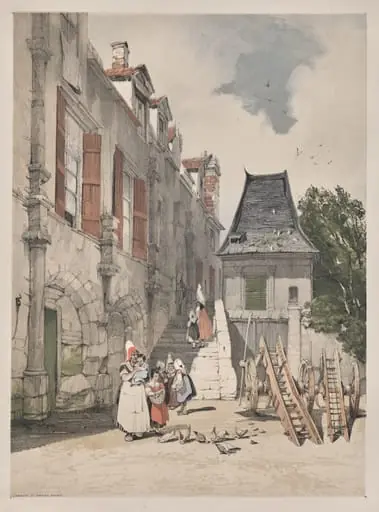 Picturesque Architecture in Paris, Ghent, Antwerp, Rouen: L'Abbaye St. Amand, Rouen, France