Artwork
The street cleaner, on his way to meet King Bhojaraja, sleeps under a tree where four thieves disguised as fellow travelers deprive him of a priceless pearl, from a Tuti-nama (Tales of a Parrot): Twelfth Night
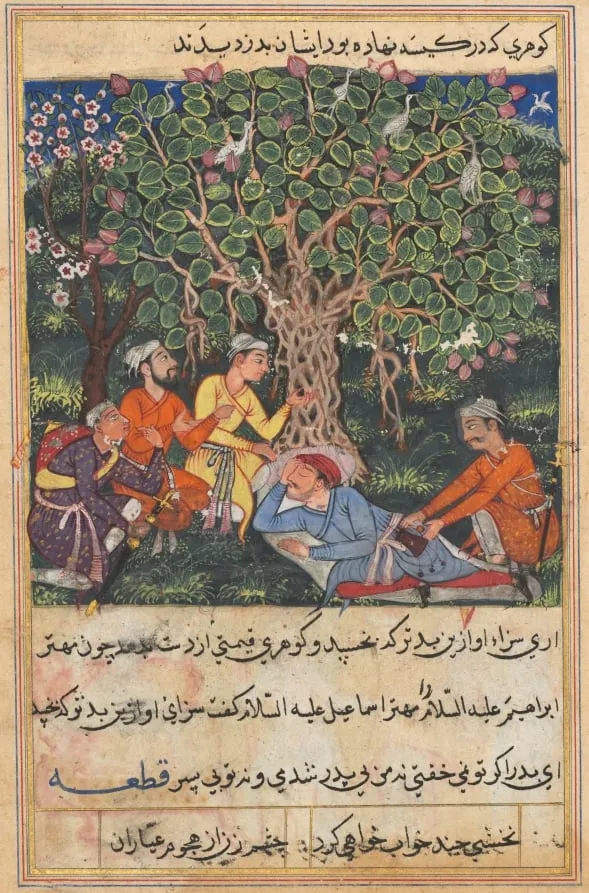
The street cleaner, on his way to meet King Bhojaraja, sleeps under a tree where four thieves disguised as fellow travelers deprive him of a priceless pearl, from a Tuti-nama (Tales of a Parrot): Twelfth Night is an unspecified painting by the Mughal Painting artist Unknown. It dates from 1560 and is held in the collection of the Cleveland Museum of Art. This painting originates from a Tuti-nama, a book of parrot tales, created for Emperor Akbar.
About this work
Indian and Persian artists worked together to create a new style—small, lively, and full of little stories.
A man naps under a tree while four thieves creep up to steal a pearl from his turban. The scene glows with tiny gold details and bright colors.
This painting comes from a book of parrot tales made for Emperor Akbar. Indian and Persian artists worked together to create a new style—small, lively, and full of little stories. The emperor liked it so much he ordered bigger projects in the same style.
To see more paintings like this, look up mughal india, court of akbar (reigned 1556–1605).
Overview
This painting originates from a Tuti-nama, a book of parrot tales, created for Emperor Akbar. It depicts a street cleaner, on his way to meet King Bhojaraja, being robbed of a priceless pearl by four thieves disguised as travelers while he sleeps under a tree.
Subject & Meaning
The scene illustrates a narrative of deception and theft, contrasting the sleeper's innocence with the thieves' cunning. The story's inclusion in the Tuti-nama suggests its appeal as a moral or entertaining tale for the imperial audience.
Technique & Style
Executed in a newly formulated Mughal style, the painting features small, lively compositions, intricate gold details, and vibrant colors, reflecting the collaborative work of Indian and Persian artists under Akbar's patronage.
History & Provenance
Created during Akbar's reign (1556-1605), this work is one of the earliest illustrated manuscripts made for the emperor, influencing subsequent projects like the Hamza-nama. Its production showcases the imperial court's artistic innovations.
Context
Part of a broader cultural exchange, the Tuti-nama's style blends Indian and Persian artistic traditions, catering to Akbar's eclectic tastes and marking the inception of the distinctive Mughal manuscript illustration.
Legacy
This painting's style, characterized by its miniature format and detailed ornamentation, paved the way for larger, renowned projects under Akbar, leaving a lasting impact on Mughal art and manuscript production.
Artist & collection

 Domestic Scene
 Giacomo and Cardinal Marco, investing Andrea, Abbot of San Zeno, with his Benefice
 The Nymph of Fontainebleau
 Portrait of a Woman
 Madonna and Child with Saints in the Enclosed Garden
 Venus and Minerva
 Family Group of Four on Sofa
 Wall painting from Room H of the Villa of P. Fannius Synistor at Boscoreale
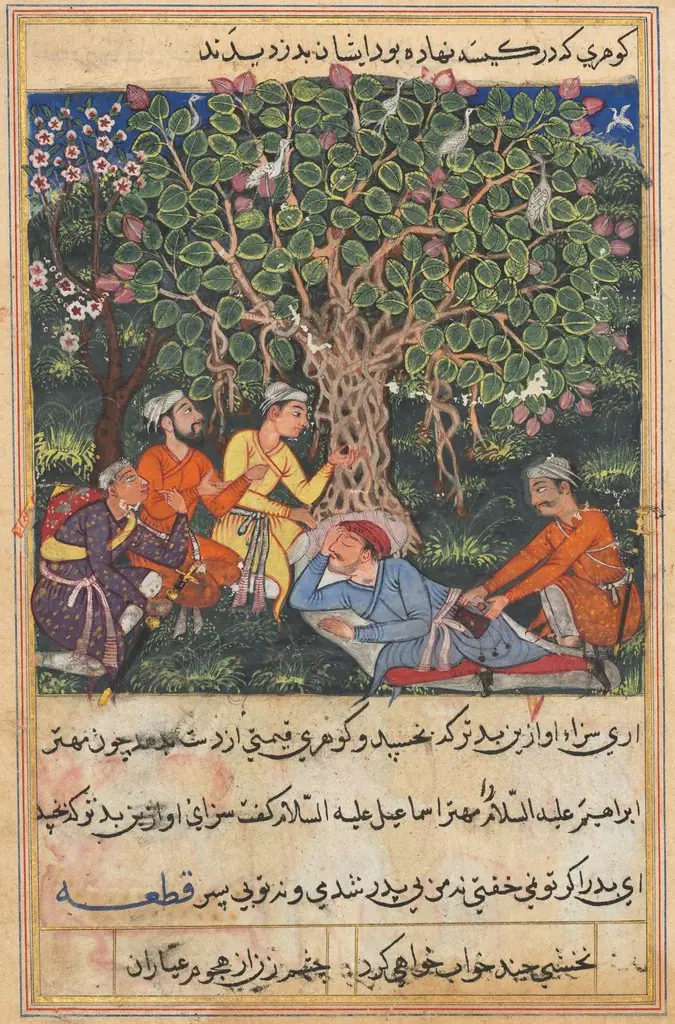 The street cleaner, on his way to meet King Bhojaraja, sleeps under a tree where four thieves disguised as fellow travelers deprive him of a priceless pearl, from a Tuti-nama (Tales of a Parrot): Twelfth Night
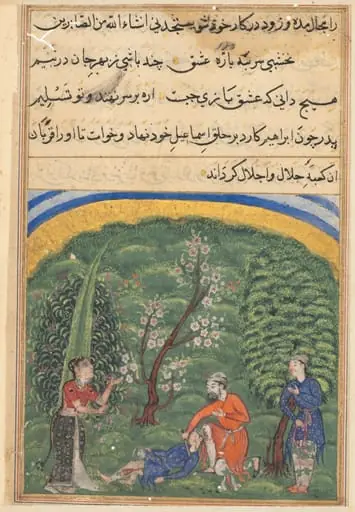 The sentinel in the employ of the Shah of Tabaristan prepares to sacrifice his son to the ghost of the Shah’s soul, from a Tuti-nama (Tales of a Parrot): Second Night
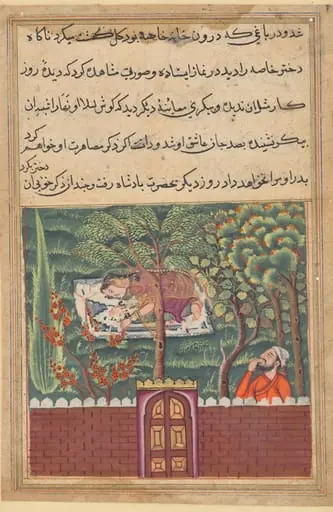 Khulasa, a vizier, sees the daughter of Khassa, another vizier, and covets her, from a Tuti-nama (Tales of a Parrot): Fifty-first Night
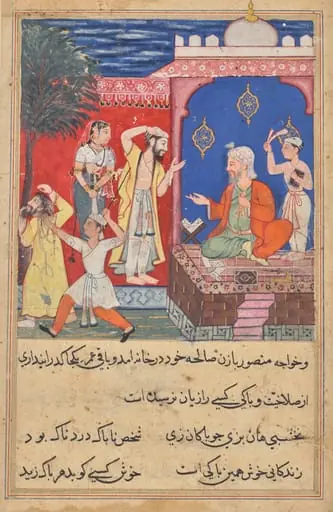 The false Mansur punished before the judge and expelled from the city, from a Tuti-nama (Tales of a Parrot): Seventeenth Night
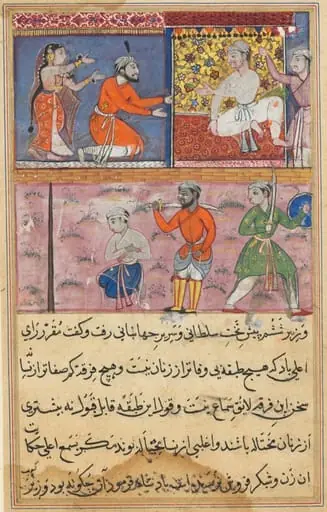 The prince sent back to the place of execution for the sixth time, from a Tuti-nama (Tales of a Parrot): Eighth Night
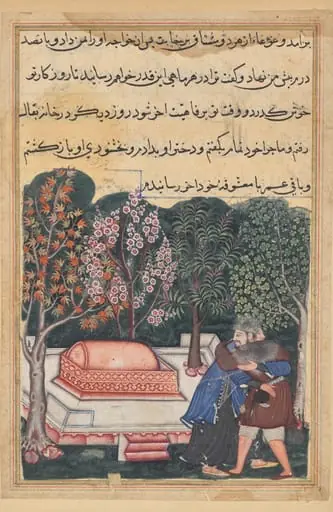 The young man of Baghdad reunited with his slave-girl, from a Tuti-nama (Tales of a Parrot): Forty-eighth Night
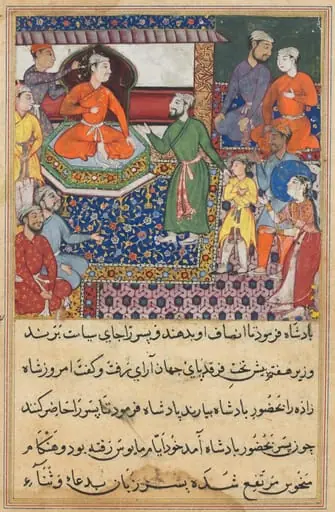 The handmaiden again pleads for the death of the prince, from a Tuti-nama (Tales of a Parrot): Eighth Night
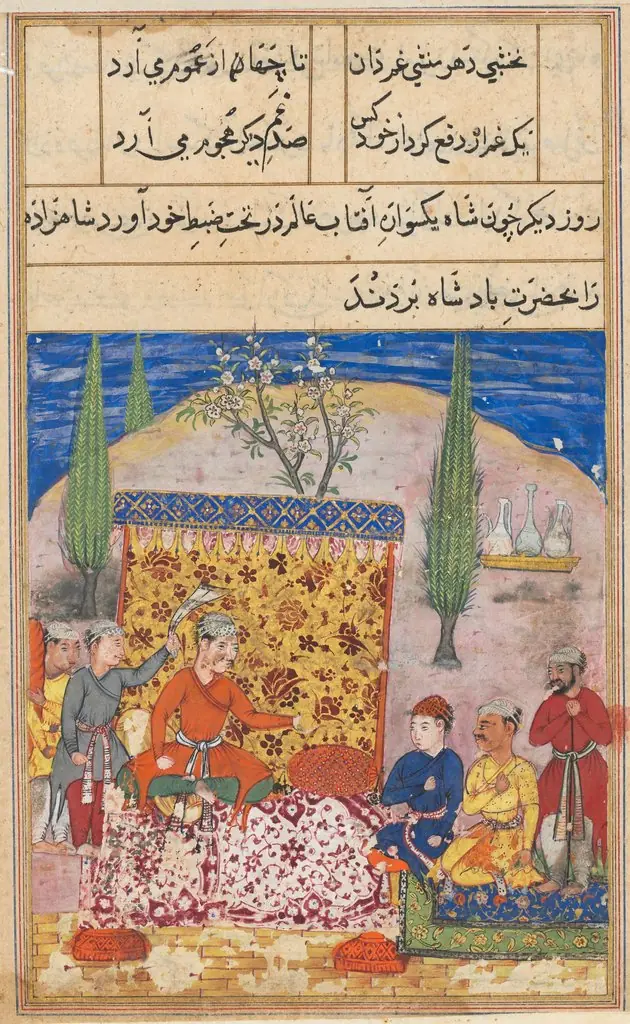 The young prince is presented to the king, his father, by his teacher, but refuses to speak, from a Tuti-nama (Tales of a Parrot): Eighth Night
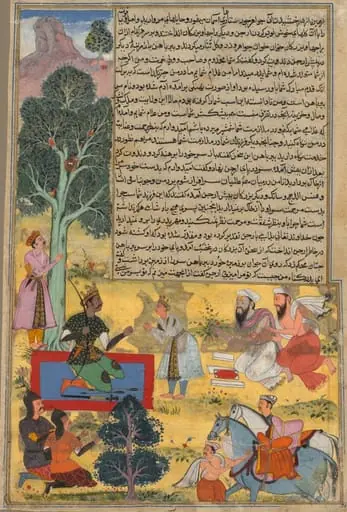 Vabhruvahana Approaches Arjuna, page from the Khan Khanan's Razm-nama
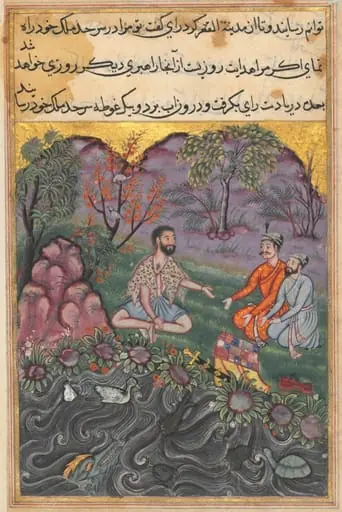 The Raja of Ujjain, who is traveling in the guise of a yogi, meets two brothers who ask him to equitably partition their father’s possession, from a Tuti-nama (Tales of a Parrot): Forty-sixth Night
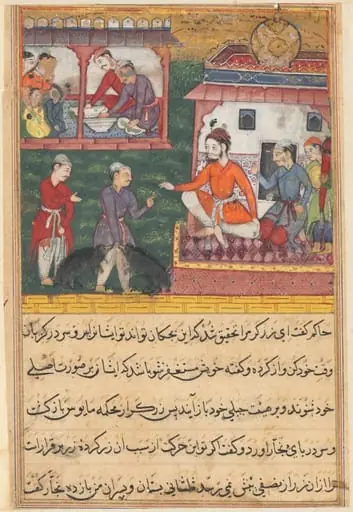 The goldsmith judged; the bear cubs trained by the carpenter as though they were his sons, from a Tuti-nama (Tales of a Parrot): Third Night
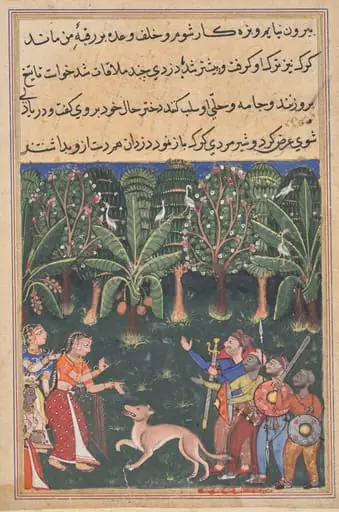 The merchant’s daughter encounters a wolf and bandits on her way to meet the gardener in order to keep her promise, from a Tuti-nama (Tales of a Parrot): Twelfth Night