Artwork
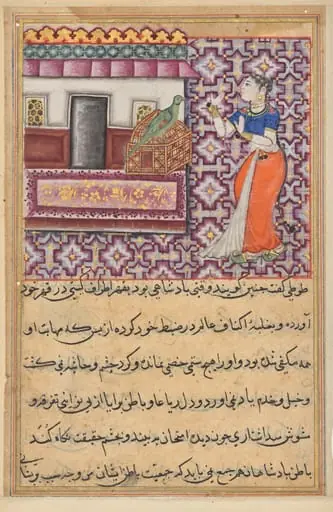
The parrot addresses Khujasta at the beginning of the forty-second night, from a Tuti-nama (Tales of a Parrot)
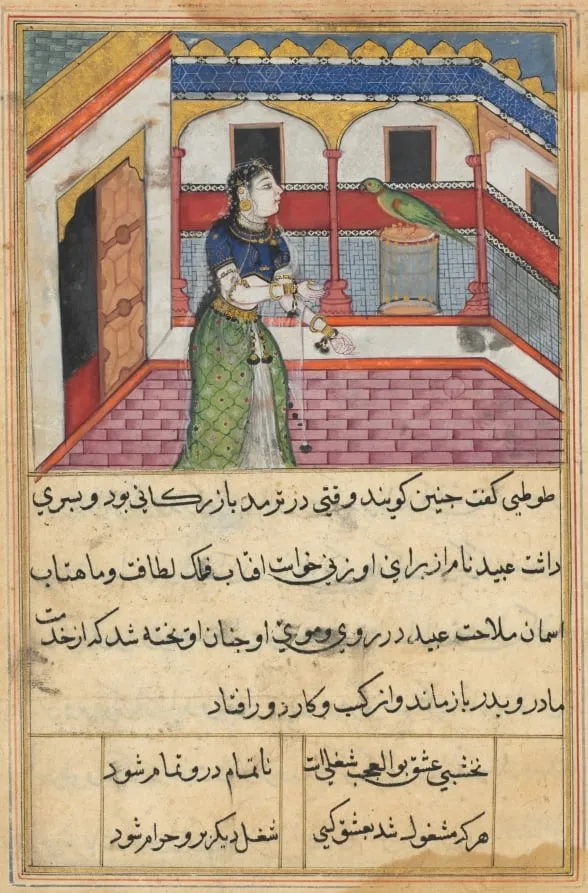
The parrot addresses Khujasta at the beginning of the forty-second night, from a Tuti-nama (Tales of a Parrot) is an unspecified painting by the Mughal Painting artist Unknown. It dates from 1560 and is held in the collection of the Cleveland Museum of Art. This painting illustrates a scene from the Tuti-nama, a collection of stories.
About this work
Each night, the parrot tells a story to delay the woman from meeting her lover—just like in the tale shown here.
You see a woman in a rich red robe sitting under a tree, a green parrot perched on a branch above her. The parrot leans forward as if speaking, while the woman listens with her hands clasped.
This painting comes from a book of stories called the *Tuti-nama*, or *Tales of a Parrot*. Each night, the parrot tells a story to delay the woman from meeting her lover—just like in the tale shown here. The bright colors and fine details were meant to impress Emperor Akbar, who loved art that told stories.
To see more art from this time, look up Mughal India, court of Akbar (reigned 1556–1605).
Overview
This painting illustrates a scene from the Tuti-nama, a collection of stories. It depicts a parrot addressing a woman, Khujasta, as part of a narrative that unfolds over forty-two nights.
Subject & Meaning
The scene shows Khujasta listening to the parrot's tale, which is a story about a merchant's son receiving advice from a parrot. The parrot's storytelling delays Khujasta's meeting with her lover, mirroring the overall structure of the Tuti-nama.
Technique & Style
The painting features vibrant colors and intricate details, characteristic of the artistic style favored by Emperor Akbar. The composition includes a woman in a red robe seated under a tree, with a green parrot perched above her, leaning forward as if speaking.
Context
The Tuti-nama was created during the reign of Emperor Akbar in Mughal India. The artwork's narrative and visual qualities were likely intended to appeal to Akbar's appreciation for storytelling in art.
Artist & collection

 Domestic Scene
 Giacomo and Cardinal Marco, investing Andrea, Abbot of San Zeno, with his Benefice
 The Nymph of Fontainebleau
 Portrait of a Woman
 Madonna and Child with Saints in the Enclosed Garden
 Venus and Minerva
 Family Group of Four on Sofa
 Wall painting from Room H of the Villa of P. Fannius Synistor at Boscoreale
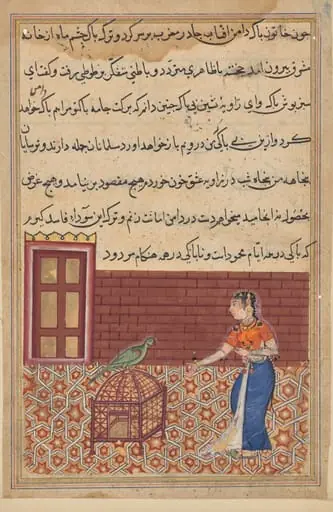 The parrot addresses Khujasta at the beginning of the fifty-first night, from a Tuti-nama (Tales of a Parrot): Fifty-first Night
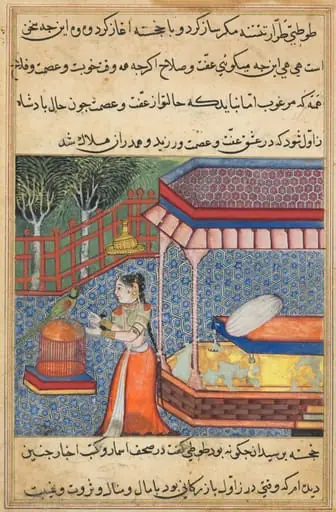 The parrot addresses Khujasta at the beginning of the thirty-sixth night, from a Tuti-nama (Tales of a Parrot)
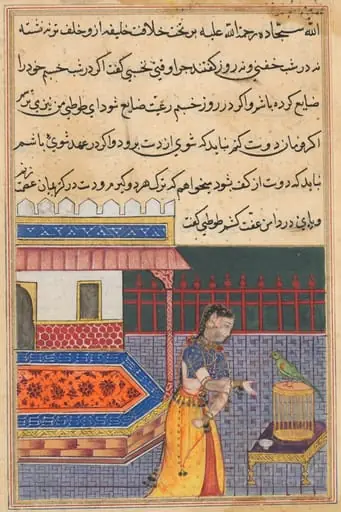 The parrot addresses Khujasta at the beginning of the forty-first night, from a Tuti-nama (Tales of a Parrot): Forty-first Night
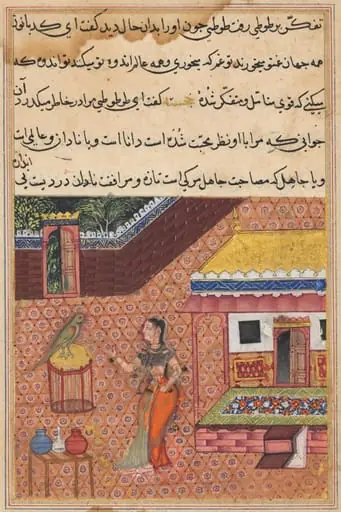 The parrot addresses Khujasta at the beginning of the thirty-fourth night, from a Tuti-nama (Tales of a Parrot)
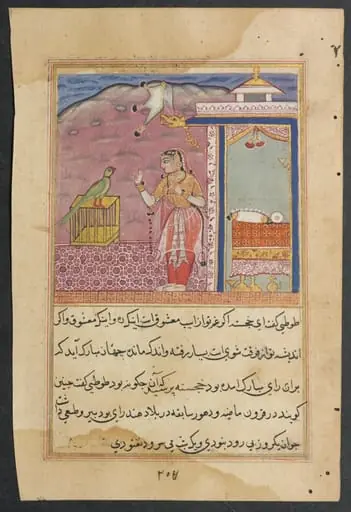 The parrot addresses Khujasta at the beginning of the forty-fourth night, from a Tuti-nama (Tales of a Parrot)
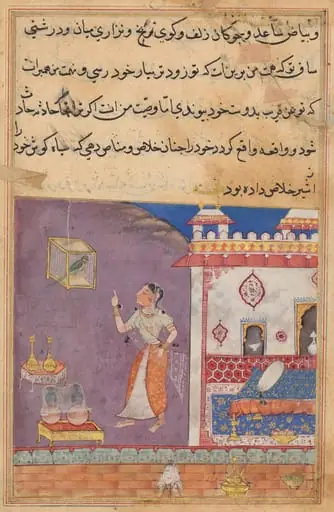 The Parrot Addresses Khujasta at the Beginning of the Twenty-ninth Night, from a Tuti-nama (Tales of a Parrot)
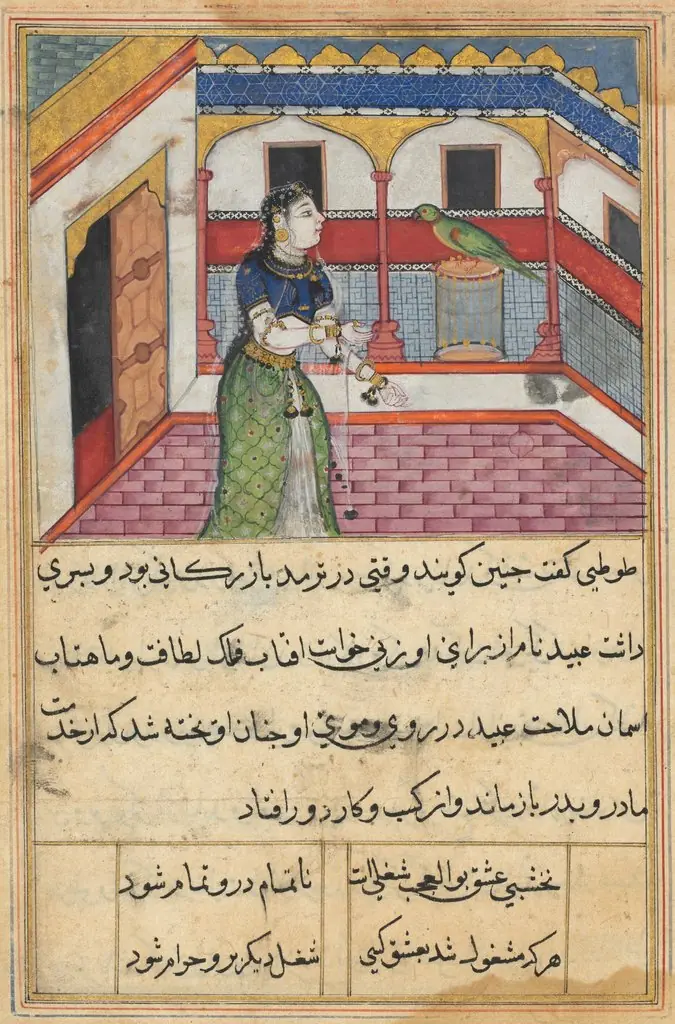 The parrot addresses Khujasta at the beginning of the forty-second night, from a Tuti-nama (Tales of a Parrot)
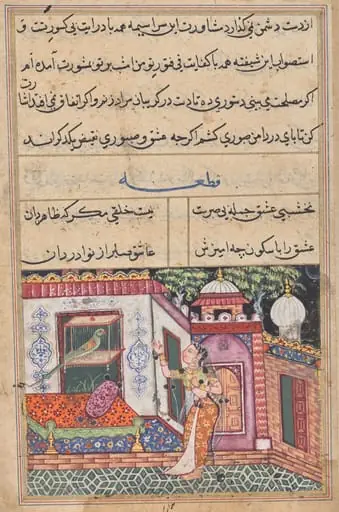 The Parrot Addresses Khujasta at the Beginning of the Eleventh Night, from a Tuti-nama (Tales of a Parrot)
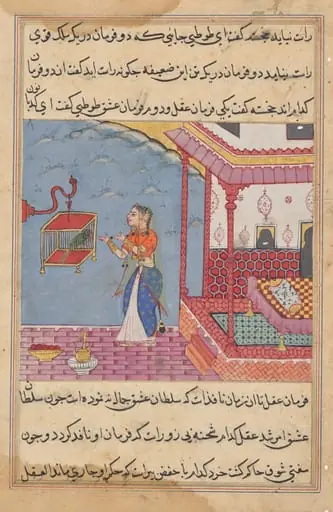 The Parrot Addresses Khujasta at the Beginning of the Twenty-Fourth Night, from a Tuti-nama (Tales of a Parrot)
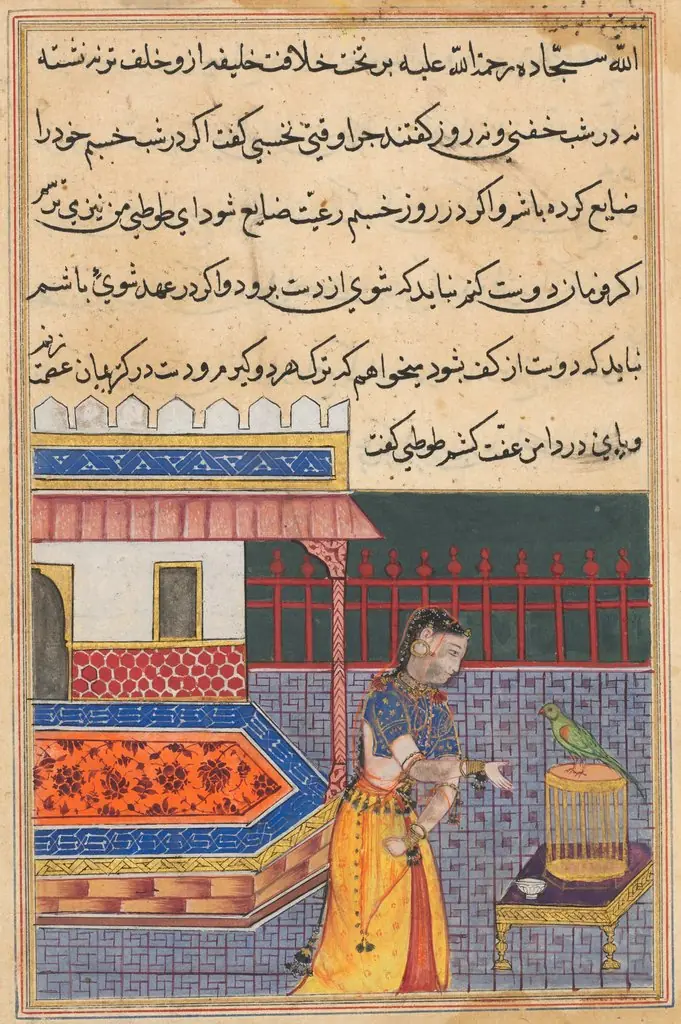 The parrot addresses Khujasta at the beginning of the forty-first night, from a Tuti-nama (Tales of a Parrot): Forty-first Night
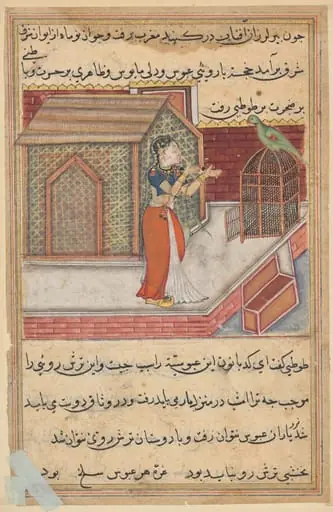 The parrot addresses Khujasta at the beginning of the forty-ninth night, from a Tuti-nama (Tales of a Parrot): Forty-Ninth Night
 The parrot addresses Khujasta at the beginning of the fiftieth night, from a Tuti-nama (Tales of a Parrot): Fiftieth Night