Artwork
The son of the king of Babylon sees the Brahman transformed into a woman bathing and falls in love with her, from a Tuti-nama (Tales of a Parrot): Thirty-fifth Night
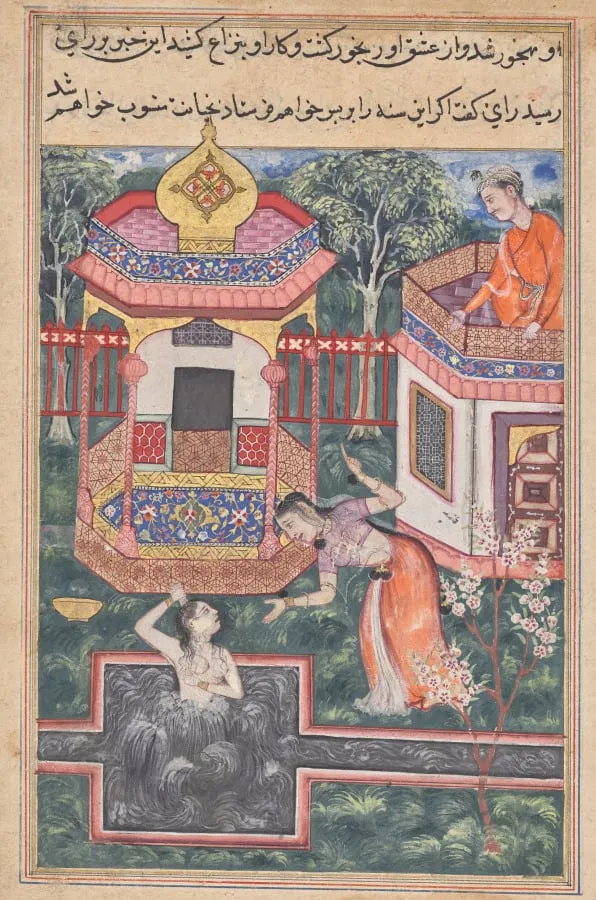
The son of the king of Babylon sees the Brahman transformed into a woman bathing and falls in love with her, from a Tuti-nama (Tales of a Parrot): Thirty-fifth Night is an unspecified painting by the Mughal Painting artist Unknown. It dates from 1560 and is held in the collection of the Cleveland Museum of Art.
About this work
The woman is really a Brahmin—a Hindu priest—who used magic to live as a woman with the princess.
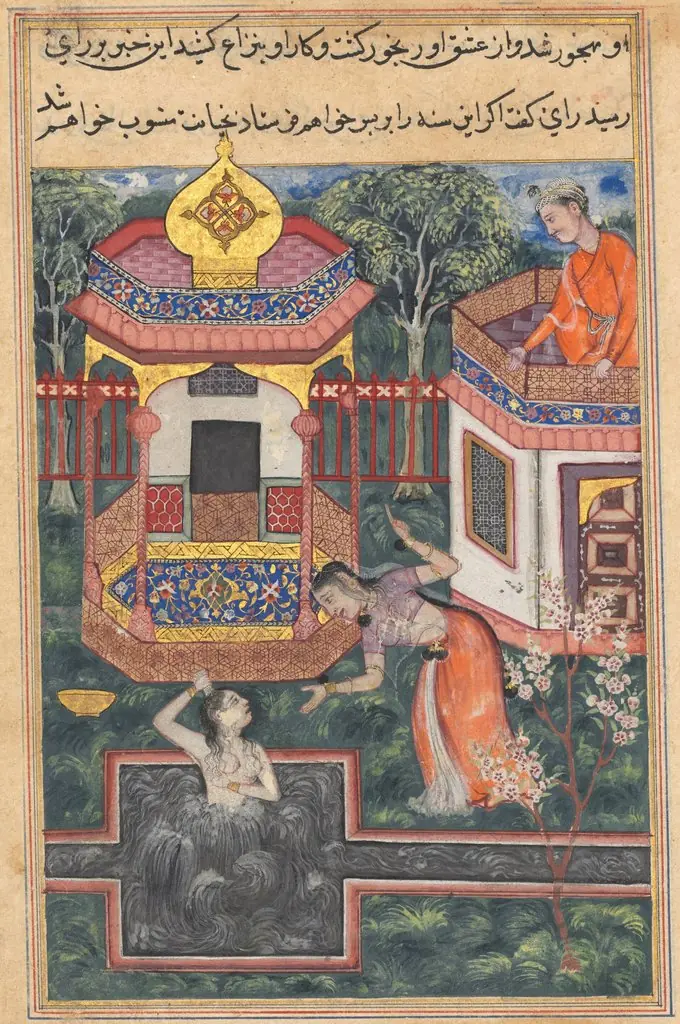
A prince watches a woman bathe in a palace pool, while a princess gasps beside him. The woman is really a Brahmin—a Hindu priest—who used magic to live as a woman with the princess.
This painting comes from a book of parrot tales told to Emperor Akbar. The bright colors and tiny details show how Mughal artists mixed Persian and Indian styles. The story itself is full of trickery and secret love.
To see more paintings like this, look up Mughal India, court of Akbar (reigned 1556–1605).
Overview
The miniature illustrates a scene from the thirty‑fifth night of the Tuti‑nama, a collection of parrot‑told stories presented to Emperor Akbar. A royal prince spies a woman washing her hair in a palace pool and is instantly enamoured. Beside him, a princess reacts with alarm, realizing the object of his affection is her secret lover, a Brahmin priest disguised as a woman through a magical pearl.
Subject & Meaning
The narrative centers on themes of disguise, forbidden desire, and the subversion of gender roles. The Brahmin’s transformation enables a clandestine relationship with the princess, while the prince’s sudden love introduces tension and potential scandal. The princess’s startled gesture underscores the precariousness of hidden unions within the courtly sphere, reflecting broader moral and social concerns in Mughal storytelling.
Technique & Style
Executed in the Mughal miniature tradition, the work combines Persian compositional rigor with Indian decorative vigor. Luminous pigments render the water’s surface in delicate, swirling strokes, contrasting with the more geometric ripple patterns seen in earlier Hindu illustrations of bathing scenes. Fine brushwork delineates intricate costume details and the expressive faces of the three figures, while the compact format allows for a densely populated visual narrative.
History & Provenance
The painting originates from a manuscript of the Tuti‑nama compiled for Akbar (r. 1556–1605), reflecting the emperor’s patronage of syncretic literary projects. The manuscript, now housed in a major museum collection, exemplifies the cross‑cultural exchange that characterized the Mughal court, where Persian literary forms were adapted to Indian mythic content.
Context
Bathing scenes appear frequently in Mughal art, often drawing on Hindu texts such as the Bhagavata Purana, where Krishna and the gopis are depicted in watery settings. However, Mughal artists render water with softer, flowing swirls rather than the concentric circles typical of earlier Indian illustrations, indicating a stylistic synthesis that distinguishes courtly visual culture of the period.
Artist & collection

 Domestic Scene
 Giacomo and Cardinal Marco, investing Andrea, Abbot of San Zeno, with his Benefice
 The Nymph of Fontainebleau
 Portrait of a Woman
 Madonna and Child with Saints in the Enclosed Garden
 Venus and Minerva
 Family Group of Four on Sofa
 Wall painting from Room H of the Villa of P. Fannius Synistor at Boscoreale
 The son of the king of Babylon sees the Brahman transformed into a woman bathing and falls in love with her, from a Tuti-nama (Tales of a Parrot): Thirty-fifth Night
 Khusrau, the King of Kings, pays homage to the pious daughter of Khassa, from a Tuti-nama (Tales of a Parrot): Fifty-first Night
 The Parrot Addresses Khujasta at the Beginning of the Twenty-sixth Night, from a Tuti-nama (Tales of a Parrot)
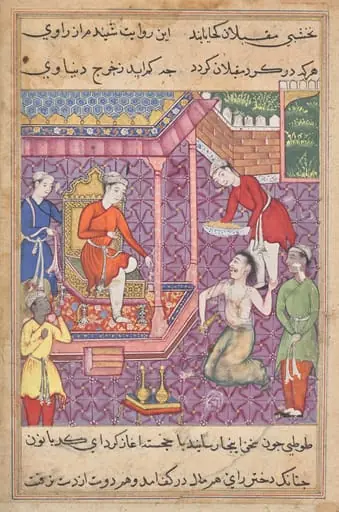 The magician disguised as a Brahman returns to claim his “daughter-in-law,” from a Tuti-nama (Tales of a Parrot): Thirty-fifth Night
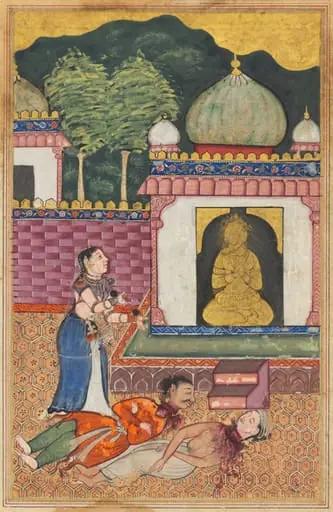 The princess discovers the dead bodies, with heads severed, of her husband and his Brahman friend, from a Tuti-nama (Tales of a Parrot): Thirty-fourth Night
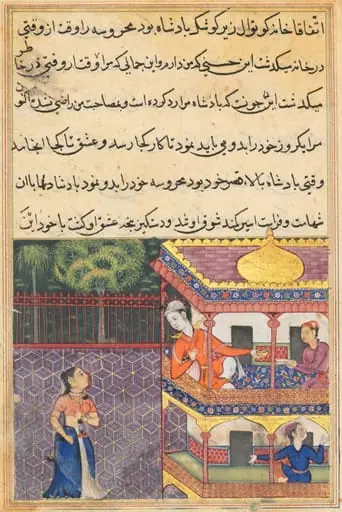 The king of Zabul sees Mahrusa from his palace balcony, from a Tuti-nama (Tales of a Parrot): Thirty-sixth Night
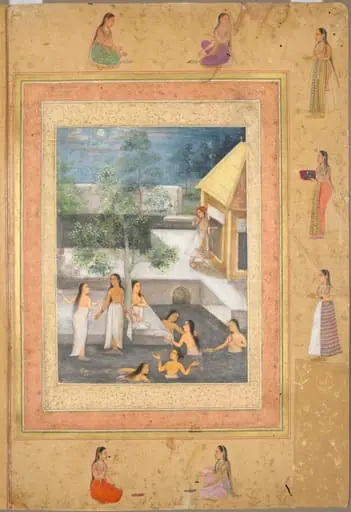 Harem night-bathing scene, from the Late Shah Jahan Album (recto)
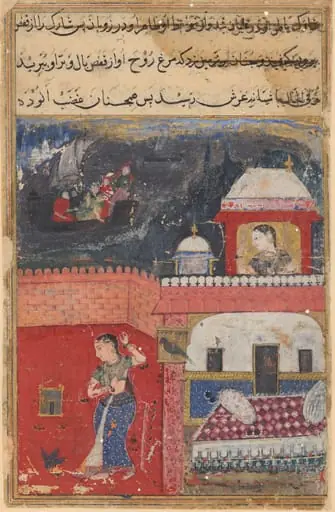 Khujasta kills the pet mynah who advises her not to be unfaithful to Maymun, her husband, from a Tuti-nama (Tales of the Parrot): First Night
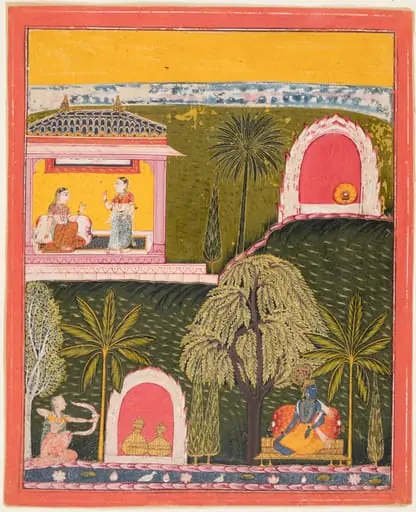 Rati, the Goddess of Erotic Love, Takes Aim at Krishna, from a Rasikapriya
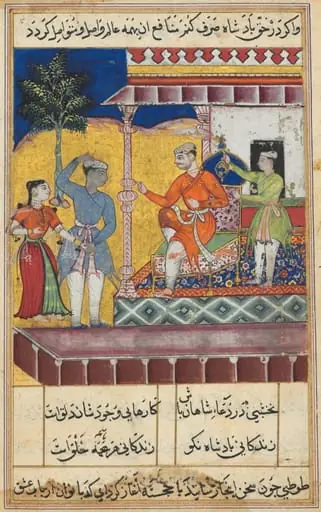 The rejuvenated old man and the daughter of the king of the jinns take leave of the King of Kings, from a Tuti-nama (Tales of a Parrot): Seventh Night