Artwork
六十余州名所図会 薩摩 坊ノ浦 雙剣石|Upright Landscape
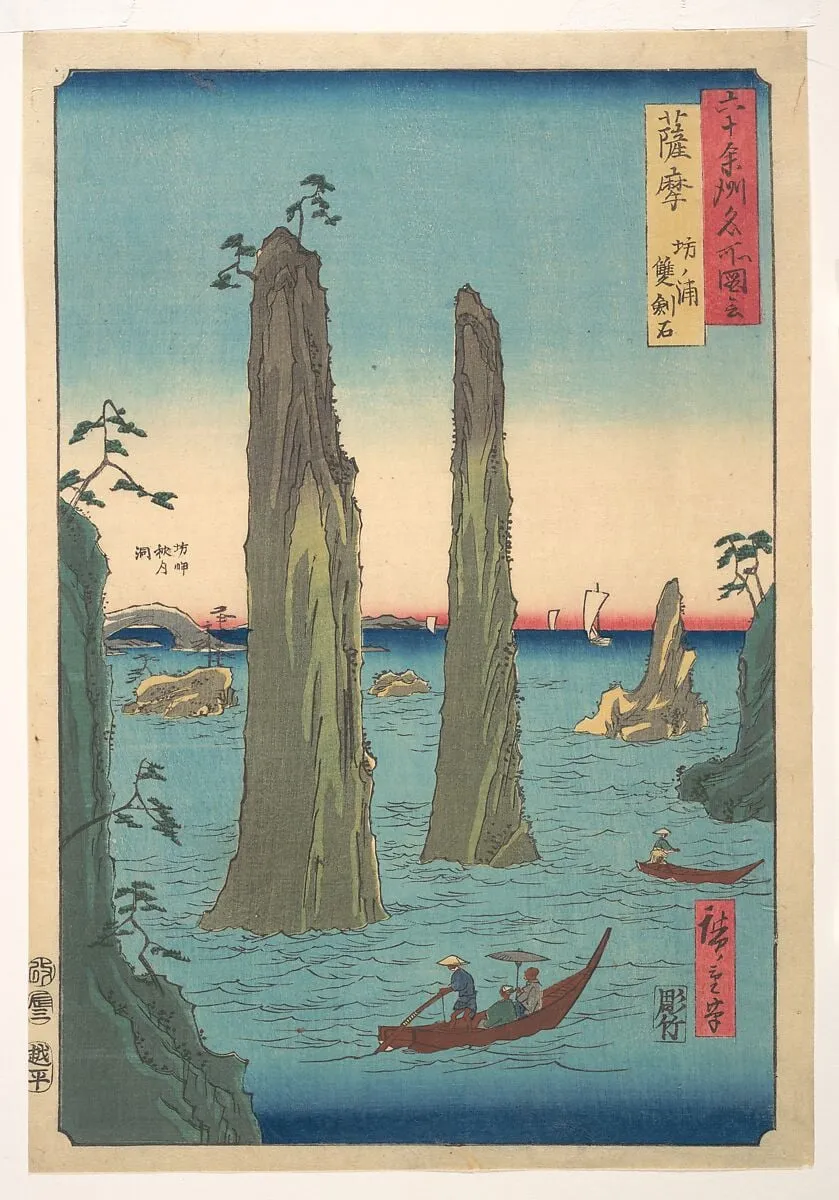
六十余州名所図会 薩摩 坊ノ浦 雙剣石|Upright Landscape is an ink print by the Romanticist artist Utagawa Hiroshige. It dates from 1829 and is held in the collection of the Metropolitan Museum of Art.
About this work
Overview
Created in 1829 by the Edo‑period ukiyo‑e master Utagawa Hiroshige, this vertical woodblock print portrays a coastal scene at Bō‑no‑ura in the former Satsuma Province. The image belongs to Hiroshige’s extensive series documenting notable locations across Japan’s provincial routes, known as the Sixty‑Nine Stations along the Roads of the Provinces.
Subject & Meaning
The composition centers on two sharply pointed rock formations that thrust upward from the sea, evoking the silhouette of twin swords. A modest boat carrying three figures drifts close to the rocks, while a second vessel sails farther out, suggesting both the tranquility and the subtle activity of a fishing community along the shoreline.
Technique & Style
Executed with ink and color on paper, the print employs a restrained palette of pink and blue hues for the sky, contrasted with darker tones for the water and rocks. Hiroshige’s use of bold outlines and simplified forms conveys a sense of calm drama, while the vertical format emphasizes the height of the stone pillars against the horizon.
History & Provenance
The work was produced as part of a government‑commissioned series intended to illustrate notable provincial sites for travelers and collectors. Printed in the early nineteenth century, it circulated among the growing urban audience for travel imagery, and later entered museum collections as a representative example of Hiroshige’s landscape oeuvre.
Artist & collection
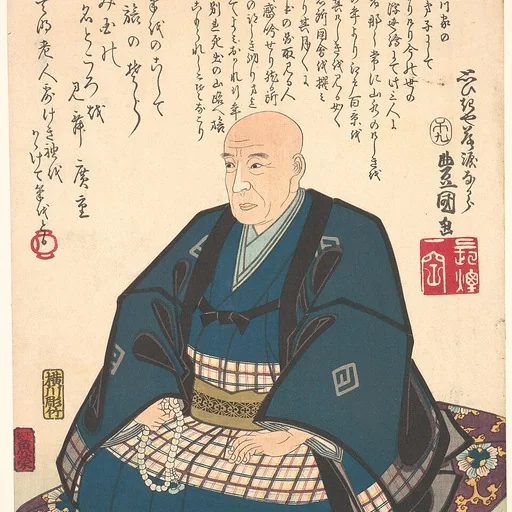
Artist
Utagawa Hiroshige (歌川 広重) or Andō Hiroshige (安藤 広重), born Andō Tokutarō (安藤 徳太郎; 1797 – 12 October 1858), was a Japanese ukiyo-e artist, considered the last great master of that tradition.

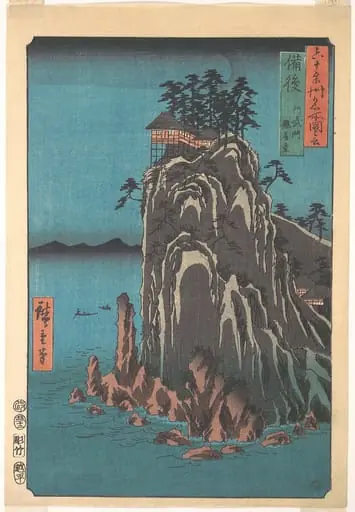 六十余州名所図会 備後 阿武門観音堂|Kannondo, Abuto, Bingo Province, from the series Views of Famous Places in the Sixty-Odd Provinces
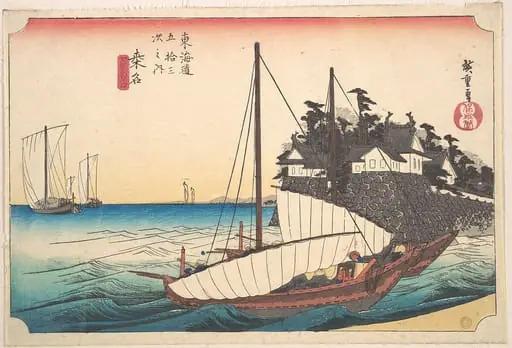 東海道五十三次之内 桑名 七里渡口|Kuwana, Shichi-Ri Watashi Guchi
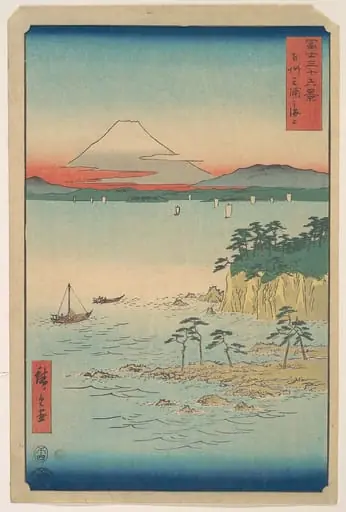 富士三十六景 相州三浦の海上|Fuji from Miura, Sagami (Soshu Miura no Kaijo), from the series Thirty-six Views of Mount Fuji (Fugaku sanjūrokkei)
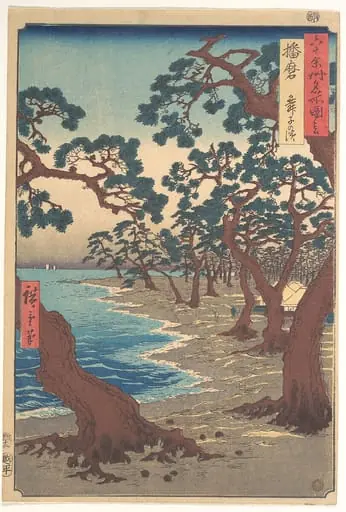 六十余州名所図会 播磨 舞子の浜|Harima, Maiko no Hama
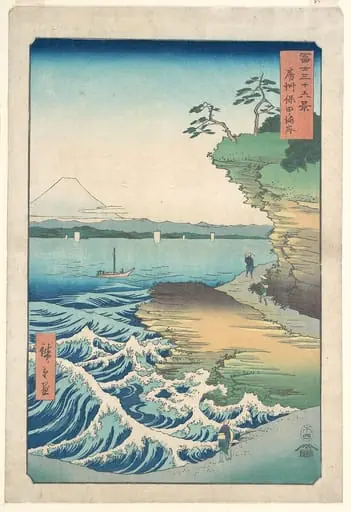 富士三十六景 房州保田の海岸|Seashore at Hoda, Province of Awa
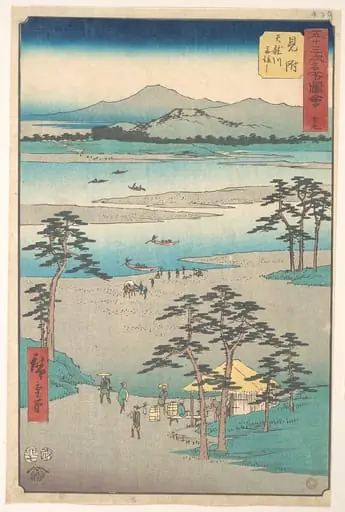 五十三次名所図会 見付 天竜川舟渡し|Mitsuke
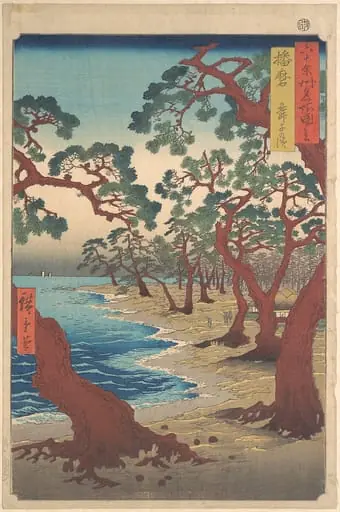 六十余州名所図会 播磨 舞子の浜|Maiko Beach, Harima Province, from the series Views of Famous Places in the Sixty-Odd Provinces
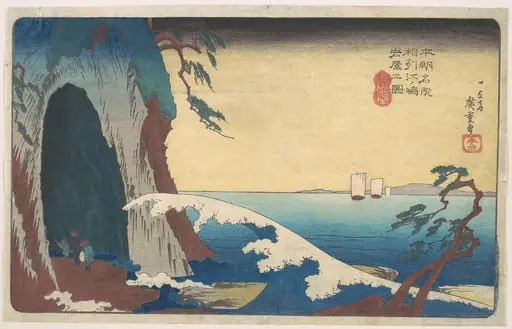 本朝名所 相州江ノ嶋岩屋之図|Sōshū, Enoshima Iwaya no Zu
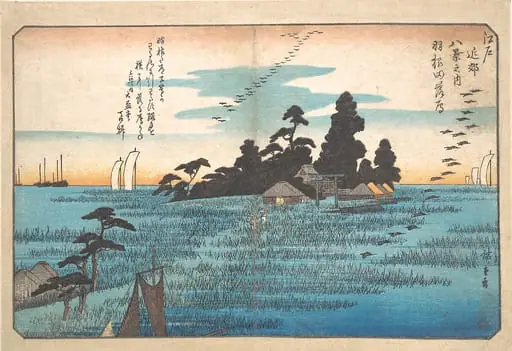 江戸近郊八景之内 羽根田落雁|Haneda Rakugan
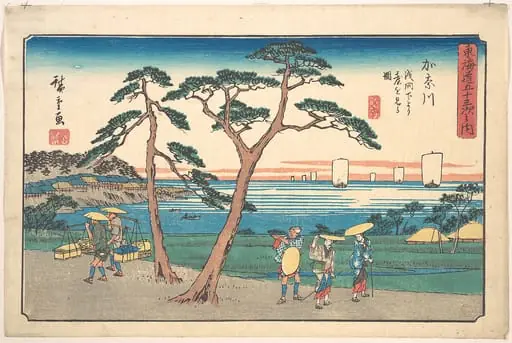 東海道五十三次之内 神奈川 浅間下より台を見る図|Kanazawa
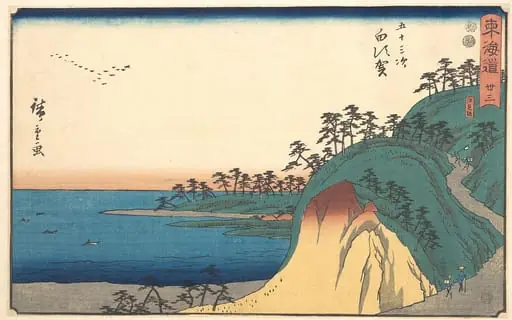 東海道五十三次 白須賀 汐見坂|Shirasuke
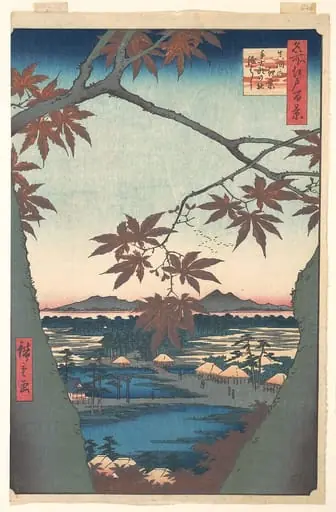 名所江戸百景 真間の紅葉手古那の社継はし|Maples at Mama, from the series One Hundred Famous Views of Edo